




BMW Details New X5 Plug in Hybrid eDrive Concept
The vehicle uses BMW’s eDrive hybrid technology, has a range of 19 miles on electric power alone, and gets 74.3 mpg, based on the EU test cycle (3.8 liters per 100 kilometers), according to BMW.
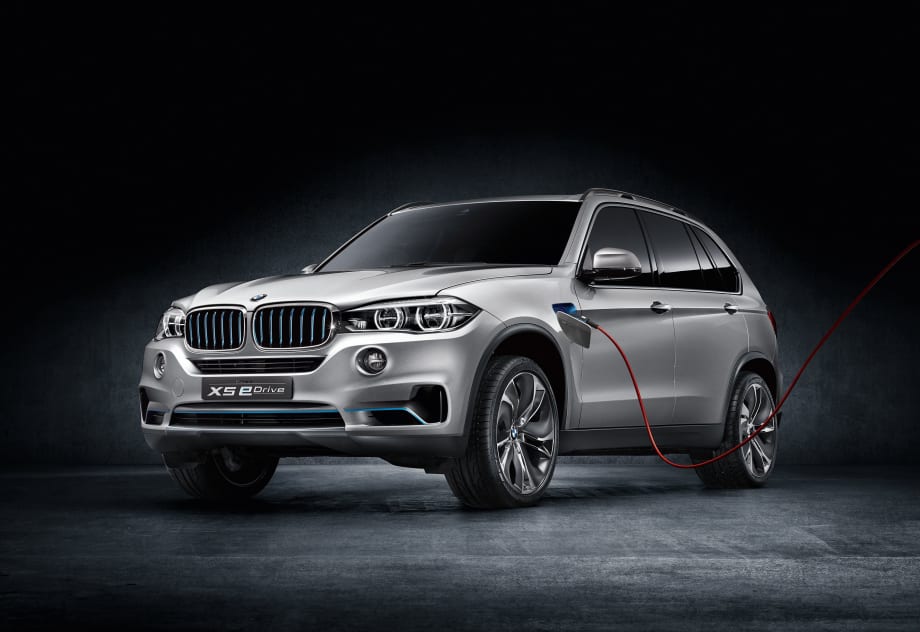
The BMW x5 eDrive plug-in hybrid concept. The automaker plans to show this vehicle at the Frankfurt Auto Show. Photo courtesy BMW.

The BMW x5 eDrive plug-in hybrid concept. The automaker plans to show this vehicle at the Frankfurt Auto Show. Photo courtesy BMW.
BMW unveiled a plug-in hybrid concept version of its X5 Sports Activity Vehicle (SAV) that the automaker plans to show at the 2013 Frankfurt International Motor Show (IAA). The vehicle uses BMW’s eDrive hybrid technology, has a range of 19 miles on electric power alone, and gets 74.3 mpg, based on the EU test cycle (3.8 liters per 100 kilometers), according to BMW.
The concept eDrive system features a four-cylinder gasoline engine, equipped with BMW’s TwinPower Turbo technology, and an electric motor. The 95 hp motor is powered by a lithium-ion battery. The vehicle can charge from any domestic power outlet, according to BMW. When traveling on electric power alone, the motor can get the X5 eDrive up to a top speed of 75 mph. It also provides boost, allowing the vehicle to go from a stop to 62 mph in 7 seconds.
For driving modes, BMW said the concept offers the driver-activated Eco Pro mode, which engages when the vehicle starts and helps manage energy use by the hybrid system. The Proactive Driving Assistant feature in the vehicle works with the on-board navigation system to incorporate route, speed limits, and traffic into the driving mode selection. On the display, the range in electric-only mode shows as a numeric value and the system monitors factors affecting range, such as traffic conditions, route, and driving style, according to BMW.
BMW said drivers can also obtain vehicle charge status information via the Remote smartphone app from BMW ConnectedDrive. The app also allows the driver to pre-program the vehicle while charging, for example in order to control heating or air-conditioning.
BMW said that although the vehicle does have less cargo space due to the battery system, it still offers enough room for two large suitcases or four 46-inch golf bags. The back seat has a 40/20/40 split/folding design for added room.
More Operations

Fleet Has a Talent Pipeline Problem. What Comes Next? | AF News Recap
Where will fleet’s next generation of leaders come from? This week, we’re looking at the industry’s talent pipeline, what certification can add to a fleet career, how to build an award-worthy track record, and the return of Automotive Fleet’s Personal Use Survey.
Read More →
Smith System Launches Driver Risk Management Program
Fleets have more driver data than ever, but identifying risky behavior doesn't necessarily correct it. Smith System's new Driver Risk Management program combines monitoring, training, and follow-up coaching to help fleets connect risk signals with driver intervention.
Read More →
Automotive Fleet Opens 2026 Personal Use Survey for Commercial Fleet Managers
Less than two weeks left! Commercial and corporate fleet managers are invited to share how their organizations handle company vehicle personal-use policies, charges, and driver eligibility.
Read More →
From AI Prompts to AI-Generated Safety Songs | AF News Recap
Can better prompts make AI more useful for fleet managers? This week, we’re breaking down smarter fleet analysis, an AI-assisted experiment that turned safety training into music, and what happened to fuel prices in August.
Read More →
How to Write Better AI Prompts for Fleet Analysis
Include these six elements in your fleet prompts to generate more relevant analysis and accurate answers.
Read More →
Fleet Meets: Eric Kilgore
This edition of the Fleet Meets series features one of the industry's best leaders driving multi-market and national operations.
Read More →
Why Reactive Fleet Management Is Becoming Too Expensive to Sustain
Research highlights a growing need for proactive management strategies to address rising costs in fleet operations effectively.
Read More →
What Your Fleet KPIs Aren’t Telling You
Tracking fleet metrics is only useful when the data leads to better decisions. This guide helps fleet leaders assess cost, utilization, and downtime more accurately, identify performance gaps, and prioritize the actions that can improve operational results.
Read More →
Hidden in Plain Sight: Fleet Compliance Risks
Fleet compliance isn't just about having policies — it's about consistently enforcing them. This practical guide reveals six hidden compliance risks common in public sector and shared fleet operations and outlines proven strategies to improve visibility, accountability, and audit readiness
Read More →
Turning Fleet Payment Data into Executive Insights
Does data alone drive results in operations?
Read More →