




2024 Toyota Prius Prime: What's New?
Limited quantities, starting with an MSRP of $32,675, will be arriving at Toyota dealerships in later this fall.

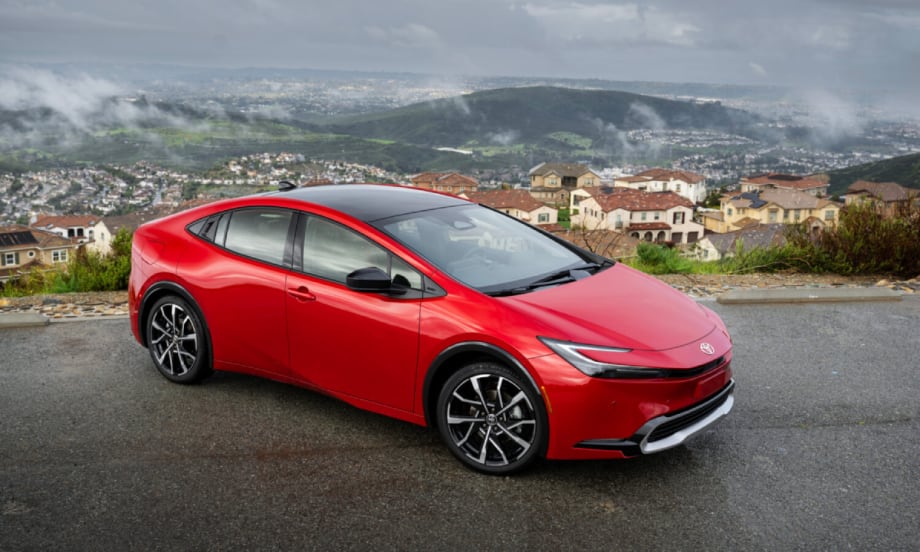
Both the standard Prius hybrid electric vehicle (HEV) and the Prius Prime PHEV are powered by Toyota’s hybrid synergy drive powertrain, which combines the output of the gasoline engine and electric motors.
Photo: Toyota
Toyota announced on Oct. 25 the new PHEV 2024 Prius Prime. Available in SE, XSE, and XSE Premium grades with a manufacturer-estimated 52 MPG combined rating on the SE grade and an all-electric range of up to 44 miles.
MSRP
SE
$32,675
XSE
$35,925
XSE Premium
$39,370
With Prius Prime’s 13.6 kWh lithium-ion battery, the SE grade has up to a manufacturer-estimated 44 miles of all-electric range. The XSE and XSE Premium grades have a manufacturer-estimated all-electric range of 39 miles. For longer drives, the Prius Prime combines a highly efficient 2.0-liter engine, an electric generator, and electric motors.
The 2024 Prius Prime also brings a 150-hp 2.0L engine and 161-hp electric motor generator. It also adds 32% more torque than the third-generation model, climbing from 105 to 139 lb.-ft. of torque. Altogether, Prius Prime’s output combines for a 35% faster 0-60 time of 6.6 seconds.
Models are expected to start arriving in limited quantities at Toyota dealerships in fall 2023.
Hybrid Powertrain and Charging
Both the standard Prius hybrid electric vehicle (HEV) and the Prius Prime PHEV are powered by Toyota’s hybrid synergy drive powertrain, which combines the output of the gasoline engine and electric motors. The biggest difference is that the PHEV model can be plugged in to recharge its lithium-ion battery pack.
For home charging, Toyota recommends using a dedicated GFI 15A outlet, the battery will recharge in about 11 hours on a standard 120V home outlet and in about four hours on a Level 2 charger under ideal conditions.
The Prius Prime can operate in EV, Auto EV/HV, or Hybrid mode depending on the driver’s needs and vehicle state of EV battery charge. EV mode relies solely on the vehicle’s battery when there is sufficient charge and functions just like any other battery electric vehicle without support from the gasoline engine.
When in Auto EV/HV mode, the vehicle will still primarily rely on the vehicle’s battery to drive the wheels but will switch to HV mode to provide additional power in more demanding circumstances, like up steep hills or at higher speeds.
In Hybrid mode, the Prius Prime automatically switches between the gasoline engine and the electric motors to combine the engine drive force and the electric power from the hybrid battery.
The Prius Prime can even help optimize range by recognizing the driver’s stopping patterns on frequently driven routes and suggesting when to let off the accelerator.
Available predictive drive with predictive deceleration support collects daily driving data to optimize points of deceleration and stopping. From then on, when the driver goes through a frequented location, the system indicates when to let off the accelerator and can apply assisted deceleration to help boost fuel efficiency.
Under the Hood
The 2024 Prius Prime is Toyota’s Fifth generation Toyota Hybrid system, which pairs the M20A-FXS inline four-cylinder 2.0L gas engine with two motor-generators (MG1 and MG2) through a planetary-type continuously variable transmission.
The engine, working in concert with the electric motor (MG2), assures responsive performance, while energy efficiency is achieved by using both electric motors (MG1 and MG2) to charge a lithium-ion battery.
A compact high-output/low-loss drive motor for the transaxle/motor uses a six-magnet and electromagnetic steel plate configuration to support drive functions.
For improved performance while in Hybrid mode, both engine power and PHEV battery power are utilized for acceleration. The result is an engaging acceleration experience with 220 combined hybrid system horsepower, 139 lb.-ft. of torque and an estimated 0-60 time of 6.6 seconds, a 35% improvement over the 10.2 second time of the prior generation model.
Another boost to Prius Prime’s fuel efficiency comes from the electronically controlled brake (ECB) system, which coordinates operation between the regenerative braking force of the electric motors and the hydraulic braking system force.
An active hydraulic booster on the conventional (non-regenerative) braking system improves pedal feel and feedback for the driver. Brake hold also comes standard, when engaged it is a convenient technology that reduces driver effort while waiting at a traffic light or while driving in heavy traffic. When the driver presses the accelerator, the Brake Hold releases instantly.
Sport Grades Across the Model
The 2024 Prius Prime will be offered in three sport grades: SE, XSE, and XSE Premium. All Prius Prime grades come in front-wheel drive.
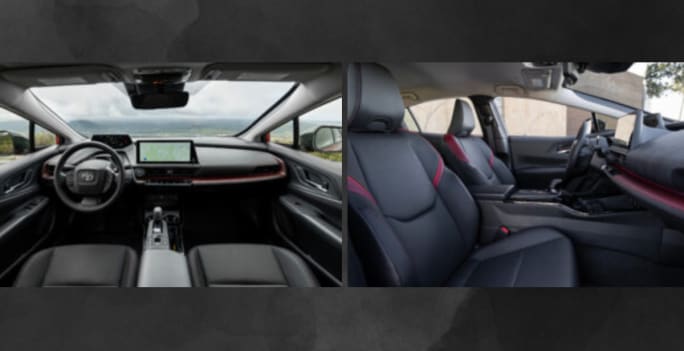
Photo: Toyota
Inside features include a new standard digital driver’s display for a head-up line of site, comfortable seating in fabric or SofTex trim depending on grade, and Toyota’s audio multimedia system.
All grades offer Toyota’s traffic jam assist technology, a radar-based system that helps ease stop-and-go traffic on limited access roadways by operating the steering, gas, and brake pedals from speeds between 0-25 mph under certain conditions.
The SE grade has dark grey 17-inch alloy wheels with wheel covers, standard; an eight-inch Toyota audio multimedia touchscreen and six-way adjustable fabric front seats in black with red trim.
Additional standard features include a smart key system on the driver door, six USB-C ports, electronic parking brake (EPB), leather-trimmed heated steering wheel, rain-sensing wipers, and a blind spot monitor (BSM) with rear cross-traffic alert (RCTA). Optional features include front and rear parking assist with automatic braking (PA w/AB).
The XSE grade comes with everything on the SE grade and adds machine-finished 19-inch alloy wheels standard.It also comes with a standard smart key system on the front doors and rear liftback.
Available options include a 12.3-inch high-resolution touchscreen display, fixed glass roof, and digital key.
The XSE Premium has all the standard SE and XSE features and adds a JBL Premium Audio system with eight speakers, a 12.3-inch touchscreen display, a fixed glass roof, SofTex-trimmed heated and ventilated front seats with a driver memory seat, power rear liftback, and digital key standard.
Prime Engineering
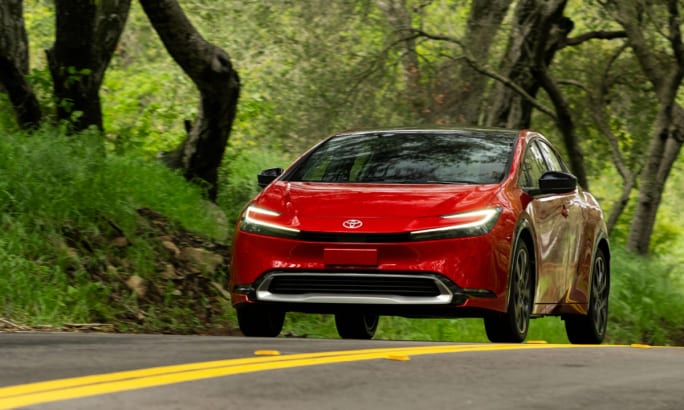
Photo: Toyota
Built on the second-generation TNGA-C platform, the 2024 Prius Prime has a lower center of gravity, reduced weight, and increased rigidity compared to the previous generation. The position of the traction battery is also optimized, with placement under the rear seat for a low center of gravity and enhanced luggage capacity.
The 2024 Prius Prime has a 0.27 coefficient of drag (Cd). Just like in previous generations, front grille shutters have been installed to optimize the inflow of air, contributing to cooling and aerodynamic performance. Aero-stabilizing underbody panels are also in place to reduce drag and road noise.
The larger wheels available on XSE and XSE Premium also catch the eye – resulting in sport-inspired proportions that offer drivers added performance and handling. Coupled with the larger wheels are 12-inch brake rotors on the front and 11.1-inch rotors on the rear.
Media and Convenience Tech
The 2024 Toyota Prius Prime comes with an eight-inch Toyota audio multimedia screen on the SE and XSE grades, and an available 12.3-inch Toyota audio multimedia screen standard on the XSE Premium grade (a 12.3-inch screen available as an option on the XSE grades).
The Toyota audio multimedia system is designed and engineered by Toyota’s Texas-based connected technologies team. Prius drivers will also have the opportunity to access a wide range of enhanced connectivity and convenience features, including over-the-air (OTA) updatable.
Users can interact with the system through intuitive touch and voice activation controls.
With the available drive connect connected service, drivers and passengers have access to intelligent assistant, cloud navigation, and destination assist. With intelligent assistant, phrases like “Hey Toyota” awaken the system for voice-activated commands to search for directions, find points of interest (POI), adjust audio controls, change the cabin temperatures, and more.
Cloud navigation, the available onboard navigation solution, utilizes the cloud to download the latest available map, traffic, and routing information. To ensure users have the most up-to-date search capabilities, POI search is provided by Google POI data. Destination assist also gives access to 24/7 live agent assistance to locate the next destination.
The Toyota audio multimedia system allows for dual Bluetooth phone connectivity, with support for standard wireless Apple CarPlay and Android Auto compatibility.
The Prius Prime is equipped with six USB-C ports in the cabin. Up front, there are two Type-C USB ports at the bottom of the center stack plus two more Type-C USB ports in the center console. For rear seat passengers, two Type-C USB ports are located at the bottom rear of the center console.
The Prius Prime also has a standard Wi-Fi Connect 1-month trial that offers 4G connectivity for up to five devices – turning the Prius into an AT&T Hotspot. Adding to the already robust offering of audio playback ability with HD Radio, USB data, a SiriusXM Platinum 3-month trial subscription, and Wi-Fi Connect.
Prime Safety and ADAS
The 2024 Toyota Prius Prime will come standard with Toyota safety sense (TSS) 3.0 standard. This suite of safety and driver assistance technologies includes:
Pre-collision system with pedestrian detection
Lane departure alert with steering assist
Full-speed range dynamic radar cruise control
Lane tracing assist
Road sign assist
Automatic high beams
Proactive driving assist
More Vehicle Research
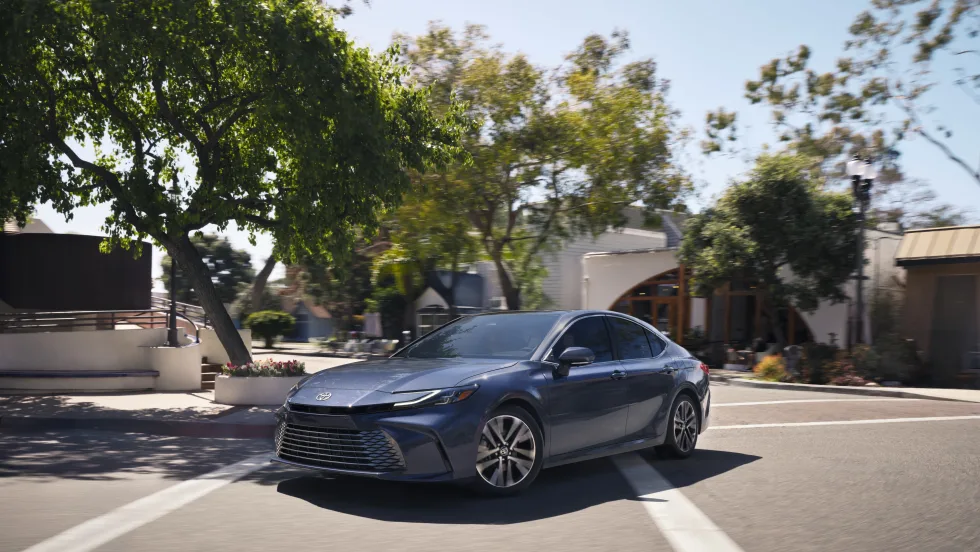
2027 Toyota Camry Offers Hybrid Powertrain Across Five Grades
The 2027 Toyota Camry is a carryover with new pricing.
Read More →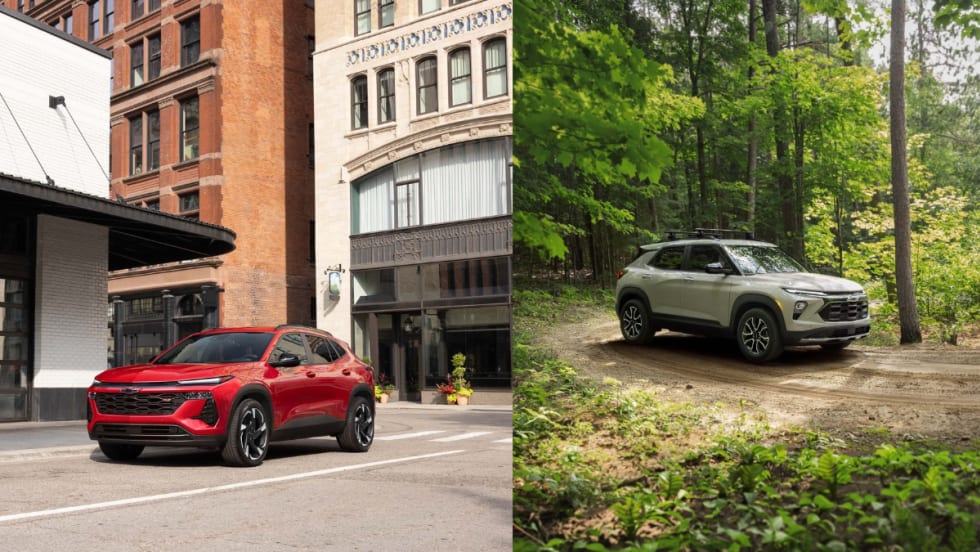
Chevrolet Updates 2027 Trax and Trailblazer with More Standard Safety Features
Chevrolet is updating two of its smallest SUVs with added driver-assistance technology, redesigned interiors, and revised trim options. The changes could add more safety equipment as standard for commercial fleets, while a new Trailblazer configuration adds another all-wheel-drive option.
Read More →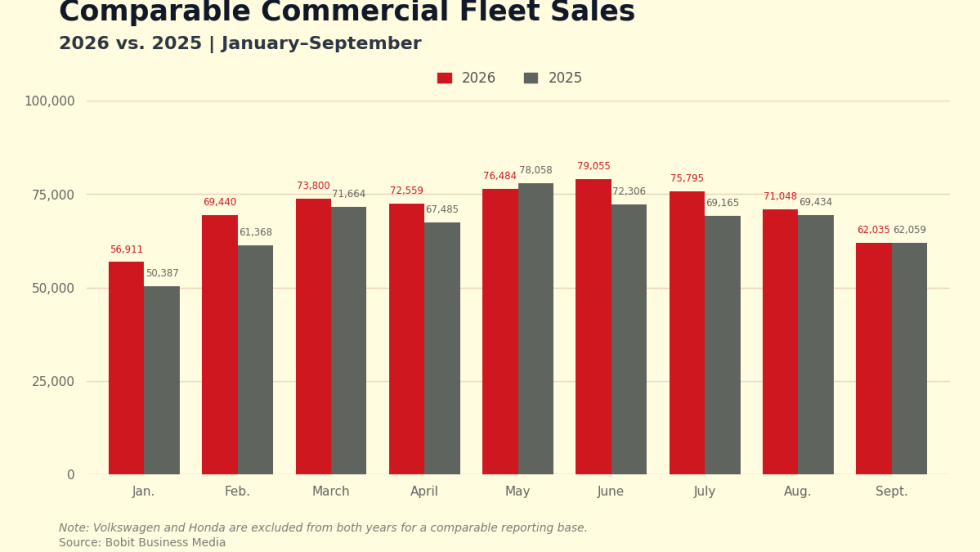
Commercial Fleet Sales Rise 5.8% Through September 2026
September commercial fleet sales were essentially unchanged from a year earlier, slowing year-to-date growth while keeping volume ahead of 2025.
Read More →
Hall of Fame Inductee: John Dmochowsky
The longtime Mondelēz International fleet executive joins the Automotive Fleet Hall of Fame.
Read More →
Hall of Fame Inductee: Lee Miller
After more than four decades at Boehringer Ingelheim, Lee Miller leaves a legacy built on fleet expertise.
Read More →
Hall of Fame Inductee: Mark F. Petersen
From managing fleets of thousands of vehicles to advancing safety and mentoring fellow professionals, Mark F. Petersen made his mark across both the corporate and supplier sides of fleet.
Read More →
When Charger Downtime Becomes a Fleet Availability Problem
As EV deployments move beyond pilot programs, charger reliability can directly affect vehicle readiness, driver productivity and route scheduling.
Read More →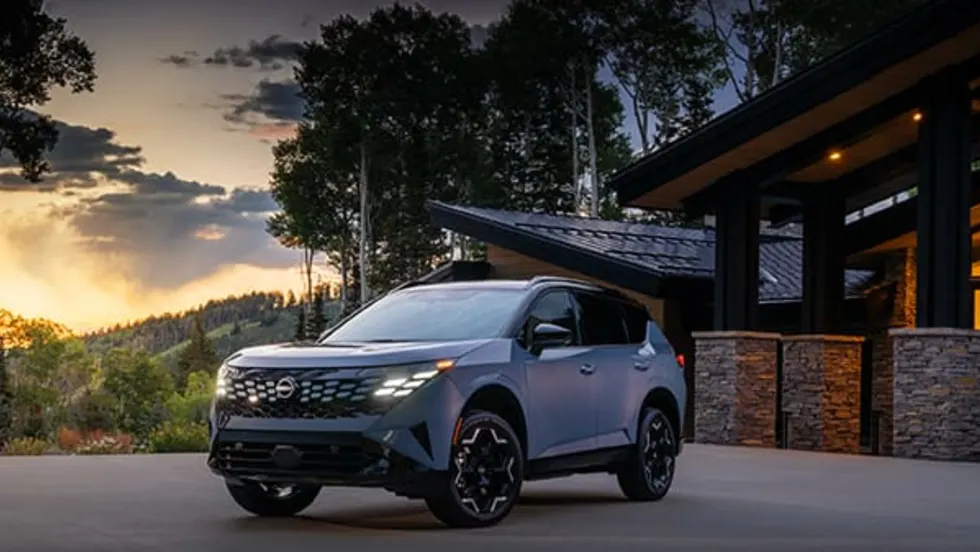
2027 Nissan Rogue Hybrid Adds e-POWER, Standard AWD
The new Rogue Hybrid uses Nissan’s e-POWER system with dual electric motors, offers an estimated 40 mpg and starts at $35,490.
Read More →
2027 Subaru Forester Adds First Wilderness Hybrid
The 2027 Forester lineup starts at $29,995 and adds a Wilderness Hybrid with 194 combined horsepower and 9.3 inches of ground clearance.
Read More →
EV Realty Names Henrik Holland President as Charging Platform Expands
The former Prologis Mobility and Shell executive will help expand EV Realty’s truck charging business and move its power-first infrastructure model into autonomous vehicle depots and other fleet sectors.
Read More →