




How Will Revised CAFE Standards Affect ZEV Targets?
NHTSA’s updated CAFE standards soften more stringent previous targets for fuel economy gains. However, superseding state regulations mandating zero-emission vehicles could lessen CAFE standard’s significance.

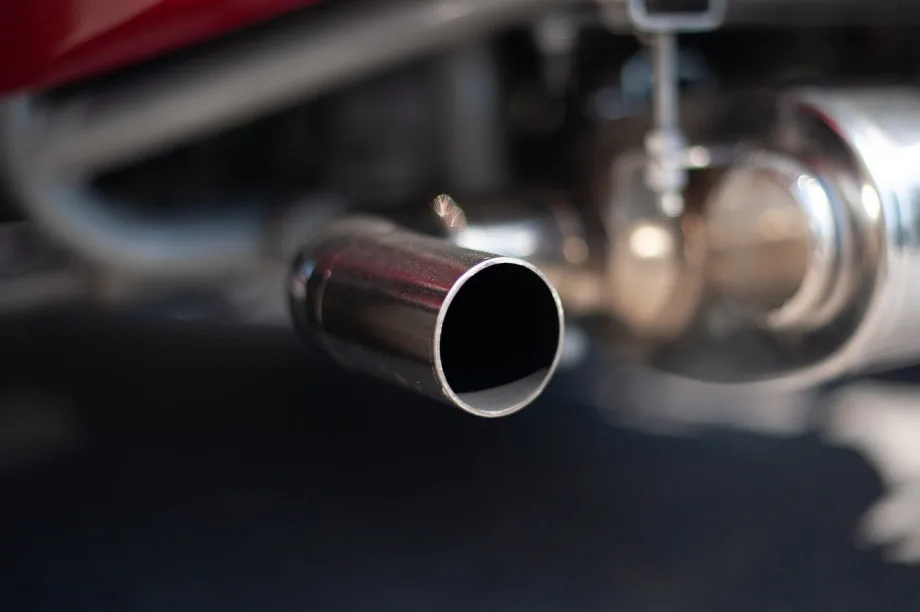
We’ve come a long way — when Congress established CAFÉ standards in the 1970s, vehicles averaged 13 miles to the gallon. But the program may have outlived its usefulness.
Photo: Pixabay
On June 7, the National Highway Traffic Safety Administration issued Corporate Average Fuel Economy (CAFÉ) standards for passenger cars, which measure the fuel economy of all the vehicles across a manufacturer’s product lineup.
The final standards will increase fuel economy by 2% annually for model years 2027-2031. Light trucks (pickups, minivans, and passenger/cargo vans) will increase by 2% annually for model years 2029-2031.
These increases will bring the average light-duty vehicle fuel economy to about 50.4 miles per gallon by model-year 2031.
Looking further out, heavy-duty pickup truck and van fuel efficiency will increase 10% per year for model years 2030-2032 and 8% per year for model years 2033-2035. This will result in a fleetwide average of approximately 35 miles per gallon by model year 2035.
The final rule also eliminates any increase for light trucks in 2027 and 2028, with only a 2% annual increase from 2029 through 2031.
The final rule softens the previous targets announced in July 2023. Those called for a 2% per-year increase for passenger cars and 4% per year for light trucks from 2027 through 2032, when average fuel economy was previously projected to rise to 58 mpg.
As such, the final rule is less of a stretch goal for the industry, as NHTSA’s rulemaking in 2022 required a fleet average of 49 mpg by 2026.
Improving MPG Reduces Fuel Tax Revenues
As it has done in whatever rulemaking phase, the government is touting the new rules by marketing the savings in gallons saved, reduced fuel expenses, and environmental benefits. Of course, those savings will be less than the previous standards would’ve been if enacted.
However, any rise in fuel economy — through electrification or improvements to internal combustion engines (ICE) — will result in fewer motor fuel tax revenues.
A study by the Illinois Economic Policy Institute (ILEPI) found that rising fuel efficiency standards and putting one million electric vehicles on the road in the state over the next decade would cost Illinois $4.3 billion, money that would support state and federal transportation projects.
New CAFÉ Rules Alleviate Fines
CAFÉ rules impose fines on automakers for noncompliance, and this is where resistance to the new rules gained traction.
In October 2023 the automakers’ trade association Alliance for Automotive Innovation sent a letter to NHTSA. The letter stated that the new CAFÉ standards would produce much higher fines for domestic manufacturers, which produce more trucks.
“Those fines wouldn’t have produced any environmental benefits or additional fuel economy and would’ve foolishly diverted automaker capital away from the massive investments required by the electric vehicle transition,” wrote President and CEO of Alliance for Automotive Innovation John Bozzella in a press statement on June 7.
Intersecting ZEV Regulations
Speaking of EVs — how do revised CAFÉ standards factor into zero emissions regulations?
In March, the EPA issued its final greenhouse gas emissions and criteria pollutant rules for light-duty vehicles. The rules cover model years 2027 through 2032 and would effectively result in 50% of EV sales in the U.S. by 2032.
However, another significantly more stringent rule is on the horizon: The Advanced Clean Cars II (ACC II) rule, implemented by the California Air Resources Board (CARB), requires that all new passenger vehicles sold in California beginning in model year 2026 will be 35% ZEV or PHEVs, build to 68% in 2030, and reach 100% in 2035.
California and its “CARB-following states” can set their own rules using a waiver granted under the EPA’s Clean Air Act. As of December 2023, 12 states have adopted some form of ACC II — representing nearly 40% of all vehicles on the road in the U.S.
So, relaxing rules that forced the improvement of ICE vehicles may matter less to vehicle makers, buyers, and sellers in light of the the larger push toward electrification and more onerous regulations coming out of California.
More Relaxation of Rules Ahead?
Both the EPA and NHTSA have set rules and relaxed them over time based on pressures from various groups and market realities. A more significant consequence would be if CARB, under similar pressures, would relax ACC II.
There has been little indication yet that CARB will rewrite ACC II. Earlier in the year, a U.S. Circuit Court of Appeals rejected a legal challenge to ACC II brought by a group of 17 Republican-led states and entities that sell or produce liquid fuels.
However, pressure from CARB-following states may be a new propellant for change — Virginia “declared its independence” from CARB on June 5. The pressure won't mount until closer to enactment of ACC II in 2026.
We’ve come a long way — when Congress established the CAFÉ program in the 1970s, vehicles averaged 13 miles to the gallon. But it may have outlived its usefulness.
“At some point we’ll need to talk about whether there’s really a need for CAFÉ in a world rapidly moving toward electrification,” Bozzella wrote.
More Blog Posts

How to Win a Fleet Manager Award: Make Your Nomination Count
Strong fleet accomplishments can go unrecognized when the nomination doesn’t make the case. Here’s what judges need to see.
Read More →
The Only Certainty with the New Tariff Threat Is Uncertainty
Trump’s Canadian tariff threat will not move production overnight, but the uncertainty could influence ordering and pricing now. Longer term, forces beyond tariffs may determine which North American plants survive.
Read More →
What Does It Mean to Embody the Spirit of Fleet?
Presented alongside Fleet Manager of the Year, Fleet Visionary, and Fleet Hall of Fame at AFLA, the new Mike Antich Spirit of Fleet Award is unique in that it recognizes service to the overall profession. Just like Mike.
Read More →
What Separates Great Fleet Managers From Everyone Else?
What do Visionary candidates with fewer than 10 years of experience have in common with Hall of Fame nominees with a lifetime under their belts?
Read More →
The Next Fleet War Won't Be Won on Specs Alone
The 2026 Stellantis Pro One Fleet Preview was less about vehicles and more about what happens after you buy them.
Read More →
Navigating Brundlefly and Fleet AI at 2026 NAFA I&E
AI is becoming the operating layer for fleets. In Cleveland, the buzz was about harnessing AI in an increasingly complex, permanently disrupted environment.
Read More →
8 Trends: Work Truck Week 2026 Reveals a Fleet Industry in Reset Mode
Walking the show floor this year, the new focus was around “practical innovation” and pragmatic solutions. And oh yeah, a new small van.
Read More →
The Moment AI Became Operational
“AI isn’t assisting us anymore. It’s doing the work,” said CEO Neil Cawse at Geotab Connect 2026. What does this mean for fleet managers?
Read More →
For Mike Antich, it Was Always About the People
He stood tall in the industry in so many ways, but he measured success by the people he served.
Read More →
Solving the Flexible-Lean Fleet Paradox
The lean fleets of yesterday are the fragile fleets of today. Where do we find the balance?
Read More →