





Photos from ACT: Up-and-Coming Electric, Alt-Fuel Work Trucks and Vans
Fleet Electrification at a Crossroads
With at least two dozen manufacturers ready to serve the commercial vehicle market with electric trucks and chassis, fleets will soon be making tough decisions they never had to with ICE vehicles.
May 23, 2022
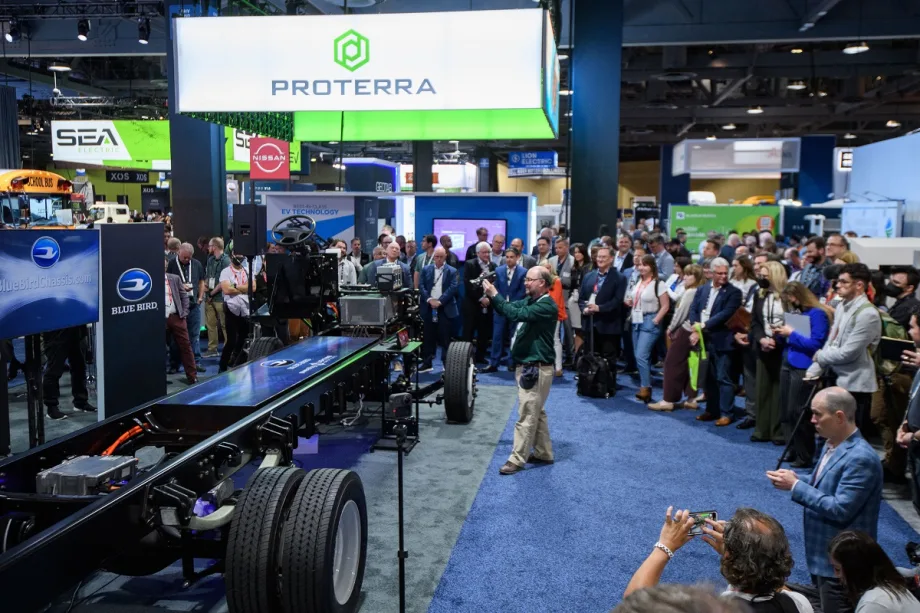
On May 10 at the 2022 Advanced Clean Transportation (ACT) Expo, school bus manufacturer Blue Bird unveiled a new electric platform for Class 5-6 vehicles. Blue Bird joins a group of at least two dozen OEMs serving the commercial electric vehicle market.
Photo: GNA/ACT Expo
7 min to read
This was the final year the ACT Expo convened at the Long Beach Convention Center south of Los Angeles. With a record 8,000 attendees, the trade event has outgrown its environs and will move to the Orange County Convention Center for 2023.
The growth of the ACT Expo mirrors — to a large extent — the growth of “Advanced Clean Transportation” in the commercial vehicle industry. Remembering my first ACT Expo some 11 years ago, the spartan show floor was filled with suppliers of compressed and liquified (CNG/LNG), propane, and other biofuels.
Since then, while some of those alt-fuel vendors still exhibit, the show has pivoted with the market to electrification. “We’re an electric show this year,” said Erik Neandross, ACT Expo producer and CEO of Gladstein Neandross & Associates, to open the 2018 show. In this fast-moving river, five years ago feels like the Dark Ages.
Evolutions are hard to measure, particularly when you’re in the middle of them. At that same 2018 show, Paul Rosa of Penske Truck Leasing said, “It’s just not in the dialogue that we’ll put (fleets) in an electric truck next month.”
Flash forward to 2022: Penske Truck Leasing is in the process of fleeting 750 Ford E-Transits, said Penske’s Art Vallely in a seminar. The river is turning into a flood — and with so many new players and moving parts, it’s hard to make sense of it all.
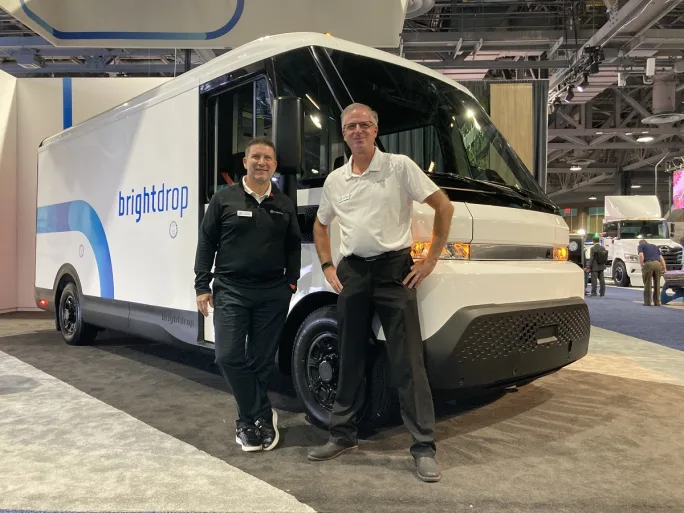
BrightDrop’s Steve Hornyak (left) and Brad Beauchamp stand in front of the Zevo 600 delivery van, which is already in FedEx fleets, with wider deliveries by the fourth quarter of 2023. BrightDrop is planning to produce 50,000 units by 2025 — a production run that will move markets with its sheer size.
Photo: Chris Brown
Walking this year’s show floor, it felt like the Gold Rush for commercial electric vehicles. By my unofficial count, there are now at least two dozen independent manufacturers of EVs looking to serve the Class 2b to Class 6 market — substantially eclipsing the incumbent OEMs in the ICE market. Throw in another handful (at least) for Class 7 and 8. Many were in Long Beach, some were not. Some will prevail, others won’t.
Should fleets looking to electrify take a chance on an independent OEM? The incumbents have a built-in advantage when it comes to funding, production capacity, sales footprint, timelines to market, and ability to service the vehicles.
But when it comes to vehicle engineering, my take has evolved: I’m not necessarily defaulting to the incumbent OEMs as the better choice, every time. There are independent makers building their own battery systems with the efficiency and energy density that rival or even surpass the technology of the majors. Some independents own their supply chains while some incumbents are outsourcing to rush EVs to market.
Of course, this only makes fleet managers’ jobs that much more difficult. They never had to make these tough decisions with ICE vehicles, as the technology and the automakers were proven. Add new uncertainties to the mix — supply chain disruptions and rising raw material costs are driving battery prices up after a decade of declines.
In addition to price increases, advancements in battery capacity have slowed, said Paul Beach, president of Octillion Power Systems, a global supplier of EV battery packs for cars, trucks, buses, and energy-storage systems. He's not counting on solid-state batteries as the big breakthrough to escalate EV adoption. “Battery prices aren’t coming down that much, so other things need to change,” Beach told me.
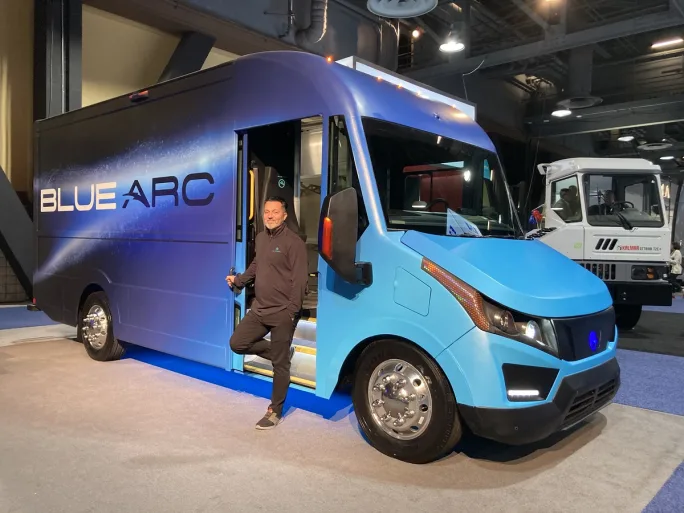
Eric Fisher of Blue Arc EV Solutions, a new division of Shyft Group, exits the company’s new Class 3 delivery walk-in van. In addition to the van and a modular chassis for various applications, Blue Arc is marketing Power Cube, a mobile EV charger that can charge up to 30 vehicles a day. The Power Cube could be a second-life home for batteries from electric vehicles.
Photo: Chris Brown
One solution is to monetize the entire lifecycle of the battery — from its first life in the vehicle, to a second life as a stationary power source, to the recycling process of extracting precious metals. Owners of the lifecycle can make money in each phase, and in turn offer a lower-priced vehicle lease in the first life, he said.
For fleets looking to electrify, the tough decisions begin well before acquiring the vehicle. Fleet managers will first need to exhaust grant opportunities, understand power needs, set up charging infrastructure, and figure out new software systems to manage all of it.
“Get EV infrastructure done” was a rallying cry at this year’s show, recognizing that the footprint of charging stations needs to grow by a multiple of seven. Shell — yes, the oil and gas conglomerate — is taking part in that growth. Shell operates 80,000 charge points globally today and is planning 500,000 by 2025 and 2.5 million by 2030. With a big presence at ACT, Shell has rolled out fleet programs for public charging as well as software for depot charging. It all ties into existing fueling programs.
After charging infrastructure, fleet managers will need to consider software to manage charging, energy costs, and operational data. For fleets already dealing with telematics, FMIS (fleet management information systems), and maintenance programs, this is one more integration and another learning curve.
Almost all EV manufacturers have proprietary software systems to manage their vehicles, and they promise — at least in theory — to connect to legacy programs through APIs. But if you’re fleeting EVs from various OEMs, you’ll still have to worry about multiple software programs. And if you decide to de-fleet from one EV brand and choose another, you’ll need to implement and learn yet another system.
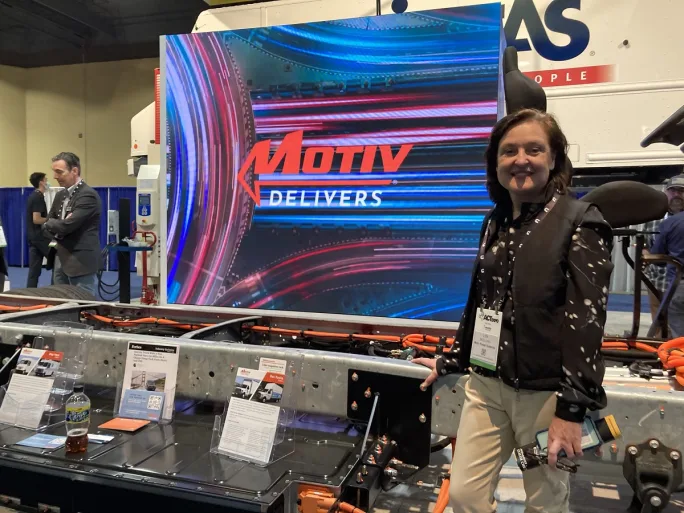
Lisa McClung, Motiv’s new president and chief commercial officer, said the company is broadening its scope to consult with fleets on the process of electrification, including interactions with the C-suite and other departments such as procurement. Motiv, which has been around since 2013, just released its six-generation battery with a higher torque motor and 150-mile range.
Photo: Chris Brown
Third parties are seizing the opportunity. EV Connect offers an open-source system that connects chargers, software, vehicles in one system and one app, with APIs to integrate with other fleet systems. “We’re going to make sure the whole thing works,” said Jon Leicester of EV Connect in an interview on the show floor. “Whether that’s charging at home, the depot, or in the wild, the idea is to connect them all.”
Remember the phrase “data is the new oil?” It’s been around for years, though we’re still just beginning to understand how to extract data from vehicles to make use of it. New solutions are coming online as the industry migrates from aftermarket modems to OEM modems installed at the factory.
I met with the team from Sibros at ACT. “We’re the secure pipeline from the vehicle to the cloud,” said Mayank Sikaria, cofounder and president of Sibros, a connected platform for fleets and automakers.
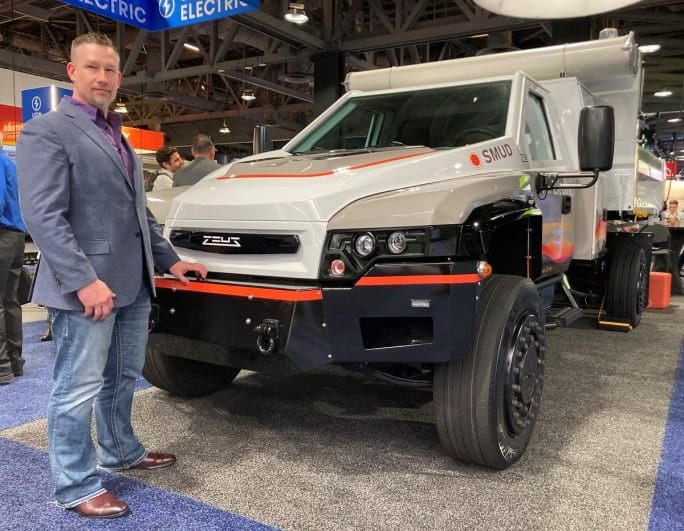
Zeus Electric Chassis (with Robert Grinstead, founder and COO) is going after the vocational medium-duty market with its Class 4-6 electric chassis.
Photo: Chris Brown
That pipeline allows the transfer of data that is then aggregated and normalized for use in vehicle diagnostics, fleet analytics, driver scoring, and security programs to protect from malware hacks. Data transfer is a two-way street, as Sibros enables over-the-air (OTA) updates to fix defects and deliver new connected services at mass scale.
Here’s another indicator of market evolution — autonomy has worked its way into the conversations at ACT Expo. While the general media fixates on robotaxis, the transportation industry sees more mundane uses for autonomy that solve big problems.
There is more immediate opportunity in fenced-in industrial areas with forklifts and yard tractors, and even depots in which the driver exits the bus or truck and allows the vehicle to park and charge. This leads the way to on-road, highly scheduled routes and long haul, hub-to-hub deliveries.
Not to be lost in these conversations is the “human in the loop of autonomy.” And this is, again, where the fleet manager’s job will grow.
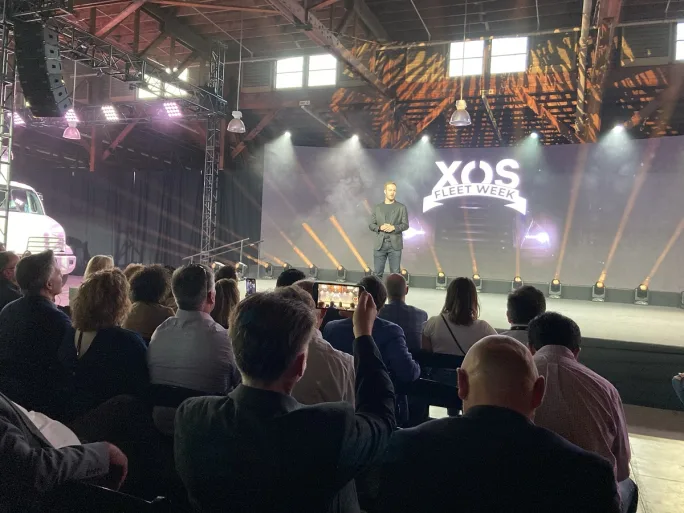
Dakota Semler, cofounder and CEO of Xos, announces the company’s new medium-duty MDXT and heavy-duty HDXT at an offsite event. The affair matched the grandeur of any incumbent manufacturer’s launch party.
Photo: Chris Brown
Drivers are traditionally responsible for driving, communication en route, trip reporting, and vehicle loading and unloading. In an autonomous environment, the computer takes over most of these functions but the fleet manager will be responsible for oversight and accountability, said Sam Saad of Gatik, an autonomous startup focusing on short-haul logistics.
Trips will need to be planned more precisely, including the process of domiciling the vehicles. “The idea is not for the human to take direct control, but to monitor remotely with a dashboard, and to approve vehicles’ recommendations when necessary,” Saad said.
Reimagining logistics around autonomy can deliver tangible benefits around more frequent deliveries, such as near real-time fulfillment of goods, avoiding stock outs, and allocating space away from storage to retail, Saad said.
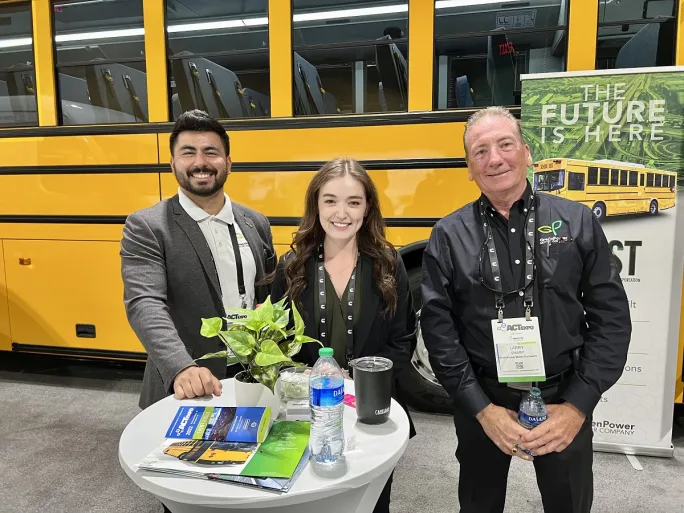
Troy Czegledy (left), Erica Baker, and Larry Sharp of GreenPower Motor Co. stand in front of the company’s electric school bus. GreenPower also produces electric transit buses, shuttles, a cargo van, and a cab and chassis. GreenPower is working with Perrone Robotics to retrofit mini transit buses with autonomous technology. The buses are in testing with the Jacksonville Transit Authority.
Photo: GreenPower
Finally, back to the evolution: In his closing keynote address, Cummins CEO Tom Linebarger seemed to echo Rosa of Penske’s comments five years ago. “We can’t give you a (Class 8) battery electric truck with the range you want now,” Linebarger said, though he stressed the importance of actively developing and implementing “partial solutions” such as hybrid technology today.
We’ll revisit that statement five years from now. For now, Linebarger summed up a prevailing industry sentiment: “We think we’ll grow and be profitable because we’re leaning into decarbonization, even if the math isn’t clear.”
Subscribe to Our Newsletter
More Blog Posts

How to Win a Fleet Manager Award: Make Your Nomination Count
Strong fleet accomplishments can go unrecognized when the nomination doesn’t make the case. Here’s what judges need to see.
Read More →
The Only Certainty with the New Tariff Threat Is Uncertainty
Trump’s Canadian tariff threat will not move production overnight, but the uncertainty could influence ordering and pricing now. Longer term, forces beyond tariffs may determine which North American plants survive.
Read More →
What Does It Mean to Embody the Spirit of Fleet?
Presented alongside Fleet Manager of the Year, Fleet Visionary, and Fleet Hall of Fame at AFLA, the new Mike Antich Spirit of Fleet Award is unique in that it recognizes service to the overall profession. Just like Mike.
Read More →
What Separates Great Fleet Managers From Everyone Else?
What do Visionary candidates with fewer than 10 years of experience have in common with Hall of Fame nominees with a lifetime under their belts?
Read More →
The Next Fleet War Won't Be Won on Specs Alone
The 2026 Stellantis Pro One Fleet Preview was less about vehicles and more about what happens after you buy them.
Read More →
Navigating Brundlefly and Fleet AI at 2026 NAFA I&E
AI is becoming the operating layer for fleets. In Cleveland, the buzz was about harnessing AI in an increasingly complex, permanently disrupted environment.
Read More →
8 Trends: Work Truck Week 2026 Reveals a Fleet Industry in Reset Mode
Walking the show floor this year, the new focus was around “practical innovation” and pragmatic solutions. And oh yeah, a new small van.
Read More →
The Moment AI Became Operational
“AI isn’t assisting us anymore. It’s doing the work,” said CEO Neil Cawse at Geotab Connect 2026. What does this mean for fleet managers?
Read More →
For Mike Antich, it Was Always About the People
He stood tall in the industry in so many ways, but he measured success by the people he served.
Read More →
Solving the Flexible-Lean Fleet Paradox
The lean fleets of yesterday are the fragile fleets of today. Where do we find the balance?
Read More →