





Read More: How a Fleet-as-a-Service Model Will Propel Electrification
Commercial EV Manufacturers: Separating Signal from Noise
While the commercial electrification market is growing, it’s not big enough for the number of players looking to sell into it. This is just another added pressure for fleets looking to electrify.
January 30, 2023

How can fleet operators strategize when it’s hard to tell which new OEMs will make it? It’ll take some vetting.
Photo: Canva
5 min to read
Sure, this upstart manufacturer hadn’t yet sold vehicles in North America. But the press event was in downtown LA, my town, so I wouldn’t be taking too much time out of my day.
At the event, I got some face time with the company’s founder. I got the low-down on the company’s ambitions and took some photos. The tech seemed groundbreaking, and the target price point was astounding. I got all the right answers and a lot of promises.
After the event, I got sidetracked with other stuff and my notes from the event sat in a folder for too long. But by that point, the news came out that the company was fighting for its financial life. That’s one story I’m glad I didn’t spend the time to write. How much of the founder’s enthusiasm would’ve made it into an article on a shiny new object that, at this point, might never make it into fleets? That’s for me to contemplate in hindsight.
Back in November 2019, I was in the room during the Night of Broken Glass, when Elon’s chief designer cracked the window of the Cybertruck. The same event in which Elon said the electric pickup truck would have a base range of 250 miles, payload capacity of 3,500 lbs., max towing capacity of 14,000 lbs., and a starting price of $39,900.
Elon didn’t talk about battery specs, but after 1.5 million reservations and counting, it doesn’t seem to be of prime concern. At least Elon has recommitted to a release timeframe (and a Tesla van “at some point.”) There are other new OEMs that have raised hundreds of millions of dollars for vehicle models that will likely never hit the road.
Tech Meets Auto Culture
Silicon Valley is officially joined at the hip with the auto industry. Tech culture is now inextricably entwined with auto culture, which was once called “staid.” Remember when?
Tech culture shakes trees, pushes boundaries, and breaks old things to make new things happen. This conjoining has brought technological advancement to the auto industry that has never been so swift. But tech culture also tolerates the “fake it until you make it” attitude, which sometimes comes with blue-sky press releases and unpaid exhibitor bills behind the scenes.
Back in the day, reps from one of those staid auto manufacturers wouldn’t have said in front of a group of journalists that a new planned model would be released in 18 months, if they weren’t reasonably certain they could pull it off. Today, it’s not uncommon to hear “We expect volume production in 18 months,” though a manufacturing plant and the capital to volume produce are works in progress.
In all this, progress in the vehicle electrification market has been astounding. Five years ago few would’ve predicted that in 2022, EV sales would account for 5.8% of all new cars sold in the U.S., up from 3.2% the year before, in an overall market that has shrunk.
Yet the amount of press coverage on electrification — compared to actual sales — is overwhelming. This signal-to-noise ratio imbalance is enough to turn away fleet operators. How can you strategize when it’s hard to tell what’s real?
Commercial EV Sales Math
The spike in EV sales penetration has been on the passenger vehicle side. The electrification market for commercial vehicles has just begun.
There are at least 30 new automakers producing, or with plans to produce, commercial electric chassis for Class 1 to Class 7. This is in addition to the incumbent OEMs producing their own EV chassis as well.
According to NTEA data, yearly sales into the U.S. commercial vehicle market break down roughly like this: Classes 1-2, about 2.8 million units; Classes 3-5, 560,000, and Classes 6-7, 90,000. (Sales of tractors in Class 8 are about 890,000.) Sales of commercial EVs represent a fraction of 1% at this point.
Of course, sales will ramp up over the next few years, but will there be a hockey stick inflection point? Can these new OEMs fulfill an overhang in demand because of disruptions and delays at the majors? Can they carry costs until then? It’s still too early to say.
That’s an overwhelming number of OEMs looking to sell into this small, albeit growing, pool. Meanwhile, infrastructure buildout is progressing, though slower than anticipated. The math doesn’t add up to allow for 30 to survive.
But this is not the time for fleets to dismiss it all out of hand, however. There is meaningful progress, lots of it. It’s time to get educated, which will come from outside research and asking questions of the manufacturers themselves.
Find out:
What are the OEM’s intended market segments, and who are its competitors?
Has the OEM contracted with manufacturing partner yet?
Does the stated production timeline align with manufacturing ramp up?
Is battery production in-house or outsourced? What components are outsourced?
Who are its largest financial backers?
Is the company publicly traded, or planning to go public?
Is it going with direct sales or a franchise dealer model?
What dealer, servicing, upfitter, and vehicle charging partnerships are in place?
What is its software strategy?
And let’s not forget — how does the vehicle drive? Are the drivability, ergonomics, capacities, and overall build quality sufficient for your jobs?
Even if the market corrects (which seems to have already begun) this research won’t be in vain, as it adds to an overall education that will prompt confident choices when the time is right, with the right partners.
There are billions upon billions of dollars being pumped into electrification. We can argue about the timeline and the penetration rate, and fret about the considerable challenges to work through. For all the noise, electrification is happening.
Fleet operators are being thrust into new requirements of verification on new vehicles and technologies. Meanwhile it’s incumbent upon us in the automotive trade media to help them separate that signal to noise.
Subscribe to Our Newsletter
More Blog Posts

How to Win a Fleet Manager Award: Make Your Nomination Count
Strong fleet accomplishments can go unrecognized when the nomination doesn’t make the case. Here’s what judges need to see.
Read More →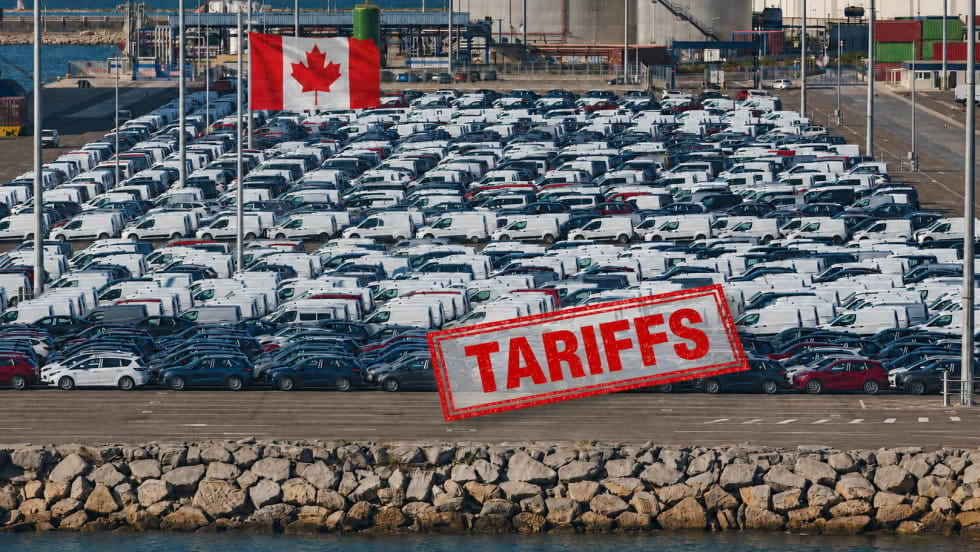
The Only Certainty with the New Tariff Threat Is Uncertainty
Trump’s Canadian tariff threat will not move production overnight, but the uncertainty could influence ordering and pricing now. Longer term, forces beyond tariffs may determine which North American plants survive.
Read More →
What Does It Mean to Embody the Spirit of Fleet?
Presented alongside Fleet Manager of the Year, Fleet Visionary, and Fleet Hall of Fame at AFLA, the new Mike Antich Spirit of Fleet Award is unique in that it recognizes service to the overall profession. Just like Mike.
Read More →
What Separates Great Fleet Managers From Everyone Else?
What do Visionary candidates with fewer than 10 years of experience have in common with Hall of Fame nominees with a lifetime under their belts?
Read More →
The Next Fleet War Won't Be Won on Specs Alone
The 2026 Stellantis Pro One Fleet Preview was less about vehicles and more about what happens after you buy them.
Read More →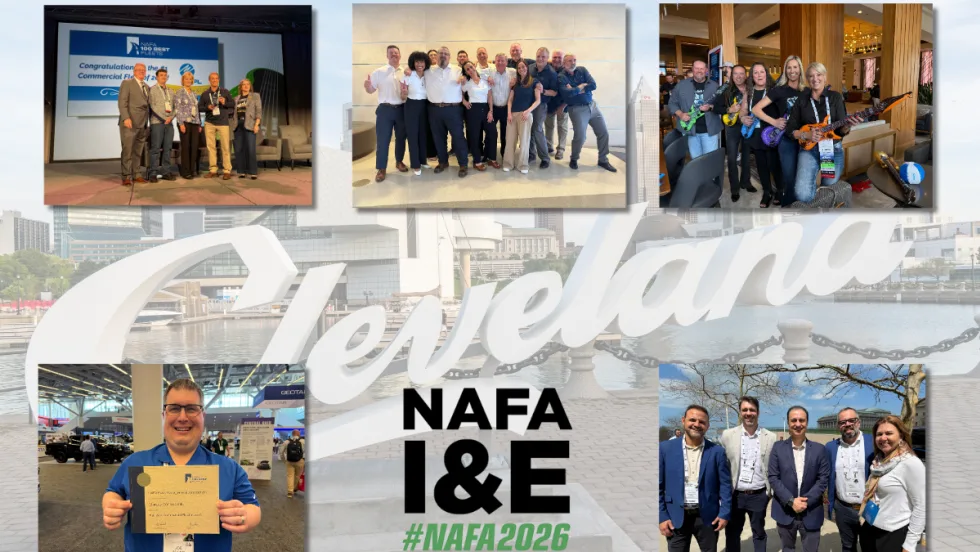
Navigating Brundlefly and Fleet AI at 2026 NAFA I&E
AI is becoming the operating layer for fleets. In Cleveland, the buzz was about harnessing AI in an increasingly complex, permanently disrupted environment.
Read More →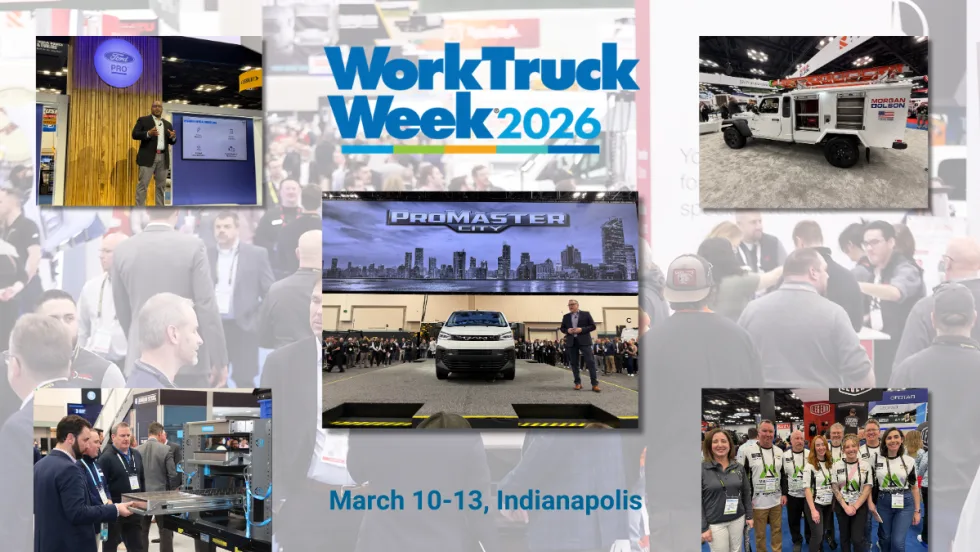
8 Trends: Work Truck Week 2026 Reveals a Fleet Industry in Reset Mode
Walking the show floor this year, the new focus was around “practical innovation” and pragmatic solutions. And oh yeah, a new small van.
Read More →
The Moment AI Became Operational
“AI isn’t assisting us anymore. It’s doing the work,” said CEO Neil Cawse at Geotab Connect 2026. What does this mean for fleet managers?
Read More →
For Mike Antich, it Was Always About the People
He stood tall in the industry in so many ways, but he measured success by the people he served.
Read More →
Solving the Flexible-Lean Fleet Paradox
The lean fleets of yesterday are the fragile fleets of today. Where do we find the balance?
Read More →