





Related: It's Time to Instill Urgency with CARB's Advanced Clean Fleets Rule
ACT Expo 2024 Takeaways: Sustainability Goals, Meet Financial Realities
As the electrification market inches from the pilot phase to everyday use cases, the magnitude of the effort — and the cost — came into sharper focus at the industry's biggest clean transportation event.
May 28, 2024
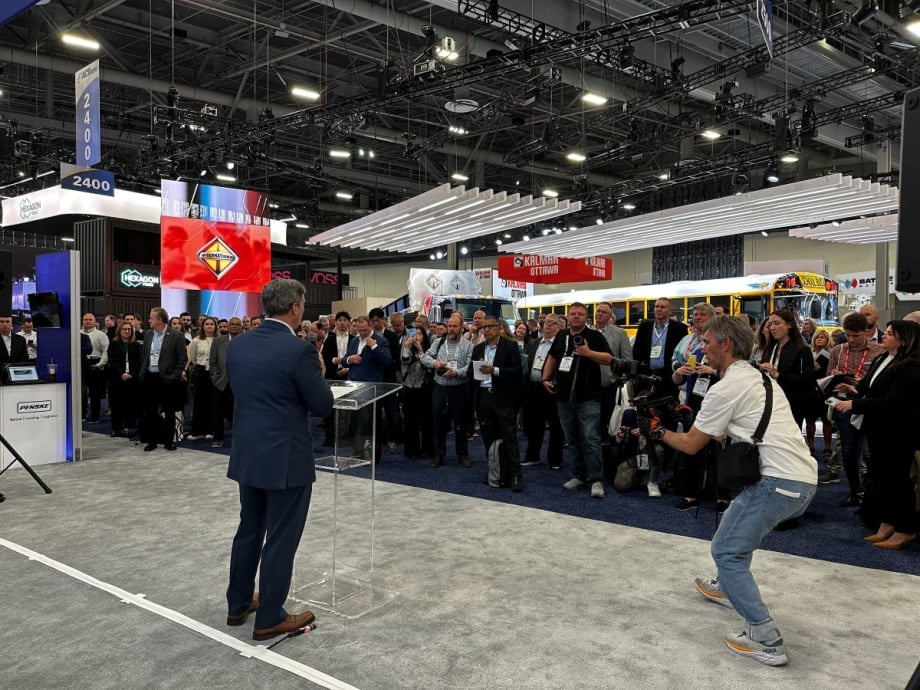
The 2024 ACT Expo show floor had over 500 exhibitors and 14 press conferences, including this one with Penske Transportation Solutions and ForeFront Power announcing a new joint venture to help commercial fleets with charging infrastructure solutions.
Photo: Chris Brown
10 min to read
With record-breaking attendance and nearly 500 exhibitors this year, the ACT Expo has become one of the most important trade events for the commercial vehicle industry. Befitting its name, the annual conference showcases the latest in Advanced Clean Transportation involving electrification, hydrogen, alt-fuels, and autonomous technologies.
Yet the number of actual sales of electric and hydrogen trucks to date belies the massive investment and activity in clean tech. In 2023, 10,265 electric units registered in the U.S. in Classes 2b to 8 out of over 500,000 medium- and heavy-duty new vehicle sales, for a penetration of 2%.
This percentage will grow meaningfully over the next few years. But as the market inches from the pilot phase to replacing fossil fuel-powered internal combustion engines in everyday use cases, the magnitude of the conversion is hitting suppliers, fleets, and regulators with full force.
This combination of complicated regulations and new technologies is producing “a period of peak complexity for fleet operators,” as affirmed in GNA’s 2024 State of Sustainable Fleets report issued in conjunction with ACT Expo, held this year at the Las Vegas Convention Center.
This reality led to a more sober tone in the addresses from the stage this year in ways that hadn’t been seen in the event’s 14-year history.
Here are nine high-level takeaways from the 2024 ACT Expo distilled from my meetings and seminar engagement. Of course, I was just one of 12,000 attendees.
Battery-electric trucks don’t make economic sense for most use cases at present.
This is not an earth-shattering conclusion, but speakers presented data and studies at this year’s convention to demonstrate the realities.
Shelley Simpson, president of J.B. Hunt, shared the results of a J.B. Hunt “Well to Wheel Impact” study on lifecycle emissions profiles and associated costs to convert to alternative modes in Class 8 transportation compared to diesel.
The study considers vehicle and energy production, distribution, and emissions across various solutions, including intermodal (containers by rail, sea), renewable diesel, renewable natural gas, battery electric vehicles, and fuel cell hybrid electric vehicles.
The takeaway: in dollars per reduction in carbon emissions, intermodal is the clear winner, and renewables perform well, but converting to electric and fuel cells is prohibitively costly compared to what the market can bear today.
(Importantly, the study did not consider drayage operations or regional hauls such as beverage deliveries, which would be made with overall mileage that could fit into existing ranges.)
In another seminar, Ryder System CEO Robert Sanchez revealed results from a Ryder study that analyzes the total cost to transport (TCT) for transitioning a Class 4 van, Class 6 straight truck, and Class 8 tractor-trailer operating in California and Georgia from an ICE to electric.
Given the differences in payload, range, and charging time between ICE and EV heavy-duty commercial vehicles, the report estimates that nearly two EVs and more than two drivers are needed to equal the output of one ICE vehicle.
The Class 6 straight truck example produced a 22% and 28% increase in Georgia and California. On the Class 8 side, the cost increase is 94% to 114% over transport using ICE trucks.
However, electrifying lighter commercial vehicle classes does approach favorable economics:
The Ryder study also analyzed a short-haul delivery route of about 80 miles per day using a Class 4 electric cargo van. The results projected a mere 3% to 5% increase over using an ICE cargo van.
Fleets’ customers are reluctant to pay a premium for decarbonization.
Simpson said that J.B. Hunt’s customers are interested in sustainability, but not when the premium they’ll pay to achieve it puts them at a disadvantage to their competitors. Simpson said J.B. Hunt offers a carbon offset program, but no clients have taken it up.
Sanchez echoed this assertion. “(Ryder has) a lot of the pieces of the puzzle ready, but we just haven't seen customers jump in,” said Sanchez later in a one-on-one meeting.
“(Ryder’s customers) want to decarbonize, but if the business down the street is doing the same thing at a significantly lower cost, that puts them at a significant disadvantage in the marketplace.”
In another seminar, Andy Walz of Chevron said his company could produce a gasoline variant with a lower carbon intensity, but if given the choice at the pump, customers would go for the lowest price.
The Tesla Semi just might satisfy over-the-road use cases. We’ll see in 2026.
The battery range for currently available electric semis averages 250 to 275 miles, contributing to the imbalance in Ryder’s TCT calculations regarding extra labor and trucks to achieve the same output.
Tesla is upping the ante. After years of delays, Tesla expects the truck to enter serial production in 2026. For now, Tesla is reporting data from tightly controlled tests.
Dan Priestley, senior manager of the Tesla Semi program, said internal tests with substantial payloads show the Tesla Semi is able to consume 1.7 kWh per mile, giving the truck up to 500 miles on a single charge.
As part of NACFE’s Run on Less tests, three Tesla Semis achieved ranges of 376, 416, and 546 miles at close to full payloads.
Priestly said that with the buildout of Tesla’s Megachargers, which can deliver 70% of range in 30 minutes, the daily logistics will begin to replicate traditional duty cycles. However, editor Jim Park of sister publication Heavy Duty Trucking reports there are still questions around the Tesla Semis performance and claims.
Renewable diesel and renewable natural gas are a growing part of the toolkit to reduce carbon emissions, but sourcing and refining feedstocks into fuel — and measuring reductions — are complicated.
The big trend in the biofuels market is renewable diesel and natural gas, which can reduce greenhouse gas emissions by 75% to 95% — and even produce a net negative carbon impact — yet are compatible with present diesel and natural gas engines and fueling infrastructure.
Renewable diesel is expected to grow 30% yearly for the next two years. Still, renewable diesel production is less than 5% of fossil diesel production. Can that share increase meaningfully in the next 10 years?
I connected with Matt Leuck of Neste, the world's largest producer of renewable diesel, at the expo. Leuck shared that the process of collecting and refining feedstocks such as recycled cooking oil, vegetable oils, and animal fats to make renewable diesel is intensive. And interoperability with fossil diesel engines can make demonstrating GHG reductions difficult.
Further, the varying carbon intensities of feedstocks make data reporting difficult too.
Western states with carbon credits produce diesel price parity. More states adopting carbon credits would accelerate the renewables market, Leuck said.
Mobile off-grid charging systems are helping to solve local infrastructure issues — and even wider grid capacity challenges.
Mobile EV charging systems were initially considered a stopgap until permanent infrastructure was built, particularly if they could be run on renewable natural gas or diesel. But they’re now being worked into permanent plans to allow for grid flexibility, such as in areas with temporary but regular demand spikes (like yearly events).
But these off-grid chargers may be part of a broader grid capacity solution. Within the Pioneer eMobility display on the show floor was Macaw Energies, which siphons energy from gas flare stacks at industrial power plants for net negative carbon capture.
The gas, sold at pennies on the dollar, is immediately liquified for transport and then de-liquefied into one of Pioneer’s “microgrids on a skid.” A single siphon can produce up to 75 megawatts of power to power a fleet of 75 semis monthly.
Pioneer is piloting the technology in West Texas in an area with insufficient grid capacity for EV charging.
Regulations will increasingly disrupt traditional truck buying cycles.
On the heavy-duty side, EPA’s 2027 Greenhouse Gas Emissions Standards for Heavy-Duty Vehicles – Phase 3 will lower engine NOx output but come with an estimated $30,000 price increase for a new semi.
Brian Antonellis of Fleet Advantage predicts a pre-buy of existing technology that could begin in 2025 and run through 2026. He warned that the scramble for non-2027 trucks could compel the OEMs to institute another allocation system, leaving fleets that haven’t properly planned holding unfulfilled orders.
He advised that fleets consider their replacement strategies and start planning at least 36 months in advance.
In addition to EPA 2027, three other regulations from the California Air Resources Board (CARB) will affect the large swaths of the market: the Low NOx Omnibus, Advanced Clean Fleets, and Advanced Clean Trucks.
“If a fleet is pushing out procurement cycles to avoid engine changes, it's going to be harder and harder to purchase those combustion trucks as time goes on, and especially as more states adopt ACT,” said Harmony Gates of GNA, a TRC Company and the owners and event producers of ACT Expo, a regulations compliance seminar.
Onsite energy management must become part of a fleet manager’s expertise and is developing into a larger business model.
Planning infrastructure requires planning how much usable energy is coming into your site. The answer will affect your infrastructure costs and the number of vehicles you can charge with your present capacity.
With the right energy and charging management, it’s likely you can charge more EVs on your site than you initially thought.
“Charge management can be seen as a capital cost reduction tool,” said Jackie Piero of Mobility House in a sit-down. “If you implement automated load management, you won’t exceed your site's power capacity and can avoid a utility upgrade.”
This model could alleviate fleets’ “guess and check” paradigm with utilities, where fleets ask for an upgrade, the utility says no, and the fleet tries again with little visibility.
In a larger sense, a third party such as Mobility House could aggregate multiple fleets’ needs and broker negotiations with multiple utilities.
Further consolidation is inevitable in the Class 3-6 electric truck maker market.
Generally, the incumbent automakers are dominating EV production and sales in the light-duty passenger car market and the heavy-duty Class 8 market. This leaves the Class 3-to-6 middle for an ever-shifting group of startup OEMs and some traditional players.
But there isn’t enough space for all those players to survive. Take the step van market, which sees about 30,000 units in total sales each year. EVs will encroach incrementally into that 30,000, but slowly. Meanwhile, the truck makers looking to take a piece of that pie have doubled.
Some high-profile commercial EV makers have gone bankrupt in the last 12 months, yet new entrants were on this year’s show floor.
School bus maker Blue Bird was at the show with its new step van. (Blue Bird had originally sourced its chassis from Lightning eMotors, which has declared bankruptcy. The powertrain is new sourced from electric truck maker Xos.)
For fleets skittish about taking a chance on a startup truck maker, Blue Bird is banking that fleets will opt for a company with a 97-year history to give fleets confidence they’ll be able to service the vehicle for its lifetime.
It’s “just do it” time.
The products are finally coming to market. Highly regulated markets like California have incentives that can exceed the premium for the electric vehicle and they're waiting to be tapped. Those regulations are coming to pass.
One thought process that came across from the stage and in conversations was that it’s “just do it” time for fleets. Those deciding not to start will be at a disadvantage to those that have started.
Utilities that said a site had enough power may no longer say that in three years when that fleet’s neighbors have the power they need. Fleets with their heads in the sand regarding regulatory compliance will have fewer options when the regulators come chasing with their enforcement sticks.
Another urgency often gets lost in these conversations and concerns the environment, the reason we’re doing this in the first place.
There are substantial health and financial benefits to air pollution reductions and gargantuan costs associated with global warming. Unfortunately, they are disassociated with businesses needing to do everything possible to keep their competitive advantages.
How can we bridge this gap? Roger Alm, president of Volvo Trucks, said, “emitting CO2 must come with a cost,” to mild applause.
Later, Walz of Chevron said California’s regulatory market makes the state “uninvest-able” to greater applause.
Meanwhile, progress is being made: J.B. Hunt has lowered its fleet’s greenhouse gas emission intensity by 18% since 2019 and is sticking to the goal of reducing its carbon emission intensity by 32% by 2034.
Can we meet in the middle to find better ways to recognize one organization’s sustainability efforts and tie it to the larger environmental crisis?
Subscribe to Our Newsletter
More Blog Posts

How to Win a Fleet Manager Award: Make Your Nomination Count
Strong fleet accomplishments can go unrecognized when the nomination doesn’t make the case. Here’s what judges need to see.
Read More →
The Only Certainty with the New Tariff Threat Is Uncertainty
Trump’s Canadian tariff threat will not move production overnight, but the uncertainty could influence ordering and pricing now. Longer term, forces beyond tariffs may determine which North American plants survive.
Read More →
What Does It Mean to Embody the Spirit of Fleet?
Presented alongside Fleet Manager of the Year, Fleet Visionary, and Fleet Hall of Fame at AFLA, the new Mike Antich Spirit of Fleet Award is unique in that it recognizes service to the overall profession. Just like Mike.
Read More →
What Separates Great Fleet Managers From Everyone Else?
What do Visionary candidates with fewer than 10 years of experience have in common with Hall of Fame nominees with a lifetime under their belts?
Read More →
The Next Fleet War Won't Be Won on Specs Alone
The 2026 Stellantis Pro One Fleet Preview was less about vehicles and more about what happens after you buy them.
Read More →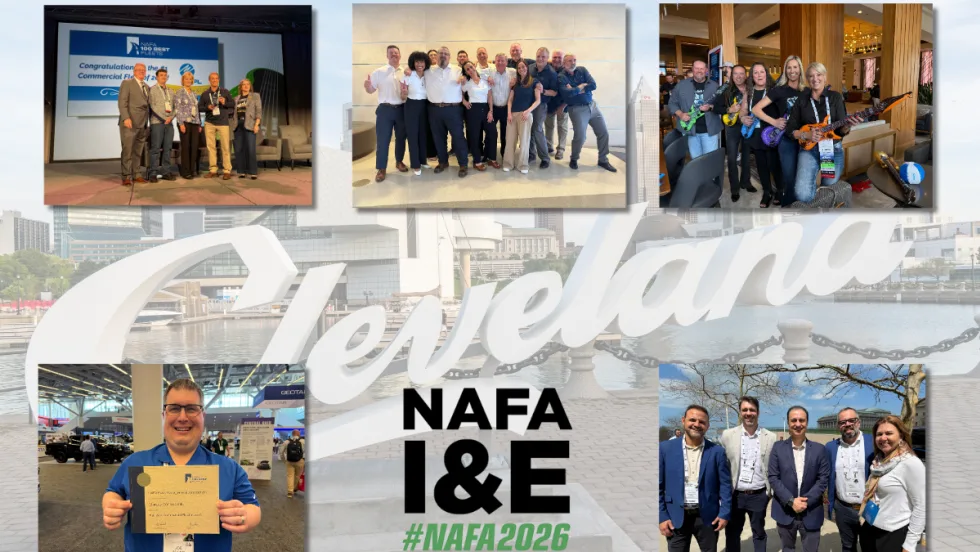
Navigating Brundlefly and Fleet AI at 2026 NAFA I&E
AI is becoming the operating layer for fleets. In Cleveland, the buzz was about harnessing AI in an increasingly complex, permanently disrupted environment.
Read More →
8 Trends: Work Truck Week 2026 Reveals a Fleet Industry in Reset Mode
Walking the show floor this year, the new focus was around “practical innovation” and pragmatic solutions. And oh yeah, a new small van.
Read More →
The Moment AI Became Operational
“AI isn’t assisting us anymore. It’s doing the work,” said CEO Neil Cawse at Geotab Connect 2026. What does this mean for fleet managers?
Read More →
For Mike Antich, it Was Always About the People
He stood tall in the industry in so many ways, but he measured success by the people he served.
Read More →
Solving the Flexible-Lean Fleet Paradox
The lean fleets of yesterday are the fragile fleets of today. Where do we find the balance?
Read More →