





Keep Reading! Company Vehicle or Reimbursement? How Fleets Are Rethinking Assignments
What Fleet Managers Really Want from Automakers
As automakers expand beyond vehicle sales into connected services, data, and support, industry representatives at the 2026 Fleet Forward Conference discussed what fleet managers need from their OEM partners.
November 24, 2026
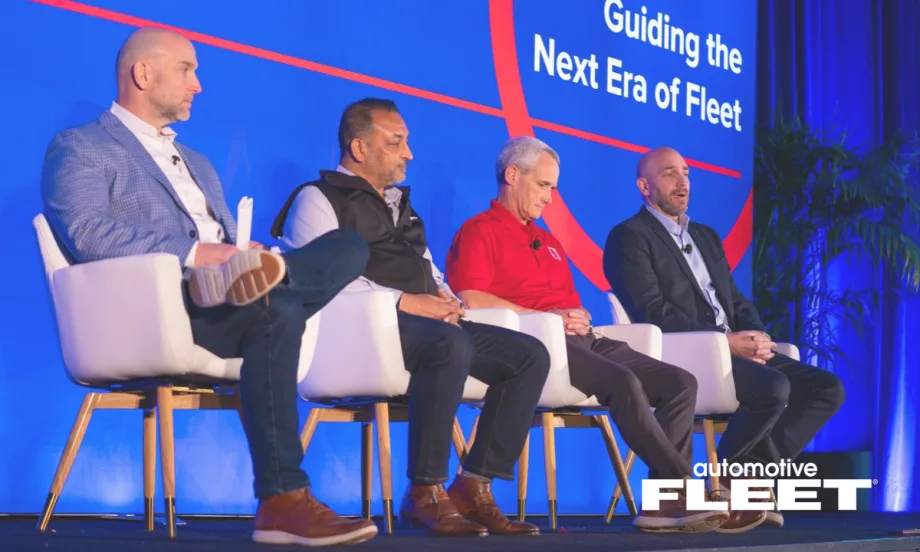
Pictured at the 2025 Fleet Forward Conference session What Fleets Want: the Future of the Fleet-OEM relationship: Bob Adamsky, an industry veteran with more than 30 years of experience; Jeff Shields of General Motors' OnStar division; Eddie Nath, head of North America sales and business development for Mobilisights; and Matt Krukin of Ford Pro.
Credit:
Nick Minton / Automotive Fleet
7 min to read
- Automakers are increasingly moving beyond just selling vehicles to offering connected services, data, and support.
- Industry experts highlighted fleet managers' needs from Original Equipment Manufacturers (OEMs) at the 2026 Fleet Forward Conference.
- Understanding the evolving requirements of fleet managers is crucial for automakers aiming to meet industry demands.
*Summarized by AI
For fleet managers, the relationship with an automaker has traditionally centered on vehicles. But as OEMs expand their connected vehicle tech, their role is extending beyond sales.
Fleet managers are increasingly looking to manufacturers for more than vehicle availability. They want better visibility into production planning, access to actionable data, and services that help manage downtime and safety costs.
That evolving relationship was the focus of a panel discussion at the 2026 Fleet Forward Conference, "What Fleets Want: The Future of the Fleet-OEM Relationship."
Moderated by Diana Holland, founder and owner of fleet consulting firm CAVIS, the discussion featured Bob Adamsky, an industry veteran with more than 30 years of experience; Jeff Shields of General Motors' OnStar division; Eddie Nath, head of North America sales and business development for Mobilisights; and Matt Krukin of Ford Pro.
Fleet Managers Want Partners Who Understand Their Business
For Adamsky, one of the most important aspects of an OEM relationship is understanding how vehicles fit into a fleet's daily operations.
"I consider the partnership with all the OEMs probably one of the most critical," he said, emphasizing that communication should happen throughout the year, not just during annual capital expenditure planning.
Fleet managers need to know whether a vehicle model will remain available, whether configurations will change, and how production timelines could affect replacement schedules.
Those questions become especially important for fleets operating specialized trucks and vans that require upfits.
Adamsky shared an example from his career involving a large order of heavy-duty trucks in a particular color. When the manufacturer later discontinued that color, the fleet had to wrap the vehicles.
While a change in vehicle color might seem minor, it created additional work for the fleet.
And for fleet managers responsible for keeping vehicles available, the reasons behind those changes don't necessarily matter to the organizations they serve.
"Most of us work for companies where our job is to make sure we're supplying vehicles and equipment," he said. "They really are not involved in: does the OEM make a change? It's, 'Did you deliver 25 vehicles per week?"’
The bottom line is that production and configuration changes can affect business operations.
Communication Can't Stop After the Vehicle Order
If there's one thing fleet managers want more of from OEMs, it's visibility into what's coming next.
For organizations planning replacements years in advance, unexpected changes to model availability, production schedules, or powertrain options can complicate purchasing.
Krukin acknowledged that manufacturers don't always have all the answers.
"Even the sales teams, the account teams, the account managers don't always know what's coming on the vehicles," he said.
He explained that last-minute manufacturing changes can sometimes leave OEM representatives learning about developments only shortly before their customers.
Still, Krukin encouraged fleet managers to maintain regular contact with their account teams, participate in customer advisory groups and schedule quarterly business reviews.
"Stay close with your account teams," he said. "Bring up the fact that you're concerned over something and ask the questions."
Nath emphasized that communication needs to work both ways.
"Yes, the OEM has responsibility, but so do you," Nath said. "We are in this partnership; we are in this game together."
He encouraged fleet managers to share their challenges and future needs with manufacturers, explaining that customer feedback can help influence technology and product development.
For fleet managers, that means communicating not only what vehicles they need today, but also what challenges they expect to face in the coming years.
OEMs Are Becoming Service Providers, Not Just Manufacturers
As automakers expand their connected vehicle offerings, their relationships with fleet customers are increasingly extending into software, data and ongoing support.
Nath described this shift through what he called the "digital thread," a continuous connection between the vehicle, manufacturer, and fleet operator throughout the vehicle's lifecycle.
That connection can provide information across several stages of fleet operations, including vehicle delivery, upfitting, maintenance, fuel management and remarketing.
"So that digital thread never breaks, never leaves the vehicle," Nath said. "It is always connecting us to you."
For manufacturers, the goal is to use that connection to provide services beyond the initial vehicle purchase.
Shields described a similar shift at GM, where connected vehicle services are increasingly focused on helping fleets turn information into decisions.
He explained that manufacturers are looking beyond individual features to consider how vehicle data can help fleet managers improve uptime and manage total cost of ownership (TCO).
Krukin also emphasized the growing role of software in the OEM relationship.
He said fleet managers are increasingly asking manufacturers about data connections, application programming interfaces (APIs) and integrations with existing systems, alongside traditional vehicle specifications.
"Do you have the enhancements? Do you have the data connections? Do you have the APIs? Have you built those integrations?" Krukin said.
As OEMs continue developing these capabilities, fleet managers may need to evaluate manufacturers not only on vehicle specifications and availability, but also on the digital services and support they provide throughout the vehicle's lifecycle.
Managing Multiple OEM Platforms Remains a Challenge
While connected vehicle technology can provide fleet managers with additional information, accessing that data across multiple manufacturers presents challenges.
Many commercial fleets operate vehicles from several OEMs, each with its own connected services, platforms, and data capabilities.
Shields, who previously managed mixed fleets, acknowledged the difficulties of working across multiple systems.
"When I was a fleet manager, clearly I did not want to be in multiple platforms," he said. "I didn't want to be managing my fleet through Excel files."
He explained that OEMs can work with fleet management companies, telematics service providers and internal technology teams to make embedded vehicle data accessible through existing systems.
Krukin shared an example of a large fleet customer using 12 different systems to access its data.
"We've got to find a way to converge that, bring that together at the end of the day," he said.
The panelists acknowledged that greater integration between OEM platforms and third-party systems could help fleet managers manage connected vehicle information more effectively.
However, Krukin noted that getting manufacturers to work together can be complicated by privacy concerns and other considerations.
For fleet managers, the question is whether an OEM's digital services can integrate with the systems they already use, rather than requiring another platform to manage.
Fleet Managers Need Actionable Data, Not Just More Data
Beyond accessing vehicle information, fleet managers also need to determine which data is useful to their operations.
Adamsky said the growing amount of information available from OEMs can become overwhelming, particularly when fleets have different operating requirements.
"Us fleet managers want data that we need for our business," Adamsky said. "Sometimes it's just too much data."
He emphasized that even organizations operating similar types of fleets may have different financial considerations, vehicle requirements, and performance priorities.
Nath explained that Mobilisights has access to approximately 13,000 vehicle signals, but providing every available data point isn't necessarily useful to fleet operators.
Instead, he said OEMs need to organize information around specific business objectives, including lowering TCO, reducing unplanned downtime and improving driver safety.
Shields pointed to predictive maintenance as an example of how connected vehicle data could become more actionable.
While fleet managers can plan around scheduled maintenance, unexpected breakdowns are more difficult to manage.
"It's really the unscheduled downtime that kills you," Shields said.
He discussed how diagnostic trouble codes, vehicle alerts, and AI capabilities could help identify potential maintenance concerns before a vehicle breaks down.
For example, fleet managers could use connected vehicle systems to identify vehicles experiencing low tire pressure, engine warning lights or other issues that may require attention.
The panel also discussed how OEM data can support driver safety and risk management, including identifying driving behaviors and providing in-vehicle alerts.
What Fleet Managers Want From Their OEM Partners Moving Forward
As the panel concluded, Holland asked Adamsky what he most wanted manufacturers to understand about fleet operators' needs.
His response returned to the importance of communication and transparency.
"Be a partner, understand our business, talk to us," Adamsky said. "Tell us what changes are coming, good or bad."
He emphasized that fleet managers often plan capital expenditures two or three years in advance, making information about future vehicle availability, configurations, and powertrain changes especially important.
"Don't be afraid to tell us bad news," he added.
Although automakers are expanding their offerings into connected services, software and data, the discussion reinforced that fleet managers still need the fundamentals of a strong OEM relationship: consistent communication, reliable vehicle planning and an understanding of their business.
As manufacturers take on a larger role in fleet operations, the value of those relationships will increasingly depend on how effectively they connect their vehicles, technology and services to the needs of the fleets they serve.
Subscribe to Our Newsletter
More Fleet Forward
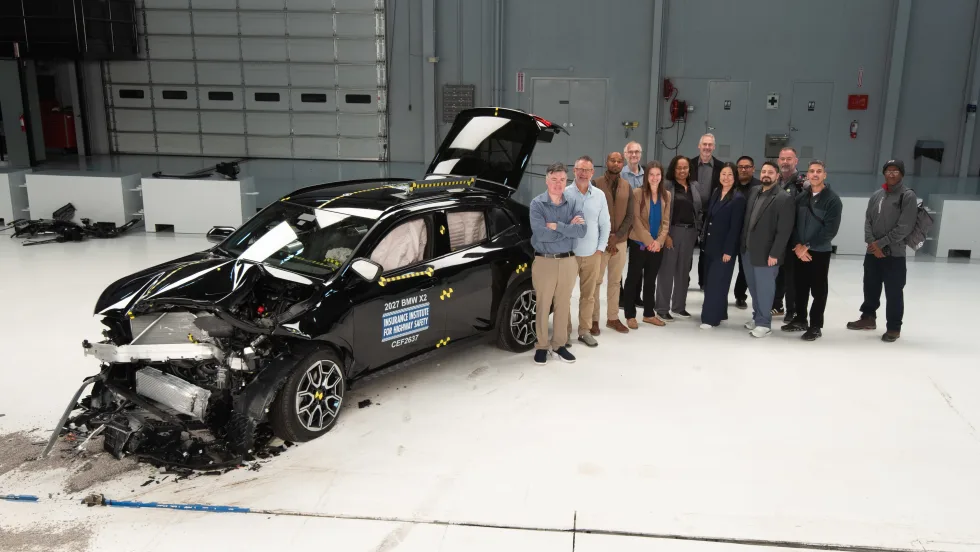
What Fleet Managers Learned from IIHS Crash Testing
Fleet Forward Conference attendees witnessed a live crash test at IIHS’s site, explored vehicle safety technology, and learned how IIHS research can inform fleet purchasing decisions.
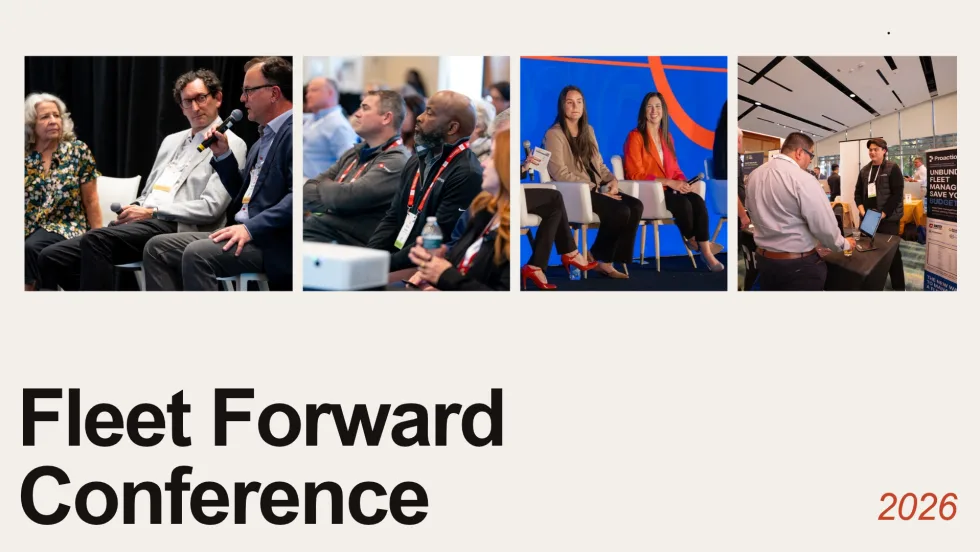
What Happened at Fleet Forward Conference 2026?
Here's what happened at this year's Fleet Forward conference, all in photo form.

Chad Edmondson Named 2026 Fleet Safety Award Winner
The VSC Fire & Security fleet director oversees more than 1,100 assets nationwide. His approach to improving driver safety emphasizes collaboration, employee engagement, and building trust with the people behind the wheel.
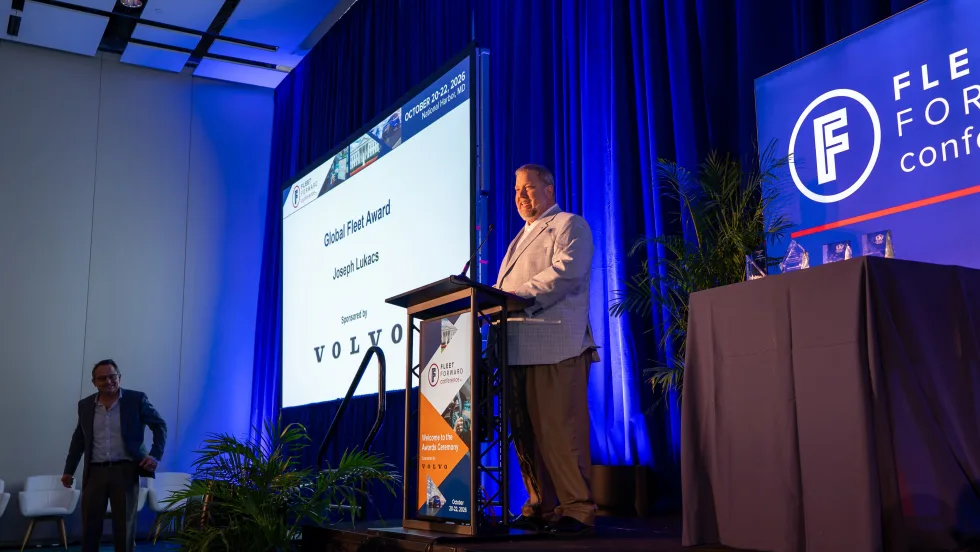
Joseph Lukacs Wins 2026 Global Fleet Manager of the Year
The Sherwin-Williams fleet leader adds another industry honor to his career after being named the 2025 Edward J. Bobit Professional Fleet Manager of the Year.
Fleet Meets: Brett Bridges
Meet Brett Bridges, project leader and industry innovator.
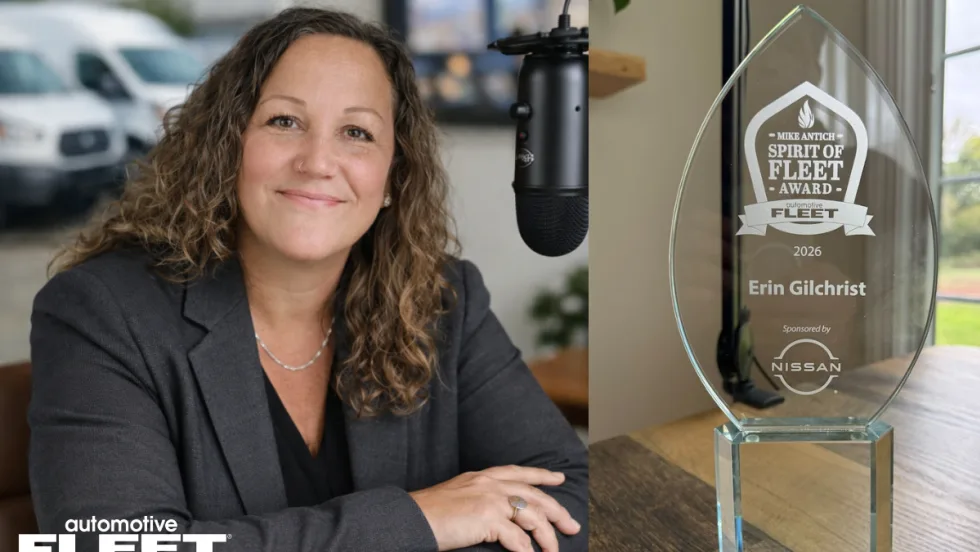
Erin Gilchrist Receives Mike Antich Spirit of Fleet Award
Last week at AFLA in Vegas, Erin Gilchrist received the inaugural, brand-new Spirit of Fleet Award.
Dominika Leja Named the 2026 Fleet Manager of the Year
The AstraZeneca associate director of fleet was recognized for her leadership in fleet electrification, cost savings, and operational transformation.
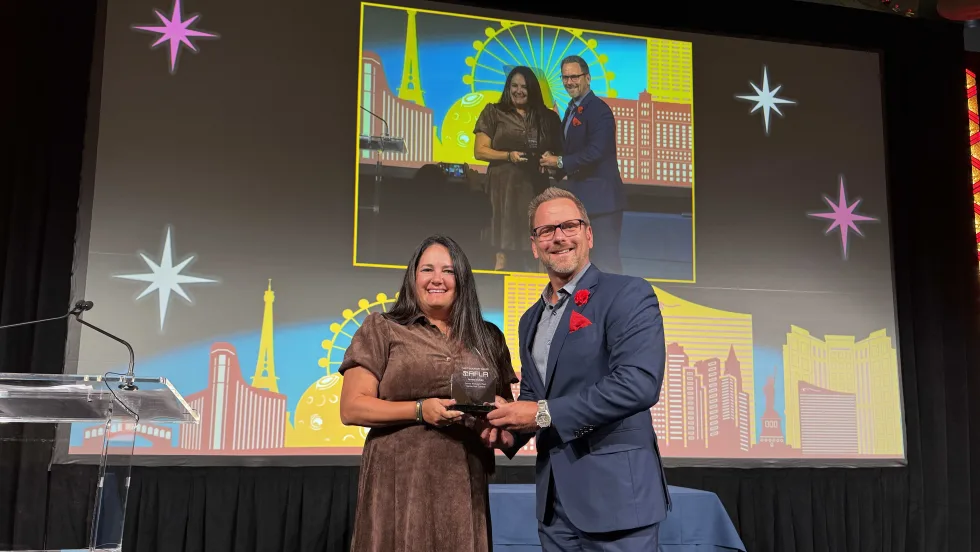
Jamie McKay Named the 2026 Fleet Visionary Award Winner
The Aptive Pest Control fleet manager was recognized for her approach to operations, data, lifecycle management, and driver needs.
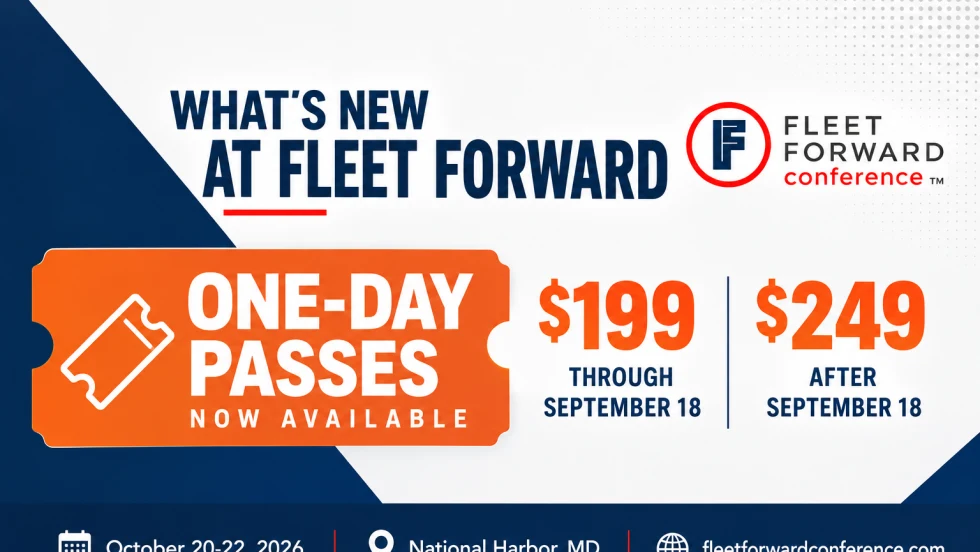
Fleet Forward Conference Introduces One-Day Passes for 2026
New one-day registration gives fleet professionals the flexibility to attend Tuesday, Wednesday, or Thursday, with passes available for $199 through Sept. 18.

Vibe Coding: When Fleet Managers Become Software Builders
Five fleet professionals — none with programming skills — discuss how they’re using AI to build fleet solutions in-house and in a fraction of the time.