




Valero Saves 6.5 CPM With Fleet Right-Sizing Initiative
Thanks to advancing technology, four-cylinder models are producing better performance for North America’s largest independent petroleum refiner and marketer versus its previous V-6 models.

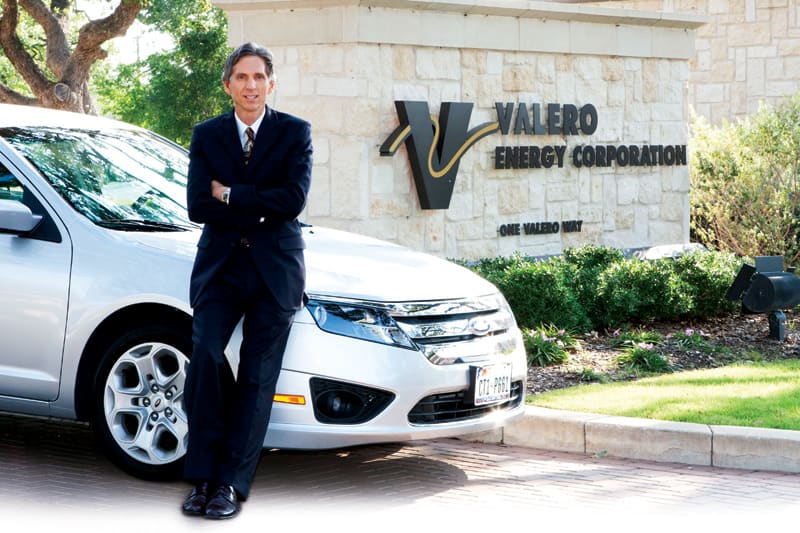
Randy Burwell, Valero's fleet administrator.

Randy Burwell, Valero's fleet administrator.
At Valero, fleet vehicles play an important role in the company’s overall success. As North America’s largest independent petroleum refiner and marketer, Valero supplies fuel and products from its 14 refineries and 10 ethanol plants stretching from California to Canada to the Caribbean.
The company’s 1,660-plus fleet drivers serve all Valero divisions, including loss control, retail, maintenance, refining, wholesale marketing, environmental, pipeline, and ethanol plants.
“A great number of employees depend on company vehicles to get their job done,” said Randy Burwell, Valero’s fleet administrator. “Self-direction is required to study trends and pertinent issues and how they may play a role in the overall success of the department.”
Vehicles are stationed in the United States, Canada, and Aruba and are comprised of Ford (61 percent), GM (27 percent), Chrysler (9 percent), and other makes and models (3 percent). The fleet makeup features mostly light-duty trucks (78 percent), but also cars (16 percent), vans (5 percent), and SUVs (1 percent).
The fleet team recently studied and upgraded several fleet policies and procedures, including right-sizing fleet vehicles. The results were significant — a 6.5 cents-per-mile savings over the life of the unit — according to Burwell, who oversees the daily activities involving Valero’s fleet, including acquisition and remarketing of fleet units and maintenance issues.
“I consider the fleet position as a deliverer of customer service,” he said.
Fleet Follows Resale Trends & Focuses on Safety
Burwell’s background in the rental car industry taught him the importance of purchasing vehicles with resale, consumer trends, and popularity in mind. By staying in touch with market trends, the fleet team was able to move minivans out of the Valero fleet years ago, prior to the economic downturn of 2008.
Safety is another top priority at Valero. All vehicles selected for the fleet must have earned top ratings. When a truck is being replaced, the driver is required to weigh the current loaded vehicle and any trailers to assure the new unit is properly built to specifications.
A recent move to the four-cylinder Ford Fusion was the result of a right-sizing and safety analysis. (The majority of the sedans replaced were the earlier generation Taurus [2006-2007].)
“The decision to appoint the four-cylinder Ford Fusion as our company car of choice began with the 2010 model-year introduction,” Burwell said. “When you consider millions of miles traveled per year by fleet vehicles, a few cents per mile advantage adds up quickly.”
Valero’s analysis into the most efficient vehicle for its fleet drivers included vehicle cost less CPA, rebates, resale, fuel and tire cost per mile, and preventive and unscheduled maintenance. The total variable cost, fixed cost, resale values, and amount of greenhouse gas emissions all played a role in manufacturer comparisons.
Advancing Technology Leads to Better Fuel Efficiency and Safety
Due to technology improvements in horsepower and fuel efficiency of four-cylinder engines, the fleet team conducted a study to determine if a vehicle with the dimensions of a Fusion would meet the requirements to perform the required tasks of Valero drivers.
After an analysis illustrated the Fusion had the same front leg and shoulder room as the previous vehicle offered, and the new four-cylinder engine had an additional 22 hp than the earlier-generation Taurus V-6, Valero felt the time was right to introduce the Fusion as the company car of choice.
The 2.5L Ford Fusion engine delivers 175 hp and 172 lb.-ft. of torque and uses intake variable cam timing (iVCT) technology to optimize valve timing, creating a broad torque curve that helps deliver increased power along with improved efficiency.
“The powertrain also incorporates electronic throttle control, dual-mode crankshaft damping, revised intake and exhaust manifolds, and an underbody-only catalyst, which help deliver greater fuel efficiency, more power, and lower noise, vibration, and harshness (NVH),” Burwell added.
With more than 100 fleet vehicles having been switched to the Fusion to date, the savings this initiative has generated are impressive, considering the small number of vehicles involved.
According to Burwell, taking the following information into consideration solidifies the decision to switch vehicles: 104 units x 85,000 lifecycle miles = 8,840,000 miles x 6.5 cents saving per mile = $574,600 lifetime savings over a 47-month period (when compared to current year V-6 Taurus models).
Involve Drivers When Making Vehicle Changes
Burwell emphasizes the importance of involving company drivers when assessing and implementing a new fleet policy, and especially when changing the vehicle they drive.
“You have a better chance of success when involving the end user. And that’s just what we did,” he said.
The proposed vehicle, the Ford Fusion, was introduced to drivers via e-mail and outlined vital specifications, including interior room and vehicle horsepower. Burwell included his phone number in the e-mail in case questions arose from drivers.
The outlined initiative was well received by Valero drivers.
Burwell emphasized that his position as fleet administrator goes well beyond vehicle acquisition and remarketing.
“Safety initiatives should play a primary role, while simultaneously foreseeing trends destined to change fleet,” he pointed out. “Attention should be given to overall cost per mile and ways to cut cost. A fleet administrator is in the customer service business and has a self-directed commitment to run the fleet in the safest, most cost-efficient manner.”
More Safety

Fleet Manager’s Ultimate Playbook: Navigating the New Standard in OEM Connectivity
Rising operating costs, driver safety concerns, and unplanned downtime are putting unprecedented pressure on modern fleets. Discover how fleet managers use embedded OEM connectivity and real-time vehicle data to cut TCO, prevent downtime, and protect drivers without aftermarket telematics hardware.
Read More →
From Driver Well-Being to EV Charging | AF News Recap
Mental health belongs in the fleet safety conversation. This week, we’re looking at five ways fleets can support employee well-being before a crisis, plus Holman’s expansion in Mexico, new one-day Fleet Forward passes, and why EV charging demand is outpacing infrastructure growth.
Read More →
Nexar-Nauto Merger Aims to Give Fleets Better Safety Intelligence Through Larger Driving Dataset
Stefan Heck tells Automotive Fleet that combining more than 10 billion miles of driving history with Nexar's AI models will give fleets deeper insights into driver risk and roadway conditions than either company could provide independently.
Read More →
Don't Wait for a Crisis: 5 Ways to Build Mental Health Into Your Fleet Safety Program
For Suicide Prevention Month, fleet and safety leaders have an opportunity to put mental health where it belongs: at the center of workplace safety.
Read More →
How Camera Data Can Strengthen a Fleet’s Insurance Renewal
Insights from a commercial insurance carrier and a broker show how fleets can turn video telematic data, driver coaching, and improved claims results into a stronger case at insurance renewal.
Read More →
The Safest Fleets Aren’t the Ones with the Most Technology
You’ve made the telematics investment. Here’s how to capture the other half of its value and build the safest fleet on the road.
Read More →
Hidden in Plain Sight: Fleet Compliance Risks
Fleet compliance isn't just about having policies — it's about consistently enforcing them. This practical guide reveals six hidden compliance risks common in public sector and shared fleet operations and outlines proven strategies to improve visibility, accountability, and audit readiness
Read More →
NETS Sets 2026 Fleet Safety Benchmark Conference for Indianapolis
The Sept. 15–17 program will feature fleet benchmarking data, case studies, emerging technologies, and implementation strategies while running alongside the NSC Safety Congress & Expo.
Read More →
Off-the-Job Crashes Account for 43% of Employers’ $61.7 Billion Crash Burden
NETS quantifies costs dispersed across fleet, risk, HR, and other departments while providing new per-crash benchmarks for employers.
Read More →
Ram Recalls More Than 1.27 Million 1500 Pickups for Seat Belt Anchor Issue
The recall affects certain 2019-2026 Ram 1500 pickups that may have improperly attached second-row seat belt buckle anchors.
Read More →