





Related: What Fleet Managers Learned from IIHS Crash Testing
GM Conducts 92,000 Virtual Crash Tests for 2027 Chevrolet Silverado 1500
General Motors used computer simulations to evaluate crash scenarios, occupant protection and vehicle design variations before conducting physical crash tests.
November 23, 2026
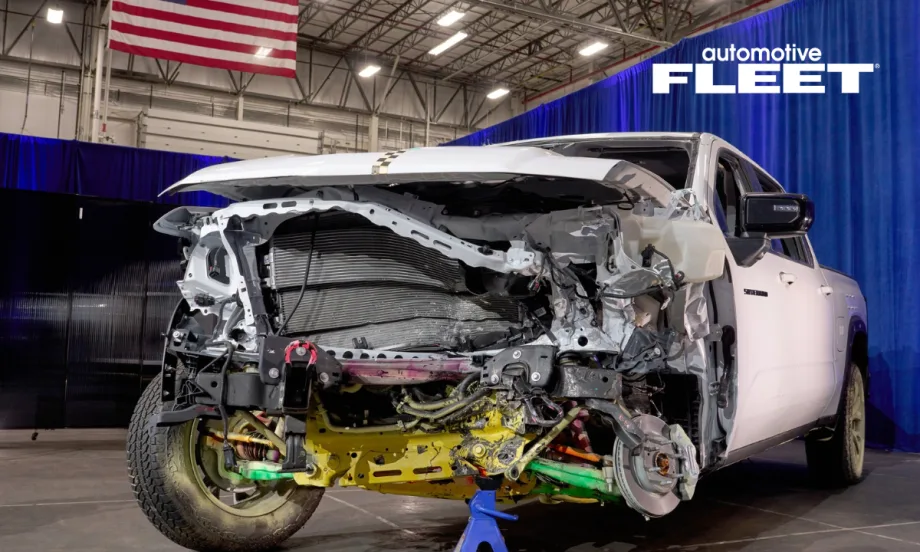
General Motors conducted approximately 92,000 virtual crash tests during development of the 2027 Chevrolet Silverado 1500. The automaker also performed physical crash tests, including a 40-mph frontal overlap test, to evaluate occupant protection and validate its computer simulations.
Credit:
Automotive Fleet / GM
3 min to read
- General Motors performed 92,000 virtual crash tests for the 2027 Chevrolet Silverado 1500.
- The computer simulations focused on crash scenarios, occupant safety, and evaluating different vehicle design options.
- Virtual tests were conducted prior to implementing any physical crash tests.
*Summarized by AI
General Motors conducted approximately 92,000 virtual crash tests during development of the 2027 Chevrolet Silverado 1500, using computer simulations to evaluate vehicle safety before physical testing.
According to GM, approximately 80% of the truck's passive safety engineering work was completed virtually, generating nearly 2 petabytes of data.
The approach allows engineers to examine how vehicle structures and occupant protection systems respond to different crash scenarios, including variations in occupant size, seating position and vehicle components.
“GM is using math-based virtual engineering to run thousands of simulated crashes before physical properties exist,” said Regina Carto, GM vice president of Global Product Safety, Systems and Certification. “Engineers can evaluate a much broader range of conditions—including different crash modes, occupant sizes, and seating positions. They can examine design details, identify issues earlier and iterate in weeks rather than months.”
How Virtual Crash Testing Works
GM uses computer-aided design (CAD), computer-aided engineering (CAE) and simulation technology to evaluate vehicle safety during development.
Unlike physical crash tests, which require test vehicles and specialized facilities, virtual simulations allow engineers to evaluate multiple design configurations before building physical prototypes.
For the 2027 Silverado 1500, GM's Global Safety Product Integration (GSPI) team used simulations to study how changes in vehicle materials, component thickness and structural connections could affect crash performance.
Engineers also examined variations in manufacturing processes and vehicle components to better understand how these factors could influence occupant protection.
According to GM, this process allows engineers to identify potential design issues earlier and evaluate a broader range of crash conditions than would be practical through physical testing alone.
Physical Crash Tests Validate Simulations
Although much of the Silverado's safety engineering was conducted virtually, GM also performed multiple physical crash tests throughout development.
One test involved a 40% frontal overlap collision at 40 mph, in which the driver's side of the vehicle struck a barrier across 40% of the truck's width.
The test included a crash-test dummy representing a 50th-percentile male in the driver's seat and a 5th-percentile female in the second row.
Before conducting the physical test, engineers evaluated hundreds of variations involving the vehicle's structure and passenger restraint systems.
These simulations helped inform the truck's design and provided data for comparison with physical crash-test results.
“Virtual engineering makes our physical testing more targeted, more efficient, and more informative,” Carto said. “Virtual models help us explore more possibilities and refine the design; physical tests then confirm those results and help us improve the models.”
GM said results from physical testing are also used to refine its virtual models for future evaluations.
AI Supports Vehicle Safety Development
GM is also incorporating artificial intelligence into its vehicle development processes to help engineers analyze large volumes of simulation data.
The company said AI currently assists engineers with processing data and debugging models, with additional applications planned for repetitive engineering tasks.
For the 2027 Silverado 1500, virtual safety engineering generated nearly 2 petabytes of data, equivalent to approximately 2.1 million gigabytes.
GM expects AI-assisted analysis to help engineers evaluate more design variations and make development decisions more quickly.
The company has previously outlined a goal of reducing vehicle development timelines from the current industry standard of four to five years by expanding its use of AI and virtual engineering.
What This Means for Fleet Vehicle Safety
For fleet managers evaluating pickup trucks, the development process provides insight into how automakers are using simulation technology to assess occupant protection across a range of crash conditions.
Virtual testing allows manufacturers to study different occupant sizes, seating positions and vehicle configurations before conducting physical tests.
However, the number of simulations performed does not independently establish a vehicle's crashworthiness or predict its performance in standardized safety evaluations.
Physical crash testing and independent safety ratings remain important considerations when assessing vehicles for fleet use.
GM said its virtual and physical testing processes are intended to complement one another, with simulations informing vehicle design and physical tests helping validate engineering models.
More Safety
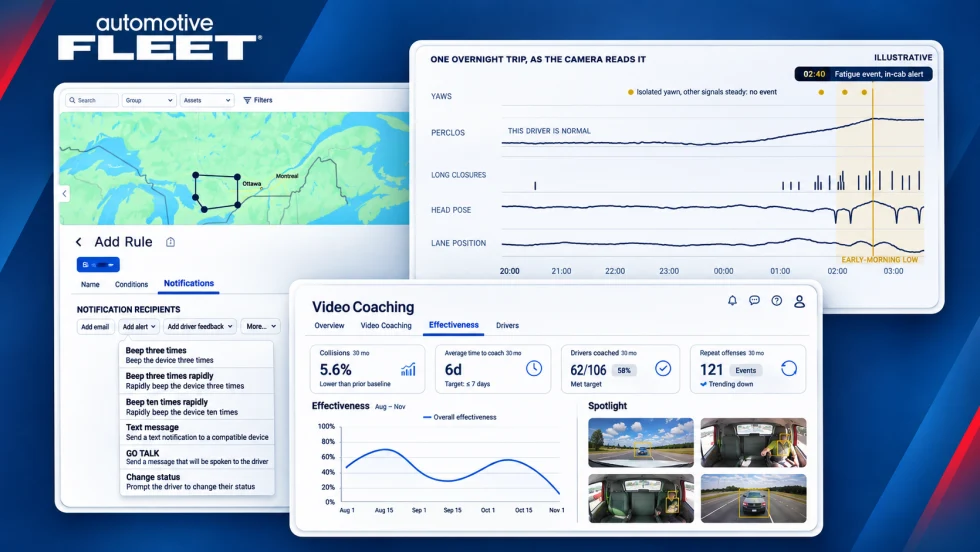
Geotab Adds AI-Powered Driver Coaching and Fatigue Detection Features
New capabilities include fatigue monitoring, two-way audio, coaching effectiveness analytics and location-based privacy controls for fleet safety management.
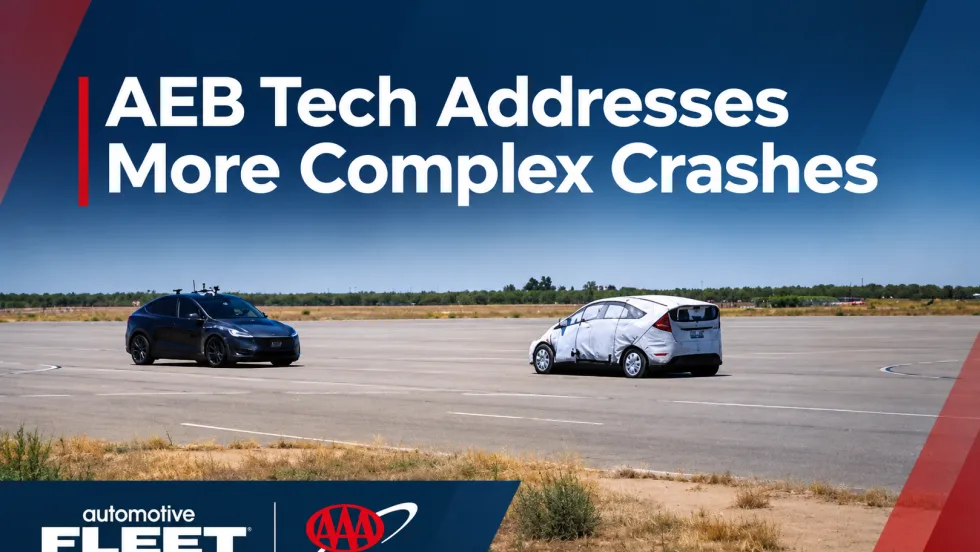
AAA Testing Finds Gaps in Intersection AEB Crash Prevention
Testing of four 2026 model-year vehicles found that automatic emergency braking prevented collisions in standardized intersection scenarios, but three vehicles failed to avoid crashes when another vehicle turned into their path.
Which Fleet Types Have the Highest Severe Speeding Rates?
New research from SambaSafety finds significant differences in speeding rates across fleet industries, even as nearly 90% of surveyed fleets report using telematics.

When a Cyberattack Hits Your Fleet: What Happens Next?
“You have two opportunities to test your plans: when you choose or when the threat actor chooses.” A cybersecurity expert reveals what fleet managers need to know before a cyberattack puts their operations at risk — and why the decisions made in the first moments can shape the entire recovery.

Tips for Driving Safely on Halloween Night
This video features a reminder from the Connecticut Department of Transportation (DOT) and the Connecticut Police Chiefs Association, urging drivers to prioritize safety this Halloween.
IIHS Crash Avoidance Tests Reveal Safety Gaps in Cargo Vans and Work Trucks
New IIHS crash avoidance ratings show uneven performance among cargo vans and heavy-duty pickups, with most struggling to avoid vehicle-to-vehicle collisions.

What’s Next for Fleet? Safety, AI & Industry Recognition | AF News Recap
Could your company's culture be encouraging distracted driving? This week, we're exploring how workplace expectations affect driver safety, what AI, EVs, and autonomous vehicles could mean for the future of fleet management, and how fleet professionals can strengthen their award nominations.

Does Your Fleet's Culture Encourage Distracted Driving?
What happens when the people responsible for enforcing safety rules are the ones setting the wrong example? The answer may reveal why some of the biggest risks to fleet drivers have little to do with what's written in the employee handbook.
Sponsored•October 1, 2026
Fleet Manager’s Ultimate Playbook: Navigating the New Standard in OEM Connectivity
Rising operating costs, driver safety concerns, and unplanned downtime are putting unprecedented pressure on modern fleets. Discover how fleet managers use embedded OEM connectivity and real-time vehicle data to cut TCO, prevent downtime, and protect drivers without aftermarket telematics hardware.

From Driver Well-Being to EV Charging | AF News Recap
Mental health belongs in the fleet safety conversation. This week, we’re looking at five ways fleets can support employee well-being before a crisis, plus Holman’s expansion in Mexico, new one-day Fleet Forward passes, and why EV charging demand is outpacing infrastructure growth.