


At a Glance
Technology is changing the way that fleets think about cars. Many automotive innovations that have flourished in the last several years include:
Autonomous Vehicles.
Vehicle Connectivity.
Drone Technology.
Augmented Reality.
 MENU
MENU SEARCH
Autonomous vehicles, drone technology, and connected-vehicle systems are just a few concepts that are part of a wave of innovations that could change the way fleets do business.


Photo courtesy of istockphoto.com
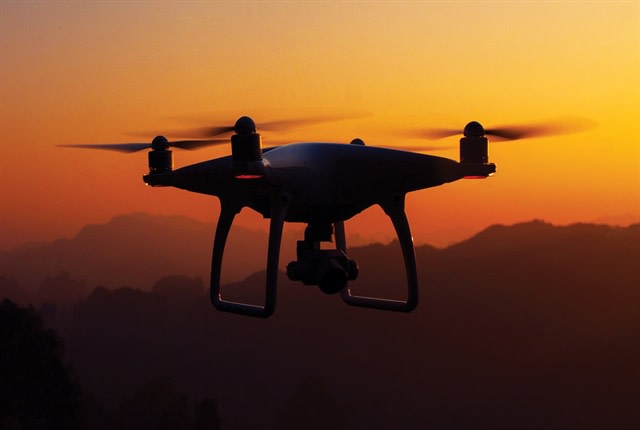
Photo courtesy of istockphoto.com
Editors Note: This article is part of a four-part package that addresses state-of-the-art fleet technology. Read related articles that offer an in-depth look at fuel, safety, and telematics.
As technology has evolved, so have the features and capabilities of automobiles and fleet operations. When talking specifically about fleets, some of the main areas of focus tend to be on features related to aspects of fuel management, safety, and telematics. But other technological innovations, such as autonomous vehicles and drone technology, have piqued the fleet world’s interest as well for good reason. These technologies, many of them undergoing real-world testing at the moment, could change the way fleets operate, their need for traditional vehicles, and the way the goods and services they provide are delivered.
One of the most anticipated and potentially disruptive technological developments on the horizon not only for fleets but the entire automotive industry are autonomous vehicles. The idea of self-driving cars has been considered for decades, but in the past several years, a push to produce and test the technology has been on the rise.
Attesting to that, over 33 corporations are working on autonomous vehicle technology, according to CB Insights. During the North American International Auto Show in January 2017, autonomous vehicle technology dominated.
Further adding to the reality of the future of the technology, in December 2016, Michigan became the first state to pass comprehensive self-driving legislation that permits authorized cars to operate on public roads without a driver or steering wheel.
As these vehicles become ubiquitous to everyday life, fleets will likely want start incorporating them due to their benefits. Not only is the technology designed to decrease the number of crashes but the fact that they are “driverless” means fleet passengers who are driven to a job site have extra time to focus on work. Indeed, according to General Motors’ CEO Mary Barra, by 2021 most autonomous cars will be able to function as a second office.
The development of autonomous vehicles has also been tied to several ride hailing services, such as Uber. Uber launched self-driving vehicles in the latter half of 2016 in cities including Pittsburgh and San Francisco. Meanwhile, Ford announced in August 2016 that by 2021 it plans to release a mass-produced, fully autonomous vehicle that can be used by ride-hailing or ride-sharing services.
Putting all of the interest into perspective, by the year 2020, there is predicted to be as many as 10 million self-driving cars on the road, according to Business Insider.
Hand in glove with the concept of autonomous vehicles is the idea of connected car services and systems, whether that means vehicle-to-vehicle or vehicle-to-infrastructure connectivity.
The desire for this has reached the federal level as the U.S. Department of Transportation (DOT) has proposed mandating vehicle-to-vehicle communication technology on all new light-duty vehicles that will be used in tandem with new crash-avoidance applications. The goal of this is to prevent hundreds of thousands of crashes each year by allowing the vehicles to “talk” to each other, according to the department.
For vehicle-to-infrastructure connectivity, the DOT’s Federal Highway Administration also proposed to develop guidelines for vehicle-to-infrastructure communications, which will help transportation planners “integrate the technologies to allow vehicles to ‘talk’ to roadway infrastructure such as traffic lights, stop signs and work zones to improve mobility, reduce congestion and improve safety,” according to the DOT.
Another innovation that has continued to flourish in terms of interest and development in the fleet industry is the utilization of drone technology. The technology has been of particular interest to companies that utilize last-mile delivery services.
In early 2016, DHL tested a drone for last-mile deliveries during a three-month trial in Germany, and Ford developed a drone delivery system that could be deployed from the rear of an F-150 for use during emergency response situations or commercial uses in agriculture.
Later that year, UPS began testing the use of drones to deliver packages, and Amazon.com made its first drone delivery in the English countryside in December 2016.
While commercial drone flights are currently banned in the U.S., the Federal Aviation Administration has allowed for these test flights to take place while the agency formulates formal regulations on the technology.
Since the advent of Google Glass, concepts surrounding the idea of augmented reality (AR) have popped up in various applications. From video games to smartphone apps, the technology has continued to flourish.
According to dictionary.com, AR is “an enhanced image or environment as viewed on a screen or other display, produced by overlaying computer-generated images, sounds, or other data on a real-world environment.” This can mean a lot of things for fleets, such as utilizing the windshield of the vehicle to set up a head-up display (HUD).
Indeed, Continental, an international automotive supplier, announced in December 2016 that it partnered with holographic projection technology company, DigiLens Inc., to develop ultra-thin AR HUDs. The technology was displayed for the first time at the Consumer Electronics Show in January 2017. This HUD is designed to provide virtual information on the windshield of the vehicle for the driver.
However, certain AR technologies are available now. While most perhaps operate on a smaller scale compared to windshield HUDs, they still serve a great purpose.
For example, Fiat Chrysler’s Ram Commercial has developed the ProMaster Augmented Reality App for tablets. The app allows fleet and business customers to view possible upfits when purchasing a configuration of the ProMaster cargo van, according to the automaker.
Another company that is offering AR solutions for fleets is ClickSoftware. The company partnered with Fieldbit to offer an AR solution that allows experienced engineers to support field technicians with real-time collaboration. The technology from Fieldbit combines live video streaming, commercially available smart glasses, and cloud computing to create one shared view of equipment that field technicians are working on, according to the company.

Rising operating costs, driver safety concerns, and unplanned downtime are putting unprecedented pressure on modern fleets. Discover how fleet managers use embedded OEM connectivity and real-time vehicle data to cut TCO, prevent downtime, and protect drivers without aftermarket telematics hardware.
Read More →
Mental health belongs in the fleet safety conversation. This week, we’re looking at five ways fleets can support employee well-being before a crisis, plus Holman’s expansion in Mexico, new one-day Fleet Forward passes, and why EV charging demand is outpacing infrastructure growth.
Read More →
Stefan Heck tells Automotive Fleet that combining more than 10 billion miles of driving history with Nexar's AI models will give fleets deeper insights into driver risk and roadway conditions than either company could provide independently.
Read More →
For Suicide Prevention Month, fleet and safety leaders have an opportunity to put mental health where it belongs: at the center of workplace safety.
Read More →
Insights from a commercial insurance carrier and a broker show how fleets can turn video telematic data, driver coaching, and improved claims results into a stronger case at insurance renewal.
Read More →
You’ve made the telematics investment. Here’s how to capture the other half of its value and build the safest fleet on the road.
Read More →
Fleet compliance isn't just about having policies — it's about consistently enforcing them. This practical guide reveals six hidden compliance risks common in public sector and shared fleet operations and outlines proven strategies to improve visibility, accountability, and audit readiness
Read More →
The Sept. 15–17 program will feature fleet benchmarking data, case studies, emerging technologies, and implementation strategies while running alongside the NSC Safety Congress & Expo.
Read More →
NETS quantifies costs dispersed across fleet, risk, HR, and other departments while providing new per-crash benchmarks for employers.
Read More →
The recall affects certain 2019-2026 Ram 1500 pickups that may have improperly attached second-row seat belt buckle anchors.
Read More →