




Keep Reading: How Distraction Affects a Driver's Safety
Smart Strategies for Introducing Dash Cams to Fleet Drivers
Helping your drivers to understand the safety benefits of dash cams — like improved driving which is also beneficial to their long-term careers — and creating incentives around them will help stave off resistance and build a safer fleet.
by Alex Firl
May 3, 2023
It’s a challenge for fleet manager to get the messaging right when introducing dash cams to fleet drivers who may be resistant to the technology.
Photo: pexels.com/Tim Samuel
5 min to read
Technology and telematics are now the driving forces behind successful fleet management, and smart dash cameras are now an essential tool in any fleet manager’s toolbox because of the speed and precision with which they track and analyze important safety details.
However, driver resistance is the biggest obstacle to dash cam implementation. No one likes being over-supervised or micro-managed, and for many fleet drivers, having dash cameras would signify an invasion of privacy and a lack of trust.
For fleet managers, it’s essential to get the messaging right when introducing dash cams to their drivers to avoid pushback and employee resentment.
Learn the stats to share with your team
We must acknowledge that drivers behind the wheel are human beings who make mistakes. To prepare for accidents beyond our control, we need to plan ahead.
According to the National Highway Transportation Safety Administration (NHTSA), 94 to 96% of vehicle crashes are caused by human error. NHTSA also notes that there were 6.74 million police-reported car accidents in the U.S. in 2019, accounting for approximately 17,000 car accidents across the nation daily.
Being part of that statistic is inevitable when driving is part of the job. Consequently, encouraging the best driving behavior makes sense for everyone. It is not only necessary for businesses to be safe, but they also want their drivers to remain unharmed.
The financial impact of collisions is significant. The average cost of an accident in 2022 was about $16,500. What's more, the annual accident rate for commercial fleets is 20%, so if your organization has a fleet with 1,000 vehicles, on average, 200 of them will be involved in accidents each year. Although all incidents won't reach the rate of $16,500, it is still evident how quickly the financial impact can accumulate.
Make it part of the safety culture
The best way to implement dash cams in your business is to present them in a positive, safety-conscious manner. For years, technology has improved road safety, and now it is time for the next step. Businesses are primarily concerned with their most valuable asset — their employees.
Make sure your drivers know dash cams are meant to protect them, not punish them. A dash cam, for instance, can exonerate wrongly accused drivers who were acting correctly. Having dash cam footage can help businesses defend their drivers' driving reactions since it provides almost-irrefutable evidence.
Communicate value
As drivers, we all want to get home safely. Drivers will understand that technology can help them improve their driving, which is also beneficial to their long-term careers. Presenting it as a non-negotiable may also be helpful. Drivers who do not want a camera might not be the right fit.
At the end of the day, the technology is designed to benefit both the driver and the organization, and businesses can build their cultures around that shared goal. Regardless of whether your drivers are resistant to cameras or technology at your organization, it's important to remember this technology is constantly gaining traction in businesses across the country.
Remind drivers about professional development
Employees are motivated by recognition and competition at work. Consider launching a professional development program as part of your dash cam implementation strategy. They can qualify by completing monthly assignments, additional assignments related to each level of recognition, and gaining the requisite experience.
Shift your mindset to say, “It's no longer about what you did wrong but rather about what was happening and how we can support you to improve.”
A shift to coaching and professional development can help drivers recognize unsafe behaviors, correct them, and improve their driving scores in the future. Incorporating dash cam data into driver behavior training creates a healthy way to work with and improve behavior.
Create incentives
Recognize, incentivize, and reward. Sound familiar? It makes people feel valued and motivates them to do their best. When incentives and rewards are provided, there's more willingness on the part of your drivers to participate and change their behavior as a result.
If you let your employees know that cameras and coaching are beneficial to their professional growth, they will be more willing to accept them as a part of their careers.
As drivers become more accustomed to new technologies, they are also coming up with new ideas for improvement since they use them on a regular basis.
Lead by example
Following training, explanation, and preparation comes another important step that all leaders should take — leading by example. It is important for you to experience dash cams firsthand if you are going to ask your drivers to install them. This will let you see how it works, see what it captures, and how your driving behavior triggers an event, enabling you to understand exactly what your drivers are experiencing.
Did you brake too quickly? Did you notice you ran that red light? Did you notice you slammed on the gas? It's important to understand both the technology and the emotions linked to having events recorded while driving. Not only does it show leadership, but it also shows respect for others.
Putting it to the test
Start by recruiting tech experts and skeptics to beta-test the solution. This will allow them to look it over, pick it apart, and come back to you with their best suggestions.
Embracing new technology is easier when Intel comes from peers and beta testing. Initial resistance is inevitable, but these approaches can help smooth things out. Ensuring drivers understand the how, why, and rewards of greater safety will improve fleet operations, drive significant cost savings, and help develop a more cohesive and successful team.
Subscribe to Our Newsletter
More Safety

Sponsored•October 1, 2026
Fleet Manager’s Ultimate Playbook: Navigating the New Standard in OEM Connectivity
Rising operating costs, driver safety concerns, and unplanned downtime are putting unprecedented pressure on modern fleets. Discover how fleet managers use embedded OEM connectivity and real-time vehicle data to cut TCO, prevent downtime, and protect drivers without aftermarket telematics hardware.
Read More →
From Driver Well-Being to EV Charging | AF News Recap
Mental health belongs in the fleet safety conversation. This week, we’re looking at five ways fleets can support employee well-being before a crisis, plus Holman’s expansion in Mexico, new one-day Fleet Forward passes, and why EV charging demand is outpacing infrastructure growth.
Read More →
Nexar-Nauto Merger Aims to Give Fleets Better Safety Intelligence Through Larger Driving Dataset
Stefan Heck tells Automotive Fleet that combining more than 10 billion miles of driving history with Nexar's AI models will give fleets deeper insights into driver risk and roadway conditions than either company could provide independently.
Read More →
Don't Wait for a Crisis: 5 Ways to Build Mental Health Into Your Fleet Safety Program
For Suicide Prevention Month, fleet and safety leaders have an opportunity to put mental health where it belongs: at the center of workplace safety.
Read More →
How Camera Data Can Strengthen a Fleet’s Insurance Renewal
Insights from a commercial insurance carrier and a broker show how fleets can turn video telematic data, driver coaching, and improved claims results into a stronger case at insurance renewal.
Read More →
The Safest Fleets Aren’t the Ones with the Most Technology
You’ve made the telematics investment. Here’s how to capture the other half of its value and build the safest fleet on the road.
Read More →
Sponsored•August 7, 2026
Hidden in Plain Sight: Fleet Compliance Risks
Fleet compliance isn't just about having policies — it's about consistently enforcing them. This practical guide reveals six hidden compliance risks common in public sector and shared fleet operations and outlines proven strategies to improve visibility, accountability, and audit readiness
Read More →
NETS Sets 2026 Fleet Safety Benchmark Conference for Indianapolis
The Sept. 15–17 program will feature fleet benchmarking data, case studies, emerging technologies, and implementation strategies while running alongside the NSC Safety Congress & Expo.
Read More →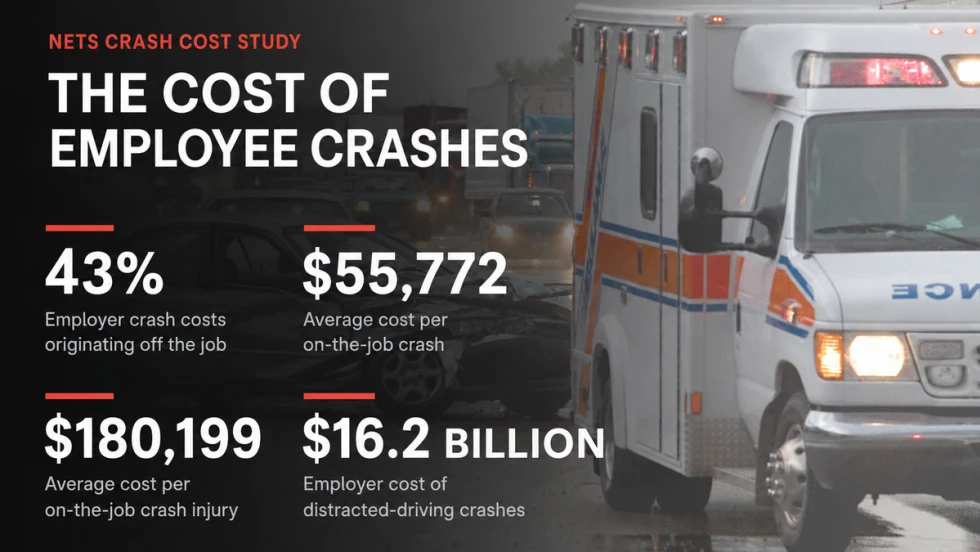
Off-the-Job Crashes Account for 43% of Employers’ $61.7 Billion Crash Burden
NETS quantifies costs dispersed across fleet, risk, HR, and other departments while providing new per-crash benchmarks for employers.
Read More →
Ram Recalls More Than 1.27 Million 1500 Pickups for Seat Belt Anchor Issue
The recall affects certain 2019-2026 Ram 1500 pickups that may have improperly attached second-row seat belt buckle anchors.
Read More →