




Regulatory Update: Senate Budget Bill to End EV Tax Credits in September
The Senate bill kills the EV tax credit under 30D earlier than the House bill and also kills 45W the commercial vehicle credit.
July 2, 2025

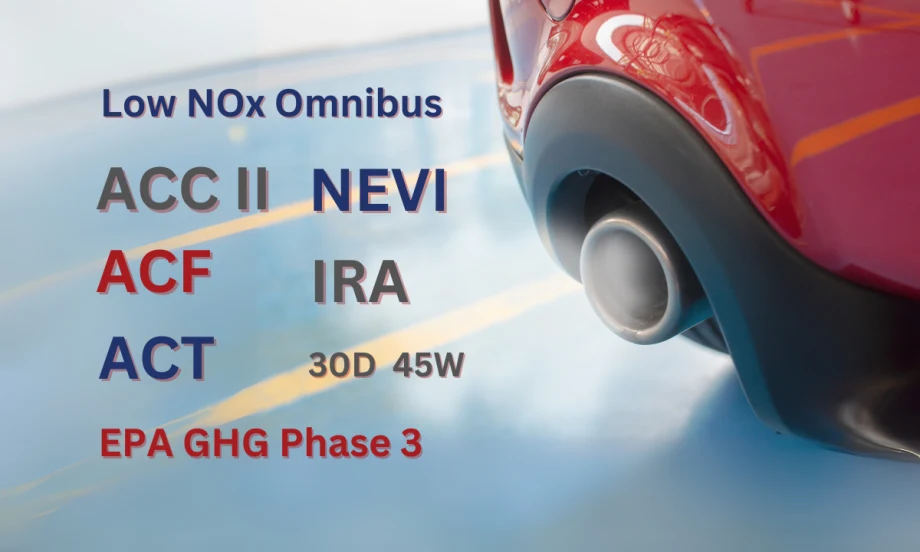
The fleet community is following potential amendments to or elimination of the numerous state and federal emissions regulations and funding for zero emissions vehicles.
Photo: Automotive Fleet
18 min to read
Regulatory Update July 1
On July 1, the Senate passed the budget and tax bill, otherwise known as the One Big Beautiful Bill (“OBBB”). The bill includes provisions to reshape federal support for electric vehicles, fuel economy standards, and related incentives.
Elimination of EV Purchase Incentives
The bill proposes ending the $7,500 federal tax credit for new EVs under Section 30D under the IRA 180 days after enactment, or Sept. 30, whereas the House bill extended it to Dec. 31. Additionally, the $4,000 credit for used EVs would be terminated 90 days post-enactment.
The $7,500 credit for leased EVs assembled outside North America would end immediately, while leased vehicles meeting North American assembly and content requirements would retain eligibility for 180 days after the bill's passage.
The commercial vehicle incentive under Section 45W is also gone as of Sept. 30.
Abolishes CAFE Standard Penalties
The legislation eliminates fines for automakers failing to meet CAFE standards, effectively nullifying enforcement of federal fuel economy requirements. This move could diminish the value of emissions credits sold by companies like Tesla.
EV and Hybrid Vehicle Fees Removed
The Senate version removes the$250 annual fee for EVs and a $100 fee for hybrid vehicles found in the House bill.
Preemption of State Emissions Standards
The bill includes provisions to bar California's plan to end the sale of gasoline-only vehicles by 2035, a policy adopted by 11 other states.
While President Trump initially revoked California's EPA waiver through executive action, the OBBB attempts to provide a legislative foundation that would make the revocation more durable against future administrative reversals.
Repeal of Clean Energy Incentives
Additionally, the Senate version expands the repeal of other clean energy incentives that aim to eliminate subsidies for renewable energy and EV infrastructure.
At the same time, both the House and Senate versions include provisions to reinstate certain oil and gas leases.
The House must now approve the Senate's changes before the bill can be signed into law by President Trump.
Regulatory Update June 12
President Donald Trump has officially signed into law three Congressional Review Act resolutions that rescind key Environmental Protection Agency (EPA) waivers previously granted to California, marking a sweeping rollback of the state’s authority to enforce stricter vehicle emissions rules across multiple states.
The measures — H.J.Res.87, H.J.Res.88, and H.J.Res.89 — effectively revoke waivers for California Air Resource Board’s Advanced Clean Cars II (ACC II) mandate, the Advanced Clean Trucks (ACT) rule, and the Omnibus Low NOx regulation, halting their enforcement not only in California but also in the dozen states that had opted into the programs.
Together, the now-rescinded rules had aimed to phase out internal combustion vehicle sales, set aggressive emissions limits, and push widespread electric vehicle adoption in both the light- and heavy-duty markets.
The Senate approved the measures on May 22 in a 51–44 vote, following earlier passage by the House. At the time, President Trump was expected to sign the legislation, which he did this week.
The rescinded waivers would have impacted approximately 100 million Americans, or roughly 35% of the U.S. vehicle market, by enabling California’s policies to apply beyond its borders. Organizations opposed to to the legislation cite EV price premiums — reportedly around $12,000 more per vehicle — and limited charging infrastructure as key barriers to mandated electrification.
In response, Governor Newsom, California Attorney General Rob Bonta, and CARB filed a lawsuit challenging the legality of the federal government’s actions, asserting that these waivers are not subject to congressional override as they are not federal regulations, but permissions granted to states under the Clean Air Act.
Impacts on Fleets & ACF Rule
Importantly, this federal action does not fully dismantle the authority of CARB. The agency retains control over in-use emissions programs and certain state-level mandates. However, the Advanced Clean Fleets (ACF) regulation, which CARB uses to enforce electrification timelines for fleet operators, now faces narrower applicability.
Specifically, ACF mandates for state and local government fleets remain in effect, but provisions applying to private and commercial fleets are no longer enforceable under the rescinded EPA waivers.
This represents a significant shift for private fleet operators in California and other opt-in states, who were previously subject to strict electric vehicle procurement requirements under the rule.
Regulatory Update May 22
On May 22, 2025, the U.S. Senate voted 51–44 to rescind California’s authority to enforce its Advanced Clean Cars II (ACC II) regulation, which required all new light-duty vehicles sold in the state to be zero-emission by 2035.
The bill, having already passed the House and expected to be signed into law by President Donald Trump, would revoke the Environmental Protection Agency (EPA) waiver that has allowed California — and 11 other states — to set emissions standards stricter than those at the federal level.
Many stakeholders welcomed the rollback. “Repealing gas vehicle bans in California and 30 percent of the U.S. auto market is among the most important policies to restore some balance to vehicle emissions regulations; to support a healthy and competitive auto industry in America; and to ensure customers remain free to choose the type of vehicle that works for them and their family,” said John Bozzella, president and CEO of the Alliance for Automotive Innovation.
At the same time, California Governor Gavin Newsom and Attorney General Rob Bonta have denounced the measure and announced plans to mount a legal challenge, calling it an infringement on states’ rights under the Clean Air Act. Unless a court intervenes with an injunction, however, the law is expected to take effect immediately, forcing the EPA to revoke the ACC II waiver and halting enforcement of the rule in all affected states.
Importantly, the law does not fully eliminate the authority of the California Air Resources Board (CARB). The agency still maintains regulatory control over in-use emissions and certain specialized programs.
However, the impact on CARB’s Advanced Clean Fleets (ACF) regulation is more nuanced. While ACF mandates for state and local government fleets remain in effect, the provisions applying to private fleets are no longer enforceable under this legislation. This clarification significantly narrows the scope of the ACF rule for the broader fleet market.
Regulatory Update May 1
In a rebuke to California’s vehicle emissions regulations, the U.S. House of Representatives passed three resolutions this week to repeal state-level emissions mandates.
The legislative actions target California’s Advanced Clean Cars II (ACC II), Advanced Clean Trucks (ACT), and Omnibus Low-NOx emissions rules, policies that have been closely watched by the fleet industry.
Three California Rules Under Fire
The resolutions, advanced under the Congressional Review Act (CRA), aim to overturn waivers granted by the U.S. Environmental Protection Agency (EPA) that allow California to implement emissions standards that are more stringent than federal regulations:
Advanced Clean Cars II (ACC II): Mandates that 100% of new passenger car and light-duty truck sales be zero-emission vehicles (ZEVs) by 2035, with interim targets starting at 35% by 2026. Non-compliance could result in fines of up to $25,000 per vehicle. At least 12 states have already adopted this rule.
Advanced Clean Trucks (ACT): Requires increasing percentages of medium- and heavy-duty truck sales to be ZEVs by 2035, including 55% of Class 2B to Class 3, 75% of Class 4 to 8 straight trucks, and 40% of truck tractors. Eleven states have signed on to ACT.
Omnibus Low-NOx Rule: Drastically reduces allowable nitrogen oxide (NOx) emissions from heavy-duty engines by 75% for MY 2024-2026, compared to 2010 levels, with a 50% reduction in particulate matter.
Fleet Impact & Industry Response
For fleets, these three rules represent sweeping mandates that directly impact vehicle acquisition, lifecycle costs, infrastructure planning, and compliance reporting.
The ACC II and ACT rules in particular have accelerated electric vehicle (EV) adoption timelines, supply chain shifts, and long-term electrification strategies.
The Alliance for Automotive Innovation, representing major OEMs, also supported the repeal efforts, citing job loss concerns and unrealistic regulatory burdens.
“Today’s vote was a welcome — and targeted — action by the House to prevent the inevitable jobs and manufacturing fallout from these unachievable regulations. Regulations, by the way, that everyone agrees are way ahead of the consumer and charging infrastructure in this country,” said John Bozzella, president and CEO of the Alliance for Automotive Innovation.
“Repealing gas vehicle bans in California and 30% of the U.S. auto market is among the most important policies to restore some balance to vehicle emissions regulations. …”
“Time is ticking. These EV sales requirements start in model year 2026 — right now for automakers. In a matter of months, automakers may be forced to adjust their vehicle shipments to dealers across the country to comply with the ‘California’ state EV mandates.”
Legal & Political Uncertainty
Despite House approval, the fate of the resolutions remains uncertain in the Senate. The Government Accountability Office (GAO) and the Senate Parliamentarian have both concluded that California’s EPA waivers are not subject to repeal under the CRA. Legal experts note that California’s authority to set stricter emissions standards is enshrined in the Clean Air Act and has historically withstood court challenges.
California Governor Gavin Newsom sharply criticized the House votes, framing them as an ideological attack on clean air and states’ rights. “Trump Republicans are hellbent on making California smoggy again,” he said in a statement.
As it stands, the California standards, including ACC II and ACT, remain in effect.
Regulatory Update March 12
On March 12, U.S. Environmental Protection Agency (EPA) head Lee Zeldin announced that the agency will reconsider the “Model Year 2027 and Later Light-Duty and Medium-Duty Vehicles" regulation and "Greenhouse Gas Emissions Standards for Heavy-Duty Vehicles.”
The EPA announced that the rule “takes away Americans’ ability to choose a safe and affordable car for their family and increases the cost of living on all products that trucks deliver.”
“The American auto industry has been hamstrung by the crushing regulatory regime of the last administration. As we reconsider nearly one trillion dollars of regulatory costs, we will abide by the rule of law to protect consumer choice and the environment,” said EPA Zeldin.
Additionally, the EPA is reevaluating other parts of the Biden EPA’s “Clean Trucks Plan,” including the 2022 Heavy-Duty Nitrous Oxide (NOx) rule.
The announcements do not carry the force of law. In almost every case, the EPA would have to undergo a lengthy process of public comment and develop environmental and economic justifications for the change.
Industry Groups Respond to EPA's Announcement
Industry groups weighed in on both sides.
“OOIDA and the 150,000 small-business truckers we represent welcome the EPA’s decision to reconsider the Phase 3 Greenhouse Gas emissions rulemaking and to review the federal NOx standard. Small-business truckers make up 96% of trucking and could be regulated out of existence if the current standards were to be implemented.
“… We have yet to see proof that electric CMVs are a practical option for most trucking businesses considering the price tag and lack of charging infrastructure. We commend EPA Administrator Zeldin on his realistic approach to emissions regulations,” said Todd Spencer, president of Owner-Operator Independent Drivers Association.
John Boesel, president and CEO, of Calstart, issued this statement:
“For decades, strong federal vehicle policies have been a critical driver to America’s leadership in the clean transportation industry. These policies have spurred game-changing economic opportunities and job growth for states, cities, and communities across the country.
“The consistency of regulatory frameworks provides the certainty that manufacturers need to make long-term investments while leveling the playing field for all industry players. By maintaining strong standards, we ensure that innovation continues and that American companies remain competitive in the global marketplace.
“At a time when the world is rapidly moving toward clean and zero-emission vehicles, we cannot walk away from our progress. To do so would cede U.S. leadership in this industry to China and other countries who continue to lead the global EV race through advanced, robust policy and market investments.”
We will update this article with news as it develops. Below is the original article published on Feb. 20:
Regulatory Crossroads: How Shifting Emissions Policies Could Reshape Fleet Rules
When political parties change after any presidential election, numerous constituencies — from business and trade groups to consumer, labor, environmental, and public policy organizations — closely monitor potential regulatory shifts to assess how new policies will affect their interests.
The 2024 presidential election was no different, but it was different.
Before the election, many anticipated that a Trump victory would bring significant political and regulatory disruption, particularly regarding environmental policies, EV incentives, and emissions regulations.
This anticipation has not been quelled after the first few weeks of the new administration, as President Trump has taken a “shock and repeal” approach to rolling back regulations.
The fleet community is following potential amendments to or elimination of state and federal emissions regulations and funding for zero emissions vehicles (ZEVs) and charging infrastructure.
Rather than taking a stance on regulatory policy, this article analyzes the restraining and driving forces behind those policies and outlines how they could be repealed, revised, or reinforced.
However, this is still early innings. The article will be updated as news arrives.
Emissions Regulations & ZEV Funding by Type
The developments fall into four major buckets. Be ready for “acronym overload:”
Federal incentives in the Inflation Reduction Act (IRA): the $7,500 Clean Vehicle Credit under Section 30D, the $4,000 used credit under 25E, and the up-to $40,000 credit for commercial vehicles under 45W.
Funding from the 2021 Bipartisan Infrastructure Law (IIJA) for the buildout of charging infrastructure in the National Electric Vehicle Infrastructure (NEVI) Formula Program.
Regulations and authority of the California Air Resources Board (CARB):
Advanced Clean Fleets (ACF): Requiring fleets operating in California to purchase ZEVs.
Advanced Clean Trucks (ACT) and Advanced Clean Cars (ACC II): Requiring manufacturers to sell zero-emission trucks and cars.
CARB’s and the CARB-following (Section 177) states’ authority to set its own emissions standards that supersede federal rules.
CARB’s Low NOx Omnibus regulations for Class 4-8 trucks.
Federal regulations:
EPA’s Multi-Pollutant Emissions Standards for MY-2027 for light and medium-duty vehicles.
Corporate Average Fuel Economy (CAFE) standards regulated by the National Highway Traffic Safety Administration (NHTSA).
New Administration’s Actions & Intentions
To date, the Trump administration has taken these actions and signaled these intentions:
Revoked a 2021 non-enforceable executive order that aimed for half of all new vehicles sold in the U.S. to be electric by 2030.
Signed an executive order to halt the distribution of unspent government funds for vehicle charging stations as part of the $5 billion fund established under the 2021 Bipartisan Infrastructure Law. The Federal Highway Administration (FHWA) halted funding on February 6.
Issued an executive order aiming to revoke California’s waivers under the Clean Air Act that allows stricter pollution standards than federal rules.
On Feb. 14, new EPA Administrator Lee Zeldin ordered Congress to use the Congressional Review Act to kill the waivers given to CARB by Biden’s EPA.
Proposes eliminating the 30D federal tax credit of $7,500 for electric vehicle purchases. While specific actions regarding the up to $40,000 credit under 45W for commercial vehicles have not been detailed, the administration’s intent to dismantle the IRA entirely would likely affect this incentive as well.
On January 29, Transportation Secretary Sean Duffy signed an order directing NHTSA to rescind the fuel economy standards established during President Joe Biden's administration.
CARB Rescinds ACF Waiver Request
One action was not generated by the Trump administration but was taken in anticipation of a losing legal battle.
On January 15, CARB rescinded its waiver request from the incoming EPA regarding enforcing ACF for private (“high-priority”) fleets. Therefore, private companies with fleet vehicles in California will not have to acquire ZEVs. The rule continues to be in effect for state and municipal fleets.
Revoking the rule also prevents the 14 to 17 “Section 177” states that follow CARB from enacting ACF.
However, the withdrawal of the waiver request does not affect the implementation of the ACF for state and local government fleets, which still must purchase an increasing percentage of zero-emission vehicles over time.
Multiple Stakeholders in 30D and 45W Credits
While the 30D tax credit is often seen as a consumer incentive, it is fundamentally a supply chain and domestic manufacturing policy, said Ben Prochazka, executive director of the Electrification Coalition.
The provision’s final assembly and sourcing requirements for battery minerals and components are designed to encourage the onshoring of battery production and sourcing of critical materials from U.S.-friendly nations rather than China.
Prochazka said repealing the credits would be politically challenging, especially given the growth of EV and battery production plants in the U.S., which has promoted job growth.
A letter sent to the new administration from 18 Republican lawmakers said that “energy tax credits have spurred innovation, incentivized investment, and created good jobs in many parts of the country — including many districts represented by members of our conference.”
Potentially complicating the repeal effort are other groups benefitting from the incentives directly or indirectly.
Scott Case, co-founder & CEO of Recurrent, noted that$3 billion in direct payments and rebates to auto dealers under 30D and 25E had fostered dealership sales and profits.
Trisha Dello Iacono, head of policy at Calstart, mentioned that private money has made up about 85% of the $184 billion invested in domestic manufacturing of ZEVs and batteries since 2020.
A Compromise on 30D and 45W Credits?
Prochazka, Case, and Dello Iacono envision potential modifications to the credits, rather than elimination. “We’ve seen signs that Congress may opt for a scalpel rather than a sledgehammer, adjusting eligibility criteria rather than outright eliminating the credits,” Prochazka said.
Case believes 30D has a better chance of remaining but could be rewritten to become even more restrictive by focusing exclusively on domestic production.
For corporate fleets, 30D allows for leasing arrangements that bypass sourcing restrictions, making certain vehicles eligible for incentives that wouldn’t qualify under direct consumer purchases. This “loophole” could be tightened.
Meanwhile, 45W has no sourcing requirements. “The 45W credit is a prime target for repeal because it lacks domestic sourcing requirements and has been used extensively for non-U.S. vehicles,” Case said.
However, Calstart believes 45W being entirely eliminated is unlikely. “Tax credits can be modified somewhat through executive action but not eliminated entirely,” Dello Iacono said.
Ruben Aronin, principal at A Better World Group, surmises that 45W could survive because eliminating it would remove support for many independent electric truck chassis makers that have production plants in the U.S.
Aronin said that if federal incentives disappear, some CARB states are prepared to invigorate their rebate programs or create new ones.
To further spur change those states could also enact procurement mandates for state-owned vehicles, set up zero-emission delivery zones, and enable access to carpool lanes or priority lanes for ZEV trucks in drayage operations.
ACT, ACC II Still in Place
With the ACF waiver rescinded, private fleets in California and Section 177 states no longer have an obligation to acquire ZEVs. Yet the manufacturer-driven ACT and ACC II rules are still in place, with litigation pending. In California, ACT requires that 7% of OEMs’ new truck sales be ZEV as of Jan 1.
With ACC II’s long-term order that 35% of new car sales be ZEVs by 2036, “This is the only true EV mandate,” Case said. “Everything else is incentives or gradual emissions tightening. If Trump targets an ‘EV mandate,’ this is what he’ll go after.”
Case and others emphasize that attempts to revoke California’s waiver would likely result in prolonged legal battles, just as they did during Trump’s first term. “Last time, California tied up the case in court for four years. If challenged again, expect the same strategy,” Case said.
Trump’s executive order to rescind California’s emissions waivers diverges from past presidential approaches in that it actively seeks to revoke already-issued waivers.
Indeed, the EPA's Zeldin has initiated steps to involve Congress through the Congressional Review Act (CRA), which would subject the California waivers to congressional oversight. By submitting the waiver as a rule under the CRA, Congress could overturn it with a simple majority.
The Government Accountability Office (GAO) may also play a key role in determining whether the waiver qualifies as a "rule" under the CRA, though this remains uncertain.
If the GAO rules in favor, it could allow Congress to intervene and potentially block the waiver, creating further challenges for California's efforts to enforce stricter vehicle emissions standards.
This dual-track approach leverages legislative and administrative tools to forestall or eliminate California’s emissions policies, though it is expected to face significant legal and political hurdles.
Voluntary OEM Agreements
Automakers have agreed to meet California’s stringent emissions targets regardless of the status of the CAA waiver as part of the voluntary Framework Agreements on Clean Cars and the Clean Truck Partnership.
Will automakers back out of these signed commitments? The agreements attempt to address policy instability. But market realities will weigh on how automakers move forward.
Ford and General Motors have scaled back EV production targets, while Ford Pro reported a $5 billion EV loss in 2024 and has projected greater losses in 2025. Meanwhile, automakers like Ford, Toyota, and Volkswagen have delayed new electric model rollouts.
Supreme Court Ruling Inevitable?
Will the challenges to California’s authority under the Clean Air Act likely end up in the Supreme Court?
Dello Iacono points out that the U.S. Supreme Court has declined to review a case challenging the EPA’s waiver granting California the right to set its own emissions standards.
However, Dello Iacono said the Court has agreed to hear cases concerning the appropriate venue for legal challenges under the Clean Air Act, which Calstart believes has much less potential impact.
Aronin thinks it’s inevitable that the Supreme Court will hear the case, with a question mark on the outcome. “Historically, this authority has been upheld, but the current court composition adds a layer of uncertainty,” he said.
With many parts of California in severe or extreme nonattainment status for ozone and particulate pollution, Aronin noted that CARB may try to legally justify its stricter emissions regulations by linking them to National Ambient Air Quality Standards (NAAQS) under the Clean Air Act.
“California has long framed emissions regulations around air quality and health, which could make it harder for a federal rollback to gain traction,” he said.
The other question is if CARB can draw out a legal battle into a new administration in 2028, can it regain its authority and retroactively reintroduce and enforce its stricter emissions standards?
Dello Iacono sees this as a possibility, though she noted retroactive enforcement authority has not been tested historically.
EPA Standards: What's Next?
On the federal level, the EPA’s multi-pollutant emissions standards for MY-2027 loom. In a traditional rulemaking environment, overturning them would require a lengthy regulatory process rather than an immediate repeal.
How will this non-traditional administration circumvent that process? Another legal fight is likely to follow. However, this one doesn’t challenge the legal authority of an entity like CARB, which may facilitate a quicker resolution.
These standards may have an advocate within the administration: Tesla benefits from existing EPA emissions rules that require automakers to meet CAFÉ and greenhouse gas (GHG) emissions standards. As an electric-only automaker, Tesla has benefitted from billions of dollars annually from regulatory carbon credit sales.
Case speculated that rather than attempting to overturn 2027–2032 regulations, the Trump administration may focus on blocking future emissions regulations beyond 2032.
The Need for Policy Stability & Consistency
When the federal government, states, and agencies set overlapping and often contradictory rules, automakers and fleets must make investment decisions without clarity on long-term compliance requirements.
Prochazka, Aronin, and Dello Iacono each stressed the importance of policy consistency for automakers, fleets, and investors. A chaotic regulatory environment not only slows carbon reductions but also undermines the climate goals these policies aim to achieve.
“The lack of market certainty creates whiplash for companies,” Dello Iacono said. “Regulations level the playing field and are crucial for long-term planning and investments.”
Subscribe to Our Newsletter
More Green Fleet
Sponsored•October 1, 2026
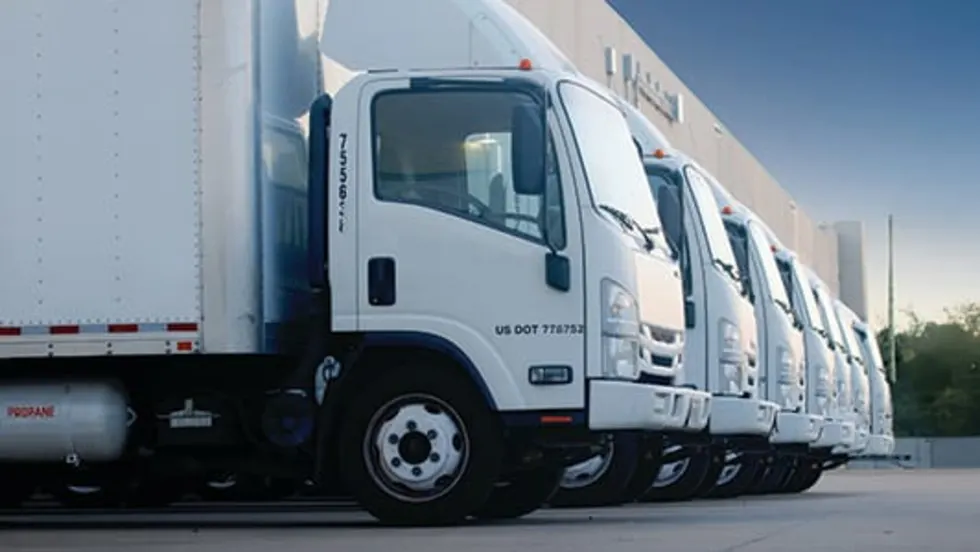
New Propane Autogas Program Offers Fleet Compensation
Qualified commercial fleets can receive $7,500 per eligible propane autogas vehicle and up to $10,000 for new refueling site prep. Learn how the program works and see whether your fleet qualifies.
Read More →
EV Charging Use Is Outpacing Infrastructure Growth
ChargePoint’s 2026 Charging Forward Report points to rising charger use, higher-powered charging, commercial vehicle electrification, and energy-management technology. Here’s what fleets should know.
Read More →
Merchants Fleet Reports 290M EV Miles as Fleets Navigate Changing Electrification Market
From millions in operating savings to hundreds of millions of EV miles, Merchants Fleet’s latest report reveals what’s working and what’s changing in fleet electrification.
Read More →
The EV Breakdown Nobody's Talking About: Why Most Electric Vehicle Roadside Calls Aren't Mechanical Failures
Here's why EV breakdowns are widely misunderstood.
Read More →
ChargePoint Now Available in Energy Pass
ChargePoint and additional planned charging network integrations were added to GM's Energy Pass.
Read More →

First Look: Slate Auto's Electric Fleet Pickup
Could an affordable, modular EV pickup make electrification more practical for fleets?
Read More →
Slate Debuts Colorful, Unique EV Models
A recent media and client event, studded with electric vehicles dressed up on platforms, planted a new position for the manufacturer in the wider EV market. Fleets will find cost-saving advantages.
Read More →
Slate Electric SUV, Pickup Switchable Model Aims For Light-Duty Fleets
Everything about this EV is counterintuitive and understated, making it stand out from the crowd.
Read More →
Inspiration Mobility Acquires Key Electrada Assets
Inspiration Mobility Group has acquired select assets of Electrada, adding the fleet electrification provider's team, technology, and charging infrastructure development capabilities to its energy management business.
Read More →