




U.S. EV Adoption Is Climbing, but Commercial and Passenger Markets Diverge
New industry group data revealed that light-duty electric vehicle sales are hitting record market share and volumes, while commercial EV volume dipped. What’s driving the fluctuations?
February 12, 2026


Passenger EVs are pushing forward through incremental growth in a relatively mature market, while commercial EVs remain highly segmented, with progress concentrated in specific applications and geographies.
Credit: Automotive Fleet
4 min to read
New data from two leading industry groups show U.S. electric vehicle adoption continuing to expand, though the pace of growth differs between passenger cars and commercial fleets.
Passenger EV registrations continue to rise despite pricing pressure, uncertainty over incentives, and challenges in charging infrastructure, according to data from the Alliance for Automotive Innovation (AAI).
At the same time, data from Calstart shows that commercial electric vehicle adoption remains uneven: overall zero-emission truck deployments declined year over year, while several medium- and heavy-duty segments outside of cargo vans reached record levels, though from a much smaller base.
Passenger EVs Show Resilience Despite Headwinds
In its latest Get Connected Electric Vehicle Report, AAI reported that EVs accounted for 12.6% of new U.S. light-duty vehicle sales in the third quarter of 2025, the highest market share and volume on record. That figure marked a 3.1% increase from Q2, even as broader auto sales slowed.
“Consumer acceptance still remains a barrier,” the report noted, pointing to affordability concerns and uneven charging availability. Even so, EVs now represent 2.4% of vehicles in operation nationwide, while gas-powered vehicle market share fell 4.6 points year over year and 24.6 points since 2016, according to AAI’s data.
Charging infrastructure remains a constraint. The report found that only one new public charging port was added for every 30 newly registered EVs, highlighting concerns that infrastructure deployment is lagging behind vehicle adoption.
Still, the data suggest the passenger EV market is continuing to expand gradually rather than stalling, even amid political uncertainty and shifting incentive structures.
Commercial EV Growth Is More Fragmented
On the commercial side, Calstart’s Zeroing in on Zero-Emission Trucks: January 2026 Market Update paints a more complex picture.
The organization reported that 6,526 zero-emission trucks (ZETs) were deployed in the first half of 2025, bringing the national total to more than 59,000 vehicles. However, that six-month figure represents a 49.2% year-over-year decline, driven primarily by a pullback in electric cargo van deployments, which account for the majority of commercial EV volume.
At the same time, Calstart emphasized that adoption remained strong across other commercial segments. Medium-duty and heavy-duty trucks, refuse vehicles, and yard tractors collectively recorded 1,152 deployments in the first half of 2025, exceeding their average of 990 deployments per six-month period since 2023.
“This update shows that ZETs are no longer a future concept — they are here, scaling, and delivering results where states have taken decisive action,” said Tor Larson, vice president of trucks and off-road at Calstart, in the report. “The progress we’re seeing is driven by clear policy signals; smart incentives; and close coordination between fleets, manufacturers, utilities, and governments.”
Still, those gains are occurring off a much smaller base than the passenger EV market. Even at record levels, non-cargo-van commercial EV deployments represent only a fraction of the millions of light-duty EVs already on U.S. roads, underscoring the early stage of the commercial transition.
Incentives, Freight Markets, and OEM Consolidation
Calstart attributed recent volatility in commercial EV deployments to several overlapping factors, including economic conditions and policy timing.
“Some fluctuation is expected as new technology enters early mass adoption,” Jacob Richard, author of the Calstart report, told Automotive Fleet. “Some fluctuation is expected as new technology enters early mass adoption. A weaker freight market and the new Administration have contributed to a more cautious, ‘wait-and-see’ approach from fleets.”
Incentive timing also played a role. Federal EV tax credits remained available through September 2025, prompting a purchase surge in Q3, while many state incentive programs closed during the first half of the year before reopening later.
“Since tax credits apply at purchase — not deployment — this timing affects the trends we track,” Calstart said, adding that fleets likely delayed orders to stack incentives.
Regarding electric van declines, cargo vans have short delivery timelines, and near-term dips are more visible,” Richard said. “Cargo vans remain attractive due to lower upfront costs, simpler charging needs, and strong duty-cycle fit, and we expect deployments to rebound.”
The report also pointed to ongoing consolidation among commercial EV manufacturers.
“Market consolidation is also underway,” Richard noted. “Mergers and bankruptcies (e.g., Motiv/Workhorse; Lion, Bollinger, Nikola) have reduced the number of OEMs, though those vehicles remain in operation and are still reflected in our data. New OEMs emerging in the market are a sign of sustained interest in zero-emission platforms.”
Two Markets, Two Timelines
Taken together, the two reports suggest that U.S. EV adoption is still advancing, but along different timelines.
Passenger EVs are pushing forward through incremental growth in a relatively mature market, while commercial EVs remain highly segmented, with progress concentrated in specific applications and geographies.
The result is a market that continues to move forward, but not evenly and not all at once.
More Green Fleet
Sponsored•October 1, 2026
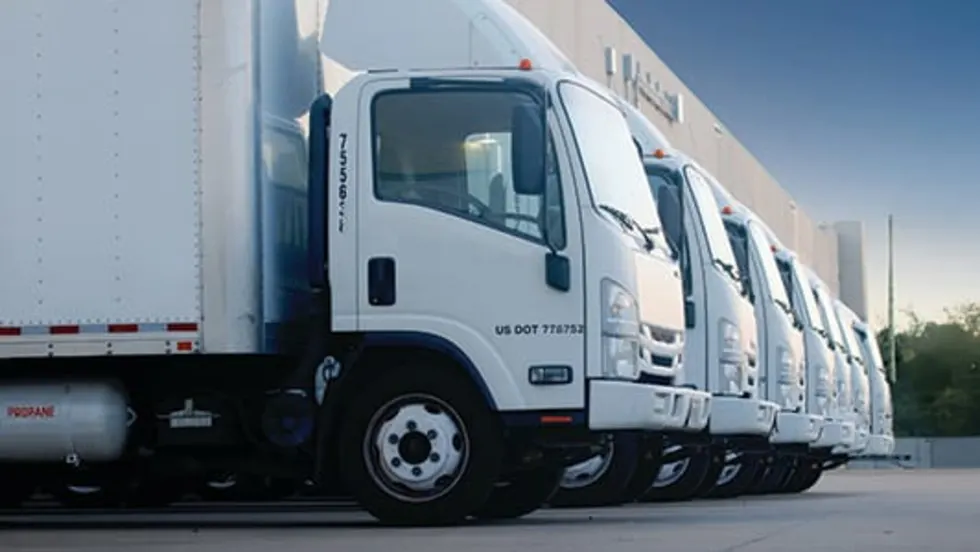
New Propane Autogas Program Offers Fleet Compensation
Qualified commercial fleets can receive $7,500 per eligible propane autogas vehicle and up to $10,000 for new refueling site prep. Learn how the program works and see whether your fleet qualifies.
Read More →
EV Charging Use Is Outpacing Infrastructure Growth
ChargePoint’s 2026 Charging Forward Report points to rising charger use, higher-powered charging, commercial vehicle electrification, and energy-management technology. Here’s what fleets should know.
Read More →
Merchants Fleet Reports 290M EV Miles as Fleets Navigate Changing Electrification Market
From millions in operating savings to hundreds of millions of EV miles, Merchants Fleet’s latest report reveals what’s working and what’s changing in fleet electrification.
Read More →
The EV Breakdown Nobody's Talking About: Why Most Electric Vehicle Roadside Calls Aren't Mechanical Failures
Here's why EV breakdowns are widely misunderstood.
Read More →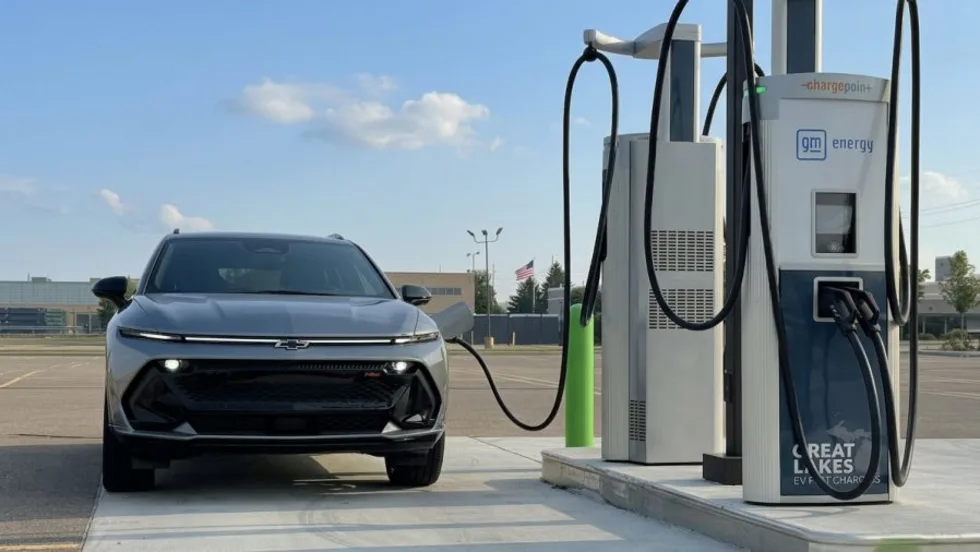
ChargePoint Now Available in Energy Pass
ChargePoint and additional planned charging network integrations were added to GM's Energy Pass.
Read More →

First Look: Slate Auto's Electric Fleet Pickup
Could an affordable, modular EV pickup make electrification more practical for fleets?
Read More →
Slate Debuts Colorful, Unique EV Models
A recent media and client event, studded with electric vehicles dressed up on platforms, planted a new position for the manufacturer in the wider EV market. Fleets will find cost-saving advantages.
Read More →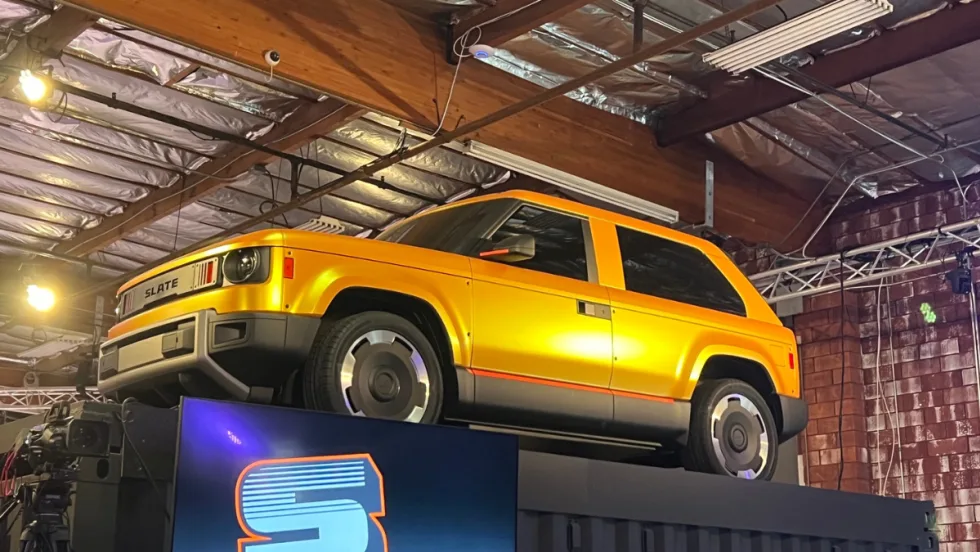
Slate Electric SUV, Pickup Switchable Model Aims For Light-Duty Fleets
Everything about this EV is counterintuitive and understated, making it stand out from the crowd.
Read More →
Inspiration Mobility Acquires Key Electrada Assets
Inspiration Mobility Group has acquired select assets of Electrada, adding the fleet electrification provider's team, technology, and charging infrastructure development capabilities to its energy management business.
Read More →