




This article appeared in the 2021 Connected Fleet Guide, which offers resources to turn connected car data into actionable insights to foster safer and more efficient fleets.
Reaping the Benefits of OEM Telematics
As manufacturers build more vehicles with OEM-embedded modems, it opens the door to direct data connections and new services for fleets.
by Ronnie Wendt
October 7, 2021
To prepare for OEM telematics, fleet owners must get consent to collect and use data, while OEMs must agree to privacy principles and protect that data.
Getty
8 min to read
Widespread adoption of autonomous vehicles may be years out, but connected cars already move among us.
Today’s modern automobiles are sensor-laden mobile Internet of Things (IoT) devices offering sophisticated on-board computing power and advanced communication systems. These innovations drive data that fleet managers can use about vehicle location, driver behavior, engine diagnostics, and telematics.
As manufacturers embed factory modems in more vehicle models, it opens the door to newer vehicle services, found a panel discussion hosted at last year’s Fleet Forward Conference.
OnStar pioneered the trend 25 years ago by enabling drivers to secure help in emergencies by pressing a button in their General Motors (GM) cars. The technology has since expanded to include the ability to track location, automatically summon help upon airbag deployment, and even remotely slow down a car or block ignition.
The success of this groundbreaking technology fueled the development of aftermarket telematics devices. The action today, however, is back with the automakers that are opening direct data connections to vehicle owners and third-party app providers.
Today, over three-quarters of all new vehicles have some data capability embedded in the system, although certain lower-priced units may lack the technology, says Arun Rajagopalan, founder of Motorq, a Silicon Valley-based connected car data and analytics company.
“I think it’s very encouraging,” says Rajagopalan. “In a fleet parking lot, I estimate about 50% of all vehicles are connectable, depending upon the rate in which (those operations) cycle vehicles through their fleets.”
The most popular data used by fleet managers pertains to vehicle maintenance, driver safety, and location, he adds. However, user experiences are driving the development of more advanced features.
“Just because a vehicle generates data doesn’t mean the data resolves a pain point,” Rajagopalan explains. “However, because more data is available, fleet managers can pick which data solves their specific concerns.”
Motorq works with vehicle OEMs to digest data and creates the infrastructure for logging, monitoring, and interpreting that data. Because datasets coming from vehicles differ by manufacturer, the challenge exists in capturing data, normalizing it, cleaning it up and feeding it to customer applications.
“Motorq does a lot of heavy lifting with structuring data and analytics,” Rajagopalan explains, noting the firm endeavors to create application programming interface (API) layers that manage a mix of inputs focused on solving specific pain points.
OEM connections can grant access to information that aftermarket developers may find difficult to process as controller area network (CAN) busses become more complex. Rajagopalan predicts OEMs will center new data sets on collision and camera data and remote commands that go well beyond the current capabilities of aftermarket devices.
Managing Data Consent
The beauty of OEM schemas is that they can turn data on and off through user and company consent policies. As a result, manufacturers are developing a roadmap for data that they can expose to various devices, like key fobs, says Rajagopalan.
To prepare, fleet owners must get consent to collect and use data, while OEMs must agree to privacy principles and protect that data, he adds. “It is important to make sure both the driver and vehicle owner consent to data collection before sharing the data,” he explains. “Regulations developed through the California Consumer Privacy Act (CCPA) govern how companies and fleets collect and use data.”
A consent platform is at the core of Motorq’s system to get the right level of driver and owner consent to use APIs. It’s challenging because each OEM is different. “Once we have consent, then data starts flowing,” says Rajagopalan. “However, when a vehicle comes off a fleet’s program, then we need to work with OEMs to stop data flow electronically through software.”
It is essential that fleet managers develop employee handbooks and fleet policy documents with company lawyers to provide correct notice and get required driver consent pertaining to connected vehicle data, he explains.
“Consent for legacy telematics was not always a thing. However, with new constructions and frameworks being developed, it is becoming very important,” he says.
Expanding OnStar Capability
According to Kristie Mitchell, GM’s API and data services manager, customers like having hardware pre-installed in vehicles, especially for commercial.
“I have yet to meet a fleet manager who wants aftermarket hardware installed in a vehicle,” she says. “Who wants a vehicle off the road and not generating income? Who wants to pay for hardware, pay to install it, track its use and then pay to uninstall it when the vehicle is sold?”
GM has offered customers the ability to collect even more data out of cars and trucks starting in model year 2015. Mitchell says customers like the convenience of having equipment to read and broadcast data installed by OEMs.
“Customers recognize that an OEM-quality module has gone through validation and testing by the company, and is then integrated into the manufacturing process,” she explains. “When commercial vehicles come equipped with a built-in solution, customers have confidence in the equipment because it came from the OEM.”
Integrations can be configurable by vehicle identification number (VIN) with software pushed to a car or truck over the air via the OnStar module to any GM vehicle older than model year 2015. That allows the OEM to add new features without installing additional hardware.
“Pushing transactions directly to a vehicle means it doesn’t have to be taken out of service and the company doesn’t lose revenue, experience any downtime or lost productivity,” she adds.
OnStar’s core benefit centers on safety, and from a data standpoint, the system is able to manage notifications as fleets turn services on or off. Most GM vehicles going back to 2019 have a privacy setting that allows drivers to turn off location data.
This would benefit drivers who also use their work vehicles for personal use during off hours. While the OnStar system still captures information related to speed, oil life, and tire pressure, location data isn’t captured unless the vehicle is involved in an emergency, such as crash response or stolen vehicle.
In-Vehicle Coaching
One of GM’s most recent innovations involves in-vehicle coaching. This tool helps drivers identify when they engage in riskier behavior, such as speeding over posted limits, harsh braking or accelerations or not wearing a seat belt.
“We have always been able to get data to put on a scorecard,” says Mitchell. “But a driver might say, ‘I don’t know what you’re talking about’ because he can’t remember the events.”
In-vehicle coaching alerts drivers about recordable events through the audio system so they can immediately change their behavior, she adds.
Transition Period
The ability of telematics to improve productivity and run fleets more efficiently has driven its explosive growth, says Jon Leicester, vice president of telematics and connected vehicle solutions for Element Fleet Management. “It is no longer a question of whether (the fleet) should use telematics, but how (the fleet) should use it,” he explains. “It’s no longer about the basics of telematics, but what else can fleets do with the data.”
“Once fleets realize data is available, they’ll start to use it,” he adds. “They’ll use measurables like driver scorecard tracking behavior and put that in context with how many miles the driver is traveling.” Data is also used commonly to help fleets right size or reassign vehicles by tracking and analyzing usage patterns.
Handling the diversity of data from different manufacturers in a mixed fleet will present a few challenges because the type and scope of the data generated by each model is different, Leicester says. “Everyone wants to go to factory-connected devices where connections can just be turned on,” says Leicester. “Fleet managers may want to move forward, but that will not happen immediately. There will be a transition period.”
Right now, he estimates only 20% of fleet vehicles on the road today have connected services through aftermarket telematics devices; however, that percentage will increase rapidly with OEM-embedded modems and tech advancements.
“Very few customer solutions offer the same data,” he explains. “It is not a one-size-fits-all approach. All our customers have different requirements. Some may be more concerned about safety, but others want data to address productivity.”
Companies have cleared the barriers to telematics in recent years, says Leicester, adding that it is an exciting time to try the technology because fleets don’t have to invest a lot of money in hardware installs. “Software is a much different approach from having to install hardware,” he explains. “Once consent is in place, it’s a matter of turning the data on and off.”
Data will soon cascade down to other features, such as paying for gas without getting out of a car, he predicts.
Embedded telematics also allows for a more targeted use of data: For example, companies may be reluctant to install telematics in the car of a highly paid, reputable, productive salesperson and manage the employee’s attitude around that.
But the equation changes with a factory-installed modem that can be accessed at opportune moments. “They probably will not care as long as the salesperson is driving safely and achieving his goals, but the data will be available,” he adds.
Finally, OEM data will play a big part in the rapid adoption of electric vehicles in commercial markets.
“Electric vehicles are a very exciting space,” adds Rajagopalan. “OEMs are supporting software to send commands to cars to start and stop charging cycles. Companies have years of data to learn about battery efficiency and how vehicles perform in Minneapolis when temperatures are minus 20 degrees versus Los Angeles where temperatures are 100.”
Leicester says even bigger changes are coming because of the paradigm shift from internal combustion engines to software-controlled electric vehicles. “Companies are looking to not just design vehicles but use telematics to leverage data from all of it,” he adds.
About the Author: Ronnie Wendt operates In Good Company Communications, a copywriting business that specializes in technology topics in the automotive, industrial and software industries.
Subscribe to Our Newsletter
More Telematics
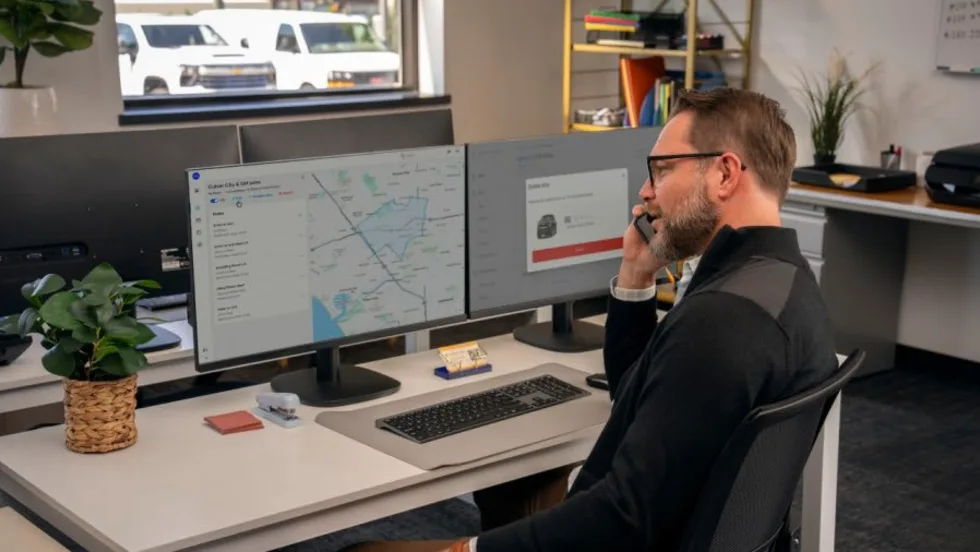
GM Launches OnStar Fleet Intelligence Platform With AI Assistant
The new platform brings vehicle data, order tracking, connected services and fleet analytics into one system, with an AI assistant that can answer fleet questions using natural-language prompts.
Read More →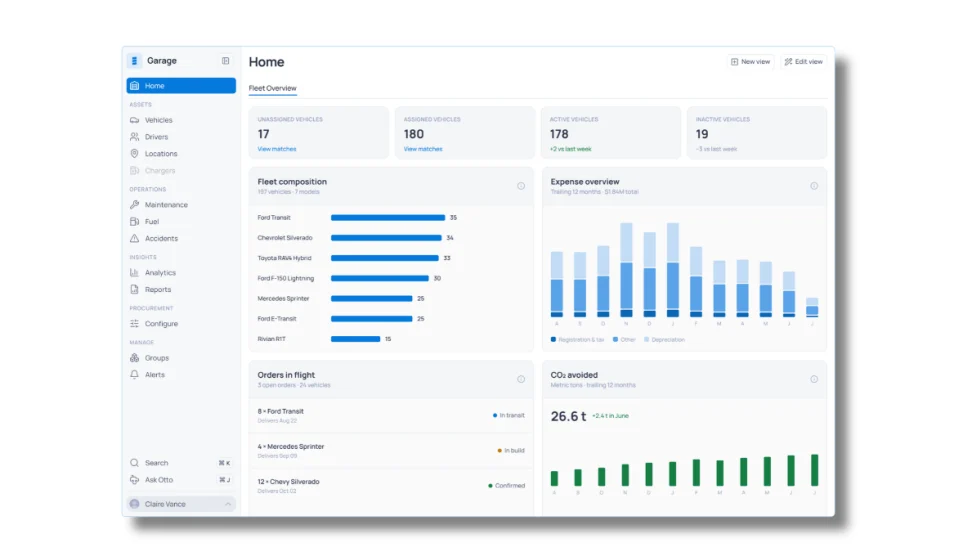
Inspiration Fleet Introduces Garage 2.0 Fleet Intelligence Platform
Fleet managers increasingly have access to data from vehicles, telematics, fuel, charging, and other systems, but those sources don't always communicate with one another. Inspiration Fleet's Garage 2.0 platform brings that information together while letting fleets keep working with different technology and service providers.
Read More →
Inside Inspiration Fleet’s New Platform for Connecting Fleet Data
Inspiration Fleet CTO Chris Getner explains how the new Garage 2.0 platform is designed to connect disparate fleet data and what that could mean for fleet managers in practice.
Read More →
Sponsored•October 1, 2026
Fleet Manager’s Ultimate Playbook: Navigating the New Standard in OEM Connectivity
Rising operating costs, driver safety concerns, and unplanned downtime are putting unprecedented pressure on modern fleets. Discover how fleet managers use embedded OEM connectivity and real-time vehicle data to cut TCO, prevent downtime, and protect drivers without aftermarket telematics hardware.
Read More →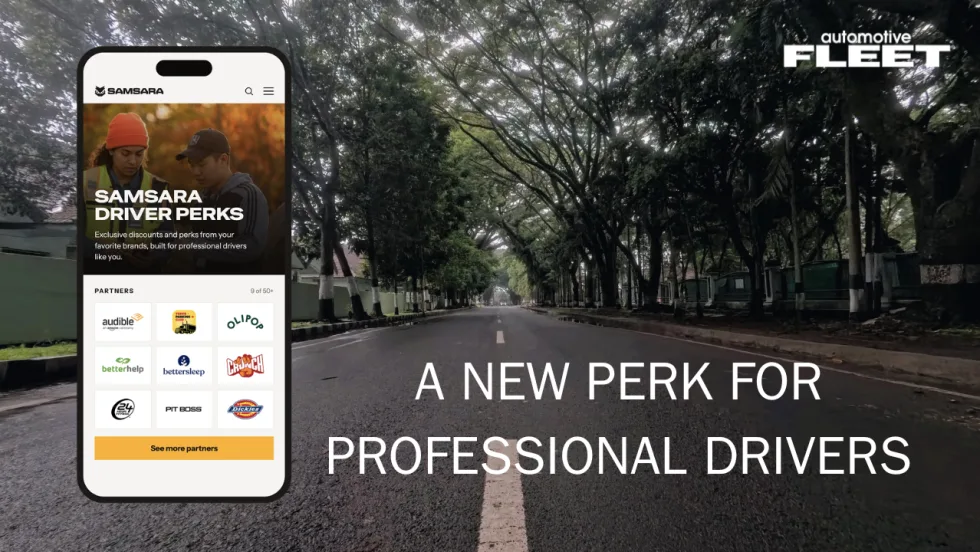
Samsara Driver Perks Adds New Benefit for Corporate Fleet Drivers
The rewards program gives eligible professional drivers access to discounts from more than 50 brands while giving fleets another way to support recruitment, retention, and the driver experience.
Read More →
Inside the Church of Jesus Christ of Latter-day Saints’ Two-Track Telematics Strategy
With 20,000 vehicles and two fundamentally different driver populations, the Church faced a fleet management problem that a single telematics program couldn't solve. How it responded offers a replicable framework for any fleet where one size doesn't fit every driver.
Read More →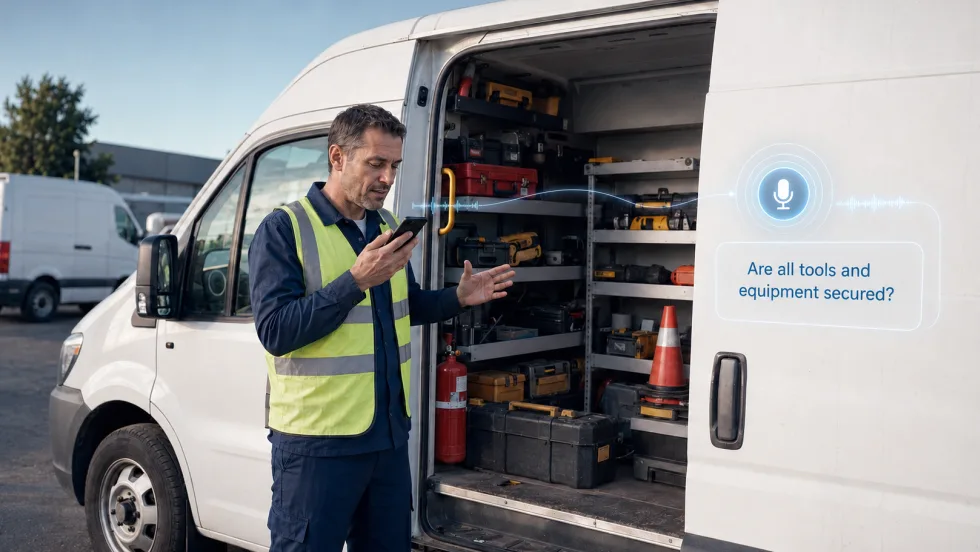
How Conversational AI Can Make Fleet Tasks Easier for Drivers
While most generative AI tools help fleet managers interpret data at their desks, Connex2X is applying voice interaction to tasks behind the wheel.
Read More →
Why Fleets Are Creating Dedicated Fleet Analyst Positions
Are fleet analyst positions the new norm? Listen here to find out.
Read More →
Teletrac Navman Begins Next Chapter as Standalone Private Company
What's new with Teletrac Navman and its new owner?
Read More →
Why Fleets Are Creating Dedicated Fleet Analyst Positions
Telematics, AI, EVs, and connected technologies are generating more fleet data than traditional teams can effectively manage. Reed Jackson explains why dedicated fleet analytics roles are emerging to turn that information into better operational decisions.
Read More →