




Learn More: 9 Steps to Convert a Work Truck to Propane Autogas
Propane Autogas: Debunking the Maintenance Myths
The Propane Education & Research Council shares its perspective that propane is simpler, cleaner, and more cost-effective to maintain than many fleet owners may expect.
by Joel Stutheit
June 2, 2025
Modern propane autogas engines are designed to mirror gasoline engines, using many of the same diagnostic tools, service equipment, and repair protocols.
Photo: The Propane Education & Research Council
5 min to read
Editor’s note: The following article was submitted by the Propane Education & Research Council (PERC) and reflects its perspective on propane autogas as a fleet fuel solution. The views and claims presented are those of the author and do not necessarily reflect those of Automotive Fleet.
Have you heard that alternative fuel vehicles are difficult and expensive to maintain? That may be true for some energy sources, but not all of them are created equal. For many fleet owners, making the switch from traditional fuels to propane autogas results in lower fuel and maintenance costs.
While outdated myths like this still circulate about the complexity or serviceability of alternative fuel vehicles, the reality is that propane autogas is easy to maintain, simple to learn, and it can save fleet owners money. Here are the top misconceptions and the facts that prove why propane autogas continues to gain traction among fleet owners.
Myth #1: Propane Autogas Maintenance is Complicated
The truth is, propane autogas maintenance isn’t much different from gasoline and is much simpler than diesel.
Gasoline can degrade over time and create buildup that can contribute to premature wear of engine parts. It also leaves behind more carbon deposits, which can affect performance and longevity. Meanwhile, diesel engines have become increasingly complex due to emissions regulations and complex aftermarket treatment systems. These vehicles rely on diesel particulate filters (DPFs) and diesel exhaust fluid (DEF) to remain compliant. Both components are costly to maintain and can contribute to significant downtime when issues arise.
Propane autogas eliminates both concerns. It is a clean energy source that doesn’t degrade engine components or require additional fluids or filters, exhaust after-treatment, particulate trap systems, turbochargers, intercoolers, or regeneration. Because of this, propane autogas engines experience less carbon buildup on valves and fewer residual contaminants in the oil, resulting in cleaner operation and, in some cases, longer engine life.
With a less complex engine system and a cleaner emissions profile, propane autogas vehicles offer lower maintenance costs. It’s one of the reasons propane autogas consistently delivers the lowest total cost-of-ownership of any fuel.
Myth #2: Special Facilities Are Required for Maintenance
Another common misconception is that propane autogas vehicles require special modifications to service garages. While that is true for some alternative fuels like CNG, if existing buildings are code compliant for diesel and gasoline, typically there are no major modifications required for the maintenance and repairs of propane autogas vehicles. Ventilation may be required if the facility is equipped with a pit used for maintenance, under vehicle inspections, and repairs.
Facility managers should always confirm requirements with their local Authority Having Jurisdiction (AHJ), but in most cases, there’s no need for costly facility upgrades. AHJ’s can assist fleets and define the code requirements, if any, for ventilation, gas detection, sources of ignition, and electrical requirements.
Myth #3: It’s Hard to Find Trained Technicians or Learn Propane Maintenance
Another persistent myth is that it’s difficult to find qualified technicians or train in-house teams to work on propane autogas vehicles. The truth is, propane autogas is one of the most approachable alternative fuels for fleet maintenance, and service technicians can be trained in just a few hours.
Modern propane autogas engines are designed to mirror gasoline engines, using many of the same diagnostic tools, service equipment, and repair protocols. For technicians already experienced with internal combustion engines, the transition is simple and intuitive. Fleet owners interested in training in-house technicians can access in-person or online training resources — many of them free or low-cost — through propane autogas engine manufacturers or the Propane Education & Research Council (PERC). Trade schools and technical programs can also participate in PERC’s Vehicle Inspection Grant Program which provides curriculum resources to help train the next generation of skilled propane autogas technicians.
There is also a wide and growing service network of trained technicians from coast to coast ready to service propane autogas vehicles in local shops. OEMs and fuel system providers offer hundreds of certified service locations across North America.
Whether outsourcing or keeping service in-house, fleet owners have easy access to the tools, training, and support needed to keep their propane vehicles running smoothly.
Real-World Results: McAbee Trucking
McAbee Trucking, Inc., a mail carrier serving the USPS, operates a fleet of propane-powered box trucks across North and South Carolina. Prior to propane autogas, the company operated several diesel vehicles that racked up high maintenance costs to fix expensive regeneration issues tied to diesel emission systems. By replacing diesel with propane autogas, McAbee eliminated those extra maintenance costs and now saves thousands of dollars each year. In fact, the regeneration issues were so costly that owner, Lisa McAbee, estimates she could have purchased three propane vehicles with the money spent on diesel engine repairs over just 18 months.
In addition to lowering maintenance costs, the company has also maintained its 99 percent on-time dispatch rate. McAbee said she’s found the propane vehicles are not only reliable, but easier to manage from a maintenance standpoint.
“One thing I’m grateful for with propane — I’ve had a couple breakdowns with the diesel regen systems. Sometimes the truck had to sit there for an hour. And an hour on a schedule is not good. With propane, I don’t have that issue,” she said.
The Bottom Line
The myth that propane autogas is difficult to maintain doesn’t match the reality. As more fleet owners make the switch, they’re finding fewer breakdowns, simpler service routines, and lower overall operating costs. It’s all backed by a nationwide network of support and opportunities for technicians to learn more. For fleet managers looking to streamline maintenance and boost efficiency, propane autogas is a proven solution. To learn more about technician training, service options, and how propane autogas can support your fleet, visit Propane.com/Fleet-Vehicles.
Joel Stutheit is the senior manager of autogas business development at the Propane Education & Research Council. He can be reached at joel.stutheit@propane.com. For more information, visit Propane.com.
Topics:Fuel
Subscribe to Our Newsletter
More Fuel
Fuel Prices Surge in September | September Fuel Update
September brought major fuel price swings, including diesel crossing $6 a gallon. Here’s how gas and diesel prices changed throughout the month, and where they stood heading into October.
Read More →
Turning Fleet Payment Data into Executive Insights
Ramel Lindsay of U.S. Bank Voyager discusses how fleets can transform payment and transaction data into actionable intelligence to reduce costs, improve oversight, and support executive decision-making.
Read More →
Why the IRS Raised Its Mileage Rate in the Middle of 2026
Fuel-price volatility drove the rare increase to 76 cents per mile, the fifth midyear adjustment since 2000.
Read More →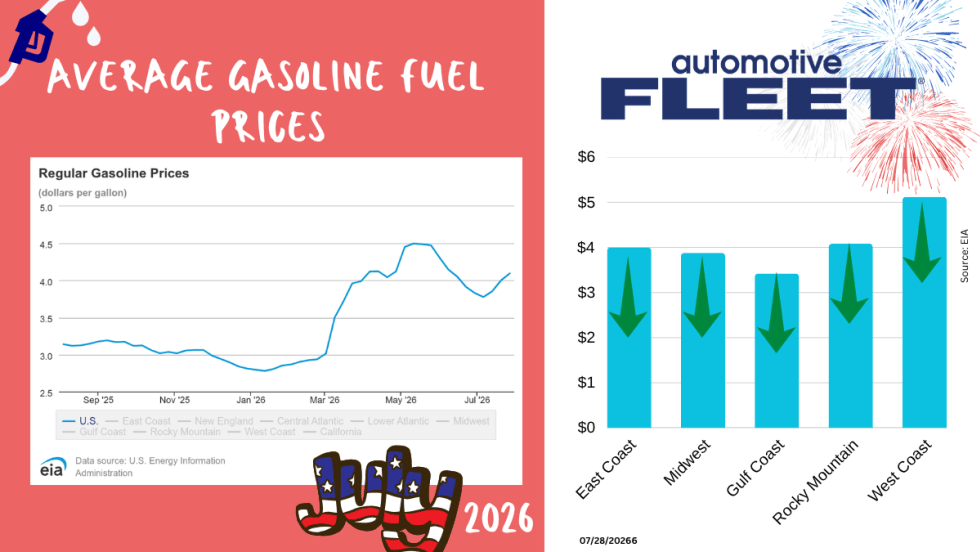
July Fuel Update: Prices Keep Rising in Light of More Conflict
Gas prices continue to rise as more and more conflicts do, too.
Read More →
Bob Adamsky on Fuel Volatility: "Don't Panic, Have a Plan."
When it comes to up and down fuel prices, Adamsky has a message for fleets: “Don’t panic.”
Read More →
How Fleets Can Gain Control of Non-Fuel Spend
Fuel often gets the spotlight, but non-fuel expenses can have a major impact on fleet costs. Ramel Lindsay of U.S. Bank Voyager discusses how fleets can gain better visibility and control over these often-overlooked expenditures.
Read More →
Fuel is Just the Start: How Middle East Tensions are Driving Up Fleet Maintenance Costs
The Middle East conflict is doing more than pushing up fuel prices. It’s also raising the cost of key maintenance products your fleet depends on, from motor oil to tires to windshield wipers. Here’s what you need to know about this budget-busting situation.
Read More →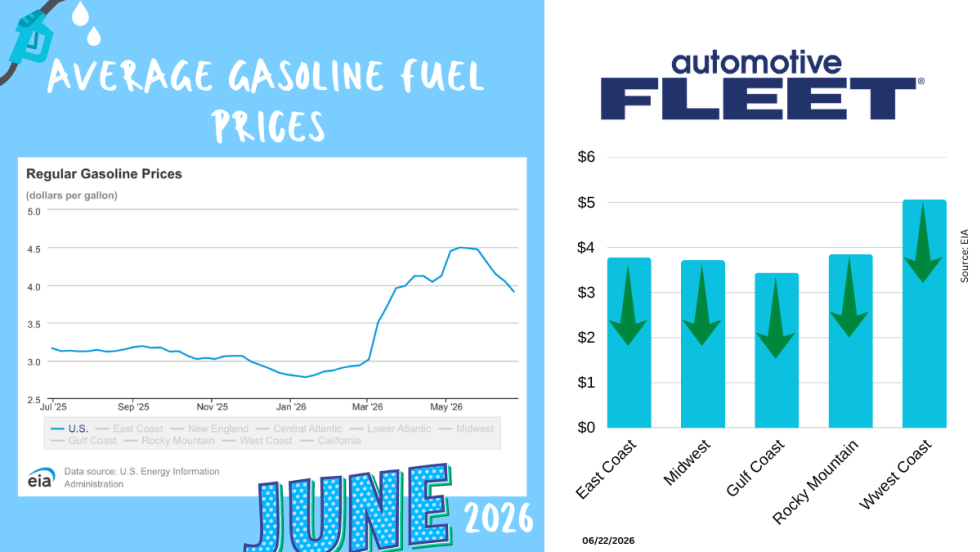
June Fuel Update: Prices Fall Below $4
Drivers are finally getting some relief at the pump. The national average gas price has dropped below $4 a gallon for the first time in months, with prices falling in 47 states as oil markets react to developments in U.S.-Iran negotiations.
Read More →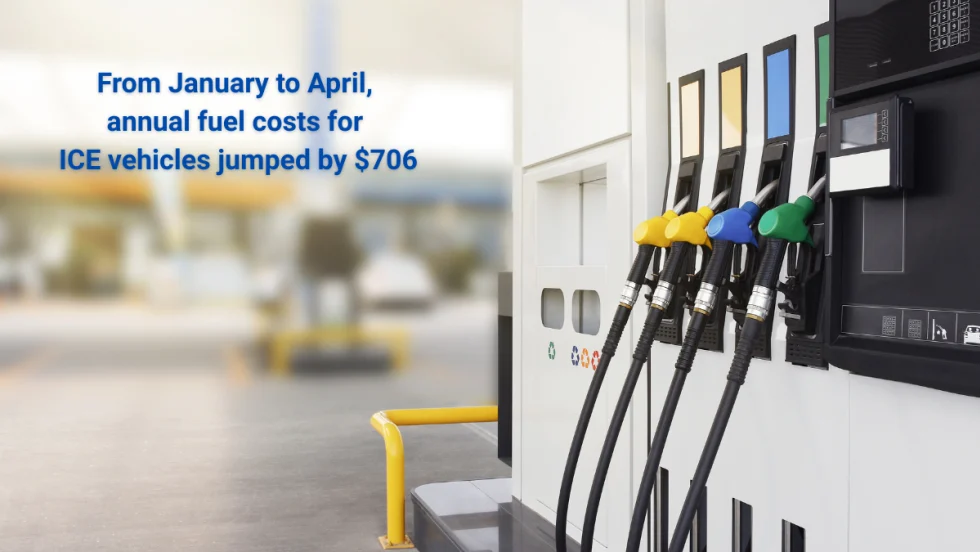
Study: How 2026's Gas Price Hikes Affect Different Vehicle Types
New data from iSeeCars reveals how rising fuel costs have affected different vehicle segments as gasoline prices climbed nearly 46% over the past four months.
Read More →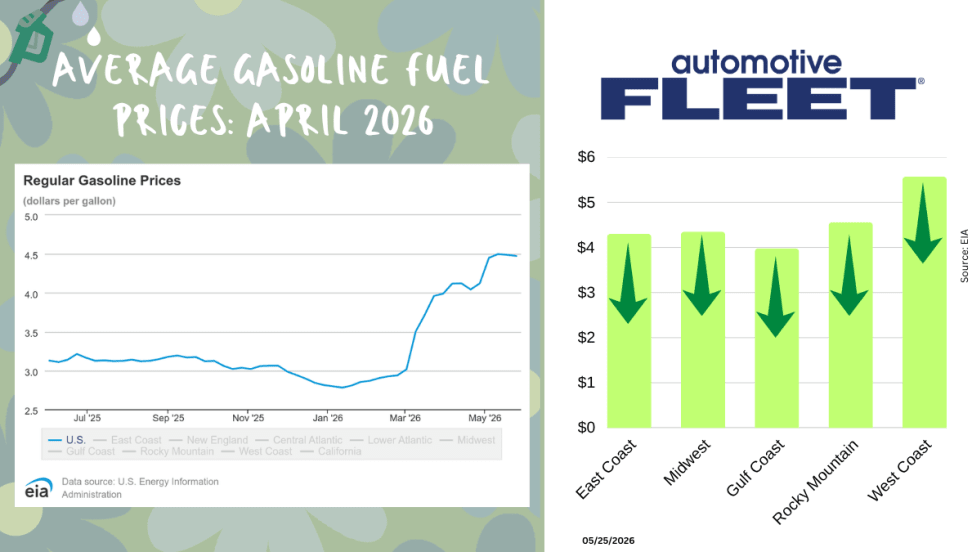
May Fuel Update: All Regions Experience Declines
Gas prices are finally easing in much of the country, but experts warn global tensions could quickly reverse the trend as the national average remains well above last month’s levels.
Read More →