




Did you know? Filling a pickup adds around 220 pounds to the vehicle’s weight, and that weight gradually decreases as the fuel is used. Even after accounting for drivetrain efficiency, gas delivers roughly ten to fifteen times more usable energy by weight than today’s lithium-ion batteries.
Why America’s Most Popular Vehicle is So Hard to Electrify
Turning America’s favorite workhorse electric means balancing range, payload, charging infrastructure, and price, an equation automakers are still trying to solve.
by Alex McIl, VanLeasing
March 9, 2026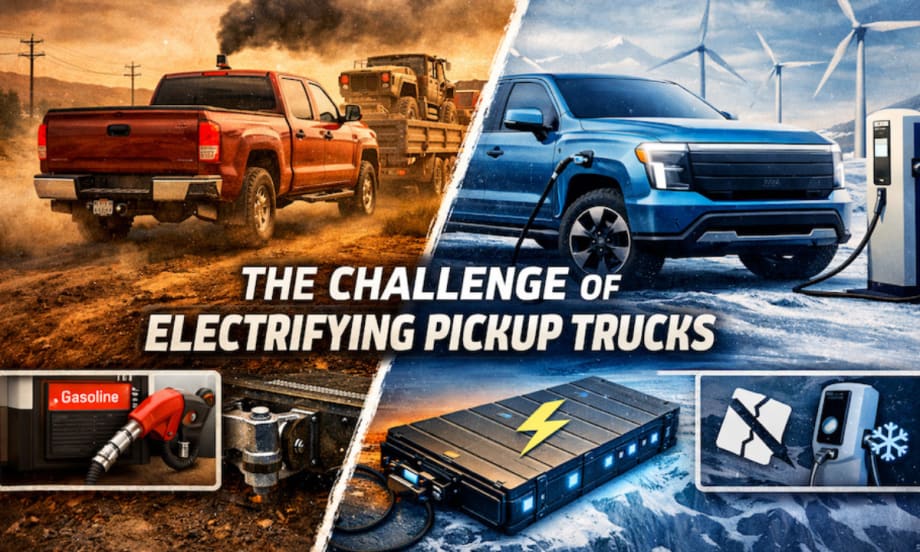
Electrifying the pickup truck requires more than replacing an engine with a battery. Automakers must preserve the range, payload, towing capability, durability, and fast replenishment that make pickups valuable work tools.
Credit:
This photo was generated with OpenAI. Please refer to our terms of use.
7 min to read
The pickup truck is one of the most recognizable vehicles in the United States. It is not just a form of transport, but a tool, a workhorse, and in many cases a way of life. With around 60 million pickups on US roads, roughly one in five vehicles, the pickup remains central to how Americans work, travel, and move goods.
Yet despite the rapid growth of electric vehicles more broadly, electric pickup trucks remain rare. Only several thousand are currently in circulation, and this imbalance has led to a common assumption that American pickup buyers are resistant to electrification.
That assumption is convenient, but largely incorrect.
The reality is that the pickup is one of the most difficult vehicle types to electrify, largely due to engineering challenges.
Pickups are expected to deliver high payload, sustained towing, long-distance capability, rural usability, and minimal downtime. These demands align closely with the strengths of gas and diesel powertrains, and poorly with the limitations of current battery technology.
As a result, the slow adoption of electric pickups reflects a technical challenge rather than a lack of interest. The real question is not whether electric pickups will be accepted, but whether they can be engineered to genuinely match what combustion pickups already do reliably and at scale.
Battery Weight Directly Eats Payload
Battery weight is the single biggest engineering constraint facing electric pickup trucks.
Pickups are not judged primarily by acceleration or headline range figure, but by how much they can carry in the bed, how much they can tow, and how consistently they can do both without compromising usability. Payload and towing capacity are central to what defines a pickup as a working vehicle.
Electric pickups start at a disadvantage because batteries are exceptionally heavy. A large battery pack suitable for a pickup typically weighs between 1,500 and 2,200 pounds. That mass is permanent and always on board, regardless of whether the truck is empty or fully loaded.
In vehicle engineering terms, this weight counts directly against the truck’s gross vehicle weight rating. Every pound allocated to the battery is a pound that cannot be used for cargo, tools, materials, or trailer tongue weight. Increasing battery capacity to improve range does not come for free. It reduces usable payload.
The issue is not theoretical. For buyers who rely on pickups for work, payload limits are quickly reached. Tools, equipment, passengers, and trailer tongue weight all stack up. Once legal payload limits are exceeded, the vehicle is no longer compliant, regardless of how capable it may feel to drive.
At that point, electrification stops being a matter of preference and becomes a constraint. For pickups in particular, choosing between gasoline, diesel, or electric power is less about ideology and more about selecting the right fuel typefor the physical demands placed on the vehicle.
Body-on-Frame Pickups Clash With Batteries
Traditional American pickups are built around a ladder frame, with two high, rigid frame rails running the length of the vehicle. This layout is excellent for towing and hauling because loads are transferred through the frame rather than the body, and the rear axle can carry significant weight without compromising durability.
Batteries do not fit neatly into this structure.
Large battery packs need to be flat, wide, and centrally mounted to protect the cells, manage heat, and keep the vehicle stable. In a body-on-frame pickup, that space is already occupied by frame rails, crossmembers, driveshaft clearances, and suspension components.
As a result, engineers face a difficult choice. Either the battery must be split, raised (affecting the center of gravity), or reshaped to fit between the frame rails, which adds complexity and limits capacity. Otherwise, the frame itself must be redesigned around the battery, which undermines the simplicity and strength that body-on-frame construction is known for.
Additionally, pickup batteries sit low and exposed. Unlike cars, pickups are expected to operate off-road, on worksites, and over debris. This requires heavy underbody armor, reinforced mounts, and complex crash structures to protect the battery from impact and intrusion, all of which add further weight and cost.
This is why adapting an existing pickup platform to electric power is far more difficult than electrifying a car or SUV. The battery is not just another component. It fundamentally conflicts with how pickups are traditionally engineered to carry loads and survive abuse.
Range and Charging Remain Major Issues
Range is not an abstract concern in the United States. It is shaped by geography, work patterns, and distance. Americans routinely drive long stretches between towns, job sites, and states, particularly in rural areas where pickup trucks are most common.
In that context, the real-world range of an electric pickup becomes a limiting factor. While gas and diesel pickups commonly travel around 400 miles on a full tank, many electric pickups deliver closer to 150 miles in everyday use and often less under real-world conditions.
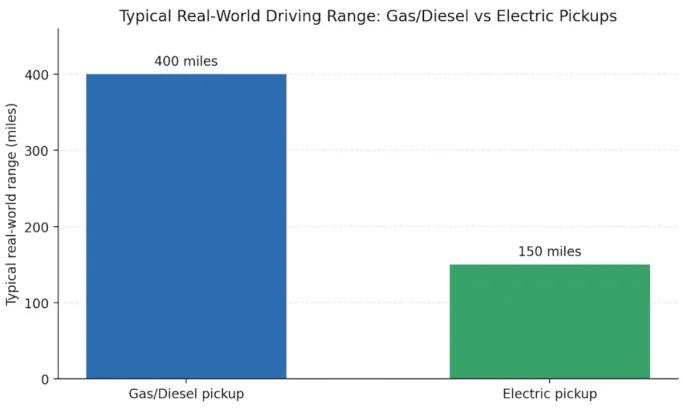
The real-world range gap becomes especially important for fleets when towing, payload, highway driving, and limited access to charging are part of the daily job.
VanLeasing.com
What makes this gap more significant is not just the headline figure, but how quickly electric range erodes in situations that pickups are designed for. Towing a trailer, carrying heavy loads, driving at highway speeds, or operating in cold weather all sharply increase energy consumption. In some cases, towing can reduce usable range by more than half, turning a long-distance vehicle into a short-hop one.
Range in electric pickups is also less flexible than that of combustion trucks. A fuel tank provides consistent performance until it is nearly empty, and refueling takes minutes. By contrast, electric range is affected by battery temperature, charging state, and power demand. Even on high-power DC fast chargers, electric pickups typically require 30 to 40 minutes to recharge from a low state of charge to around 80 percent under ideal conditions.
Beyond that point, charging slows significantly. The final 20 percent of battery capacity can take as long as 2 hours, or more. For a vehicle expected to cover long distances with minimal interruption, this charging behavior fundamentally changes trip planning.
For cars used primarily in urban or suburban settings, these limitations are often manageable. For pickups, which are expected to travel long distances, operate far from infrastructure, and remain productive throughout the day, the restrictions are far more stringent.
This is why range remains a central challenge for electric pickups. It is not just about how far the vehicle can go on paper, but how reliably it can cover long distances under load, in all conditions, without interrupting how pickups are traditionally used.
Cold Weather Hits Hard
Cold weather exposes several weaknesses in electric pickup trucks simultaneously. While all electric vehicles experience winter efficiency losses, the effect is more severe in pickups because of their size, weight, and the type of work they are expected to perform.
At low temperatures, battery chemistry becomes less efficient due to increased internal resistance. This resistance affects the battery in two ways: during discharge and during charging.
When the vehicle is driving, more energy is lost as heat inside the cells, reducing usable power and effective range. During charging, the same resistance limits how quickly energy can be safely pushed back into the battery. As a result, cold conditions reduce range and slow charging.
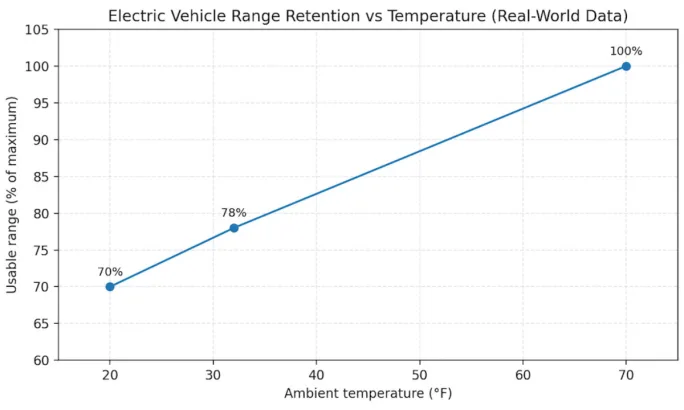
Cold weather can deliver a double hit to electric pickups by reducing usable battery range while also slowing charging, a significant consideration for fleets operating through winter conditions.
Heating demand compounds the problem in ways that are easy to underestimate. Gas and diesel pickups generate abundant waste heat from the engine, which can be redirected into the cabin at no cost. Electric pickups cannot do this.
Cabin heat must be produced electrically, drawing directly from the traction battery. Because the battery is already operating less efficiently in cold conditions and takes time to reach its optimal temperature, the relative energy cost of cabin heating is highest when pickups are typically being used.
Departing Thoughts
What ultimately limits electric pickup adoption today is not demand, incentives, or awareness. It is the current state of the technology. Batteries still impose hard constraints on weight, range under load, replenishment time, and cold-weather performance, all in a vehicle category that has historically been defined by surplus capability and flexibility.
That does not mean the picture is static. Several developments would materially change the equation for electric pickups if and when they arrive at scale. Higher energy-density batteries would reduce the payload penalty. Faster charging with less aggressive taper would shrink downtime. Improvements in cold-weather performance and thermal management would narrow the winter capability gap. Even modest gains across these areas would matter more for pickups than for cars, because they attack the specific constraints that define pickup usability.
Until those advances are realized, electric pickups will continue to make sense in narrower, more predictable roles rather than as universal replacements. When the technology shifts, adoption will likely follow quickly, not because buyers have changed their minds, but because the vehicle will finally meet the expectations pickups have always carried. In that sense, the future of electric pickups is less a question of persuasion and more a question of physics catching up with demand.
Subscribe to Our Newsletter
More Green Fleet
Sponsored•October 1, 2026
New Propane Autogas Program Offers Fleet Compensation
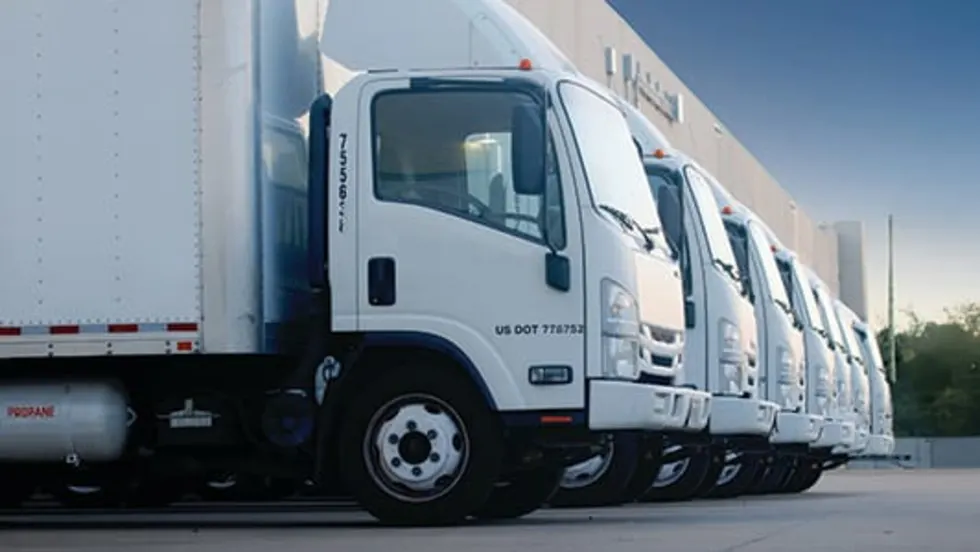
Qualified commercial fleets can receive $7,500 per eligible propane autogas vehicle and up to $10,000 for new refueling site prep. Learn how the program works and see whether your fleet qualifies.
Read More →
EV Charging Use Is Outpacing Infrastructure Growth
ChargePoint’s 2026 Charging Forward Report points to rising charger use, higher-powered charging, commercial vehicle electrification, and energy-management technology. Here’s what fleets should know.
Read More →
Merchants Fleet Reports 290M EV Miles as Fleets Navigate Changing Electrification Market
From millions in operating savings to hundreds of millions of EV miles, Merchants Fleet’s latest report reveals what’s working and what’s changing in fleet electrification.
Read More →
The EV Breakdown Nobody's Talking About: Why Most Electric Vehicle Roadside Calls Aren't Mechanical Failures
Here's why EV breakdowns are widely misunderstood.
Read More →
ChargePoint Now Available in Energy Pass
ChargePoint and additional planned charging network integrations were added to GM's Energy Pass.
Read More →

First Look: Slate Auto's Electric Fleet Pickup
Could an affordable, modular EV pickup make electrification more practical for fleets?
Read More →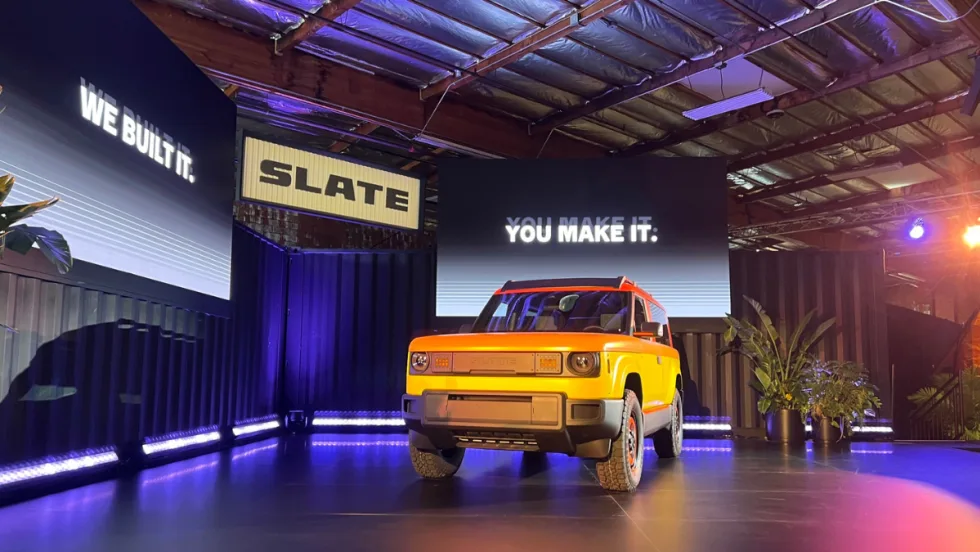
Slate Debuts Colorful, Unique EV Models
A recent media and client event, studded with electric vehicles dressed up on platforms, planted a new position for the manufacturer in the wider EV market. Fleets will find cost-saving advantages.
Read More →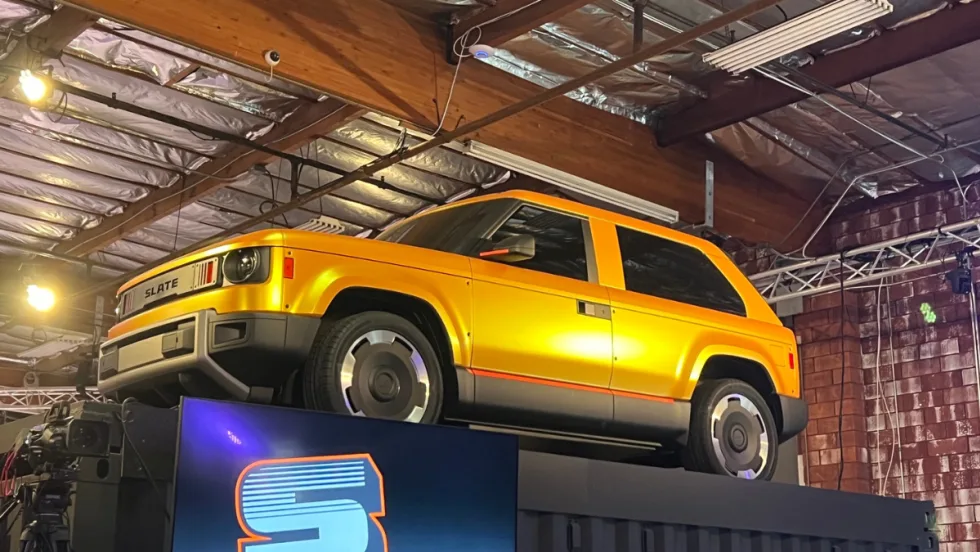
Slate Electric SUV, Pickup Switchable Model Aims For Light-Duty Fleets
Everything about this EV is counterintuitive and understated, making it stand out from the crowd.
Read More →
Inspiration Mobility Acquires Key Electrada Assets
Inspiration Mobility Group has acquired select assets of Electrada, adding the fleet electrification provider's team, technology, and charging infrastructure development capabilities to its energy management business.
Read More →