




Nothing About Fleet Stands Still Anymore
Is the fleet industry finally accepting that volatility is the new normal?

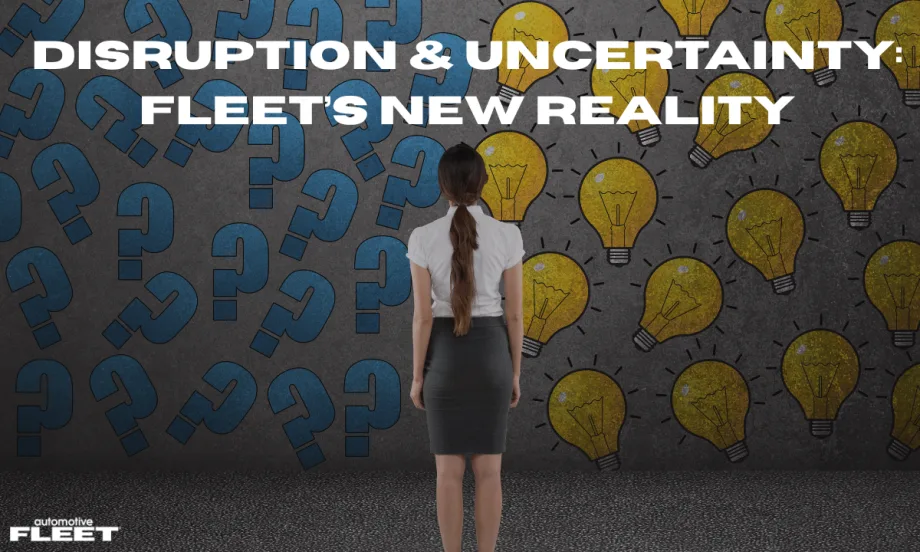
Fleet leaders are navigating a future where volatility is the operating system.
Image: Automotive Fleet
The fleet industry is increasingly acknowledging that stability isn’t coming back, at least not in any form that resembles the past. As Kimberly Fisher of NOV put it, “Disruption is just part of our lives now. We’re always going to have new disruption.” What once felt like a series of isolated shocks has settled into a permanent operating environment.
That reality is forcing fleets to readjust planning, risk, and investment. Electrification may be the most visible shift, but it now comes amid policy uncertainty, AI acceleration, global automotive realignment, the evolution of autonomy, and growing workforce pressure.
These insights emerged from theoretical discussions and real-world case studies at the 2025 Fleet Forward Conference in San Diego, where fleet managers, vendors, analysts, and technology leaders explored what it means to run operations in a world that no longer stands still.
A Fleet Industry Operating in Permanent Volatility
Speakers across multiple sessions described 2025 as a year when every major force in fleet management converged. “This is a convergence year where every trend hits the fleet manager at the same time: electrification, AI, autonomy, China, regulation, and cost pressure,” said Tyson Jominy of J.D. Power in his plenary session.
Supply-chain shocks, post-pandemic demand swings, changing incentive landscapes, and uneven global production have all forced fleets to develop new reflexes. “I think disruption brings opportunity,” said Mace Hartley of the Australasian Fleet Association (AfMA) in the opening keynote. “Having lived through 2020, within 12 months, we knew the cycle. We knew how to deal with it.”
Instead of waiting for stability to return, fleets are designing systems and strategies that assume volatility will continue.
Electrification in a Market Still Finding Its Footing
Electrification remained one of the most discussed topics at FFC2025, and the discussions revealed a more uneven landscape. Passenger EV adoption continues to move forward, yet commercial EV deployment “is still in its infancy,” as several speakers noted, constrained by limited vehicle availability, inadequate range for certain missions, and inconsistent charging access.
This gap was underscored when news broke during the event that GM was shutting down its BrightDrop electric van program.
Against this backdrop, fleet conversations focused less on declarations and more on evidence-based approaches. Clinton Bench of UCLA reported that the university’s fleet is now 45% battery electric. Yet even within a compact campus footprint, success depends on optimizing charger distribution, reshaping driver routines, and using telematics to turn data into actionable decisions. “We haven’t done a good enough job turning data into the information we need for distribution and charging decisions,” Bench said.
For fleets operating across large geographies, foundational work comes first. San Bernardino County is conducting site-by-site electrical-capacity audits to determine which facilities can realistically support charging. “We’re not shifting plans with every administration,” said Mark McCullough. “We’re looking at what’s best for the county and meeting mandates without being whiplashed.” Bradley Northup of the City of Carlsbad echoed the need for resiliency planning and carefully sequenced investments rather than large, upfront infrastructure commitments.
How Fleets Are Learning What Works in Electrification
If the first wave of EV enthusiasm emphasized technology, the conversations at FFC2025 made clear that the current phase is about operational learning — matching vehicles to duty cycles, routing intelligently, and understanding where electrification genuinely delivers value.
The session with Mary Till of Sawatch Labs, Beth Murphy of Revolv, and Sadie Dougherty of Utilimarc illustrated this with data from hundreds of deployments. Their research showed that most commercial duty cycles fall well below the range capacity fleets believe they need. Daily use often sits under 75 miles. In many cases, EVs returned to base with more than 50% of battery capacity unused — evidence that range anxiety often pushes fleets to overspecify vehicles.
Just as important, misallocating EVs to the wrong job can turn a promising project into an expensive one. As one panelist noted, “you can lose millions, not save them” when duty cycles are not analyzed carefully.
Driver behavior emerged as one of the biggest variables in EV success. The panel shared data indicating that drivers are often less frustrated by the availability of charging than by the time it takes. Real-world charging habits — when and where drivers plug in — continue to shape depot design, TCO models, and workflow adjustments.
Siemens offered one of the most vivid real-world examples. With more than 2,600 EVs deployed, the company discovered through telematics that 86% of charging occurs at home, not at depots. “My depot is their home… the customer they service,” said Adam Orth. That single insight shifted Siemens toward a distributed, hub-and-spoke charging model built around actual usage rather than planning assumptions.
This operational shift is changing the nature of the fleet manager’s job as well. Orth noted that energy planning now sits squarely within fleet management — “where power is coming from, how it’s priced, and how batteries are being used” — a far more complex scope than traditional vehicle provisioning.
Across sessions, speakers reinforced that electrification’s biggest hurdles are human and operational. Driver engagement, daily charging routines, and new processes often determine success more than battery size or charger speed. As Orth put it, resistance drops quickly once drivers gain hands-on experience with EVs.
Data and AI Move from Concept to Daily Practice
The conversation around AI followed a similar trajectory: less speculation, more grounding. Ian Gardner opened the AI track by noting that adoption is growing but far from uniform. Only a small share of fleets are fully committed to generative AI today, while most are experimenting or waiting for clearer use cases. The bottlenecks, Gardner said, are not enthusiasm but fragmented systems, inconsistent data quality, and a workforce still developing the skills needed to support AI tools.
Rather than replacing fleet managers, Gardner argued that AI’s near-term value lies in automating routine tasks such as maintenance triage, ticket and toll processing, and vendor coordination — with natural-language interfaces serving as the bridge. The goal is not sweeping automation but simplifying daily work.
In another AI session, Eddie Nath of Mobilisights/Stellantis and Aaron Osborne of Ford Pro emphasized that fleets do not struggle with a lack of data so much as a lack of usable data. Much of what fleets collect sits in silos or arrives in incompatible formats, making it difficult to turn information into decisions. Their message echoed throughout the week: AI becomes powerful only when the underlying data is structured, connected, and tied to a clear operational problem.
Legal and governance considerations are also entering the conversation. “If you’re talking to legal when your AI project is about to launch, you’re getting a no,” warned Lalia Pastzi of Polsinelli. Privacy, safety, and compliance need to be addressed from the beginning, not at the end.
Autonomy Quietly Enters the Fleet Conversation
Autonomy was not the headline topic of FFC2025, but it threaded through enough sessions to suggest a growing fleet relevance. Author John Niles highlighted how autonomous ride-hail systems like Waymo are logging hundreds of thousands of weekly rides, with passengers increasingly treating travel time as productive time.
Autonomous trucking also appeared in multiple discussions, with several companies now running driverless pilots in controlled environments. The relevance for fleets lies less in full automation and more in preparing for mixed operating environments where human-operated, remote-assisted, and autonomous systems coexist. Safety protocols, mapping needs, charging requirements, and data-sharing frameworks were recurring themes.
China’s Influence Reshapes Expectations
Panels on global automotive dynamics offered some of the most eye-opening comparisons of the week. Ryan Pritchard of Pritchard Companies and Leo Cai, who helped build China’s second-largest car rental company, described how Chinese manufacturers have reached a level of scale, cost efficiency, and software-driven development that outpaces Western OEMs.
China’s EV penetration now exceeds 50%, and its development cycles have compressed from years to months. “Whether or not Chinese vehicles enter the U.S., their influence is already here,” Pritchard said, citing changing expectations around pricing, interiors, connectivity, and product cadence.
For fleet managers, the takeaway is not about imminent Chinese imports but about the shift in global competitive pressure — and how quickly customer expectations may change.
The Workforce Challenge Beneath the Surface
Amid discussions about technology and regulation, speaker after speaker pointed to workforce strain as one of the industry’s most immediate challenges. Public and private fleets alike are navigating technician shortages, the need for more data-literate analysts, and a wave of retirements among experienced managers.
Several speakers warned that without intentional succession planning, fleets risk losing institutional knowledge precisely as EV, AI, and autonomy transitions accelerate. Workforce development, they stressed, must advance in parallel with technology adoption.
Preparing for 2026
By the end of the conference, one sentiment tied the conversations together: nothing about fleet stands still anymore. Electrification continues, but unevenly. Policy influences decisions, but inconsistently. AI is accelerating but demands discipline. Autonomy progresses quietly. Global competition is intensifying. Workforce pressure is growing.
Yet through it all, fleets are adapting. They are sharpening their decision-making, relying more on data, and redefining what resilience looks like. If 2025 was a convergence year, 2026 will demand not just strategy, but stamina.
More State of the Fleet Industry
Is the Future of U.S. Fleets Already Unfolding Overseas?
Fleet Forward Conference keynote speaker John Rossant examines how AI, autonomy, and electrification are converging, and why developments in China, Europe, and the Middle East could preview what’s coming for U.S. fleets.
Read More →
Fleet Meets: Amy McAdams
In this edition of Fleet Meets, Amy McAdams shares how an unexpected career move led to more than 15 years in fleet.
Read More →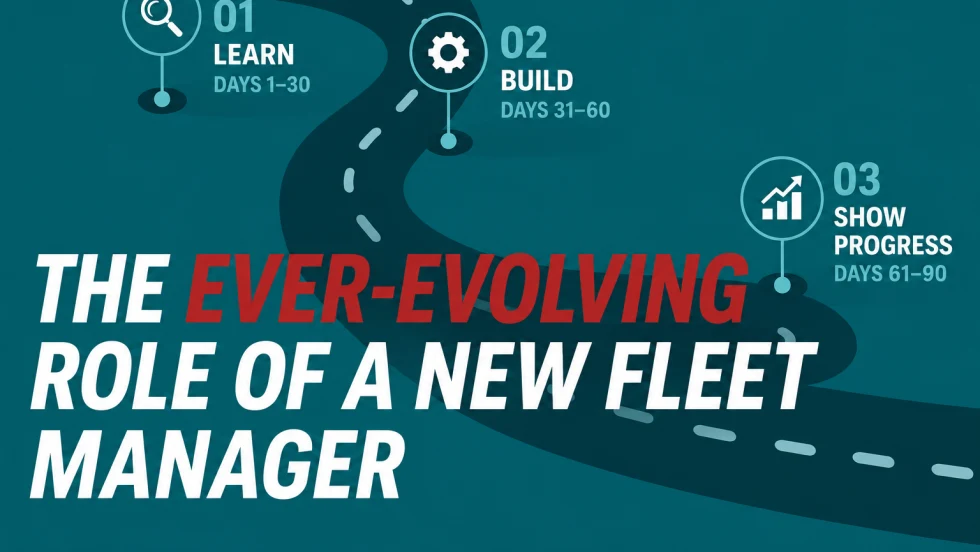
From Tactical to Strategic: A Fleet Manager's First 90 Days
The first 90 days as a fleet manager can be daunting, and the role has changed a lot over the years. What's important now?
Read More →
Fleet Industry Mourns the Passing of Donna Bibbo
Fleet leader Donna Bibbo passed away after a long battle with uterine cancer and a failing heart.
Read More →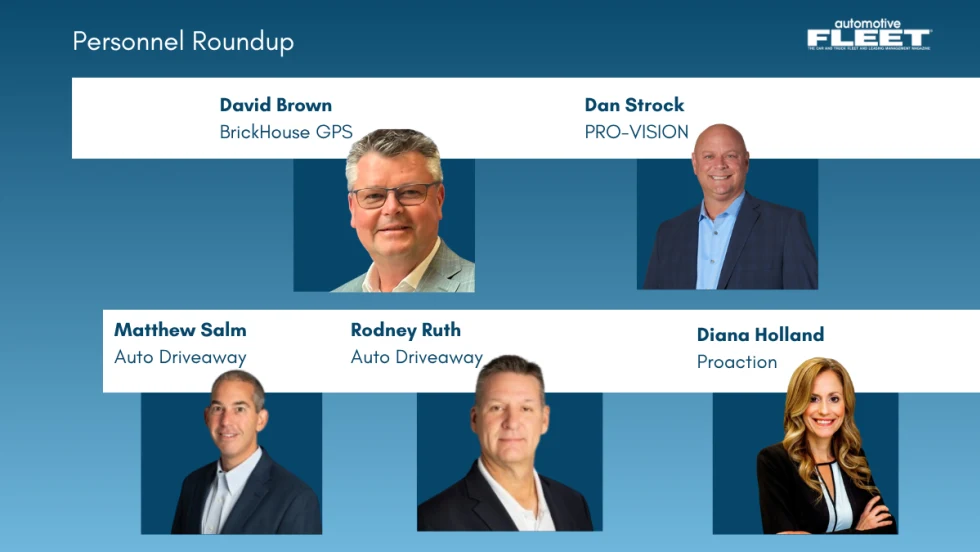
Personnel Update: BrickHouse GPS, PRO-VISION, Auto Driveaway, and Proaction
Check out the latest must-know fleet personnel updates from the last couple of months.
Read More →

‘Mike Just Gives Cars to People’ — And Other Misconceptions Fleet Managers Need to Fix
Most organizations misunderstand fleet. The best managers make sure that doesn’t happen.
Read More →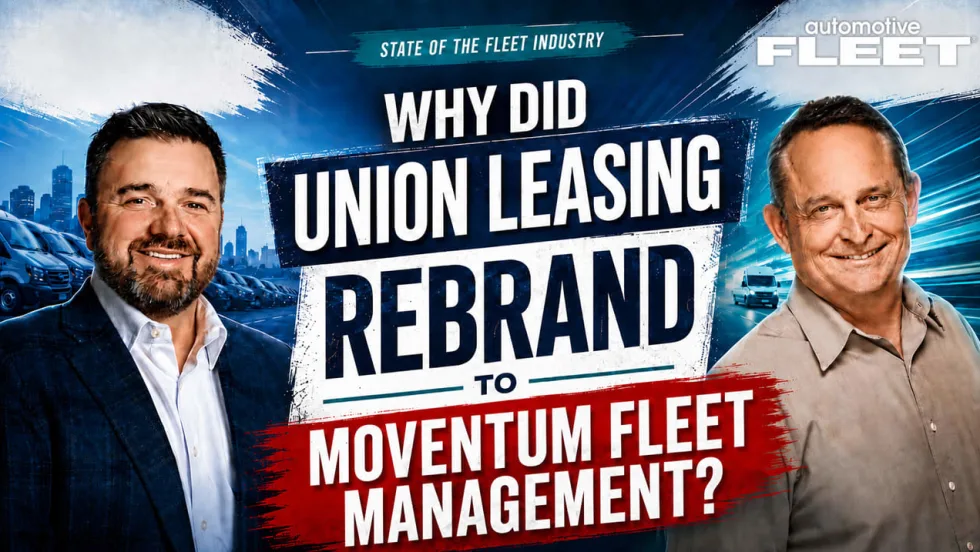
Why Union Leasing Rebranded to Moventum Fleet Management
Mark Hogland discusses Union Leasing’s transition to Moventum Fleet Management and how the rebrand reflects the company’s growing focus on strategic fleet management and lifecycle support.
Read More →
From Storm Response to Data Strategy: Fleet Trends to Watch | AF News Recap
In this AF news recap, host Faith Howell covers this week's most pressing industry updates.
Read More →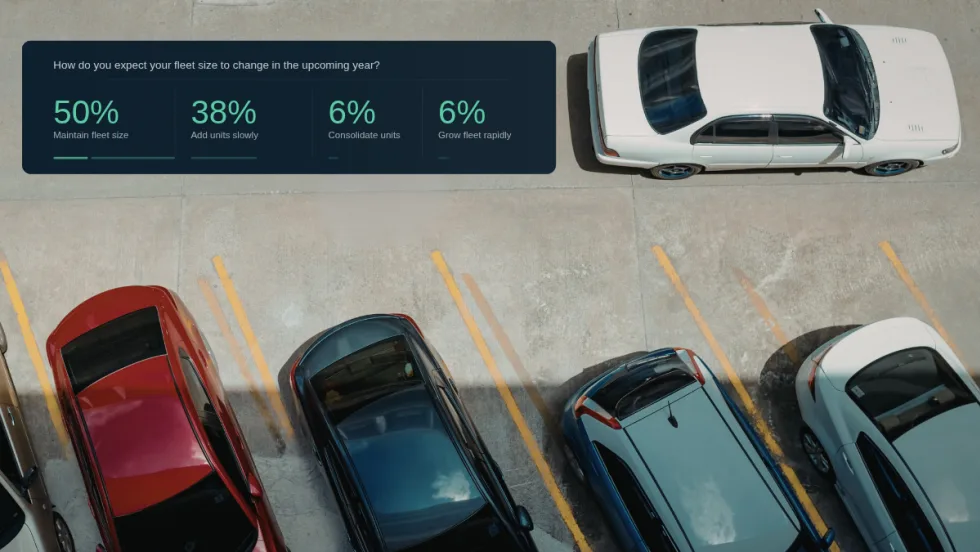
Report: 36% of Fleet Managers Are Delaying Replacements
Element’s 2026 Market Pulse Report finds fleets are slowing replacement cycles amid tariffs, economic uncertainty, and rising costs.
Read More →