





Related: GM & Hyundai to Partner on Consumer, Commercial Vehicles
GM Ends Production of BrightDrop Electric Delivery Van
General Motors is ending production of the BrightDrop electric delivery van at its CAMI Assembly plant in Ontario, signaling a shift in the company’s EV strategy amid slower fleet demand.
October 28, 2025
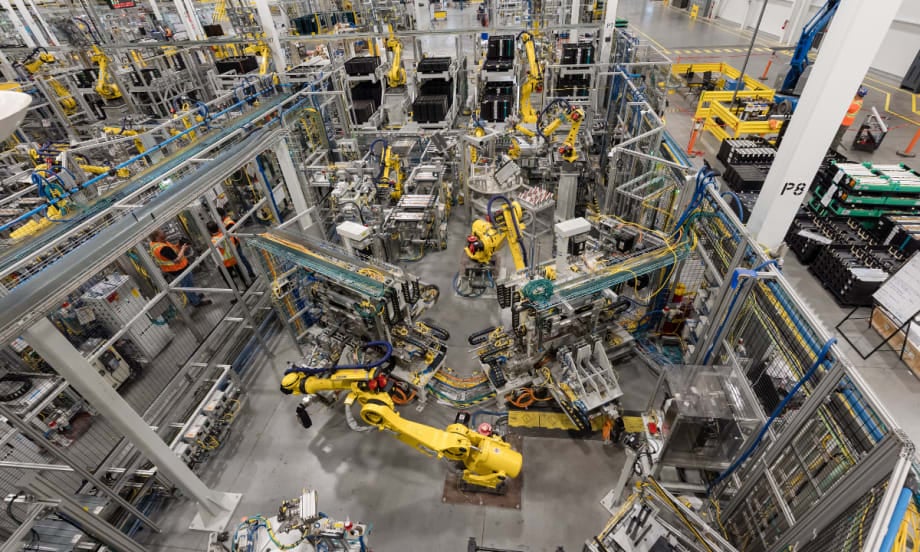
Automated machinery operates inside General Motors’ CAMI Assembly plant in Ingersoll, Ontario. The facility, which built the BrightDrop Zevo electric delivery vans, will cease production as GM adjusts its EV manufacturing capacity and responds to changing fleet demand.
Photo: GM
2 min to read
General Motors has confirmed that production of the BrightDrop electric delivery van has ended at the CAMI Assembly plant in Ingersoll, Ontario. The company will not move production to another facility.
The decision follows slower-than-expected demand for electric delivery vehicles, leaving the CAMI plant operating below capacity. Production has been on pause since May 2025. GM cited changes in EV incentives and regulations, including the removal of U.S. tax credits for certain vehicles, as additional challenges to the BrightDrop business model.
The move comes as GM adjusts its overall electric vehicle manufacturing capacity across North America.
Impact on Fleet Customers
BrightDrop, a GM subsidiary, was launched in 2021 to provide fully electric delivery vans and fleet management technology to commercial operators such as FedEx, Ryder, and Merchants Fleet. The BrightDrop Zevo 600 and Zevo 400 models were designed to support last-mile and regional delivery operations with zero-emission performance and connected services.
While GM has not detailed what will happen to existing BrightDrop assets and support infrastructure, fleet customers are expected to continue receiving parts and service for vehicles already in operation.
GM Canada Addresses Workforce and Future Plans
“The decision to end production of the BrightDrop electric delivery van is driven by market demand and in no way reflects the commitment and skill of our workforce at CAMI,” said Kristian Aquilina, president and managing director of GM Canada. “This continues to be an uncertain time for our workforce at CAMI, and we are committed to working closely with our employees, Unifor, and the Canadian and Ontario governments as we evaluate next steps for the future of CAMI.”
GM said it will follow collective bargaining provisions with Unifor. Hourly employees will receive six months of salary, along with the potential for lump-sum payments and other benefits.
Continuing Commitment to Canadian Operations
GM emphasized that its Canadian operations remain an important part of its North American business strategy, including manufacturing, software development, and parts distribution.
“Our Canadian operations continue to be a critical part of GM and our North America business,” Aquilina said. “We employ thousands of Canadians across our manufacturing facilities, tech centers, parts distribution network, and corporate offices. For more than a century, GM has been designing, engineering, and building vehicles in Canada, and we intend to continue that tradition.”
More Operations

Company Vehicle or Reimbursement? How Fleets Are Rethinking Assignments
As fleet costs and insurance pressures rise, fleet managers are taking a closer look at which employees need company-provided vehicles and when a reimbursement program may make more sense.
Read More →
Fleetio, ASE Launch Scholarship Program for Automotive Technicians
The second annual program will award 15 scholarships totaling $35,000 to support ASE certification, testing fees, and equipment costs.
Read More →
Reading the Global Signals: What AI and the Energy Transition Mean for Fleets Now
How can fleet managers navigate a never-ending, changing industry landscape?
Read More →
90% Use Telematics. Are Fleets Getting Safer? | AF News Recap
This week, we're breaking down which industries have the highest rates, how Jamie McKay manages 2,400 vehicles, what's happening with the 2027 fleet awards, and why software-defined vehicles could introduce new costs.
Read More →
What's Best Handled by an FMC, and What's Better Done Directly?
Fleet managers continue to rely on FMCs for essential services but are taking a closer look at where working directly with suppliers can improve efficiency and responsiveness.
Read More →
Fleet Meets: Erin Gilchrist
Meet Erin Gilchrist, the inaugural Mike Antich Spirit of Fleet Award winner, as she shares insights on leadership, mentorship, the power of industry connections, and why people remain at the heart of fleet's future.
Read More →
How 2026 Fleet Visionary Jamie McKay Manages 2,400 Vehicles Across 37 States
How do you keep 2,400 vehicles running across 37 states? Fleet Visionary Award winner Jamie McKay shares how collaboration, flexibility, and a few simple strategies help her tackle fleet management challenges at Aptive Pest Control.
Read More →
Managing Fleet Costs in an Era of Permanent Volatility
Fleet operating costs have risen more than 20% since 2020, raising a key question: When does extending a vehicle's service life stop making financial sense?
Read More →
The Next Evolution of Fleet Management: Autonomous Operations
This opening keynote session at the Fleet Forward Conference highlights the future of autonomous driving for fleets.
Read More →
How to Reduce the Total Cost of Risk From Catalytic Converter Theft
A stolen catalytic converter can cost fleets far more in downtime and lost productivity than in repairs. A total-cost-of-risk approach can help fleet managers quantify their exposure and prioritize theft prevention.
Read More →