





Digging into Data: Strategic & Proactive: Using Data to Drive Fleet Efficiencies
Maximizing Fleet Utilization Increases Productivity & Revenue
Managers need to view their fleets as a business and not assets to manage. Optimal fleet utilization boosts productivity and decrease costs, which boost corporate profitability because these savings go straight to the bottom line.
July 13, 2023

By taking a hard look at how trucks are spec’d, along with modifying driver behavior, a fleet manager can find many opportunities to increase productivity and reduce costs.
Photo: Stellantis
11 min to read
Optimizing fleet utilization is a critical KPI for most fleet managers because it is crucial to maximizing efficiency, controlling costs, and improving productivity. By actively managing and optimizing vehicle utilization, fleet managers can drive better overall fleet performance and achieve their operational and financial goals.
When you take a deep dive into the nuances of fleet utilization, here are six reasons why it is important:
Cost Efficiency: Maximizing fleet utilization allows fleet managers to optimize the usage of company vehicles and assets, minimize idle time, and reduce unnecessary expenses. By keeping vehicles active and fully utilized, managers can avoid the costs associated with underutilization. (See sidebar below.)
Resource Allocation: Efficient fleet utilization enables fleet managers to allocate resources effectively. By understanding which vehicles are frequently utilized and which are not, they can make informed decisions about fleet size, vehicle types, and fleet composition. This helps prevent over-investment in unnecessary assets and ensures that the fleet meets operational demands.
Productivity and Performance: Fleet utilization directly impacts productivity and performance. When vehicles are utilized optimally, it means more work can be completed within a given timeframe. It allows fleet managers to schedule more jobs or deliveries, improve response times, and meet customer expectations more efficiently. High fleet utilization helps enhance overall operational performance.
Revenue Generation: For businesses that rely on their fleet to generate revenue, such as transportation or delivery companies, fleet utilization is crucial for maximizing revenue. Fully utilized fleets can handle more orders, deliveries, or services, leading to increased revenue potential. Fleet managers need to ensure that vehicles are efficiently utilized to generate the highest possible return on investment.
Maintenance and Downtime Management: Fleet utilization plays a role in managing maintenance and reducing downtime. When vehicles are used consistently and efficiently, fleet managers can implement proactive maintenance schedules, reducing the likelihood of breakdowns or unscheduled repairs. By avoiding unplanned downtime, fleet managers can keep their operations running smoothly and minimize disruptions.
Safety and Compliance: Proper fleet utilization contributes to safety and compliance with regulations. When vehicles are used within their intended capacity and not overworked, it reduces the risk of accidents, equipment failures, and violations of load restrictions. By monitoring and optimizing fleet utilization, managers can prioritize safety, minimize risks, and maintain compliance with relevant laws and regulations.
View Fleet as a Business
Everyone recognizes the strategic importance of fleet utilization, but what are the tactical ways that utilization of a vehicle can be maximized to get more done, faster, and at the lowest possible cost of ownership?
Fleet managers pride themselves in their expertise in the acquisition, management, and remarketing of assets. But if you want to provide added value to your company, you need to view fleet as a business and not simply an aggregation of assets to be managed cost effectively. Regardless of the fleet application or industry segment, all companies strive to maximize fleet utilization.
Optimal utilization maximizes the revenue produced by these assets that is applicable to any metric used by your company, such as lowering the cost per pound of a shipment, increasing revenue per route, expanding the number of service calls per day, or decreasing vehicle downtime. Conversely, under-utilized vehicles add unnecessary costs to a fleet. In addition to being a depreciating asset, under-utilized vehicles have to be registered and maintained whether or not they are attaining their full revenue potential.
The biggest challenge for a delivery company is to manage last-minute changes due to traffic, roadblocks, accidents, breakdowns, or rescheduling, etc. It is necessary to use a dynamic route optimization process to accommodate last-minute changes in delivery plans. This helps you avoid missed or failed deliveries and inform customers of likely delays.
In the end, a well-utilized fleet will not only boost productivity and decrease costs, but it will subsequently increase corporate profitability because these savings and supplemental revenues go straight to the bottom line.
A Multi-Pronged Strategy
Fleet managers must adopt a multipronged strategy to increase fleet productivity. For instance, how employees drive vehicles greatly impacts productivity. Close monitoring of your vehicle fleet (and drivers) is a key to maximizing productivity and to helping ensure operational cost containment.
When you monitor driver behavior, you can see the disparity in wear rates for tires and brakes. For instance, when one driver can make a set of tires last for 50K miles versus a driver who replaces tires every 20K-30K miles on the same make and model of vehicle, it is typically a sign of aggressive driving. The same is true with other wear items, such as brakes. Faster than normal brake wear is usually indicative of making sudden versus gradual stops and other aggressive driving. Fleet productivity increases when drivers adopt more efficient driving techniques. Driver training and telematics can be used to modify driver behaviors.
By taking a hard look at how trucks are spec’d, along with modifying driver behavior, a fleet manager can find many opportunities to increase productivity and reduce costs. By understanding actual usage, you can determine all truck specifications. Vehicle specifications must be defined by the fleet application and the best way to understand this is by talking with the actual users of the asset. The key objective of your discussions with vehicle end-users is to correctly match the truck with the fleet application.
By understanding the day-to-day fleet application, you will be able to build a truck that meets end-user needs. If possible, schedule site visits to see firsthand how a truck is being used in its work environment. This will also give you the opportunity to confirm firsthand what is really needed as opposed to what a driver or technician may want.
Incorrectly spec’ing trucks can result in overloading, which, in turn, will consume additional fuel, poses a safety risk, and causes unnecessary wear and tear on the chassis and tires. Surveys consistently show that overloading is the No. 1 cause of unscheduled maintenance for trucks.
Fleet Utilization Metrics
Being a fleet manager, you are under constant pressure to manage the efficiency levels of your fleet. With intense competition in delivery services and rising operational costs, it is necessary to track inefficiencies. This is where fleet utilization metrics come into play.
For instance, you find that delivery costs are rising due to high fuel consumption or there is a reduction in mileage. How do you know the exact quantity of fuel excessively consumed or the vehicles that gave lesser mileage than expected? Only with the help of fleet utilization metrics can you find the factors that lead to lesser fleet capacity utilization.
Fleet capacity utilization (or) fleet utilization involves the measurement of fleet performance and use.
Therefore, if you ask for a definition, 10 fleet managers could possibly come up with 10 different answers. Fleet utilization is a comparison of demand to fleet capacity. Capacity and demand change daily, and hence the approach to manage it varies as well. There is optimum fleet utilization for each location and each class of vehicle at different time windows.
A parked truck attracts only storage costs. Also, an empty running truck does not attract any revenue. Maximizing vehicle capacity utilization helps you increase revenue potential with fewer resources.
Fleet capacity utilization refers to the extent to which a fleet’s available resources, such as vehicles, equipment, and personnel, are utilized or put to productive use. It is a measure of how effectively the fleet’s capacity is being utilized to meet operational demands.
Fleet capacity utilization is typically expressed as a percentage and is calculated by dividing the actual utilization or usage of the fleet by its total capacity and multiplying by 100. The total capacity represents the maximum potential output or usage of the fleet, considering factors such as the number of vehicles, working hours, shifts, or available resources.
The actual fleet usage can be measured in different ways, depending on the specific industry or fleet management objectives. It could be based on factors such as the number of vehicles in operation, the total distance traveled, the number of jobs or deliveries completed, or the total working hours of the fleet.
A well-utilized fleet not only improves productivity and reduces costs; it also boosts profitability. Here are the reasons why fleet utilization is important.
By monitoring and analyzing fleet capacity utilization, fleet managers can assess how effectively their resources are being utilized and identify opportunities for improvement. A high capacity utilization indicates that the fleet is operating efficiently and making the most of its available resources, while a low capacity utilization suggests there may be room for optimization or adjustments in fleet operations to improve efficiency and productivity.
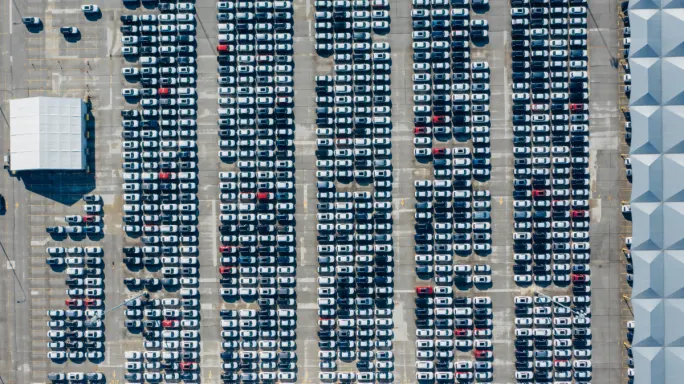
At the core of utilization studies are the fundamental questions: Do you have too many or too few vehicles to meet the demands of your business? How many miles should a vehicle be driven for it to be considered properly utilized?
Photo: Michael / pexels
Determining Optimal Fleet Size
Utilization is a key component to determining optimal overall fleet size. Fleets utilization studies generally have one of two outcomes: The results will either help a company right-size its fleet, or it will validate that the fleet already operates with an optimal number of vehicles. At the core of utilization studies are the fundamental questions: Do you have too many or too few vehicles to meet the demands of your business? How many miles should a vehicle be driven for it to be considered properly utilized?
One way many fleets determine a mileage minimum is by using their current utilization data to determine a baseline. Often there is pushback from user departments who want to retain under-utilized assets “just in case they are needed.” On the other end of the pendulum, some management teams simply reduce the number of vehicles on the road and require the remaining vehicles do more. This isn’t the best strategy when you have various kinds of vehicles, different kinds of services or deliveries, and a diversity of territories or routes that your vehicles travel.
Improve the Bottom Line
If a fleet operation isn’t contributing to a company’s bottom-line profitability, you need to improve fleet capacity utilization. This is especially true if a fleet operation is in a constant state of flux created by high vehicle downtime, higher fuel consumption, or poor on-time delivery rates.
But, as with many truisms, the hard part is doing it. Today, fleet managers are used to doing more with less. Knowing what assets exist and how they are being used enables a business to get more done with fewer resources.
But the question is how to make best use of the fleet? The answer lies in fleet capacity utilization. If you want to operate your fleet efficiently by making the best use of your fleet without incurring huge costs, fleet capacity utilization is critical.
If you want to gain insights on fleet utilization metrics and maximize fleet utilization, the only way for it is investing in a fleet management software. It helps you reduce the last-mile delivery costs and improve your efficiency.
Being logistics managers, you should analyze driver performance, and routing to find patterns.
Route Optimization: Require strict adherence to routing plans and route optimization to minimize unnecessary mileage.
Optimize Utilization to Smooth Out Mileage Variations: Managers should closely monitor vehicle mileage records and swap out high-mileage units with lower-mileage units.
Idle Reduction: Besides wasting fuel, excess idling also causes unnecessary emissions, noise pollution, and needless engine wear-and-tear. However, only utilize an anti-idling strategy in situations where there is no possibility of collision since turning off the engine may disable safety features such as airbags.
Fuel Consumption: Fuel consumption provides an essential and additional view alongside miles traveled. It helps your businesses minimize excessive fuel usage, thereby reducing fuel costs. Traveling fewer miles reduces the number of trips and optimizes fuel consumption.
The Negative Consequences of an Under-Utilized Fleet
An under-utilized fleet of vehicles can have several consequences, both financial and operational. Here are seven common consequences:
Higher costs: Maintaining a fleet of vehicles involves fixed costs such as vehicle acquisition, insurance, registration, and depreciation. When vehicles are under-utilized, these costs are spread over fewer productive hours, resulting in higher costs per unit of work.
Inefficient resource allocation: Under-utilization means that vehicles are not being used to their full potential. This leads to inefficient resource allocation, as some vehicles may be sitting idle while others are overworked. It can result in poor utilization of capital investments and decreased overall productivity.
Increased maintenance and depreciation: Vehicles that are not used frequently may experience higher maintenance costs. Lack of regular use can cause mechanical issues, battery discharge, or other problems that arise from prolonged periods of inactivity. Additionally, vehicles that are not utilized efficiently may experience accelerated depreciation due to reduced resale value.
Reduced flexibility and unresponsiveness: An under-utilized fleet may lack the necessary flexibility to respond to fluctuating demands or unexpected changes. When vehicles are sitting idle, it becomes challenging to meet sudden increases in demand or accommodate unforeseen operational requirements.
Missed revenue opportunities: Under-utilization of vehicles means missed revenue opportunities. If the fleet is not fully utilized, the business may not be able to take on additional customers or contracts, resulting in potential revenue loss.
Environmental impact: Vehicles contribute to carbon emissions and environmental pollution. An under-utilized fleet means that more vehicles may be required to complete the same amount of work, leading to unnecessary emissions and a larger carbon footprint.
Employee dissatisfaction: Under-utilization of vehicles can affect employee morale and job satisfaction, especially if the workforce sees idle resources while they could be utilizing them for productive tasks. It may also result in reduced job security if the company's financial performance is negatively impacted.
To mitigate the consequences of an under-utilized fleet, businesses can consider optimizing routes, implementing better scheduling and dispatching systems, exploring shared fleet options, diversifying services, or leasing excess capacity to other organizations. These strategies can help improve fleet utilization, reduce costs, and increase overall operational efficiency.
Subscribe to Our Newsletter
More Operations
Here's When You Should Make an Exception to Fleet Policy
Fleet policies are designed to create consistency, but not every driver or situation fits neatly within standard rules.
Read More →
AI-Native or AI-Acquired: What Should Fleet Managers Look for in an AI Platform?
Six questions can help fleet managers look beyond AI marketing claims to evaluate integration, data access, and real-world operational performance.
Read More →
Sponsored•October 14, 2026
A buyer's guide to fleet management software in 2027
Buying fleet management software in 2027 means looking beyond features and price. As fleet operations, technology and expectations evolve, this guide explores what today’s fleet professionals should consider when choosing a system that can deliver value now and adapt to what comes next.
Read More →

What Will Shape the Next Era of Fleet Management?
EVs, AI, and autonomous vehicles are reshaping fleet management. Discover what’s ahead—and how fleet leaders can prepare for the next era.
Read More →
How Fleets Can Recruit and Train Veterans for Technician Roles
Here's how the technician shortage has affected uptime for fleets, and what to do about it.
Read More →
Avis Budget Group Deploys Neology Toll Management Technology Across Major Brands
Neology’s neoFleet platform will manage toll transactions and toll-authority operations for vehicles across Avis, Budget, Payless, Budget Truck and Zipcar.
Read More →
Fleet Personal-Use Charges Edge Higher in 2026
Nearly eight in 10 surveyed fleets allow personal use of company vehicles, while just over half of respondents report charging employees for the privilege.
Read More →
The Future of Fleet + What’s Changing Right Now | AF News Recap
Could developments overseas offer a preview of what’s coming for U.S. fleets? This week, we’re looking at the future of AI, autonomy, and electrification, plus Ford Pro’s new certified pre-owned program, smarter vehicle offboarding, and a new way for fleets to manage toll expenses.
Read More →
How to Handle Vehicle Offboarding
What do fleet managers need to do when a driver leaves?
Read More →
Sponsored•October 1, 2026
Fleet Manager’s Ultimate Playbook: Navigating the New Standard in OEM Connectivity
Rising operating costs, driver safety concerns, and unplanned downtime are putting unprecedented pressure on modern fleets. Discover how fleet managers use embedded OEM connectivity and real-time vehicle data to cut TCO, prevent downtime, and protect drivers without aftermarket telematics hardware.
Read More →