




In a recent video episode of Fleet Forward, Kuhn and Brian Bathe, vice president of information technology at Mike Albert Fleet Solutions, discussed how new technologies around predictive analytics, artificial intelligence (AI), telematics, data sourcing, and connected vehicles help drive efficiencies and provide insights for fleets.
How Leveraging Technologies Makes Fleets More Efficient
Mike Albert Fleet Solutions has increasingly applied data from predictive analytics, AI, and telematics to deliver actionable insights for fleets.
by Jose Tingson
June 20, 2023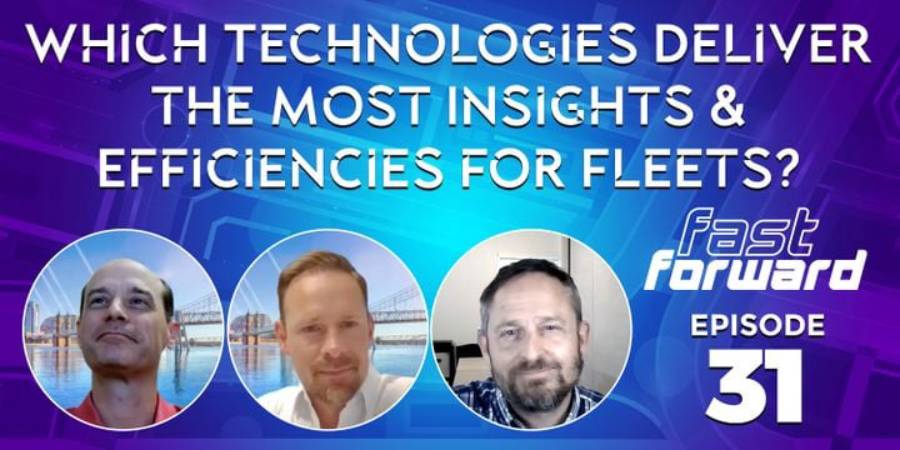
Two experts from Mike Albert Fleet Solutions recently explained how FMCs should focus on six aspects in fleet management that the market indicates are important.
Photo: Fleet Forward
5 min to read
The emphasis on greater reliance on data-driven insights has shifted the partnership between fleets and fleet management companies (FMCs) from a purely service-based to more of a consulting-based relationship, where FMCs act as a strategic advisor in helping their clients make informed decisions, said Marty Kuhn, president of Mike Albert Fleet Solutions.
“As fleets become more connected and the volume of data they generate increases, fleets managers are looking to their FMCs to help them make sense of all this data, which is not easily readable and can be somewhat difficult to obtain,” Kuhn said. “So, they’re relying on us to provide a level of insight in actionable follow-ups on how to manage it. The ability to provide actionable insights from this has become a key value prop for all FMCs.”
Key Areas for FMCs to Focus On
Mike Albert emphasizes six important aspects in fleet management that the market indicates FMCs should focus on, Kuhn said.
Telematics. This technology provides real-time tracking of vehicles, including their location, speed, idle time, and other parameters. The data can be used to optimize routes, reduce fuel consumption, and improve driver performance.
Artificial intelligence (AI). It can predict, for instance, maintenance needs based on vehicle usage patterns, identify inefficiencies and routes, and provide recommendations for improving driver performance. “It provides actual insight that’s not readily known or readily available to a client,” Kuhn said.
Predictive analytics. It uses historical data and types of machine learning algorithms to predict future events. For instance, it can pinpoint the usage and the wear and tear of vehicles, engines, or tires. “These vehicles are being used to generate revenue for clients. How do you balance that cost in the usage of the vehicles compared to the revenue that’s being generated by these vehicles?” Kuhn said.
Cybersecurity. As vehicles become more connected, the risk of threats from digital attacks rises. “Fleets and FMCs need to consider solutions that protect against these types of threats and, most importantly, ensure the security of their vehicles and driver data,” Kuhn said. “Each individual state has very finite rules and regulations on the sharing of data and on personally identifiable information containment.”
Fleet management software. It provides a centralized platform for managing all aspects of a fleet ranging from vehicle acquisition and maintenance to dispatching and route optimization. Modern fleet management software, which is cloud-based, can be accessed from any device and gives flexibility and real-time visibility into fleet operations. “Some of our larger customers who have thousands of vehicles with us are able to look on a map and have real-time visual snapshots of where all of their vehicles are, whether they’re delivering parts or delivering groceries,” Khun said. “It is increasingly important to have that level of sophistication in full view.”
Dash cameras. The cameras help reduce accidents and false litigation claims brought on by these accidents, Kuhn said. “A lot of our clients have started to suggest that they think these will allow them to provide meaningful returns. Specifically, this type of technology improves driver behavior because they realize that they’re being watched. In addition, with supply chain for replacement parts being severely constrained, reducing accidents substantially increases fleet efficiency and reduces the total cost of ownership.”
Kuhn said there’s a heightened focus internally at Mike Albert with considerations around when and where to make all these investments.
“You can’t necessarily do them all at the same time,” Kuhn said. “While everyone would like to be best in class, you have to figure out where, and when, do you make these investments. It really requires you to listen to the market and your associates who are manning the phones and have their finger on the pulse with the clients, and most importantly, understand the feedback coming from the usage of these types of technologies.”
Harnessing Predictive Analytics and Telematics Data
Properly managing a fleet requires having modern fleet management software, Bathe said. Mike Albert has its proprietary Overdrive fleet portal, which provides comprehensive data that fleet clients can access anytime.
Bathe points out the importance of aggregating and analyzing information covering multiple facets such as financial data, vehicle maintenance, compliance information, telematics, and dash cameras.
“One of the things we try to work on is making sure that we’re bringing actionable insights to our clients,” Bathe said. “There’s no way that anybody can wade through all this data and draw their own powerful conclusions. You must have the fleet management software with the predictive analytics built in, where it’s actually going through this data and bringing up only the exceptions, and maybe you can fine-tune it after that.”
With the fleet management software, Mike Albert can leverage machine learning to identify patterns and make predictions, so that fleets can run more efficiently, focusing on vehicle maintenance and vehicle health. That results in fewer interruptions in business and vehicle breakdowns as well as reduced total cost of ownership on the vehicle.
The usage of predictive analytics has increased, as it has become an integral part of the fleet management toolbox. Mike Albert has concentrated on leveraging the huge volumes of telematics, maintenance, and financial data to make predictions, Bathe said.
With the additional data being continually gathered and analyzed, Bathe points out the vast amount of information provided by built-in cameras and sensors in vehicles. “Each one of those can start to leverage AI. Are drivers properly slowing down when there are potholes and pedestrians? If I can start getting more data points, I can start doing a lot more predictions, as long as I’m building the right models.”
As telematics becomes table stakes for fleets, its data has created efficiencies in areas pertaining to maintenance, driver behavior, and vehicle usage, Bathe said. “You can harness the data, such as what drivers are getting done in a day, and then you can start to learn some of those patterns and educate the rest of your fleet. As we start marrying up more data sets, we can start to derive more efficiency out of our techs and the resources.”
Subscribe to Our Newsletter
More Telematics
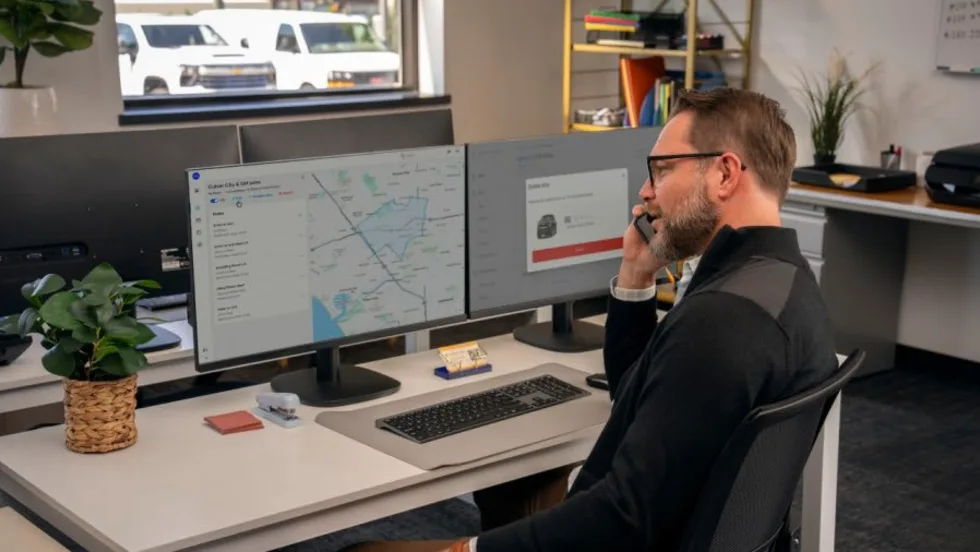
GM Launches OnStar Fleet Intelligence Platform With AI Assistant
The new platform brings vehicle data, order tracking, connected services and fleet analytics into one system, with an AI assistant that can answer fleet questions using natural-language prompts.
Read More →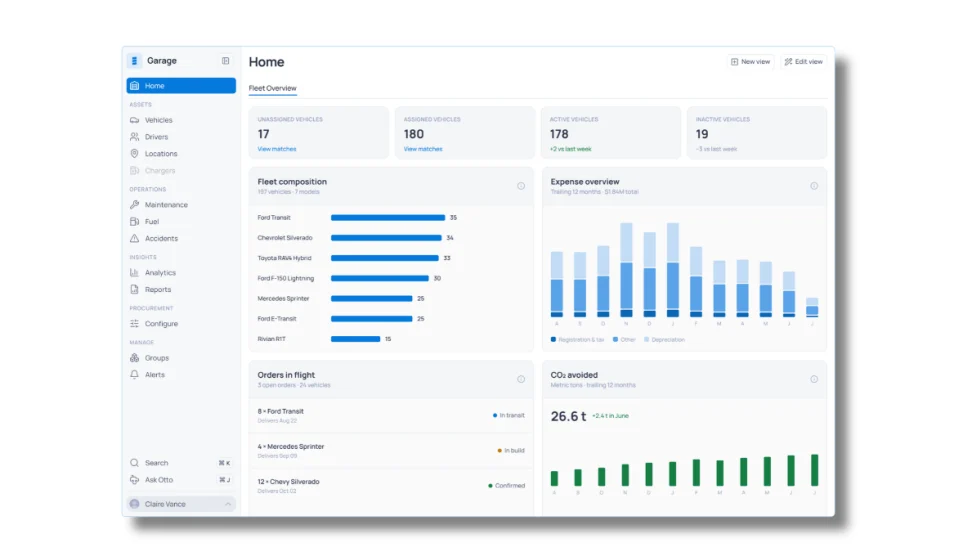
Inspiration Fleet Introduces Garage 2.0 Fleet Intelligence Platform
Fleet managers increasingly have access to data from vehicles, telematics, fuel, charging, and other systems, but those sources don't always communicate with one another. Inspiration Fleet's Garage 2.0 platform brings that information together while letting fleets keep working with different technology and service providers.
Read More →
Inside Inspiration Fleet’s New Platform for Connecting Fleet Data
Inspiration Fleet CTO Chris Getner explains how the new Garage 2.0 platform is designed to connect disparate fleet data and what that could mean for fleet managers in practice.
Read More →
Sponsored•October 1, 2026
Fleet Manager’s Ultimate Playbook: Navigating the New Standard in OEM Connectivity
Rising operating costs, driver safety concerns, and unplanned downtime are putting unprecedented pressure on modern fleets. Discover how fleet managers use embedded OEM connectivity and real-time vehicle data to cut TCO, prevent downtime, and protect drivers without aftermarket telematics hardware.
Read More →
Samsara Driver Perks Adds New Benefit for Corporate Fleet Drivers
The rewards program gives eligible professional drivers access to discounts from more than 50 brands while giving fleets another way to support recruitment, retention, and the driver experience.
Read More →
Inside the Church of Jesus Christ of Latter-day Saints’ Two-Track Telematics Strategy
With 20,000 vehicles and two fundamentally different driver populations, the Church faced a fleet management problem that a single telematics program couldn't solve. How it responded offers a replicable framework for any fleet where one size doesn't fit every driver.
Read More →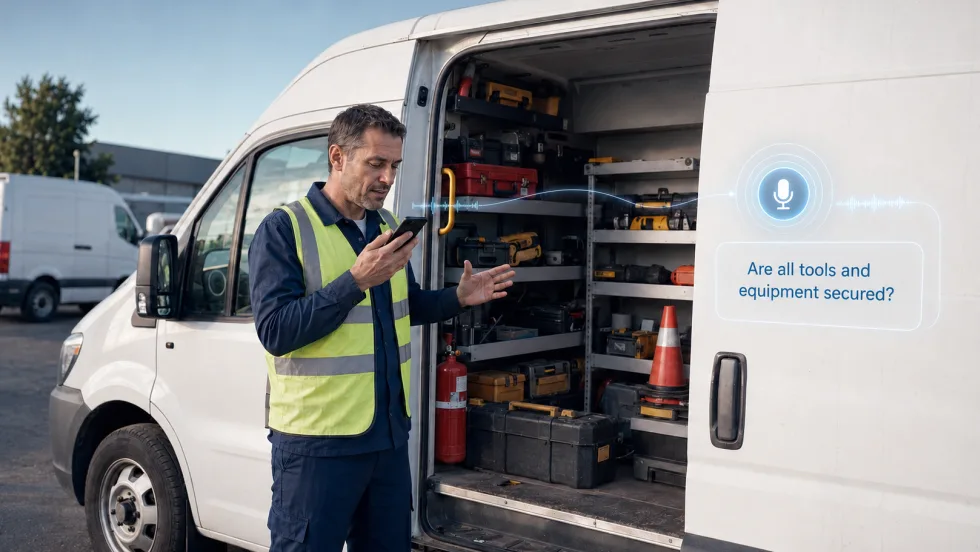
How Conversational AI Can Make Fleet Tasks Easier for Drivers
While most generative AI tools help fleet managers interpret data at their desks, Connex2X is applying voice interaction to tasks behind the wheel.
Read More →
Why Fleets Are Creating Dedicated Fleet Analyst Positions
Are fleet analyst positions the new norm? Listen here to find out.
Read More →
Teletrac Navman Begins Next Chapter as Standalone Private Company
What's new with Teletrac Navman and its new owner?
Read More →
Why Fleets Are Creating Dedicated Fleet Analyst Positions
Telematics, AI, EVs, and connected technologies are generating more fleet data than traditional teams can effectively manage. Reed Jackson explains why dedicated fleet analytics roles are emerging to turn that information into better operational decisions.
Read More →