




Managing Your Off-Road Fleet from a Desktop
Caterpillar uses telematics to put fleet managers on the jobsite without ever leaving their workstations.

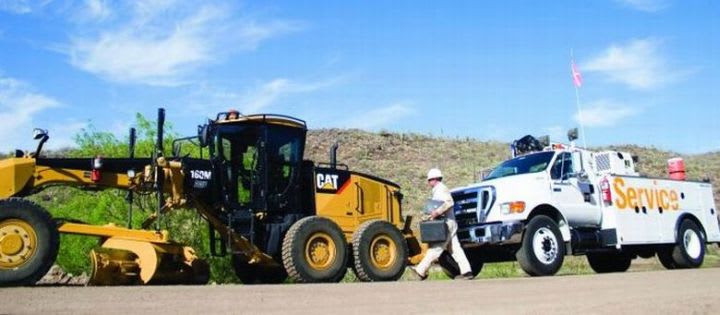
A fleet manager’s ability to be everywhere at once would guarantee all fleet vehicles work optimally and correctly for the task at hand. Fortunately, telematics now makes a kind of “bi-location” possible.
Machinery manufacturer Caterpillar, Inc. uses telematics technology to “put” fleet managers on multiple jobsites simultaneously from any location with an Internet connection. Caterpillar plans to incorporate new telematics devices in its heavy construction machinery.
Using Cellular Networks
“Caterpillar will provide technology that utilizes cellular networks (complementing our current satellite solution) to communicate a broad range of information,” said Caterpillar Connected Worksite Senior Program Manager Karl Figg. The system can transmit larger volumes of data to provide customers more information about their equipment, helping increase productivity and reduce costs, Figg added.
For several years, Caterpillar has partnered with Delphi Corporation to equip its machinery with electronic control units. Starting in 2010, this initiative will incorporate telematics devices for Caterpillar heavy construction machinery and become part of the company’s Product Link initiative. Information will be transmitted wirelessly via cellular networks, allowing customer access to near real-time data from any Internet-connected location.
Using global positioning systems (GPS) and wireless communications technology, Caterpillar customers can monitor, track, and manage their heavy construction machinery at remote sites.
“Product Link can be easily retrofitted on any CAT machine, or other brands, so we can link the customer’s entire fleet, regardless of brand,” said Figg. “We do far more than report data; the data is delivered through powerful tools that enable quick identification of actions required to maximize equipment uptime and control operating costs.”
All Industries Can Benefit
According to Figg, all industries can benefit from telematics-equipped vehicles.
“For example, public sector fleets see benefits with [Product Link] Asset Management because they are able to monitor actual equipment usage and are notified when preventive maintenance is due on the product,” he said. “Fleets utilize the Maintenance Watch feature to ensure they perform the correct preventive maintenance with the correct parts. High-production applications utilize the Health Watch to monitor a fleet of equipment and provide early warning of potential problems. Site managers responsible for overall productivity leverage the Productivity Monitoring feature to ensure the site is operating in the most productive manner.”
“The benefits of telematics to end users is near real-time access to information on equipment, location, maintenance information such as low hydraulic pressure, and/or machine uptime data so machine efficiency can be calculated,” said Jim Bretl, customer manager of entertainment and communications, Delphi Corporation.
Figg noted a few examples of telematics’ impact on a fleet’s operation. In one example, Product Link alerted a fleet manager to a malfunctioning water flow switch on a Cat 5110 mining shovel. The on-site manager was notified of the malfunction, and the machine was shut down immediately for a minor repair — a move that saved the organization nearly $100,000.
Near real-time reporting can help fleet managers tackle problems large and small, but always with significant results. “If Product Link alerts a customer to a steering sensor problem, they can connect to a Caterpillar database and download service information for that particular part, then e-mail the information to the technician,” said Figg. “The technician now has instructions to troubleshoot the problem without spending hours in a service manual.” Telematics has helped improve uptime, increased efficiency, and reduced labor rates.
This technology isn’t new to Caterpillar. For 10 years, the company has provided information to customers about equipment health through telematics. With the recently expanded telematics capabilities, however, customers now also can see enhanced productivity and utilization for both the equipment and the jobsite.
[PAGEBREAK]
Product Link Telematics System Offers Four Features
Caterpillar’s Product Link technology offers four primary features, each with associated benefits:
1. Asset Management
Time and location reporting lets a fleet manager know company vehicle locations at all times. Fleet managers also can create “fences” specifying when and where a machine is allowed to operate. Fleet managers are alerted to restriction violations.
The fencing option also can be used to monitor environmental compliance. “For example, if your machine is working near a protected area or can only be operated during certain hours due to sound regulations, you can create a fence and receive notification any time these boundaries are crossed,” said Caterpillar Connected Worksite Senior Program Manager Karl Figg.
Similarly, if a vehicle is operating during unauthorized hours, fleet managers are notified and can handle the problem in real time. Figg said this feature has led to the recovery of numerous stolen vehicles. Furthermore, when a fleet manager knows exactly how and when a vehicle is used, safety at the jobsite is facilitated.
2. Productivity Monitoring
With the Caterpillar telematics productivity monitoring feature, customers track equipment productivity and identify opportunities to improve jobsite efficiency. By gathering data about the actual number of service hours a vehicle logs each day, fleet managers can move equipment to sites where needed and better utilized.
“Having the information available almost real time allows the back office to reallocate equipment that might be underutilized to a new site or to a different task on the same jobsite,” said Jim Bretl, customer manager of entertainment and communications, Delphi Corporation.
3. Health Watch
Fleet managers can also collect information on how well each individual vehicle is operating. Access to this important data can help reduce on-site accidents due to equipment failure. The fewer mechanical issues, the safer the worksite. It can also reduce downtime, as repairs can be scheduled the moment a problem arises. Additionally, when a piece of machinery is repaired quickly, expensive repairs likely will be reduced in the future.
Another valuable metric tracked through Health Watch is fuel consumption and levels, allowing a site manager to schedule fuel delivery when and where needed, Figg said. “It can also be used to alert them if there has been suspected fuel theft.”
4. Maintenance Watch
Just as valuable as repairing damage is preventing it. Maintenance Watch enables users to be proactive about preventive maintenance (PM) by notifying managers when PM procedures are due. The feature also records maintenance history and lets users create customized PM checklists based on the specific vehicle. With regularly scheduled PM, Figg said fleet managers can increase vehicle uptime, reduce operating costs, and extend component life.
More Telematics
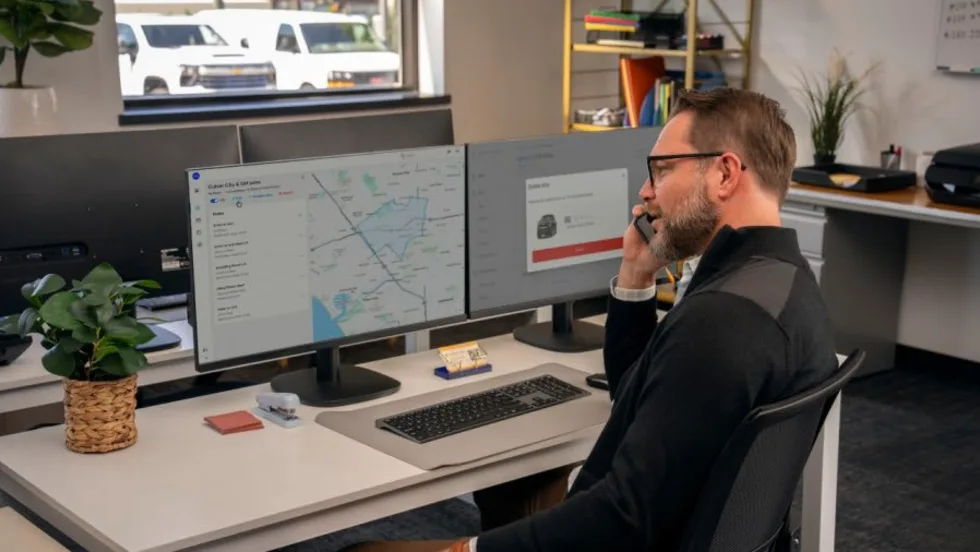
GM Launches OnStar Fleet Intelligence Platform With AI Assistant
The new platform brings vehicle data, order tracking, connected services and fleet analytics into one system, with an AI assistant that can answer fleet questions using natural-language prompts.
Read More →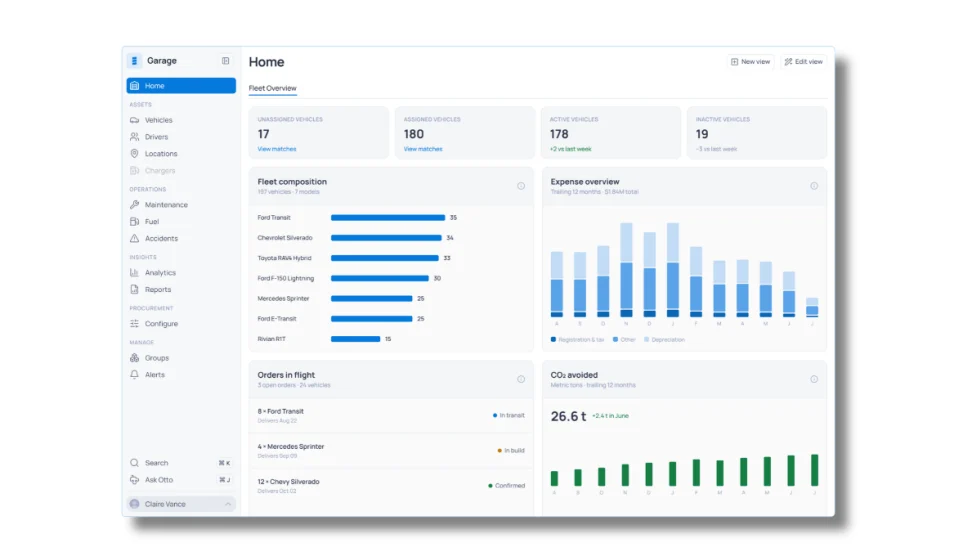
Inspiration Fleet Introduces Garage 2.0 Fleet Intelligence Platform
Fleet managers increasingly have access to data from vehicles, telematics, fuel, charging, and other systems, but those sources don't always communicate with one another. Inspiration Fleet's Garage 2.0 platform brings that information together while letting fleets keep working with different technology and service providers.
Read More →
Inside Inspiration Fleet’s New Platform for Connecting Fleet Data
Inspiration Fleet CTO Chris Getner explains how the new Garage 2.0 platform is designed to connect disparate fleet data and what that could mean for fleet managers in practice.
Read More →
Fleet Manager’s Ultimate Playbook: Navigating the New Standard in OEM Connectivity
Rising operating costs, driver safety concerns, and unplanned downtime are putting unprecedented pressure on modern fleets. Discover how fleet managers use embedded OEM connectivity and real-time vehicle data to cut TCO, prevent downtime, and protect drivers without aftermarket telematics hardware.
Read More →
Samsara Driver Perks Adds New Benefit for Corporate Fleet Drivers
The rewards program gives eligible professional drivers access to discounts from more than 50 brands while giving fleets another way to support recruitment, retention, and the driver experience.
Read More →
Inside the Church of Jesus Christ of Latter-day Saints’ Two-Track Telematics Strategy
With 20,000 vehicles and two fundamentally different driver populations, the Church faced a fleet management problem that a single telematics program couldn't solve. How it responded offers a replicable framework for any fleet where one size doesn't fit every driver.
Read More →
How Conversational AI Can Make Fleet Tasks Easier for Drivers
While most generative AI tools help fleet managers interpret data at their desks, Connex2X is applying voice interaction to tasks behind the wheel.
Read More →
Why Fleets Are Creating Dedicated Fleet Analyst Positions
Are fleet analyst positions the new norm? Listen here to find out.
Read More →
Teletrac Navman Begins Next Chapter as Standalone Private Company
What's new with Teletrac Navman and its new owner?
Read More →
Why Fleets Are Creating Dedicated Fleet Analyst Positions
Telematics, AI, EVs, and connected technologies are generating more fleet data than traditional teams can effectively manage. Reed Jackson explains why dedicated fleet analytics roles are emerging to turn that information into better operational decisions.
Read More →