




Indonesian Auto Production and Domestic Consumption Trending Upward
Indonesia represents the second largest car manufacturing nation in Southeast Asia and the ASEAN region, but increased production and rising domestic sales could narrow the margin.

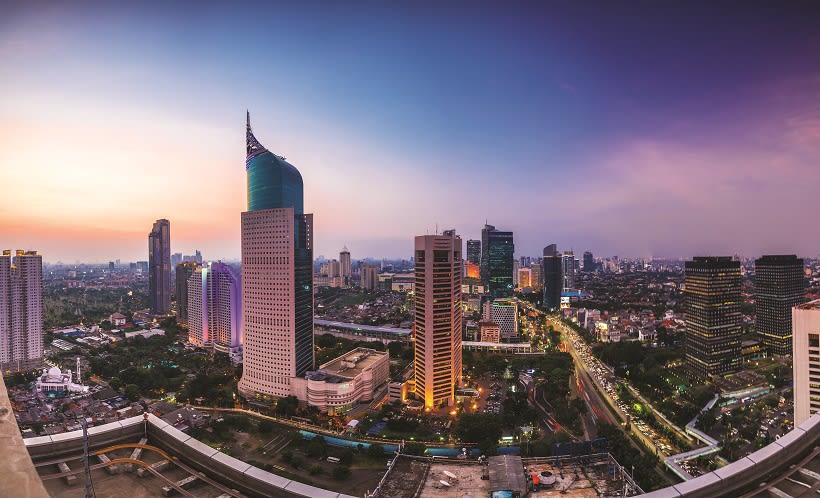
Indonesia’s automobile manufacturer’s association projects that car sales in the country will remain at 1.1 million units in 2019.
Photo: ©istockphoto.com/ Jakarta Skyline
Indonesia is the second largest car manufacturing nation in Southeast Asia and the ASEAN (Association of Southeast Asian Nations) region, trailing behind Thailand, which controls about half of total car production.
Well-known auto producers have opened or reopened manufacturing plants or increased production in Indonesia.
In 2017 SAIC-GM-Wuling — a joint venture between General Motors, SAIC, and Guangxi Automobile Group — invested $700 million into a manufacturing facility in Indonesia.
The facility would cover roughly 148 acres and have an annual capacity of 120,000 vehicles.
The first product of this facility was the Wuling Confero S MPV (multi-purpose vehicle).
Secondly, thanks to a rising GDP, car production in the country has transitioned from being mostly export focused to now also include production to meet rising domestic sales.
Automotive Production
Car production in Indonesia saw a peak in 2014 at 1,298,523 vehicles produced for the year. Sales dropped to 1,098,780 in 2015, but since have climbed back to 1,216,615 as of 2017.
This is significantly fewer than the 1,988,823 Thailand produced that same year, but is far and above the third-largest producer in the ASEAN region Malaysia, at 499,639 vehicles.
Currently, Japan leads the pack as the major investor in Indonesian car manufacturing facilities. The top five brands by production volume include Toyota in the top spot, followed by Honda, Daihatsu, Suzuki and Mitsubishi.
Auto Sales
Although Thailand leads the way in production, Indonesia has secured the top position in vehicle sales, with 1,079,534 in 2017 compared to Thailand’s 871,650. That’s because Indonesia is the largest car market in Southeast Asia and ASEAN, accounting for about one-third of annual car sales in ASEAN.
Gaikindo, the Indonesian automobile manufacturers association, reports year-over-year car sales stood at 3.2% higher year-over-year as of January 2019.
However, previous months reported stronger YOY sales stats at 4.2% in December 2018, 6.2% in October and a whopping 12.3% in November. In all, full-year 2018 car sales were up 6.9% to 1,151,291 units.
Gaikindo projects car sales in Indonesia will remain at 1.1 million units in 2019.
Currently, Indonesia averages 68 cars per 1,000 inhabitants. With a large population of 258 million inhabitants, and a rapidly growing middle class, that number, along with domestic sales, could trend upward.
Vehicle Preferences
For fleets, the top brands are Toyota, Honda and Kia/Hyundai, with these models emerging as the most popular choices:
Toyota Avanza
Toyota Innova
Honda CRV
A strong dealer network exists in major cities including Jakarta (the capital), Surabaya, Medan, Bandung, Palembang, and Makasar.
Major Industries in Indonesia
Major industries in Indonesia include petroleum and natural gas, textiles, apparel, footwear, mining, cement, chemical fertilizers, plywood, rubber, food, and tourism.
GDP by sector is:
Industry — 46.4%
Services — 37.1%
Agriculture — 16.5%
Among these, the agriculture, chemical, and pharmaceutical industries provide the most fleet cars. Examples of how businesses allocate fleet vehicles include:
Junior professionals: Toyota Rush, Honda City
Sales professionals: Toyota Innova, Toyota Avanza
Managers: Toyota Altis, Toyota Fortuner, Honda Civic, Honda CR-V
Executive: Toyota Alphard, Toyota Camry
The ratio of company-owned to leased vehicles is about 30% and 70%.
More Global Fleet
GeoFencing Adds to Your Truck Security Arsenal
Geofencing is a familiar fleet tool today, but its early adoption marked a major shift in vehicle tracking, route monitoring, and the debate over employee privacy.
Read More →
Holman Takes Full Ownership of ARIZA in Mexico
Holman is bringing its Mexican fleet management operation fully under its own brand after more than 30 years as a joint venture. The change gives multinational fleet customers a single Holman operation across the U.S., Canada, and Mexico.
Read More →
5 Tire Maintenance Tips to Help Prevent Work Truck Downtime
Regular tire checks can do more than extend tread life. These five maintenance practices can help work truck fleets catch problems early, reduce costs, and prevent downtime.
Read More →

Proven Ways to Reduce Work Truck Downtime
The age-old problem of downtime will always be a reality, but with new strategies at hand, fleets have more ways to keep trucks on the road longer.
Read More →


Cameras, Safety and Insurance: From Reactive Claims to Real-Time Prevention (Part 2 of 2)
Part Two: Commercial auto remains one of the most challenging and costly lines of coverage for fleet operators and insurers alike. Continue learning more about how to effectively address these issues from Onur Aksan, Enterprise Business Development Executive, Geotab
Read More →
Cameras, Safety and Insurance: From Reactive Claims to Real-time Prevention
Commercial auto remains one of the most challenging and costly lines of coverage for fleet operators and insurers alike. Learn more about how to effectively address these issues from Onur Aksan, Enterprise Business Development Executive, Geotab.
Read More →
Fleet Costs Are Rising: Here’s How Leaders Are Responding
Fleet leaders are under pressure to reduce costs, adapt to economic uncertainty, and make smarter decisions. See how peers across North America are responding with real data, proven strategies, and forward-looking insights. Download the 2026 Market Pulse Report to benchmark your strategy and uncover where you can gain an edge.
Read More →
Enterprise Fleet Management Surpasses 900,000 Vehicles in U.S. & Canada
Enterprise Mobility connects with mobility solutions around the globe
Read More →