




Related: Taiwanese Automotive Industry Slowed by Decline in Exports
Thailand’s Auto Industry Appears Positive
Overall car sales in the Southeast Asian country grew by 18% in the first five months of 2018, and that was just some of the good news. Other reports are gloomier, but outlook is mostly positive.
by Daryl Lubinsky
April 30, 2019
Thailand has become a vital hub for OEMs from all over the world, and currently sits as the 12th most industrious auto manufacturer globally.
Photo courtesy of Pixabay.
3 min to read
Thailand’s automotive industry is expected to maintain output in 2019 at 2.15 million cars, even as domestic and external factors become volatile, according to a report from the Bangkok Post.
Those factors include Europe halting car imports from Thailand and the trade war between the U.S. and China.
Thailand has become a vital hub for manufacturers from all over the world, and it is currently the 12th highest volume auto manufacturer in the world, according to a CNN article from July 2018.
OEMs such as Toyota, GM, Ford, and Mitsubishi have long had a presence in Thailand. the article noted. Other manufacturers such as Mercedes and BMW have also entered the region.
GM in particular has been bolstering its investment in the region since 2000.
Positive Factors in the Automotive Industry
Overall car sales in the Southeast Asian country grew by 18% in the first five months of 2018, according to CNN.
The same article quoted a spokesperson for Mercedes-Benz, which makes only passenger cars in Thailand, as saying said the company had its biggest year ever in 2017, with 14,000 units sold.
The Federation of Thai Industries reported late in 2018 that it remained optimistic about the country’s car production hitting 2 million units that year, despite the September output dropping for the first time in 15 months, according to online news site Asia & Pacific.
November 2018 vehicle sales in Thailand increased 21.2 % year over year to 94,643 units, according to a report from automotive industry portal Marklines. Sales from January to November 2018 rose 21% to 928,158 units.
Toyota sales were up 41.3% to 30,732 units. Tracking several other manufacturers, Isuzu was up 17.9% to 16,777 units and Honda 7.1% to 11,099, Mitsubishi sales were up 14.7%to 7,309 units, and Nissan sales were up 22.4% to 6,713 units.
Tracking body type, Marklines reported that passenger cars were up 12.8% year over year to 35,446 units. Commercial vehicle sales were up 26.9% to 59,197 units. Pickup sales included in the commercial vehicle sales were up 27.5% to 48,612 units.
Marklines noted that the sales growth in November was largely due to the healthy economic sentiment and new model introductions.
Automotive exports from Thailand will face fragile conditions on many continents. In the Middle East, an important market for Thai-made pickups, fluctuations in oil prices are pressuring people’s purchasing power.
Europe is halting car imports from Thailand under the region’s Generalized System of Preferences (GSP). To go around the system, many car makers plan to ship cars from Turkey to that region since Turkey enjoys a free-trade agreement with Europe. He added that the trade war between the United States and China continued to have a widespread negative impact and was the most important factor hurting the global economy and exports.
Some news articles offered a mix of good and bad news. For example, the Post reported in March 2017 that the used-vehicle market in the country was expected to surge, but that was only because a new excise tax rate would make new cars less attractive to potential buyers.
Even with a few uncertainties, the overall outlook of Thailand’s auto industry is mostly positive.
CNN Business reported that between 2000 and 2017, Thailand’s auto production grew by 383%, meaning it could keep its reputation as the Detroit of Asia for quite some time.
Subscribe to Our Newsletter
More Global Fleet
Holman Takes Full Ownership of ARIZA in Mexico
Holman is bringing its Mexican fleet management operation fully under its own brand after more than 30 years as a joint venture. The change gives multinational fleet customers a single Holman operation across the U.S., Canada, and Mexico.
Read More →
Proven Ways to Reduce Work Truck Downtime
The age-old problem of downtime will always be a reality, but with new strategies at hand, fleets have more ways to keep trucks on the road longer.
Read More →
Sponsored•July 23, 2026
The Top 300 Commercial Fleets
The Top 300 Commercial Fleets: See the List
Read More →


Cameras, Safety and Insurance: From Reactive Claims to Real-Time Prevention (Part 2 of 2)
Part Two: Commercial auto remains one of the most challenging and costly lines of coverage for fleet operators and insurers alike. Continue learning more about how to effectively address these issues from Onur Aksan, Enterprise Business Development Executive, Geotab
Read More →
Cameras, Safety and Insurance: From Reactive Claims to Real-time Prevention
Commercial auto remains one of the most challenging and costly lines of coverage for fleet operators and insurers alike. Learn more about how to effectively address these issues from Onur Aksan, Enterprise Business Development Executive, Geotab.
Read More →
Sponsored•May 6, 2026
Fleet Costs Are Rising: Here’s How Leaders Are Responding
Fleet leaders are under pressure to reduce costs, adapt to economic uncertainty, and make smarter decisions. See how peers across North America are responding with real data, proven strategies, and forward-looking insights. Download the 2026 Market Pulse Report to benchmark your strategy and uncover where you can gain an edge.
Read More →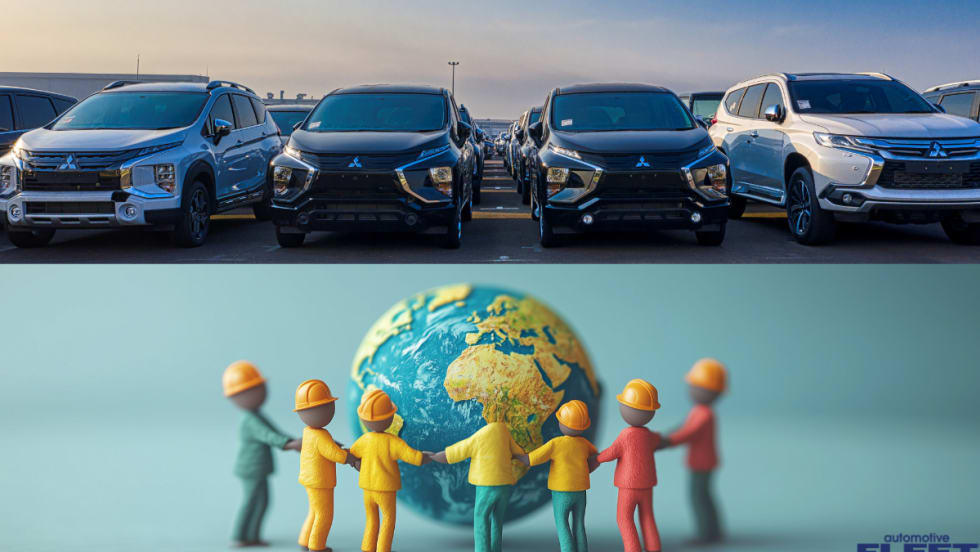
Enterprise Fleet Management Surpasses 900,000 Vehicles in U.S. & Canada
Enterprise Mobility connects with mobility solutions around the globe
Read More →
Sponsored•October 14, 2025
Automotive Fleet's Guide to Fleet Electrification
Unlock the secrets to a successful transition to electric fleets with Automotive Fleet's comprehensive Fleet Electrification Guide!
Read More →
Sumitomo Rubber Industries to Acquire Viaduct
Viaduct will join Sumitomo as an independent subsidiary. Partnership strengthens global reach and accelerates AI-driven innovation for fleets and manufacturing.
Read More →