





Check Out:Fleet Managers on Retention, Compliance, AI, and Safety
How Fleet Managers Are Using Generative AI to Transform Daily Operations
Fleet managers are no longer just operating vehicles — they're operating data-driven ecosystems. Here's how artificial intelligence is reshaping strategy, safety, and success.
May 29, 2025
Artificial intelligence is no longer a fringe experiment. It's becoming essential to competitive, safe, and efficient operations.
Photo: Automotive Fleet
5 min to read
What comes to mind when you picture artificial intelligence (AI)? Futuristic robots? Self-driving cars?
In today's fleet world, AI is already at work behind the scenes, summarizing complex documents, refining training materials, and even flagging aggressive driving behavior in real time.
For a growing number of fleet managers, AI isn't replacing their jobs. It's elevating them.
Take David Hayward, fleet manager at ABM, who uses ChatGPT through an enterprise secure workspace to tackle everything from supplier evaluations to writing Request for Proposals (RFPs) for AI camera systems and telematics.
Hayward isn't alone. Across the industry, fleet professionals are embedding AI deeper into their operations, from maintenance and routing to policy writing and driver coaching.
In this article, Automotive Fleet catches up with some trailblazers whose approaches offer a glimpse into the present and future applications of AI-powered fleet management.
From Hours to Minutes: How AI Transforms Routine Tasks
At a high level, AI is helping fleet managers think faster and communicate more clearly.
Hayward leans on AI not just for supplier evaluations but also for crafting onboarding materials, polishing executive reports, and even scanning VINs from images. Tasks that once took hours now take minutes.
"Routine tasks can be completed quickly, leaving me more time to spend on strategic activities," Hayward said.
Ernie Garcia, director of fleet and business systems at Gothic Landscape, echoes that sentiment. He uses AI tools like ChatGPT to outline SOPs, think through new processes, and educate fleet admins via structured career path guides.
"Sometimes I drop a new law into the chatbot and have it explain it to me like I'm a 5th grader," Garcia said. "It's easier to digest."
Safety and Predictive Power with AI on the Road
If AI is streamlining the back office, it's revolutionizing the road. Jeb Lopez, founder and CEO of Wheelz, has integrated platforms like Netradyne, Geotab, and Linxup into his operations. These tools deliver predictive maintenance alerts, real-time driver feedback, and safety warnings that reduce downtime and collisions.
Netradyne's cameras, for instance, evaluate driver behavior continuously, spotting unsafe habits and alerting management in real-time.
"If we identify a consistently risky driver, we either immediately provide targeted coaching or, if necessary, terminate their employment," Lopez said. "Safety is paramount."
There are some cons to using a variety of integrated platforms. Multiple systems, according to Lopez, that do not have APIs or directly communicate with each other have become a challenge. This issue means fleets must download and review data across all systems, which can be tedious.
While Gothic is not yet fully embedded in predictive analytics, Garcia sees immense potential.
"Fleets could benefit the most with predictive analytics and warnings — recognizing issues before they come up," Garcia said.
Lopez is already living in that future, where proactive intervention has significantly reduced accidents via tracking driver behavior, call-outs, and daily work outputs.
Some predict that fleet managers won't just use AI for predictive maintenance but for detecting driver fatigue or illness and automatically calling for them to return to base.
AI as a Strategic Ally, Not a Substitute
Despite the high-tech tools, none of these fleet managers see AI as a replacement for human oversight. In fact, it's the human-AI partnership that creates the most value.
Whether it's ChatGPT helping Hayward build out a telematics RFP or Lopez using predictive data to inform acquisition strategy, AI is treated as a strategic assistant, not a threat.
"My guiding principle here is, 'It's easier to critique than create.' AI helps quickly establish structure, streamlining subsequent edits," Hayward said.
Proceed with Caution (and a Strong Password)
However, with great power comes real responsibility. All three fleet managers are mindful of AI's risks, especially regarding data privacy.
Some tips to keep in mind:
Take advantage of the protections offered in a secure workspace or subscription (depending on the offerings of ChatGPT, Google Gemini, Deepseek, etc.).
Avoid entering proprietary data and frequently delete chat histories.
Change your password often.
In ChatGPT's case, an enterprise workspace may fit a company's privacy needs, according to Hayward. The OpenAI developer offers a workspace in a unique ChatGPT environment with its own settings, members, and resources.
"The enterprise workspace provides ABM with a secure platform that supports collaboration while protecting sensitive company data," Hayward said.
In a secure workspace, there is the potential to rule out how the system uses your data, such as preventing it from using any information to train its AI models.
Other platforms, such as Google Gemini, offer enterprise-grade security protections on the same level as Gmail and Google Docs, including data region policies and data loss prevention.
Shaping Tomorrow's Fleet: AI, Ethics, and the Road Ahead
Looking forward, the opportunities are vast. Artificial intelligence is no longer a fringe experiment. It's becoming essential to competitive, safe, and efficient operations.
Lopez envisions AI-driven hiring platforms, and updates to route optimization software and systems that turn off smartphone distractions behind the wheel. Garcia wants stronger predictive tools. Hayward hopes to continue shifting time-consuming tasks to AI to focus more on people and performance
What's important is that those leading the charge demonstrate that responsible implementation matters just as much as innovation. Privacy, data integrity, and cautious use of AI outputs must be critical components of their strategies.
One thing is clear. The future of fleet management isn't just about engines and fuel. It's about data, safety, and decisions powered by human and artificial intelligence.
As Lopez said, it's not enough to keep pace in this new landscape. It's AI or be left behind.
Subscribe to Our Newsletter
More Telematics
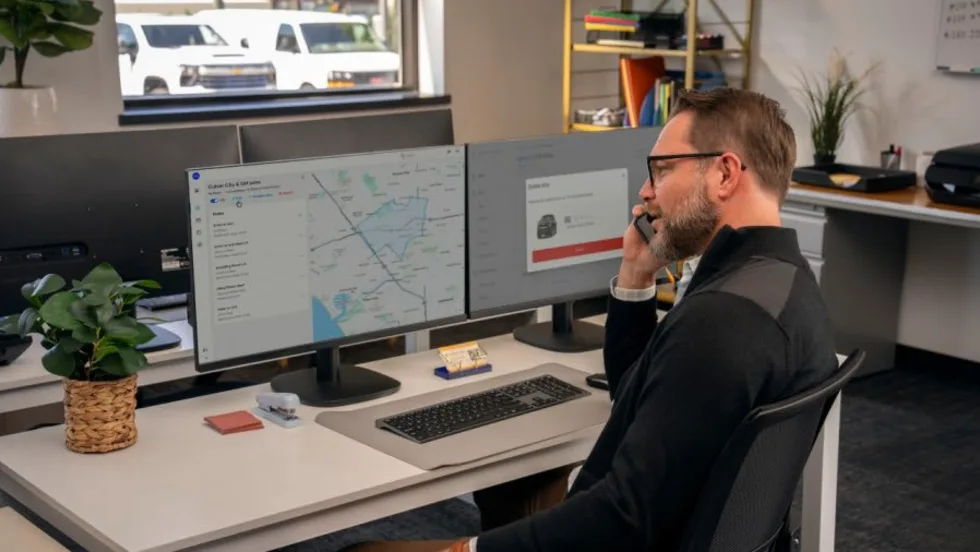
GM Launches OnStar Fleet Intelligence Platform With AI Assistant
The new platform brings vehicle data, order tracking, connected services and fleet analytics into one system, with an AI assistant that can answer fleet questions using natural-language prompts.
Read More →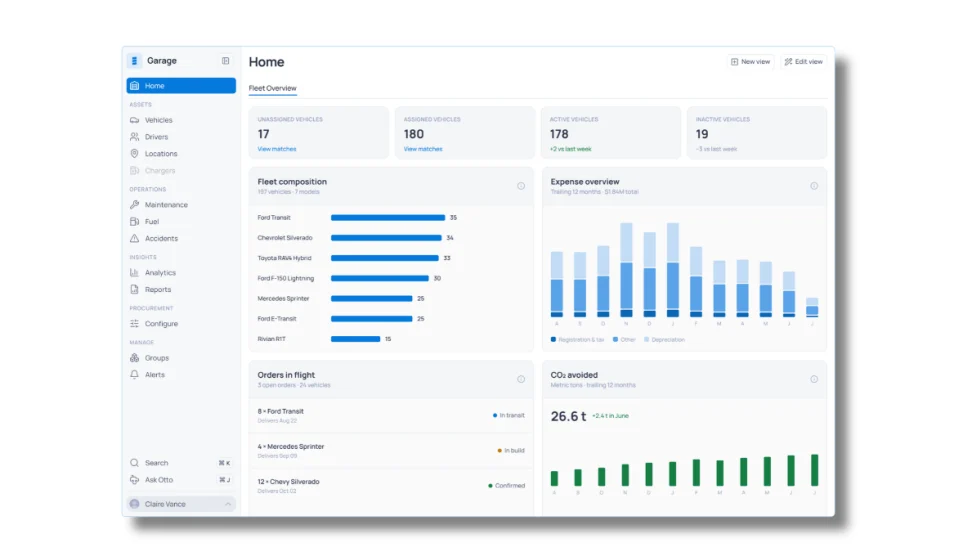
Inspiration Fleet Introduces Garage 2.0 Fleet Intelligence Platform
Fleet managers increasingly have access to data from vehicles, telematics, fuel, charging, and other systems, but those sources don't always communicate with one another. Inspiration Fleet's Garage 2.0 platform brings that information together while letting fleets keep working with different technology and service providers.
Read More →
Inside Inspiration Fleet’s New Platform for Connecting Fleet Data
Inspiration Fleet CTO Chris Getner explains how the new Garage 2.0 platform is designed to connect disparate fleet data and what that could mean for fleet managers in practice.
Read More →
Sponsored•October 1, 2026
Fleet Manager’s Ultimate Playbook: Navigating the New Standard in OEM Connectivity
Rising operating costs, driver safety concerns, and unplanned downtime are putting unprecedented pressure on modern fleets. Discover how fleet managers use embedded OEM connectivity and real-time vehicle data to cut TCO, prevent downtime, and protect drivers without aftermarket telematics hardware.
Read More →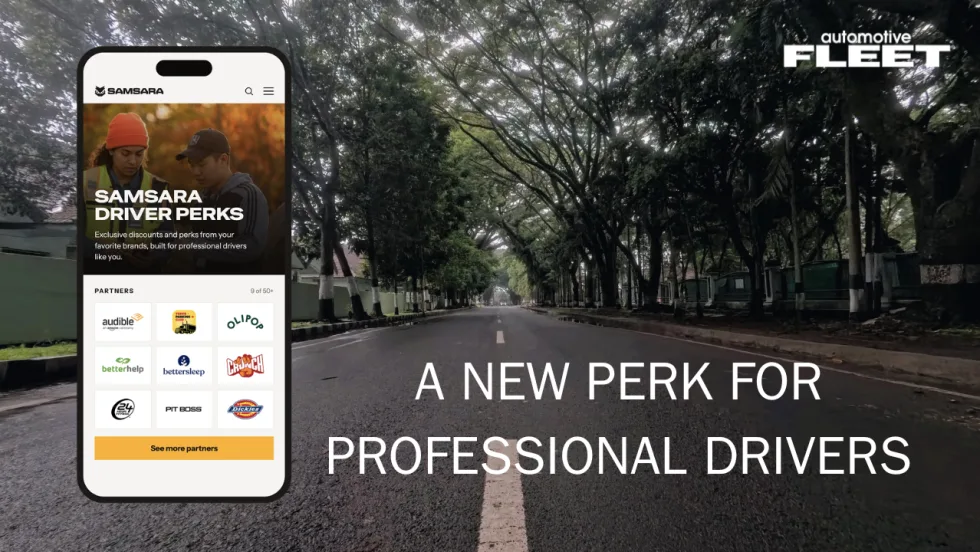
Samsara Driver Perks Adds New Benefit for Corporate Fleet Drivers
The rewards program gives eligible professional drivers access to discounts from more than 50 brands while giving fleets another way to support recruitment, retention, and the driver experience.
Read More →
Inside the Church of Jesus Christ of Latter-day Saints’ Two-Track Telematics Strategy
With 20,000 vehicles and two fundamentally different driver populations, the Church faced a fleet management problem that a single telematics program couldn't solve. How it responded offers a replicable framework for any fleet where one size doesn't fit every driver.
Read More →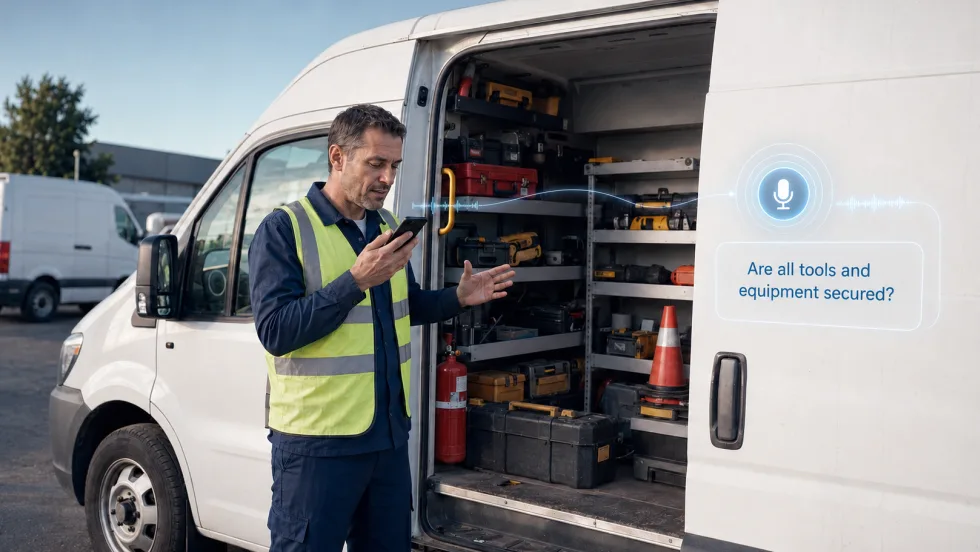
How Conversational AI Can Make Fleet Tasks Easier for Drivers
While most generative AI tools help fleet managers interpret data at their desks, Connex2X is applying voice interaction to tasks behind the wheel.
Read More →
Why Fleets Are Creating Dedicated Fleet Analyst Positions
Are fleet analyst positions the new norm? Listen here to find out.
Read More →
Teletrac Navman Begins Next Chapter as Standalone Private Company
What's new with Teletrac Navman and its new owner?
Read More →
Why Fleets Are Creating Dedicated Fleet Analyst Positions
Telematics, AI, EVs, and connected technologies are generating more fleet data than traditional teams can effectively manage. Reed Jackson explains why dedicated fleet analytics roles are emerging to turn that information into better operational decisions.
Read More →