




Fleets Controlling Costs With Driver Training and Rightsizing
Emkay’s Brad Vliek outlines how the four fleet cost centers — fuel, tire replacement, maintenance, and preventive maintenance oil drains — have influenced the way fleets have done business in 2012 and what to expect in 2013.

Emkay's Brad Vliek outlines how four cost centers are influencing how fleets do business.

Emkay's Brad Vliek outlines how four cost centers are influencing how fleets do business.
At a Glance
Over the past 12 months, fleets have seen their four primary cost centers — fuel costs, replacement tires, maintenance repairs, and preventive maintenance oil drains — swing wildly.
Brad Vliek, vice president − service solutions for Emkay, outlined several ways fleets have been coping with today’s volatile marketplace, including:
Rightsizing to take advantage of fuel-efficient technologies, weight reductions, higher-speed transmissions, and appropriate drive types.
Using synthetic oils to increase oil drain intervals.
Taking advantage of competition in the tire market.
If there was a word that could describe fleet costs in 2012, it would be “volatile.” This is particularly the case with fuel prices, which have swung wildly throughout the past 12 months due to supply-and-demand imbalances, natural disasters, and the political instability of oil-producing countries in the Middle East.
But, the other three operating cost centers — replacement tires, maintenance/repairs, and preventive maintenance oil drains — have also seen their ups and downs.
Automotive Fleet recently spoke with Brad Vliek, vice president − service solutions for Emkay, about the ongoing challenges of operating fleets in today’s volatile marketplace, how they have been coping, and how they have found ways to increase productivity while saving money and improving the company’s overall bottom line.
AF: What key differences have you observed in the fleets you manage concerning the impact of gasoline/diesel costs on fleets in CY-2012 compared to CY-2011?
VLIEK: Emkay has experienced average diesel fuel cost increases of approximately 9.45 percent (September 2011-August 2012 versus the same period the year before) and gasoline prices have increased 7.67 percent.
Consumption by gallon has decreased 7 percent for diesel and 3.72 percent for gasoline, while mileage accumulation has increased 11.98 percent overall. These statistics suggest the utilization of newer vehicle technologies, implementation of appropriate driver behavior measures, and the rightsizing of corporate fleets.
AF: What are some of the steps fleets are employing to mitigate the cost of fuel?
VLIEK: Fleets are rightsizing their vehicle selectors to take advantage of fuel-efficient technologies, weight reductions, higher-speed transmissions, and appropriate drive types to meet business necessities. Furthermore, the importance of driver behavior is essential. According to the U.S. Environmental Protection Agency (EPA), a driver can impact fuel efficiency as much as 33 percent [due to the way they operate their vehicles].
The implementation of driver behavior training to reduce speeds, idling, accidents, rapid deceleration, etc., continues to gain momentum within the industry. When paired with technological GPS solutions, route optimization can reduce miles driven, scheduling, speed, and personal use.
AF: What is your forecast of the cost of fuel and its impact on fleets in 2012-2013?
VLIEK: The Energy Information Administration (EIA) expects Brent crude oil prices to fall from their recent highs for the remainder of 2012 and average approximately $111 per barrel through the end of the year and $103 per barrel in 2013.
[Editor’s Note: Brent crude is a type of oil sourced from the North Sea. It is used to benchmark prices of European, Middle Eastern, and African oil exported to the West.]
Higher crude oil prices, refinery outages, pipeline disruption, and concerns over August 2012’s Hurricane Isaac’s impact on the Gulf Coast (the United States’ major refining region) contributed to higher gasoline prices in the second quarter. The EIA expects retail gasoline prices to begin declining as the gasoline market recovers and transitions from summer-grade to winter-grade gasoline specifications.
Forecasts suggest regular gasoline retail prices will average $3.58 per gallon over the fourth quarter of 2012 and $3.43 per gallon in 2013. These fuel prices can continue to be offset by several defensive and strategic tactics that include but are not limited to vehicle selection, driver training, telematics, and proactive operational consulting.
[PAGEBREAK]
AF: What key differences have you observed concerning the impact of oil costs on fleets in calendar-year 2012 compared to calendar-year 2011?
VLIEK: Manufacturers are moving toward lower viscosities and more complex blends, including synthetics.
AF: What additional factors have impacted the cost of oil to fleets in 2012?
VLIEK: Extended oil life and the use of oil life monitors have also decreased the number of oil changes required annually.
AF: What is your forecast of the cost of oil and its impact on fleets in 2012-2013?
VLIEK: I expect it to be flat with little change in overall net cost.
AF: What key differences have you observed concerning the cost of tires among fleet operating expenses in 2012 compared to 2011?
VLIEK: Tire prices have started to come down, and tire manufacturers are starting to compete for lower prices again.
AF: What were the pricing trends for replacement tires in 2012?
VLIEK: Vehicles are starting to feature larger tires as well as more low-profile designs, which, by their nature, are more expensive.
AF: What is your forecast of the cost of tires and its impact on fleets in 2012-2013?
VLIEK: It is likely tire costs will remain flat. As I mentioned, prices are coming down, and sizes are increasing.
AF: What key differences have you observed concerning maintenance/repair costs for fleets in 2012 compared to 2011?
VLIEK: Fleets have more choices for repair facilities. Manufacturers are making an effort to compete with national account chains, which are driving costs down.
AF: What significant factors, such as parts prices, have impacted maintenance/repair costs in 2012, either positively or negatively?
VLIEK: Parts availability for newer models has been a challenge this past year due to just-in-time production and limited parts availability beyond production. Manufacturers have put more pressure on the dealers regarding warranty processing, which has increased downtime.
AF: What is your forecast of the cost of maintenance/repair and its impact on fleets in 2012-2013?
VLIEK: Preventive maintenance will remain flat or decrease slightly, and repair costs will be slightly higher given increases in labor costs and the parts availability issues.
AF: What changes have you observed concerning warranty recovery among fleets in 2012 compared to 2011?
VLIEK: Manufacturers have tightened their belts on post-warranty considerations.
AF: Are there other factors beyond the traditional cost centers that have impacted fleet operating costs in calendar-year 2012?
VLIEK: Replacement vehicle costs are up due, in part, to the extended time involved in warranty situations.
More Fuel
Fuel Prices Surge in September | September Fuel Update
September brought major fuel price swings, including diesel crossing $6 a gallon. Here’s how gas and diesel prices changed throughout the month, and where they stood heading into October.
Read More →
Turning Fleet Payment Data into Executive Insights
Ramel Lindsay of U.S. Bank Voyager discusses how fleets can transform payment and transaction data into actionable intelligence to reduce costs, improve oversight, and support executive decision-making.
Read More →
Why the IRS Raised Its Mileage Rate in the Middle of 2026
Fuel-price volatility drove the rare increase to 76 cents per mile, the fifth midyear adjustment since 2000.
Read More →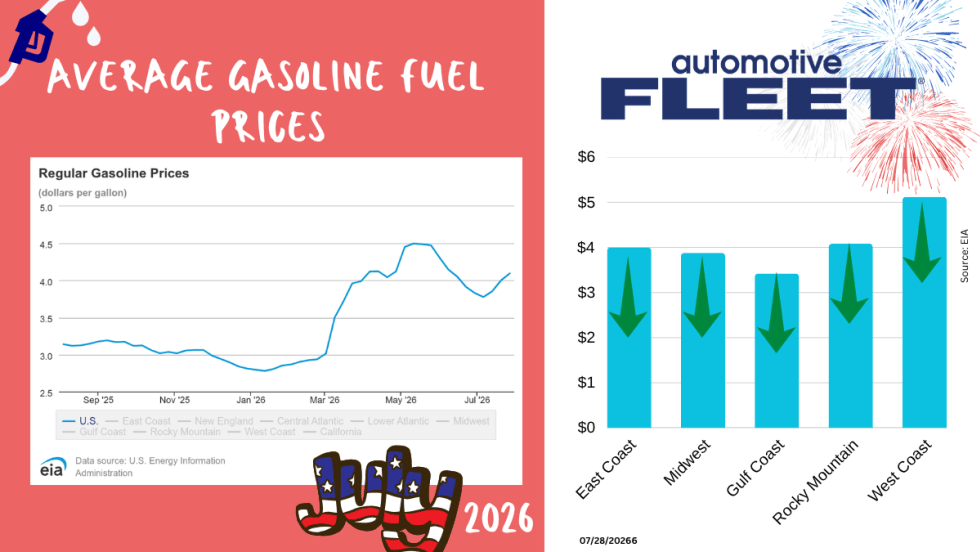
July Fuel Update: Prices Keep Rising in Light of More Conflict
Gas prices continue to rise as more and more conflicts do, too.
Read More →
Bob Adamsky on Fuel Volatility: "Don't Panic, Have a Plan."
When it comes to up and down fuel prices, Adamsky has a message for fleets: “Don’t panic.”
Read More →
How Fleets Can Gain Control of Non-Fuel Spend
Fuel often gets the spotlight, but non-fuel expenses can have a major impact on fleet costs. Ramel Lindsay of U.S. Bank Voyager discusses how fleets can gain better visibility and control over these often-overlooked expenditures.
Read More →
Fuel is Just the Start: How Middle East Tensions are Driving Up Fleet Maintenance Costs
The Middle East conflict is doing more than pushing up fuel prices. It’s also raising the cost of key maintenance products your fleet depends on, from motor oil to tires to windshield wipers. Here’s what you need to know about this budget-busting situation.
Read More →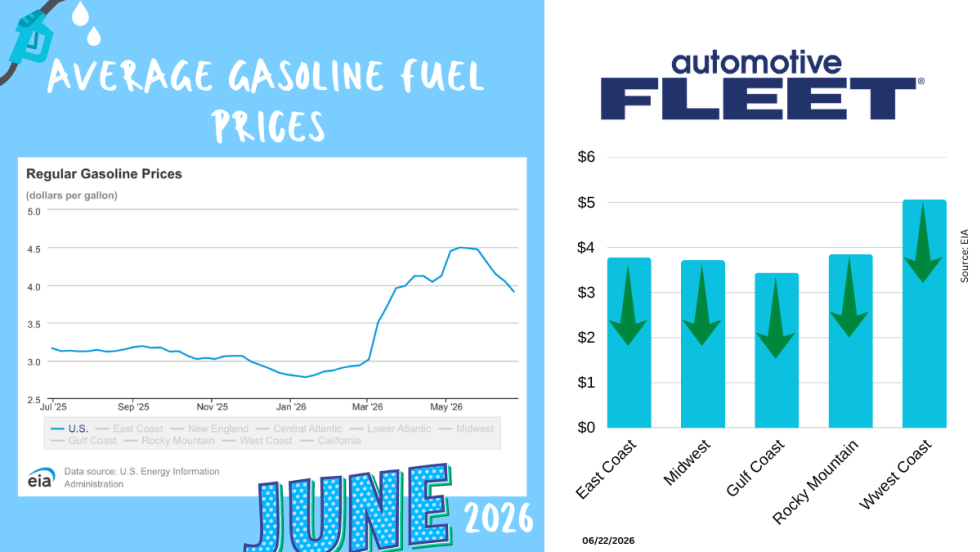
June Fuel Update: Prices Fall Below $4
Drivers are finally getting some relief at the pump. The national average gas price has dropped below $4 a gallon for the first time in months, with prices falling in 47 states as oil markets react to developments in U.S.-Iran negotiations.
Read More →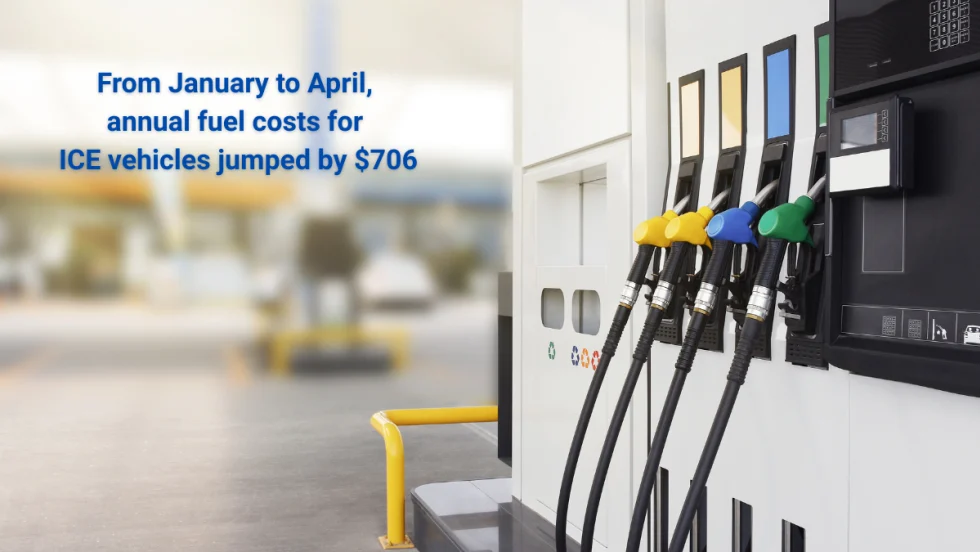
Study: How 2026's Gas Price Hikes Affect Different Vehicle Types
New data from iSeeCars reveals how rising fuel costs have affected different vehicle segments as gasoline prices climbed nearly 46% over the past four months.
Read More →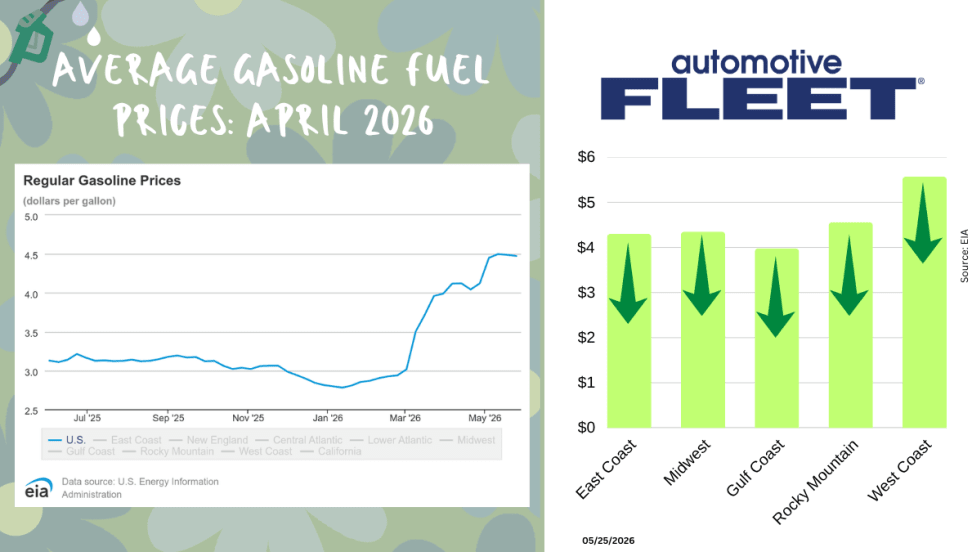
May Fuel Update: All Regions Experience Declines
Gas prices are finally easing in much of the country, but experts warn global tensions could quickly reverse the trend as the national average remains well above last month’s levels.
Read More →