




Fleeting With Used Vehicles
In the right situations and with the right fleet planning, car rental operators can save up to 20% on depreciation costs with used fleet.

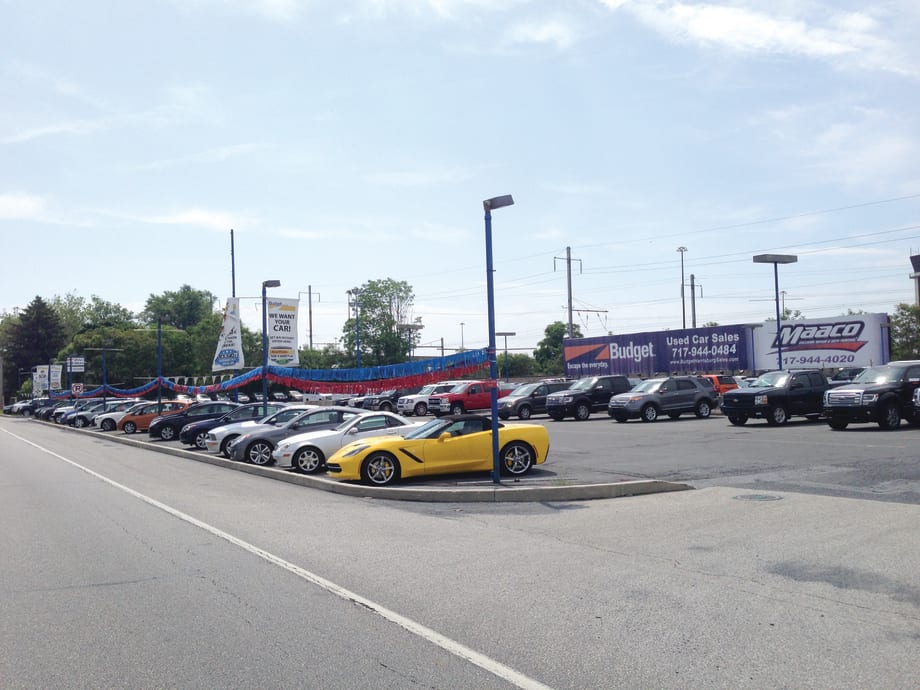
Budget Rent A Car of Harrisburg, Pa., a Budget licensee, retails 25 to 30 vehicles a month from its lot next to the rental office. The company leaves its retail units plated, which allows them to be rented if needed. This works especially well as a no-pressure test drive, says Solomon Cramer, president.
Budget Rent A Car of Harrisburg, Pa., a Budget licensee, retails 25 to 30 vehicles a month from its lot next to the rental office. The company leaves its retail units plated, which allows them to be rented if needed. This works especially well as a no-pressure test drive, says Solomon Cramer, president.
The average car’s lifespan has reached a record high of 11.4 years. Imagining the average car’s depreciation over that time might look like a theme park water slide — there’s a steep drop in year one, followed by a much gentler angle for the rest of the ride.
Car rental operators generally take it as a business fact of life that they accept the steepest part of the slide. However, one way to avoid that hardest depreciation hit is by fleeting with used vehicles.
Compared to fleeting with new vehicles, the result is lower capitalized costs, lower monthly deprecation and lower monthly payments.
Nonetheless, running used vehicles won’t satisfy every rental situation. The practice should be considered in the right scenarios and with the proper fleet planning.
Beneficial Scenarios
When does it make sense for a rental company to fleet with used vehicles? It could satisfy a number of needs, such as access to specialty units with limited availability, the ability to fleet immediately or to grow fleet quickly at reduced costs.
Used units can come in handy when utilization may be steady but not optimal, such as a company that needs to deliver materials once a week, schools, camps and churches that need shuttle vans for regular events or for short demand periods such as seasonal floral delivery, contractor jobs or visiting employees on assignments.
“That’s where used comes in, because you have lower costs,” says Joe Lyons of Marple Fleet Leasing, a provider of leasing, remarketing, sales and fleet consultations to the rental industry. “That used van is costing you $350 a month instead of $500 a month for new.”
Local market rentals are good for used because those renters don’t rack up mileage like business travelers or summer vacationers do. Keeping miles low helps the rental company remarket those used units while they’re still under factory warranty.
Used units work particularly well for replacement rentals, especially when the transaction is handled through an insurance claim. “Because the customer is getting a car ‘for free,’ he’s going to be less discerning if the car has 35,000 miles,” Lyons says.
But this is in contrast to the airport business traveler. “When the mileage parameters changed (during the Recession), there was a huge pushback with business travelers,” Lyons says. “The ‘gold’ customers are more concerned with the three business calls they’ve got to make that day and whether the car is going to break down on them.”
Who Sells Used?
Used vehicles for rental fleets come from a variety of sources. While auctions are an obvious choice, many major rental companies (and some independents) regularly sell direct to the secondary rental market, as do some leasing companies. This direct sale has the benefit of avoiding auction fees for both the buyer and seller.
Brokers are also a source of used vehicles. Though independent, some are known to buy from a particular rental company or other specific companies with vehicles to sell. In a broker scenario, you are paying the owner of the vehicle and the broker takes a service fee to make the sale happen. Some brokers act as agents for both the seller and buyers.
Fleet remarketers are distinct from brokers in that they actually own the units and are paid directly.
When considering buying used, Lyons recommends that operators check with their lender. There may be a premium on the rate for used vehicles, or the lender may have a threshold for age and model year of vehicles allowed under its line of credit, he says.
[PAGEBREAK]
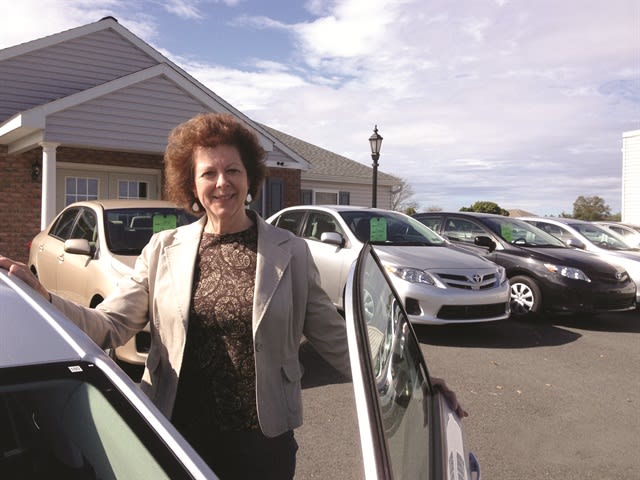
Denise Borcheit, fleet sales manager, steps into a used vehicle for sale on the Kulp Car Rentals & Sales lot. By selling cars retail, Kulp realizes returns of $1,000 to $1,500 greater per unit than selling at auction.
Buyer Beware
When dealing with any third-party seller for the first time, take precautions. Buyers should get proof of ownership before they transfer funds. Conversely, most sellers will not allow units to be picked up until they are paid.
Be sure to know where the titles are held and when you can expect them to be sent. Most states won’t allow you to register used vehicles until there is evidence that the new title and license plates are in process.
Ask the owner or broker for a written “standards of acceptance,” which stipulates the ground rules for the condition of the vehicle based on age and miles.
While buyers shouldn’t expect new car conditions, the standards of acceptance should define parameters for monetary remediation for items such as worn tires, cracked windshields, dent removal and more, as well as grounds to refuse the car altogether.
Don’t be afraid to ask for references from the seller, and of course check those references. “What started as nice talk and a great deal has ended up with some operators losing their investment,” Lyons says.
Working the Auctions
Used fleet vehicles can be found at two types of auctions, open and closed.
Any licensed dealer is allowed to buy at an open auction, and you can find low-mileage units in good condition at open auctions.
On the other hand, closed auctions are structured specifically for manufacturers to sell directly to their franchised dealers. Those dealers are the only ones allowed to buy at closed auctions.
Laws vary by state, so rental companies should research the stipulations for a dealer’s license. Some states, such as Maryland, offer a wholesale license, which allows you to buy at an auction but not sell vehicles retail.
The Mileage Game
Understanding when to buy and sell used rental fleet is where the rubber meets the road.
Solomon Cramer, president of Budget Rent A Car in Harrisburg, Pa., buys used units with mileage in the teens and sells before they hit 30,000 miles — with the bumper-to-bumper factory warranty still in place.
Michael Kulp, president of Kulp Car Rentals, serving southeast Pennsylvania, is also mindful of factory warranties, and he adds that another critical threshold in used car marketing is 50,000 miles. Units below that point are more likely to satisfy factory certified, pre-owned (CPO) program conditions, and buyers could get a cheaper extended warranty.
Cramer isn’t worried about the customer’s perception of used vehicles. “I don’t think most customers can differentiate between a 2011 Hyundai Sonata and a 2014, as long as the odometer isn’t very high,” he says, adding that the majors are running cars past his mileage limit anyway.
“The days of expecting the 5,000-mile rental car are long gone,” he says.
[PAGEBREAK]
Playing the Seasons
As important as mileage — or more so — is seasonality. To really utilize used fleet to your advantage, “You need to buy when everyone else is selling,” Kulp says.
In cold weather climates, that means buying after the summer season through February. Kulp says he bought 40 loaded 2013 model-year Chrysler Town & Country minivans in January, “when it was cold and snowy and no one wanted minivans,” he says. However, “I had to be prepared to sit on them for three or four months and see my utilization suffer.”
To get those vans on the road during the winter, Kulp rented them for $25 a day, the same rate as a Toyota Corolla. On the face of it, that doesn’t seem to make business sense. However, “I could take those to Manheim today and get $2,000 more each than I paid for them,” he says.
Cramer uses a similar model. He stocks up on used units when car rental companies are de-fleeting at the end of summer, runs them through the winter and sells in the spring — when prices are at their highest. “We typically don’t expect to have a net depreciation cost on the used vehicles we buy in the fourth quarter and sell in late first quarter or early second quarter,” he says.
Fleet Discipline
For Cramer and Kulp, balancing used fleet supply with rental demand is a science.
“You have to be disciplined,” Cramer cautions. “When you get into the spring, you need a solution or else you’ll be tempted to hold that [used] car until August. If you do, you’ll have a car you kept for 12 months that you bought low and will sell low.”
When Kulp bought those minivans in January and February, he already was in the process of reconditioning his older minivans to sell them into the strong seasonal market, from April to June.
Cramer uses program cars specifically to meet the high summer demand. The program cars come in waves between March and May, which allows him to sell his used units in waves.
“This way, we don’t need to sell all the cars right away for cash flow reasons,” he says. “We can sell them in a more disciplined matter rather than what the market will bear on a given day.”
Selling Retail
Both Kulp and Cramer have the benefit of selling their de-fleeted rental vehicles retail. They not only have a built-in customer base of existing renters, they also realize returns of $1,000 to $1,500 greater per unit than selling at auction.
Cramer leaves plates on his retail units to allow him to rent them until the moment the car is actually purchased. Allowing the customer a test drive for the daily rental fee is a good enticement to buy. “It’s much more of a no-pressure tactic,” he says.
Nonetheless, “If you’re thinking of getting your dealer’s license and throwing a couple of cars out there to sell, you might as well send them to Manheim,” Kulp says.
Both Kulp and Cramer have in-house maintenance and body shop facilities with on-staff mechanics. While adding a layer of overhead, this allows them to buy cars with some scratches and dings, and even rent them that way. “But when you go to sell them, you need to be prepared to fix them,” Kulp says.
[PAGEBREAK]
Becoming a retail car dealer means not only investing in a sales force and mechanics, but also taking trade-ins, offering financing and warranties and marketing your used cars effectively.
Independent car sellers aren’t allowed to be part of manufacturers’ certified, pre-owned (CPO) programs. However, Kulp sets his own standards — similar to a CPO program — and markets it as “Kulp Certified.” He also sells maintenance and assurance plans.
Selling retail also affects what you buy. “If you’re looking to retail, you need to be a lot more attentive to what the used buyer wants,” says Cramer, in reference to options such as leather, power seats and sunroofs. “You may not care about these things from a rental perspective, but it’s the difference between that car sitting or selling.”
It’s All About Costs
Ultimately, used fleet has become integral to Kulp and Cramer’s business models.
“If I can reduce fleet costs by $100 a unit on a car with $1,000 RPU (revenue per unit, per month), it’s like adding 10 points of margin,” Cramer says. “You’re not going to get that from anywhere else. You can only do so much with personnel costs or interest rates.”
While Kulp will continue to be an opportunistic buyer of used, he cautions that deals on new vehicles lately have steered him away from the used market. Kulp just bought 40 new small sedans “for less than we could sell them at Manheim,” he says.
While the trend is good in the short term, Kulp is worried about it. “If I had a crystal ball, I’d say 2015 and 2016 are going to be bad,” he says. “I think the used car market is going to really soften.”
Joe Lyons will participate in the 2014 Auto Rental Summit's "Fleet Jam Session," an intensive, three-hour workshop on fleet planning, funding, sales and remarketing. Visit www.autorentalsummit.com for more information.
Originally posted on Auto Rental News
More Global Fleet
GeoFencing Adds to Your Truck Security Arsenal
Geofencing is a familiar fleet tool today, but its early adoption marked a major shift in vehicle tracking, route monitoring, and the debate over employee privacy.
Read More →
Holman Takes Full Ownership of ARIZA in Mexico
Holman is bringing its Mexican fleet management operation fully under its own brand after more than 30 years as a joint venture. The change gives multinational fleet customers a single Holman operation across the U.S., Canada, and Mexico.
Read More →
5 Tire Maintenance Tips to Help Prevent Work Truck Downtime
Regular tire checks can do more than extend tread life. These five maintenance practices can help work truck fleets catch problems early, reduce costs, and prevent downtime.
Read More →

Proven Ways to Reduce Work Truck Downtime
The age-old problem of downtime will always be a reality, but with new strategies at hand, fleets have more ways to keep trucks on the road longer.
Read More →


Cameras, Safety and Insurance: From Reactive Claims to Real-Time Prevention (Part 2 of 2)
Part Two: Commercial auto remains one of the most challenging and costly lines of coverage for fleet operators and insurers alike. Continue learning more about how to effectively address these issues from Onur Aksan, Enterprise Business Development Executive, Geotab
Read More →
Cameras, Safety and Insurance: From Reactive Claims to Real-time Prevention
Commercial auto remains one of the most challenging and costly lines of coverage for fleet operators and insurers alike. Learn more about how to effectively address these issues from Onur Aksan, Enterprise Business Development Executive, Geotab.
Read More →
Fleet Costs Are Rising: Here’s How Leaders Are Responding
Fleet leaders are under pressure to reduce costs, adapt to economic uncertainty, and make smarter decisions. See how peers across North America are responding with real data, proven strategies, and forward-looking insights. Download the 2026 Market Pulse Report to benchmark your strategy and uncover where you can gain an edge.
Read More →
Enterprise Fleet Management Surpasses 900,000 Vehicles in U.S. & Canada
Enterprise Mobility connects with mobility solutions around the globe
Read More →