




Fleet Fuel Cards Provide Easy Accessibility and Card Security
Standard Supply has saved $120,000 annually using the Fuelman card. The Wright Express Universal Fleet Card has given Wendy's Comprehensive reporting and security. Boeing has selected GE MasterCard.
By mid-1997. Bill Alvarez, controller/CFO for Standard Supply & Hardware Co., realized something had to be done about the company's spiraling fuel costs. And fast.
Alvarez said. "We weren't very happy with the situation of having multiple gas cards. We were being billed by different gas companies. And it gave us very poor control over the charges.'
Before the Fuelman program was implemented last year, Standard Supply, an industrial supply company based in New Orleans, had at least 10 gas cards for its eight branches covering most of Louisiana and parts of Mississippi and Arkansas. The company maintains about 40 one-ton, flat-bed trucks and 30 cars.
In addition, the company had difficulty keeping track of people who had been terminated. And there were a couple of incidents when cards were stolen and used. Alvarez said.
He continued, "So, in essence, we needed something better."
Coincidentally, one of the branches happened to be using the Fuelman card on a trial basis. Alvarz decided to take a closer look.
Alvarez said. "I got in touch with Fuelman and asked them to give us a presentation on what they could provide us. And based on that presentation, we decided to go with the Fuelman program."
Standard Supply Saves $ 120,000 Annually with Fuelman Program
With the Fuelman program. Standard Supply is able to monitor and control fuel purchases at the corporate office. The card is used primarily for fuel and preventive maintenance.
Alvarez said, "Basically, with everything included, we're saving about $120,000 a year with the Fuelman program."
Standard Supply initially started with the two-card system for its trucks: one card attached to the vehicle, and one to the driver. Impressed with the initial results, the company eventually established a one-card system for its sales and administrative personnel.
Standard Supply gels fuel discounts and sometimes discounts on repairs.
"It allows us to use gas stations with lower prices," Alvarez, said. "We save about 1 cent or so per gallon, and it adds up."
Weekly Reports Help Audit and Track Fuel Use and Maintenance
Standard Supply receives weekly reports that provide information on fuel use by a driver or vehicle. Plus, the reports also help the company audit and track abuse by drivers, who are given fuel allotments.
"It helps us monitor the average miles per gallon of gas per vehicle," Alvarez said. "The data we get allows us to say, there's something wrong here - that vehicle is not giving the gas mileage that it should have."
Standard Supply also receives weekly reports that itemize all the repairs on a vehicle.
"I know what maintenance has taken place and the average gas mileage. I get a phone call with any repair that's more than $1,000." Alvarez said.
Alvarez gets a monthly summary of repairs, analysis, and weekly reports on which vehicles need maintenance.
"I send out a copy of my bill to the branches for approval individually so they know what's going on, and they approve what their branches are doing," Alvarez said. "I review it myself. Each branch has the responsibility to take care of its vehicles."
Two-Card and One-Card Systems Prevent Misuse
Standard Supply's trucks run on diesel fuel.
"I restrict those cards to trucks that use diesel fuel exclusively," Alvarez said. "It makes it very hard for somebody to use that card for his or her automobile. If they try it, it's a red flag, and I'd gel a phone call."
On the two-card system, the driver runs the vehicle card as well as the individual driver card. "The individual card has a PIN number, so if somebody uses it without the PIN, he can't do anything with it," Alvarez said.
On a one-card system, the card has a PIN number as a security feature.
The card's safety features have eliminated driver misuse of the card, which has led to big savings for Standard Supply.
Cost differences account for 10 percent of the savings, but the bulk of the savings can be attributed to the reduction of card misuse, such as drivers using the card for their personal vehicles.
Prior to using the Fuelman card, Alvarez said some gas stations would occasionally allow drivers with gas cards to buy other items other than gas, but the security features of the card has prevented such instances from occurring.
[PAGEBREAK]
"It keeps the drivers away from the temptation of misusing the cards, and it eliminates the possibility of someone being innocently accused of misusing it," Alvarez said.
Maintenance Reports Aid in Vehicle Replacement
In addition to monitoring and controlling fuel costs, Alvarez also wanted to keep track of data such as the cost of operating a particular vehicle to determine whether it's worth fixing, and the cost to maintain it per year - key factors that allow him to make a comparison between the price of a new vehicle and the cost to maintain the old one.
"Having this type of data helps you with the decision that this truck's not worth keeping on the road; let's sell it and buy a new one," Alvarez said. "With the high mileage we put on our trucks, it's belter to buy a new one that's more economical and has fewer repairs."
Standard Supply's trucks average about 40,000-50,000 miles per year. Currently, the replacement cycle has been maintained between three to five years.
But this wasn't always the case. Alvarez recalled a time when the company wasn't investing in new trucks, which meant higher repairs and operational costs.
"Now we've put new vehicles on the road and have reduced the operational costs and maintenance costs," Alvarez said.
Alvarez continued. "We get better reliability because we want to get from point A to point B in order to serve the needs of our customers. The customers don't want to hear the truck has broken down along the way. Reliability allows us higher quality of customer service, which is a key factor for us."
WEX Card Meets Wendy's Needs for Reporting and Security
Seven years ago, when Wendy's International Co. Inc. in Dublin, OH, started using the Wright Express Universal Fleet Card, there weren't a lot of options for national fuel cards. Wendy's was using multiple cards such as Shell and BE
"We took in Wright Express as a test - test markets were in Pennsylvania and Colorado - and over a period of time, we determined it fit our needs as far as reporting and security, and it gave our drivers access to the fuel providers they needed," said Scott Mayo, Wendy's director of fleet, who oversees 825 cars and 175 vans and light trucks.
The WEX card is used exclusively for fuel.
"We were having to provide seven to eight different gas cards in various pails of the country, and now we can provide one. Administratively, it has allowed us to simplify everything that the driver has done for us," Mayo said.
WFX Card Provides the Key Security Features
Mayo was looking for a card with safety features that prevent card abuse and provide quick cancellation if the card is stolen. He said, "How secure is that card? If it gets lost, how easy is it to cancel? Now, most of the stations have become electronic. If you cancel that card today, it's canceled today."
While Wendy's never really had a security problem, there were a few cases where a gas card would be left behind at a gas station and used by somebody other than the driver. "Using the WEX card helps us avoid future security problems," Mayo said.
Mayo pointed out the PIN number as an effective security feature for Wendy's.
Reports Provide Parameters in Fuel Purchasing
The reports provided by Wright Express help set parameters and allow Wendy's to track virtually every aspect of fuel purchases, Mayo said.
Wendy's receives monthly reports, along with the bill. The vehicle analysis report (VAR) lists each transaction that the driver made during a particular period - where the driver has driven, what time of day he's buying fuel, what type of fuel he's buying, and how many gallons he has purchased.
Exceptions can be set up within these reports.
"You have a wide range of parameters that you can set up within the card to control what can be purchased, when it can be purchased, and track anything that was purchased on the card." Mayo said. "If mileage input is correct, if the fuel is correct, you can get you miles per gallon, and it can get your miles per gallon, and it can help you calculate cost per mile of operation. It allows you to audit any factor in the fuel purchase."
Website Helps in Ordering and Canceling Cards
Mayo said the WEX website has been particularly useful in ordering and canceling cards, which has cut down the phone calls. Wendy's uses the website every two days on a test basis.
We also update information on their system concerning our drivers there are instances when a driver has moved to another vehicle," Mayo said.
In-house support from WEX has also been a helpful feature from the program. "Most of our dealings are with someone in their main office, whether it's support for getting a card canceled or replaced, or looking for more detail on a certain purchase," Mayo said.
WEX Card Reduces Monthly Fees
While Mayo couldn't specifically quantify the dollar savings, he said, overall, the whole process has generated savings for Wendy's.
Mayo said, "It has reduced our monthly fees. It has saved us time on processing invoices because we went from having seven to eight cards down to one card. We're cutting one check a month instead of seven or eight."
WEX Answers Wendy's Needs for Fuel Accessibility and Billing
Among the numerous advantages provided by the WEX fuel program is the large number of fuel locations available, Mayo said.
Mayo also identifies some key questions concerning billing. He said, "How is billing corning? Is it set up the way you want it to be set up? Does it give you exceptions, if that's what you're looking for? How flexible are their systems, and how flexible are their people to work with you in the reports that you want? They have proven to be good at all of these."
More Fuel
Fuel Prices Surge in September | September Fuel Update
September brought major fuel price swings, including diesel crossing $6 a gallon. Here’s how gas and diesel prices changed throughout the month, and where they stood heading into October.
Read More →
Turning Fleet Payment Data into Executive Insights
Ramel Lindsay of U.S. Bank Voyager discusses how fleets can transform payment and transaction data into actionable intelligence to reduce costs, improve oversight, and support executive decision-making.
Read More →
Why the IRS Raised Its Mileage Rate in the Middle of 2026
Fuel-price volatility drove the rare increase to 76 cents per mile, the fifth midyear adjustment since 2000.
Read More →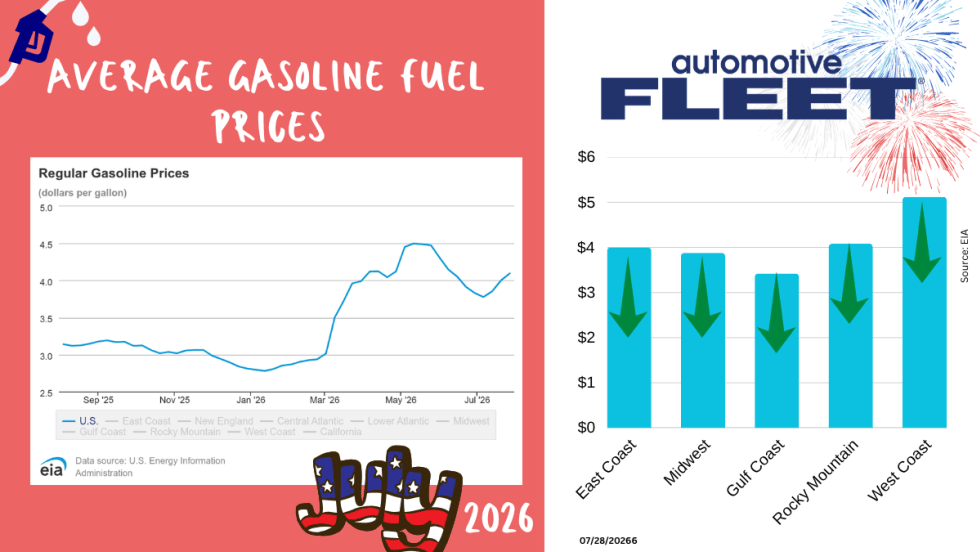
July Fuel Update: Prices Keep Rising in Light of More Conflict
Gas prices continue to rise as more and more conflicts do, too.
Read More →
Bob Adamsky on Fuel Volatility: "Don't Panic, Have a Plan."
When it comes to up and down fuel prices, Adamsky has a message for fleets: “Don’t panic.”
Read More →
How Fleets Can Gain Control of Non-Fuel Spend
Fuel often gets the spotlight, but non-fuel expenses can have a major impact on fleet costs. Ramel Lindsay of U.S. Bank Voyager discusses how fleets can gain better visibility and control over these often-overlooked expenditures.
Read More →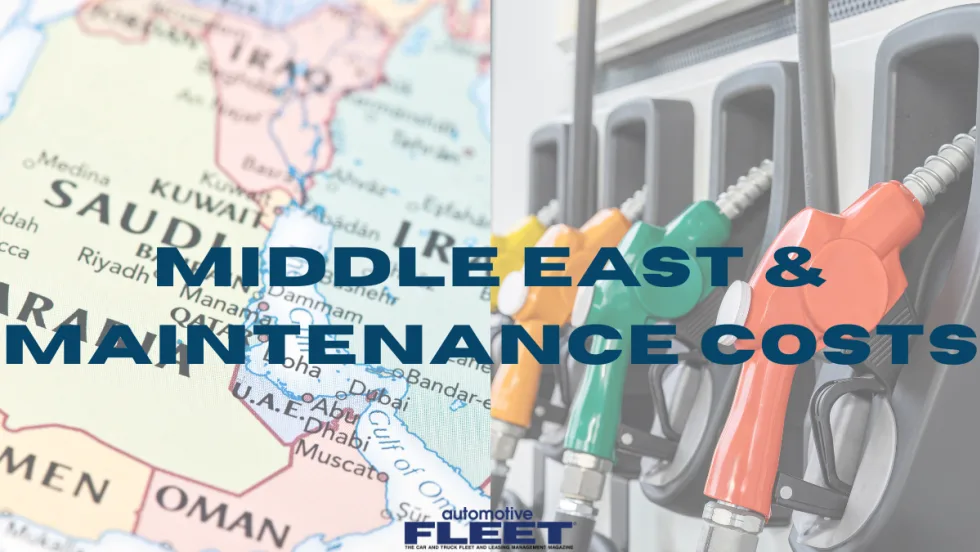
Fuel is Just the Start: How Middle East Tensions are Driving Up Fleet Maintenance Costs
The Middle East conflict is doing more than pushing up fuel prices. It’s also raising the cost of key maintenance products your fleet depends on, from motor oil to tires to windshield wipers. Here’s what you need to know about this budget-busting situation.
Read More →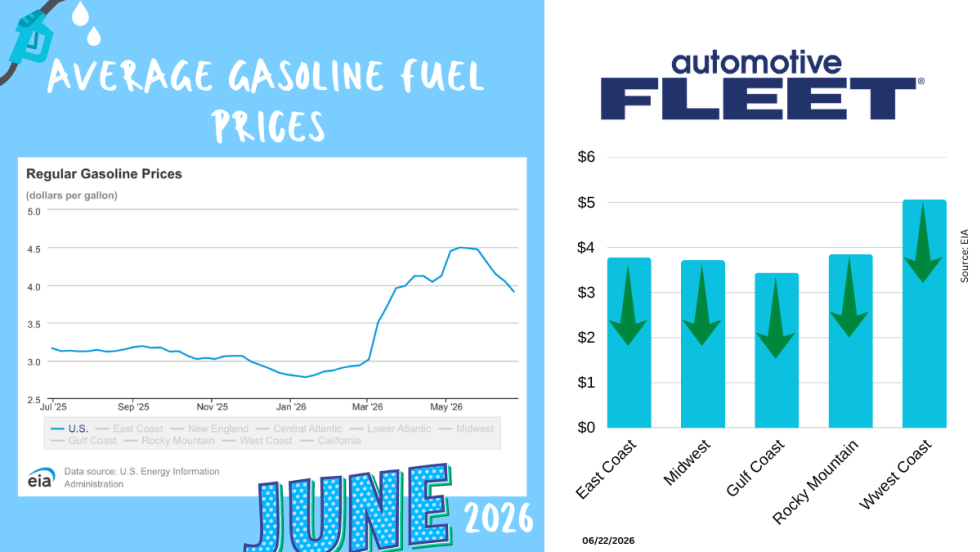
June Fuel Update: Prices Fall Below $4
Drivers are finally getting some relief at the pump. The national average gas price has dropped below $4 a gallon for the first time in months, with prices falling in 47 states as oil markets react to developments in U.S.-Iran negotiations.
Read More →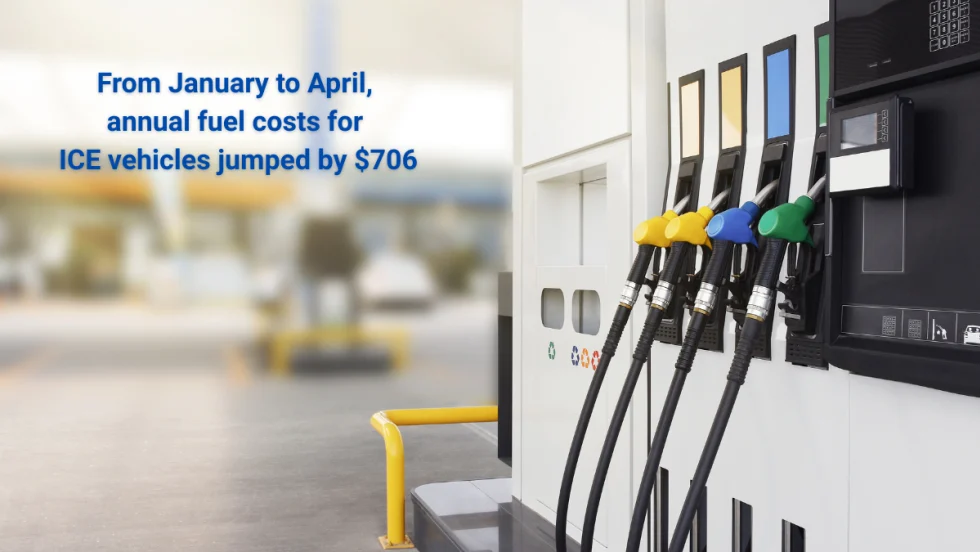
Study: How 2026's Gas Price Hikes Affect Different Vehicle Types
New data from iSeeCars reveals how rising fuel costs have affected different vehicle segments as gasoline prices climbed nearly 46% over the past four months.
Read More →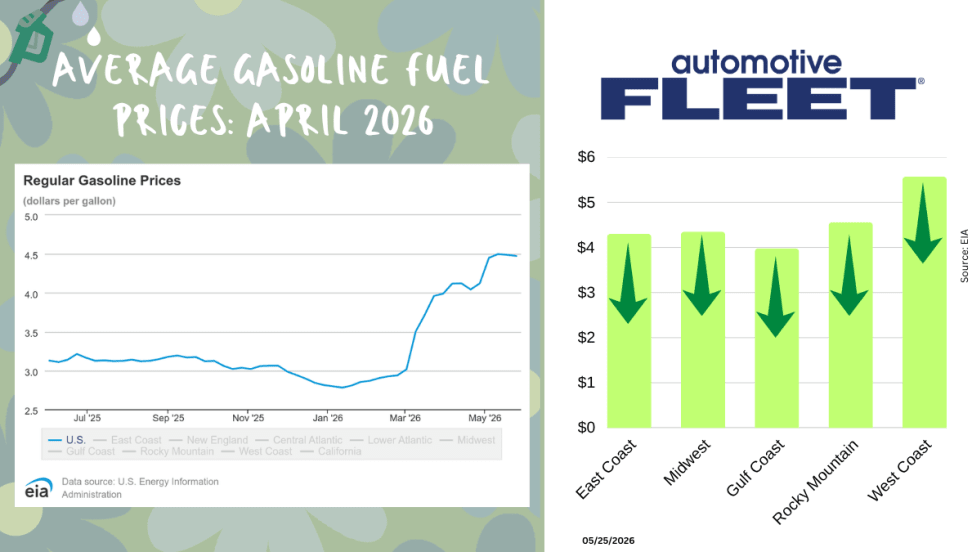
May Fuel Update: All Regions Experience Declines
Gas prices are finally easing in much of the country, but experts warn global tensions could quickly reverse the trend as the national average remains well above last month’s levels.
Read More →