




Examining Reimbursement Economics from Multiple Perspectives
As financial hard times prompt companies to once again consider reimbursement, the economics of this type of program versus company-provided vehicles may not add up to perceived cost savings.
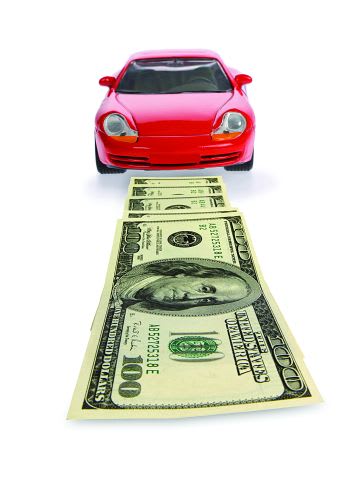
As we emerge from one of the worst recessions in most of our collective memories, it's no surprise C-level executives are taking another look at reimbursement as an alternative to company-provided vehicles. After all, reimbursement sounds a lot simpler than worrying about manufacturers, interest rates, fuel prices, regulation, taxes, etc. But beware of that which sounds simple - it usually has unintended consequences.
Rather than spend time on the myriad qualitative and quantitative reasons why reimbursement does or does not make sense, the focus of this article is purely the economics. When it comes to the economic analysis of reimbursement, four perspectives need to be accounted for:
● Direct cost of reimbursement.
● Direct cost of company-provided vehicles.
● Driver out-of-pocket expenses.
● Driver productivity.
Let's look at each in turn.
First, a word of explanation: when we discuss reimbursement, we are specifically discussing fixed and variable reimbursement, or FAVR. The IRS variable rate is a simple process, designed for infrequent or low-mileage drivers, and the economics are fairly straightforward.
Perspective 1: Reimbursement Direct Spend
Fixed and variable rate (FAVR) reimbursement is what it says: a fixed reimbursement amount based on depreciation and insurance, and a variable reimbursement based on fuel prices, maintenance spend, and other variable expenses. The majority of FAVR programs are regionalized - the programs account for regional variations in insurance rates and fuel prices.
The fixed portion of the reimbursement is largely dictated by the IRS, with pre-defined depreciation schedules and a cap on the fixed reimbursement of 71.4 percent for depreciation and insurance. The variable reimbursement is calculated as a cost-per-mile amount and is paid based on driver-reported business mileage.
Currently, the typical total reimbursement for a passenger car (program fees included) runs $750-$825 per month, depending on the region of the country and the vehicle selected. For an SUV, the reimbursement is closer to $800-$870 per month. Assuming 2,000 miles traveled monthly, this equates to a cost per mile of approximately 41 and 44 cents, respectively.
[PAGEBREAK]
Perspective 2: Company-Provided Vehicles Direct Spend
Coming up with the total cost per mile for a company-provided vehicle is a relatively easy exercise. Simply take the total annual spend and divide by the miles driven.
But you're not quite through. Keep in mind when using a reimbursement program, you only reimburse business miles, so conversely when evaluating a company-provided program, you must attach a dollar value to personal use and deduct it as if you were charging the driver directly, even if you are not currently doing so.
Today, the average cost per mile for a passenger car fleet, net personal use, runs 25-32 cents per mile, depending on the model and regional distribution. For SUVs and passenger vans, the range is 28-36 cents per mile.
Clearly, company-provided vehicles enjoy an economic advantage, when looking purely at direct spend. However, we must explore two more aspects of reimbursement: driver out-of-pocket expenses and driver productivity.
Perspective 3: Driver out-of-pocket expense
In a FAVR scenario, costs shift from the company toward the driver. A combination of factors causes this shift. The first is simply how the regulation is spelled out by the IRS, and the second is the variability that occurs among individual drivers. Let me explain further.
One impact of the regulation is in the safe harbors for depreciation that the IRS establishes, plus the 71.4-percent business use cap. We know from experience that in a company-provided scenario, drivers report 15-20 percent personal use on average. So, the difference between the cap of 71.4 percent and the actual business use percentage of 85 percent is an out-of-pocket expense absorbed by the driver. This expense equates to roughly $85 per month out-of-pocket.
Another issue is the items for which the driver is not compensated, such as the cost of financing a personal vehicle or extraordinary maintenance expenses. FAVR regulations do not permit reimbursement for items not spelled out in the regulation. This can result in additional out-of-pockets ranging from $50 to $100 per month.
Then there's the variability discussion. Suppose a driver living in a suburb of Atlanta is reimbursed for insurance at $900 annually x 71.4 percent, or $642 annually. However, suppose the driver in question is 24 years of age, with a violation in his or her recent past. Most likely, the driver's insurance expense will be significantly higher than the regionalized average. This is only one of several examples in which variation can and will occur.
Drivers quickly realize this type of program is based on use, and there may be a natural inclination to inflate monthly mileage to increase reimbursement to cover perceived out-of-pocket expenses. While this is difficult to quantify, it is an unintended consequence that can raise reimbursement costs even higher.
[PAGEBREAK]
Perspective 4: Driver Productivity
In a managed-fleet scenario, drivers are issued a selector when it's time to order, are directed where to go for maintenance, and have minimal involvement in registration renewal, etc. When shifting to reimbursement, drivers must manage all these activities themselves. The driver is now shopping for a car, financing, and insurance, arranging for maintenance/tows/rental cars, etc. There's no need to quantify the impact, except to know it exists and can be significant.
Reimbursement Risks Loss of Company Control
Inevitably, risk management comes into play. While not something to which we can necessarily attach economic value, it bears discussing. One argument made by reimbursement proponents is the company eliminates risk by moving to reimbursement. The counter argument is, under a reimbursement program, the company gives up control over the person behind the wheel, and the company is always liable for the actions of its employees while on the job.
Often under reimbursement, motor vehicle record checks are not conducted beyond initial hire, maintenance records for the vehicle are not maintained, and as a result, the driver's risk profile actually increases.
So, while losing the risk associated with personal time, the trade-off is increased risk in general by giving up program control.
[PAGEBREAK]
What's the Economic Bottom Line with Reimbursement?
The decision to move to reimbursement is, at its very essence, a shifting of cost, responsibility, and some risk to the employee. The essential economic argument against reimbursement is this: employers have economies of scale, individuals do not. This reality means economic efficiency will not be attained by shifting to a reimbursement program.
The direct spend differences are clear: managed fleets are more cost effective than reimbursement by a good 8-15 cents per mile.
When the additional cost to the driver, and the impact of lost productivity to the company is added to the reimbursement column, the economics strongly favor company-provided vehicles. Chart 2 summarizes various alternatives for business transportation.
When Does Reimbursement Make Sense?
A FAVR-type reimbursement program can have a place in handling corporate business travel. These programs work well in several situations, such as:
● Highly transient workforces.
● Contract-based work.
● Executive management.
● Thinly capitalized companies.
● Professional services firms, i.e., legal or consulting, for which business miles are highly variable.
● Low business-mile applications.
In many instances, reimbursement and company-provided programs operate within the same company for different applications. Much depends on the business objective, attitude toward the employee, and business need, but most of all, it has to be about the economics.
More Leasing

Martin Kuhn on the Future of Mike Albert Fleet Solutions
The new president and CEO explains how Mike Albert Fleet Solutions plans to invest in technology, data, and people without losing the personal service fleet customers value.
Read More →
Mike Albert Fleet Solutions Names Marty Kuhn CEO, First from Outside the Family
Kuhn has a theory of what sets the company apart from larger FMCs: depth of partnership over breadth of volume.
Read More →
Union Leasing Rebrands as Moventum Fleet Management
The name Moventum reflects the company’s position at the intersection of movement and momentum, with the guiding principle "Keep Work Moving."
Read More →
How Does a Mid-Major FMC Compete? Ask BBL Fleet
This Pittsburgh-based FMC built a technology-first culture, sustained double-digit organic growth, and expanded its Midwest footprint through a recent acquisition. How did it happen?
Read More →
What’s Really Happening in Fleet Supply Right Now
Fleet supply has improved, but not everywhere. Merchants Fleet’s Charles Matthew explains where constraints still exist, what risks are emerging, and why fleets shouldn’t wait to place orders.
Read More →
These Edges Are Measured in Inches — Matt Dyer on Fleet’s New Normal
The Merchants Fleet CEO contends that fleets that drive the business win the inches. In 2026, every one of them counts.
Read More →
Who Gets a Company Car? (In 2026 and Beyond)
As costs rise and scrutiny increases, fleets are refining criteria that govern eligibility for company-owned vehicles.
Read More →
DriveItAway Holdings, Free2move Launch Operations In Nine Cities
The co-branded program with Stellantis’ mobility division scales up leasing and financing options nationwide with more cities to come online in 2026.
Read More →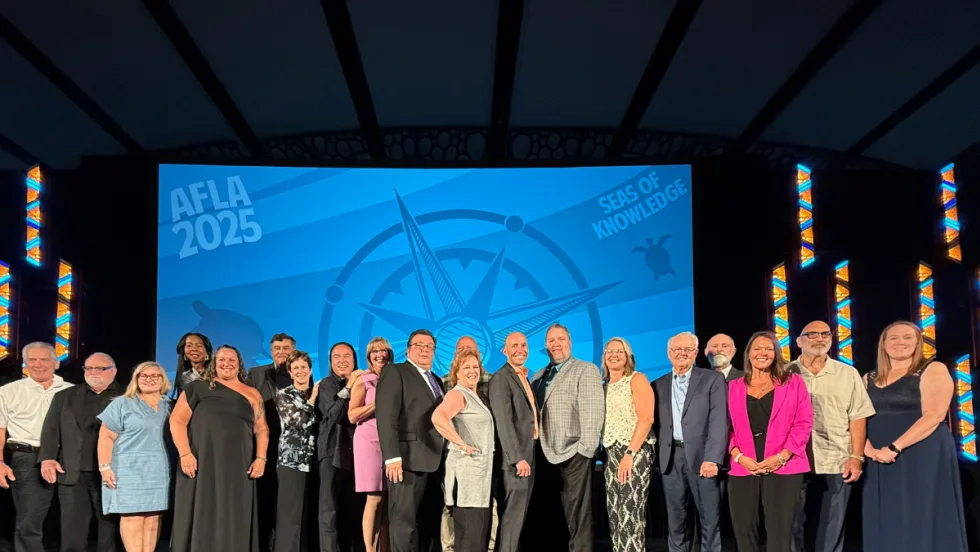
AFLA 2025 Conference in Pictures
Drawing over 640 attendees, the 2025 AFLA Annual Conference was held Sept. 14-17 at the JW Marriott Marco Island Beach Resort in Florida.
Read More →
DriveItAway, Free2move Partner to Expand Vehicle Access for Dealers
The arrangement enables franchise dealers to offer flexible lease-to-own programs with no credit checks, no down payments, and no long-term commitments.
Read More →