




'Eco' Issues Top of Mind at Ford Advisory Board Meeting
Fleet professionals who form Ford’s Fleet Advisory Board participated in Eco-Driving training and tested the new EcoBoost engine, which, the automaker says, delivers V-8 performance to V-6 engines with better mpg.

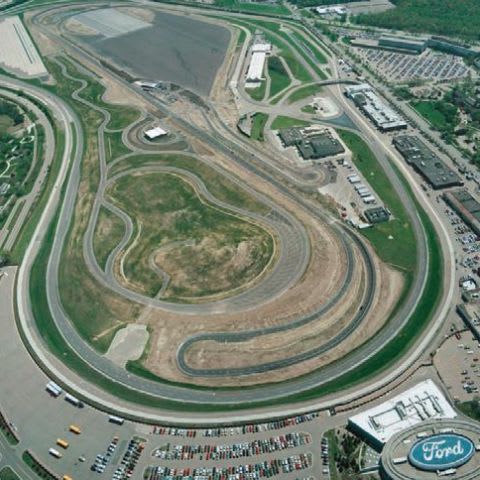
The Fleet Advisory Board meeting included comparison drives on Ford’s test track.
Boosting fuel efficiency, through product innovations and mpg-paring driver training, was a focus of the Ford North American Fleet, Lease, and Remarketing Operations Fleet Advisory Board (FAB) meeting held in early October at the automaker’s Dearborn, Mich., headquarters. Other presentation topics during the three-day gathering included safety, consumer trends, battery technology, manufacturing processes, and new products.
Board members, who include fleet industry professionals, serve three years, meeting semiannually to provide a fleet perspective on new products and concepts, services, and industry trends.
Following a product presentation on Ford’s new 3.5L EcoBoost V-6 engines, FAB members evaluated the powertrain in comparison drives on the automaker’s test track.
According to Ford, the EcoBoost technology "delivers reliable V-8 power with V-6 fuel economy." Driven the equivalent of more than 500,000 miles in durability testing, the new engine debuts next year on the Lincoln MKS.
Sue Miller, senior fleet manager, domestic fleet, for McDonald’s, favorably reviewed the turbocharged powertrain after driving an EcoBoost engine-equipped Fusion, MKS, and F-150.
"This was an amazing experience. Being able to drive vehicles side-by-side for immediate comparison really made the improvements pop. There was no mistaking how great the new product is," said Miller.
"I was impressed with the performance of the Fusion. I experienced no slow-down or engine-dragging fuel injection performance with the turboboost engine," said fellow FAB member Nancy Barlage, fleet administrator for Minneapolis-based Regis Corp.
Board members also participated in a new Ford initiative, Eco-Driving training. The one-on-one coaching program emphasizes small incremental driving behavior changes that cumulatively can achieve up to 20-percent improvement in fuel economy.
Barlage, whose 1,100-vehicle fleet includes Fusion, E-250, Focus, and Fiesta (in the U.K) models, appreciated the training course. "I am looking for ways to educate our drivers on these processes. My group gained 3 mpg during our test drive. That can be huge savings overall!"
Barlage plans to introduce the Eco-Driving concept to her drivers, then "emphasize one ‘baby step’ at a time" so drivers can habituate the steps. Additionally, she will use other sources, including tips from Ford’s fleet communications, e.g., its newsletter, as well as Web sites with fuel-conscious educational resources.
"The Eco-Driving training is almost like performing magic," said Miller. "With some very simple common sense, no-hurry driving, and behavior changes, our mpg increased 20 percent. And that was the crash course. Imagine what a full training could provide."
Based on the training, Miller said she "will incorporate the simplicity of the Eco-Driving, communicating the ability to obtain big results with very minimal cost or effort" in communications with McDonald’s drivers.
The 3,700-vehicle McDonald’s fleet includes primarily the Escape/Mariner, followed by Taurus/Sable, Fusion/Milan, and Explorer/Mountaineer (in that order), noted Miller.
[PAGEBREAK]
Other FAB meeting presentations included updates on Ford product safety initiatives, sustainability, and battery electric technology. A sneak preview of the 2013 Transit was also provided.
In a report on consumer trends and "Futuring," Sheryl Connelly, global trends manager, discussed how Ford measures and interprets societal trends in personal and cultural behavior and habits around the world. The findings are considered in new product creation and development.
Vic Poco, advanced manufacturing planning manager, presented a video on virtual manufacturing that explored the complexities of safely and productively implementing even the smallest design or parts change.
Truck FAB subcommittee members provided input on Ford’s future powertrain strategy and assessed alternatives. They also previewed the automaker’s 2011-MY Super Duty product, which included a walk-around of the vehicle’s exterior and interior features.
Ford officials presented B and C car segment changes to Car/SUV/CUV subcommittee members. The company’s new simplified order guides, scheduled to launch with the 2010 Fusion in early 2009, were unveiled.
The subcommittee also reviewed a potential future vehicle "that may help define a new segment for the Ford Motor Company," reported a Ford official.

Barlage, in her final year as a FAB member, says participating has provided high value. "I have gotten a lot out of serving. The information presented by Ford has been great, and I feel they value the opinions shared by the fleet community."
Members offer value to Ford, added Barlage. "Ford wants us to work. This is not a PR or marketing event. They want value from the board members. They want to hear our thoughts and opinions. It’s a very open format."
Serving a second "tour" on the board, Miller appreciates the opportunity "to create new relationships and nurture established ones." From those relationships, she said, "comes valuable information-sharing on best practices and ideas to improve your fleet or develop yourself professionally."
In return, said Miller, "I believe we challenge Ford’s thinking about what they think the customer wants. We also provide feedback on how their marketing messages are perceived, and most importantly, what really works in the product."
More Fuel
Fuel Prices Surge in September | September Fuel Update
September brought major fuel price swings, including diesel crossing $6 a gallon. Here’s how gas and diesel prices changed throughout the month, and where they stood heading into October.
Read More →
Turning Fleet Payment Data into Executive Insights
Ramel Lindsay of U.S. Bank Voyager discusses how fleets can transform payment and transaction data into actionable intelligence to reduce costs, improve oversight, and support executive decision-making.
Read More →
Why the IRS Raised Its Mileage Rate in the Middle of 2026
Fuel-price volatility drove the rare increase to 76 cents per mile, the fifth midyear adjustment since 2000.
Read More →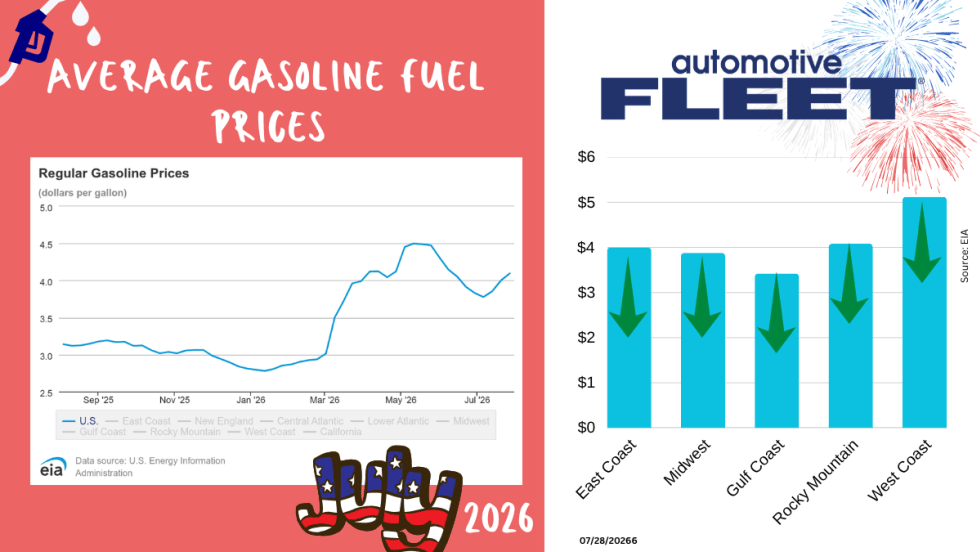
July Fuel Update: Prices Keep Rising in Light of More Conflict
Gas prices continue to rise as more and more conflicts do, too.
Read More →
Bob Adamsky on Fuel Volatility: "Don't Panic, Have a Plan."
When it comes to up and down fuel prices, Adamsky has a message for fleets: “Don’t panic.”
Read More →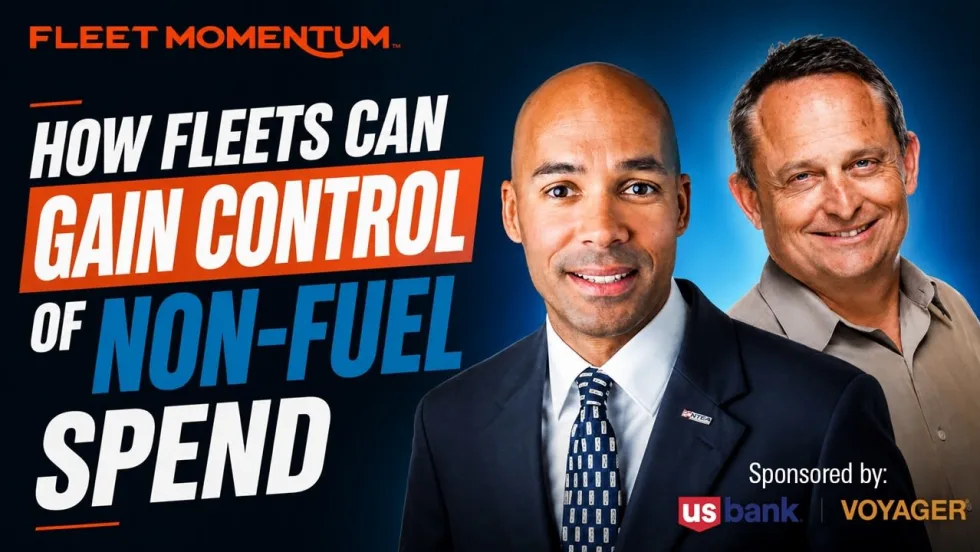
How Fleets Can Gain Control of Non-Fuel Spend
Fuel often gets the spotlight, but non-fuel expenses can have a major impact on fleet costs. Ramel Lindsay of U.S. Bank Voyager discusses how fleets can gain better visibility and control over these often-overlooked expenditures.
Read More →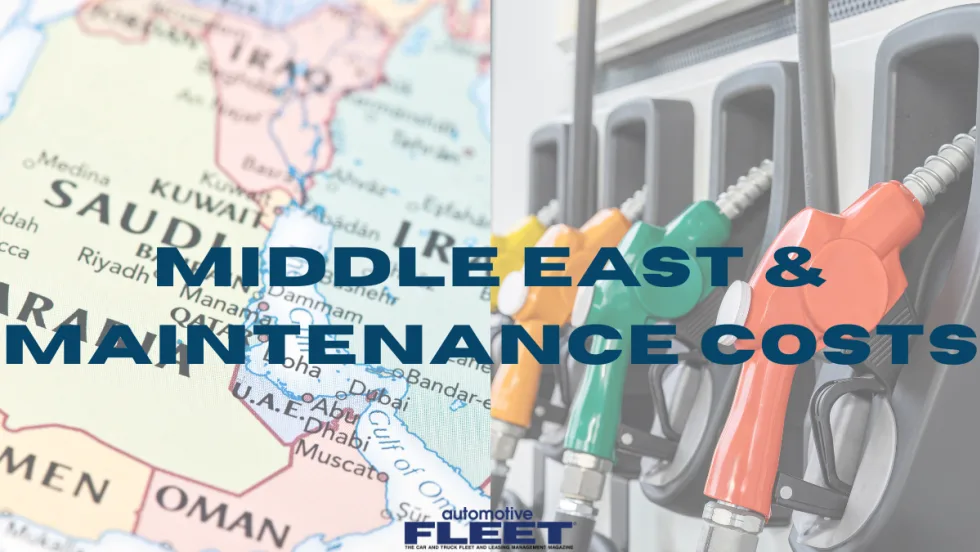
Fuel is Just the Start: How Middle East Tensions are Driving Up Fleet Maintenance Costs
The Middle East conflict is doing more than pushing up fuel prices. It’s also raising the cost of key maintenance products your fleet depends on, from motor oil to tires to windshield wipers. Here’s what you need to know about this budget-busting situation.
Read More →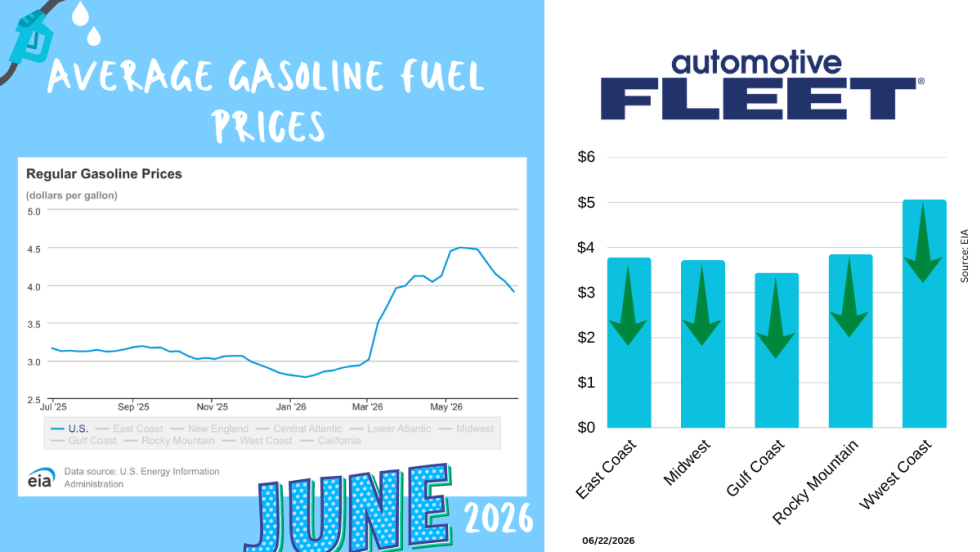
June Fuel Update: Prices Fall Below $4
Drivers are finally getting some relief at the pump. The national average gas price has dropped below $4 a gallon for the first time in months, with prices falling in 47 states as oil markets react to developments in U.S.-Iran negotiations.
Read More →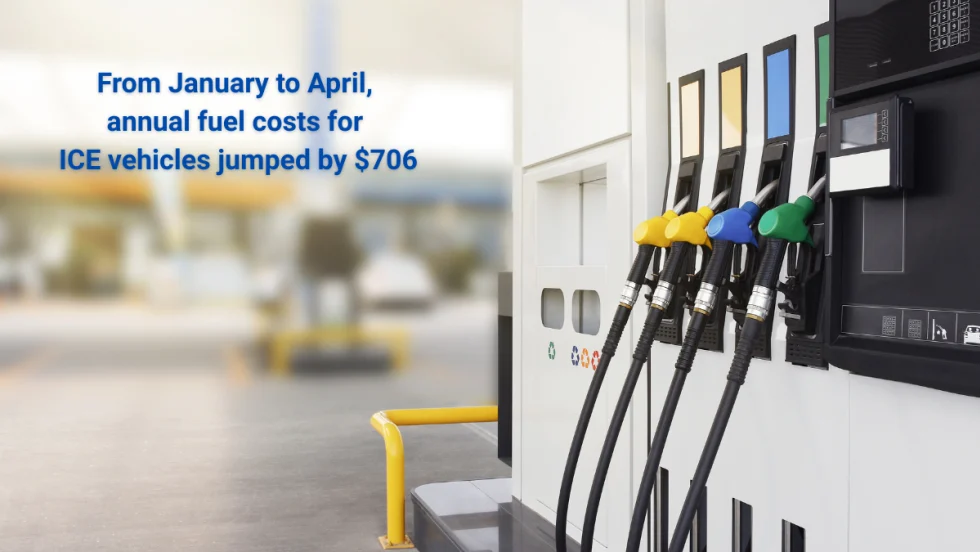
Study: How 2026's Gas Price Hikes Affect Different Vehicle Types
New data from iSeeCars reveals how rising fuel costs have affected different vehicle segments as gasoline prices climbed nearly 46% over the past four months.
Read More →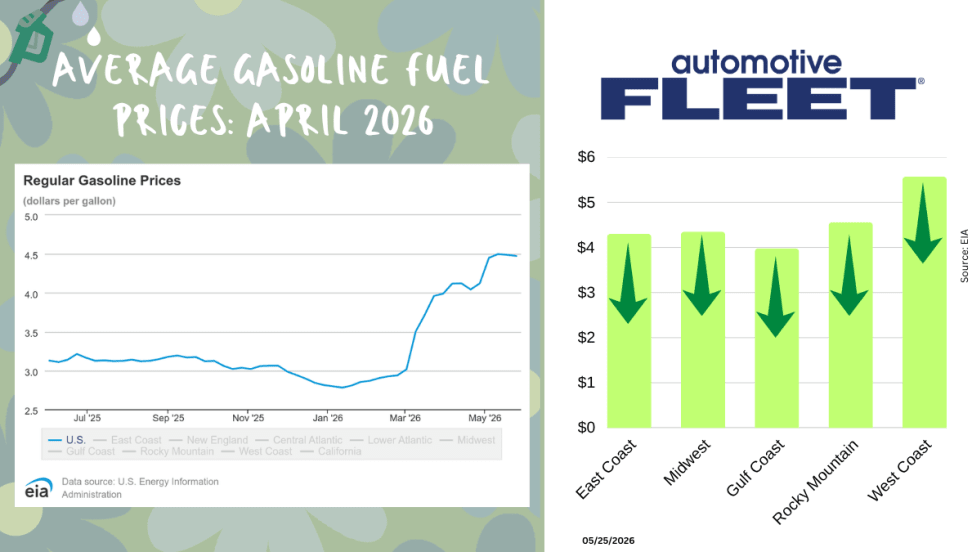
May Fuel Update: All Regions Experience Declines
Gas prices are finally easing in much of the country, but experts warn global tensions could quickly reverse the trend as the national average remains well above last month’s levels.
Read More →