




Conventional Fuel Management Strategies That Work
Fuel is one of the largest expenses associated with owning and operating a fleet, typically, second only to asset acquisition and depreciation. Here are some strategies to mitigate the effects of fuel price fluctuations and increases without impacting service levels.
Photo courtesy of iStockPhoto.com.
Photo courtesy of iStockPhoto.com.
Fuel is one of the largest expenses associated with owning and operating a fleet, typically, second only to asset acquisition and depreciation. In the last decade, the average retail price of a gallon of unleaded gasoline has increased more than 126 percent, with average prices fluctuating as much as 39 percent from one year to the next. During this same period of time, the average retail price of a gallon of diesel fuel increased more than 160 percent, with the average price annually fluctuating as much as 33 percent.
Why the price increase and variability? Global energy demand, instability and war in petroleum-producing countries, international sanctions, changes in domestic energy policies and regulations, a global economic recession, and natural and man-made disasters have all contributed to the increased, unpredictable cost of fueling a fleet.
Here are some strategies to mitigate the effects of fuel price fluctuations and increases without impacting service levels.
Ensuring Preventive Maintenance
Properly maintained fleet assets are more fuel efficient and perform better. Fouled spark plugs, underinflated tires, dirty air filters, using the improper grade of oil, restricted exhaust flow, damaged oxygen sensors, and dragging brakes are just some of the common mechanical issues that can degrade a vehicle's fuel efficiency by as much as 40 percent or more, according to the U.S. Department of Energy.
To ensure an effective preventive maintenance (PM) program, a fleet management information system (FMIS) is required. An FMIS allows a fleet manager to define what parts need to be replaced, components checked, and services performed as part of a PM service. Moreover, this can be defined for each type of equipment and at what intervals a PM service should be performed (e.g., every 90 days or 5,000 miles).
When properly configured, an FMIS can notify drivers when an asset is due for service, alert staff when vehicles are past due for service, track all work performed through work orders, and much more. A quality FMIS is a must-have for effectively managing a fleet and can help a fleet make the most out every gallon of fuel purchased.
Renewing the Fleet
The age of a fleet is one of the most significant factors in fuel-related costs. An older fleet is not only more costly to maintain and requires more care, but is also less fuel efficient and produces more greenhouse gas (GHG) emissions. Changes in the federal Corporate Average Fuel Economy (CAFE) regulations, which require equipment manufacturers to comply with fuel economy standards set by the U.S. Department of Transportation (DOT), have established aggressive annual increases in fuel efficiency for vehicles and equipment.
Current CAFE standards state that 2011-2025 sedans and light-duty vehicles must achieve an annual increase of 6 percent fuel efficiency per model year; 2014-2018 heavy-duty trucks must achieve an annual increase in fuel efficiency of 2.4 percent for vocational trucks and 5.3 percent for semi tractors per model year.
For example, a fleet of 1,000 light-duty vehicles with an average usage of 8,000 miles, an average fuel efficiency of 14 mpg, consumes fuel at an average cost of $3.50 per gallon, will spend $2 million annually on fuel.
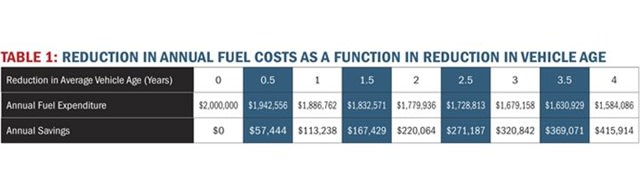
By replacing older equipment and reducing the average age of the fleet, an organization can achieve real savings as illustrated in Table 1.
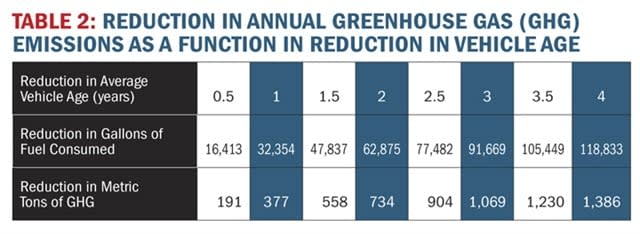
In addition to achieving better fuel economy, newer vehicles produce fewer GHG emissions. Table 2 illustrates how reducing the age of the example fleet also reduces the amount of GHG produced.
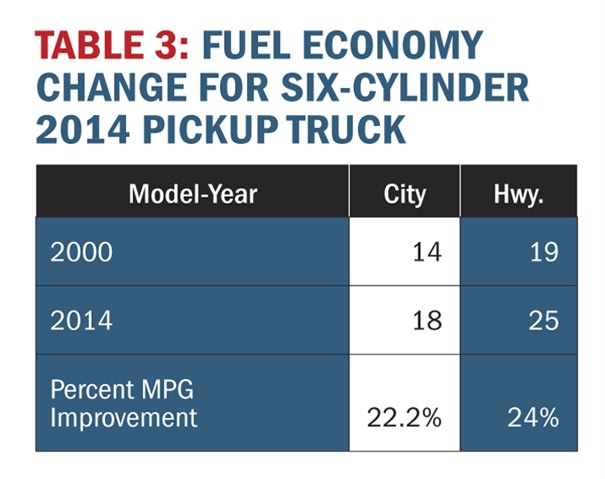
Replacing older vehicles and equipment will not only produce long-term fuel savings as illustrated in the example above, but will also produce immediate savings. Over the past decade, several popular fleet vehicles in the industry have improved fuel efficiency by more than 20 percent utilizing conventional fuels and motors. Table 3 illustrates how fuel economy has increased substantially with newer model vehicles and equipment.
Finding Alternative-Fuel and Hybrid Solutions
Alternative-fuel vehicles (AFVs) and hybrids are promising solutions for achieving better fuel economy within a fleet, but the acquisition cost of these vehicles versus their conventional fueled counterparts are significantly more expensive as illustrated in Table 4.
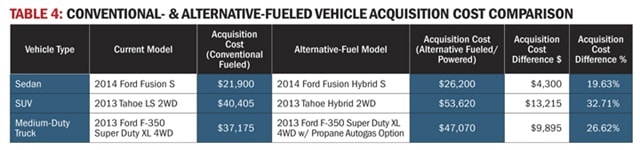
Although the increased fuel economy of hybrid solutions can produce savings, it can take thousands of miles to realize enough savings to offset the additional cost of the hybrid model.
Additionally, if we consider the average number of miles traveled by a vehicle in a year, how many years would it take to realize enough savings through fuel economy to offset the additional cost of the hybrid model over the conventional model? According to data analysts at Vincentric, the initial cost difference between hybrids and conventionally fueled vehicles is on average approximately $5,285. The average five-year fuel savings for hybrids of $4,597 does not compensate for the initial investment made by fleet managers, as illustrated in Table 5.
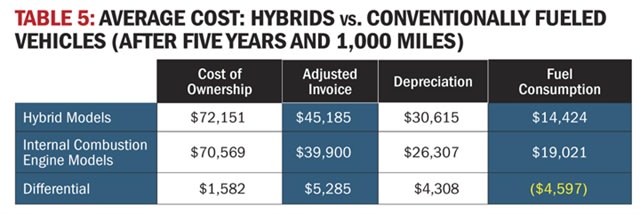
When we consider that the optimal replacement cycle for a sedan is typically between seven to nine years and many fleet assets do not achieve annual utilization levels over 12,000 miles, the hybrid solution may not produce enough fuel economy to justify the additional expense.
Achieving sustainability in a fleet through alternative fuels and hybrids is fine, but don't count on them producing cost savings through better fuel economy. Your limited fleet replacement dollars will go further by replacing older fleet assets with fuel efficient, conventionally fueled vehicles available today.
Reviewing Fleet Size and Composition
The size and composition of a fleet have a direct impact on the amount of fuel that is consumed. Progressive organizations are beginning to focus on the business need justification for the allocation of vehicles and equipment across user groups.
Through quantitative data analysis in combination with surveys and in-person interviews, fleet operations can determine what activities within the organization need a vehicle and what type of vehicle is needed to perform specific jobs (e.g., six-cylinder or four-cylinder, SUV or sedan, 4x2 or 4x4).
Staff positions for which a permanently assigned vehicle or piece of equipment is no longer justified are transitioned to using motor pool vehicles, rentals, personally-owned-vehicle (POV) reimbursement, public transportation, and shuttle or taxi services. To ensure that employees choose the most cost-effective mode of transportation, some organizations are implementing computerized solutions that select the mode with the best value based on an employee's travel plans.
Evaluating Personal-Use Fringe Benefits
Many corporate fleet organizations charge drivers for the cost of personal use of a company-provided vehicle and most follow IRS annual lease value safe harbor guidelines to calculate the charge-back amount. When using the Annual Lease Value, fuel must be added separately. The IRS allows the employer to either value the fuel at 5.5 cents per mile (cpm) or at the employer's actual cost.
Many fleet organizations continue to use the lower amount of 5.5 cpm when the typical cost of regular fuel for an intermediate car is about 12 cpm. The variance of 6.5 cpm equates to $325 in lost reimbursement per vehicle when presuming 5,000 average annual personal miles (20,000 annual miles with 75 percent attributable to business use). For a fleet of 1,000 vehicles, the savings add up to $325,000 per year.
Using Fuel-Management Technology
Fleet and fuel management technology is essential for any organization with a fleet. Moreover, organizations that operate their own bulk fuel site should use a fuel management solution that validates vehicle and operator information and captures fuel transaction data.
Fleets that use commercial fuel sites should utilize a third-party fuel card provider that can validate and capture fuel transactions with level 3 or greater detail. Transactions captured by a commercial card provider and fuel management systems can be imported through an interface into an FMIS where they can be interrogated to make management decisions and analyze trends. Modern telematics solutions are also capable of capturing fueling events and forwarding the information on to an FMIS via an interface.
Fuel transactions should be validated to identify bad data and improper use of an organization's resources. Most modern fuel management systems and commercial fuel card providers have the ability to validate driver, vehicle, and meter readings prior to authorizing a driver to fuel a vehicle. They also have the ability to limit the amount and type of fuel that can be dispensed and how many times a vehicle can be filled within a 24-hour period. These and other validation rules should be considered as part of any fuel management strategy.
These are just a few strategies that can be used to cope with the rising, volatile fuel costs, and help control the overall cost and sustainability of a commercial fleet. These concepts can be augmented with driver training, business policies, and other technologies that drive greater fuel economy through better driving habits and tighter fuel management practices.
Brad Kelley is a senior vice president with Mercury Associates, Inc., a fleet management consulting firm that works with fleets of all types and sizes. He can be reached at bkelley@mercury-assoc.com.
More Fuel
Fuel Prices Surge in September | September Fuel Update
September brought major fuel price swings, including diesel crossing $6 a gallon. Here’s how gas and diesel prices changed throughout the month, and where they stood heading into October.
Read More →
Turning Fleet Payment Data into Executive Insights
Ramel Lindsay of U.S. Bank Voyager discusses how fleets can transform payment and transaction data into actionable intelligence to reduce costs, improve oversight, and support executive decision-making.
Read More →
Why the IRS Raised Its Mileage Rate in the Middle of 2026
Fuel-price volatility drove the rare increase to 76 cents per mile, the fifth midyear adjustment since 2000.
Read More →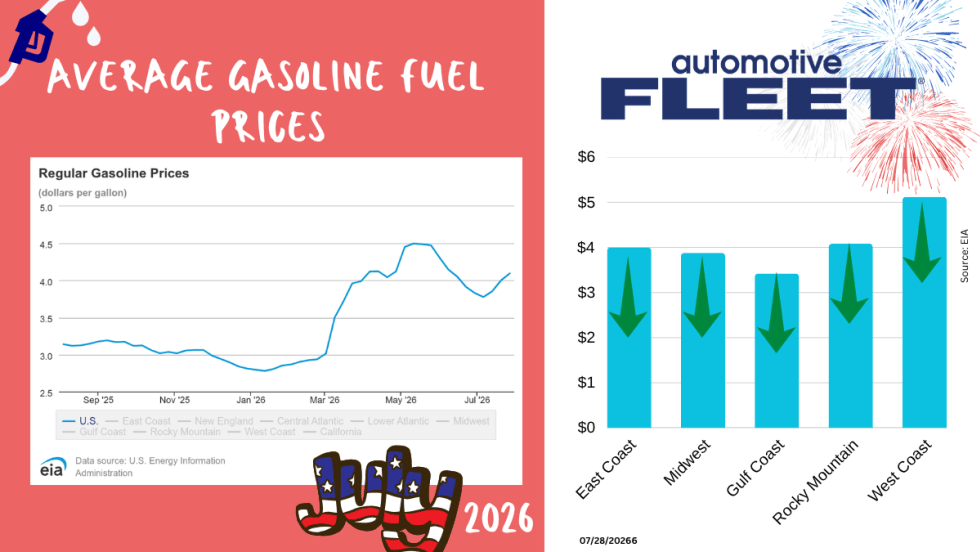
July Fuel Update: Prices Keep Rising in Light of More Conflict
Gas prices continue to rise as more and more conflicts do, too.
Read More →
Bob Adamsky on Fuel Volatility: "Don't Panic, Have a Plan."
When it comes to up and down fuel prices, Adamsky has a message for fleets: “Don’t panic.”
Read More →
How Fleets Can Gain Control of Non-Fuel Spend
Fuel often gets the spotlight, but non-fuel expenses can have a major impact on fleet costs. Ramel Lindsay of U.S. Bank Voyager discusses how fleets can gain better visibility and control over these often-overlooked expenditures.
Read More →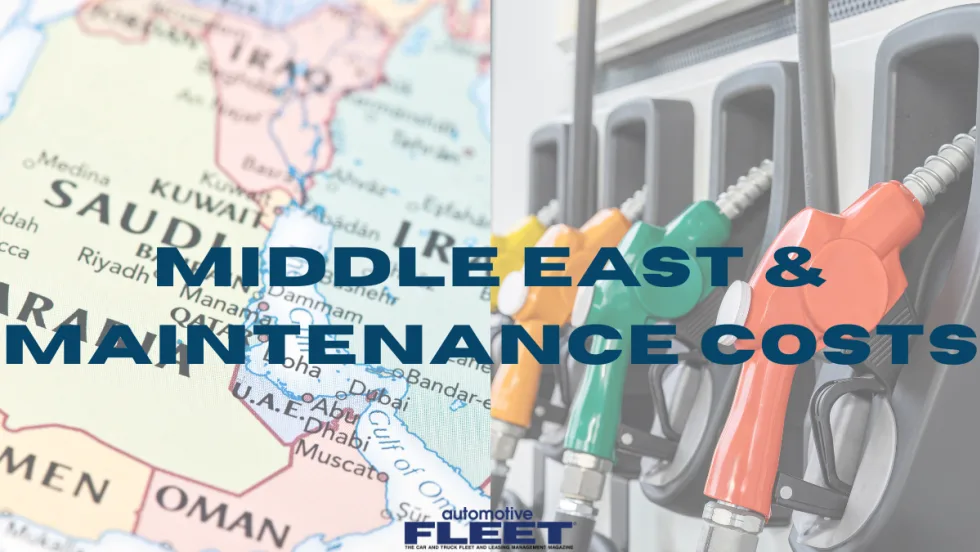
Fuel is Just the Start: How Middle East Tensions are Driving Up Fleet Maintenance Costs
The Middle East conflict is doing more than pushing up fuel prices. It’s also raising the cost of key maintenance products your fleet depends on, from motor oil to tires to windshield wipers. Here’s what you need to know about this budget-busting situation.
Read More →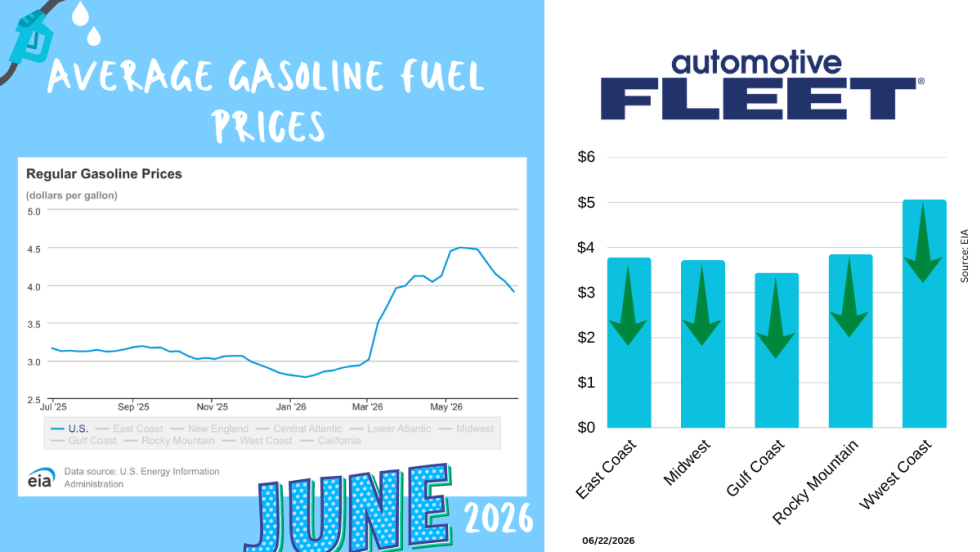
June Fuel Update: Prices Fall Below $4
Drivers are finally getting some relief at the pump. The national average gas price has dropped below $4 a gallon for the first time in months, with prices falling in 47 states as oil markets react to developments in U.S.-Iran negotiations.
Read More →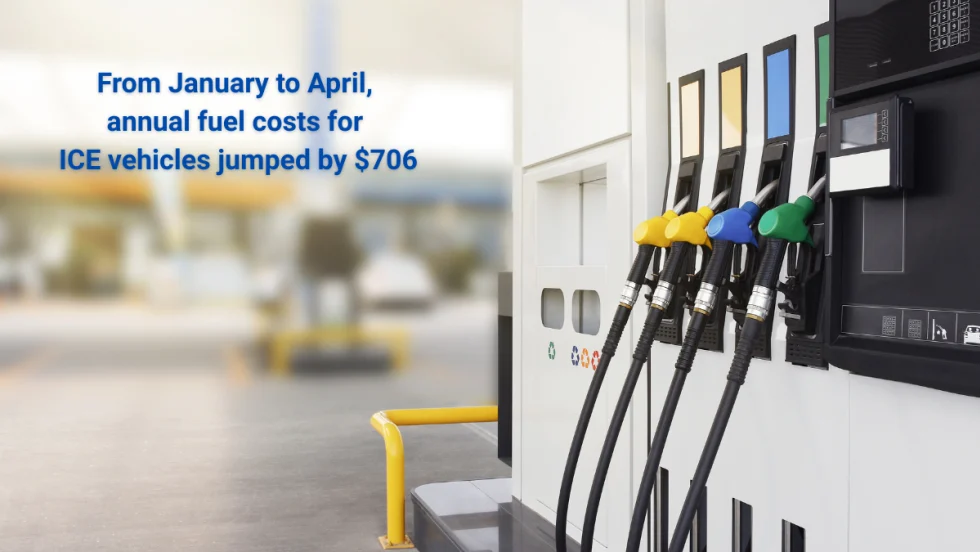
Study: How 2026's Gas Price Hikes Affect Different Vehicle Types
New data from iSeeCars reveals how rising fuel costs have affected different vehicle segments as gasoline prices climbed nearly 46% over the past four months.
Read More →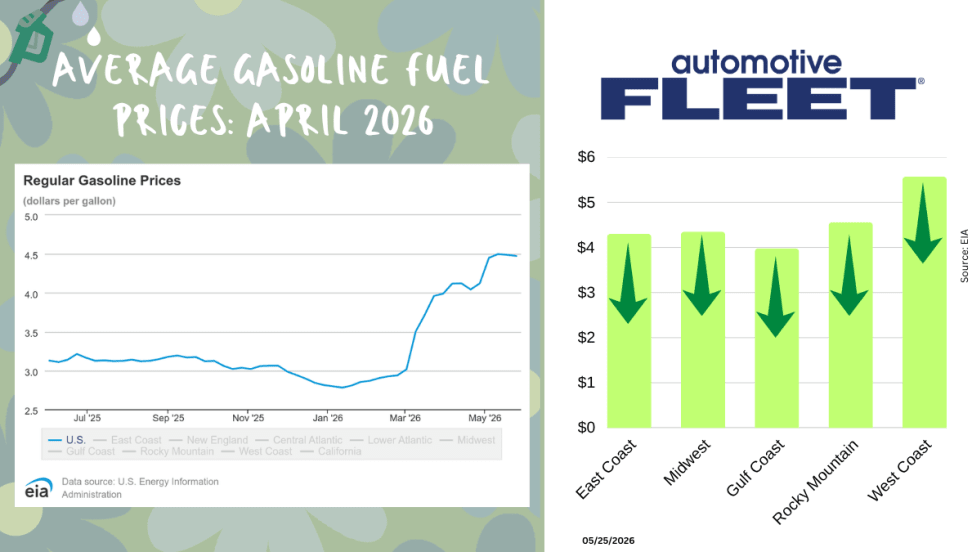
May Fuel Update: All Regions Experience Declines
Gas prices are finally easing in much of the country, but experts warn global tensions could quickly reverse the trend as the national average remains well above last month’s levels.
Read More →