





Related: Labor Shortage Increases But Economic Uncertainty Emerges
Containing Fuel Spend Is a Top Fleet Focus Despite Price Stability
With the cost of fuel representing 60% of the total fleet budget, fleet managers are looking for opportunities to reduce expenditures ranging from rightsizing, route optimization, telematics, personal use, and modifying driver behavior.
December 18, 2019

The way fleets can mitigate overall fuel cost is to focus on vehicle fuel efficiency, operating parameters, driver behavior, and a focus on filling up at low-cost fuel providers.
Photo courtesy of Roman Stavila via Gettyimages.com.
10 min to read
Fleet costs are generally divided into two categories — operating (or running) costs and fixed (or standing) costs. Depreciation is a fleet’s largest fixed cost and its largest overall expense when calculating total cost of ownership. Fuel is the second largest total cost of ownership expense after depreciation. In terms of operating costs, fuel represents, on average, 60% of a company’s total fleet operating budget, which makes it crucial to manage this expense to keep fleet budgets from getting out-of-kilter.
The good news is that fuel price volatility, while still present, has receded tremendously in the past several years and, in calendar-year 2019, the nationwide average price per gallon of gasoline and diesel was lower than the year prior. While fuel prices may fluctuate by metro areas, the higher cost areas are balanced out by lower cost metro areas, creating an average nationwide fuel price that is relatively flat.
“Generally speaking, fuel prices have been relatively stable. Monthly year-over-year gasoline prices were lower for every month in 2019 as compared to 2018,” said Andy Hall, assistant manager, fuel & GMS for ARI. “Diesel was also lower, but not as significantly.”
The reality is that the price of fuel is impossible to control, and, at best, fleet managers can seek to control fuel consumption, which, in turn, would reduce overall costs. As the price of fuel is uncontrollable by fleet managers, the way to mitigate overall fuel cost is to focus on vehicle fuel efficiency, operating parameters, driver behavior, and a focus on filling up at low-cost fuel providers.
Likewise, fuel prices are impossible to forecast with certainty, since they are influenced by a wide variety of macroeconomic factors, such as economic growth, supply/demand, and currency fluctuations, to name a few. As a result, most companies use the forecasts produced by the Energy Information Agency (EIA) of the U.S. Department of Energy for their internal planning and external fuel price forecast dissemination to fleet clients.
In calendar-year 2020, the EIA forecasts that there will be an incremental increase in fuel prices in 2020.
“Prices on average for retail gasoline were higher in 2018 than 2019 but remained steady and are expected to rise again into 2020. Refineries are entering maintenance season, causing a dip in new production and unknowns around downtime. The biggest wildcard for the forecast of fleet fuel prices is the current administration and the upcoming 2020 election, along with ongoing sanctions on production that continue to impact supply, demand and pricing,” said Emily Candib, director of products & services for Merchants Fleet. “Diesel will continue to be in the top three most expensive petroleum products into 2020.”
Since fuel costs make up the largest portion of fleet operating spend, the forecast for flat fuel prices should portend stability in the overall fleet operating expense in calendar-year 2020.
Strategies to Curb Fuel Spend
Since the cost of fuel represents such a large part of the total fleet budget, fleet managers focus on opportunities to decrease this spend.
“There are three strategic areas by which a fleet may reduce fuel spend. These are to focus on: reduced mileage, improved fuel economy, and price. Analytics and technology have allowed for increased focus on retail price paid at the pump. This occurs by understanding fueling habits and at what price fuel is purchased, then correcting or changing habits where needed using technology,” said John Wuich, vice president, strategic consulting services for Donlen.
Agreeing with this assessment is Candib of Merchants Fleet, who offers other examples of fuel cost mitigation strategies.
“Many fleets are working with their consultants to evaluate their fleet’s performance and are looking for additional engine efficiencies. Engine efficiency and advanced engine technology will continue to be a large threat to gas prices,” said Candib. “Additionally, fleets are exploring the concept of mobile fueling, which allows for a streamlined supplier to provider approach, keeping costs competitive with retail stations. Benefits to the fleet include reduced labor costs, reduced downtime, and employee retention.”
In addition, it is well documented that fuel prices influence vehicle acquisition decisions. New- and used-vehicle markets tend to react to fluctuations in fuel prices. When prices are low, consumers may be more willing to consider larger, less fuel-efficient vehicles. In recent years, lower fuel costs created an upward trend in truck and compact SUV resale values, resulting in a lower cost per mile and making these vehicle classifications more affordable to operate.
“Appropriate vehicle selection and right-sizing are effective fleet strategies for countering the effects of rising fuel prices. It is common for an organization to select too much or too little vehicles for the job. Taking the time to analyze business needs and carefully match a vehicle’s specifications with its job reaps benefits in the long run,” said Mike Emmons, national service department manager for Enterprise Fleet Management.
However, there is a limit as to how much fuel savings a fleet can wring from the types of vehicles acquired without impacting the fleet application. One of the best ways to control fuel expenditures is to control driver behavior.
“After vehicle selection, once the vehicle goes on the road, the total fuel expense factors become the number of miles being driven and cost per gallon,” said Becky Langmandel, senior vice president of consultancy at LeasePlan USA. “While fleets can’t control the nationwide average price per gallon, fleets can look at fuel vendors and optimize these fuel purchases by their drivers. Are the drivers being directed to the lowest cost fueling stations? Are the fleet managers and their fleet management partners reviewing dashboards and reporting around fueling vendor selection? These are all important factors to consider to minimize fuel expense.”
In all industry segments, fleet managers are looking for opportunities to reduce their expenditures ranging from rightsizing, route optimization, shifting to hybrid use, using telematics to improve driver behavior, reducing mileage accrued and idle time, maintaining tire pressure, and using fuel apps.
“The trend of right-sizing vehicles continues with fleets by focusing on opportunities to improve fuel economy without sacrificing job function,” said Mark Lange, CAFM, managed maintenance analyst for Element Fleet Management.
Rejuvenating the Fleet
Another strategy in moderating fuel spend is increasing the fleet’s overall vehicle fuel economy by eliminating older, higher-mileage vehicles that have lower fuel economy.
“Vehicle miles per gallon (mpg) is a significant factor in a fleet’s vehicle selection process. As OEMs continue to increase mpg, clients are experiencing mpg and CO2 improvement just by following normal replacement cycles, cycling out older model -years and adding in new model-year vehicles,” said Langmandel of LeasePlan USA.
Fuel cost is one of the highest operating expenses for a fleet, and therefore, vehicle mpg is a large factor in the vehicle selection process. As OEMs continue to increase mpg with every new model-year, many compact, and even midsize SUVs, now have mpg ratings that were only available on sedans even just a few years ago. With the increased mpg on these SUV models, fleets are now able to add SUVs to their selectors, as driver preference continues to shift, without a great impact on their fuel costs and greenhouse gas emissions.
More fleet managers are investigating the use of hybrids to increase their fleets overall average miles per gallon fuel consumption. “Concerning fuel efficiency, we have seen the introduction or re-introduction of hybrids into the fleet and evaluation of vehicle utilization,” said Wuich of Donlen.
Vehicle selection plays an important role in mitigating fuel costs. As fleets continue to replenish their portfolios with newer assets, the replacement assets are more fuel-efficient, which serves as a natural hedge when fuel prices rise. This includes implementing and enforcing a clear, well-communicated fuel policy; effectively using Big Data to evaluate your fleet’s fuel consumption and find opportunities for efficiency; and offering training for drivers around safe driving techniques, which also helps to conserve fuel.
Leverage Fuel Card Controls
There are many powerful fuel management tools available to fleet managers, with the best being fleet fuel cards.
“Companies should also continue to leverage fuel card controls, setting parameters to help prevent excessive or unauthorized spending. Fuel cards often include controls that allow you to set daily, weekly, or monthly transaction limits and place restrictions on the types of purchases and the time of day the card can be used. Additionally, controls are available to allow you to cue the fuel pump to shut off after a certain dollar amount. All of these options help you better manage your fuel spend,” said Hall of ARI.
Harnessing Telematics Data
There is a continuing trend of using telematics to manage driver behavior in order to maximize ROI in the form of reduced fuel spend.
“More interest is being centered on the benefits of telematics platforms. Clients are utilizing the devices to monitor idling time, trip history, and route optimization to identify risks and reduce overall fuel expenditures. Furthermore, vehicle right-sizing continues to be an emphasis, as well as taking advantage of new fuel efficient technologies that are increasingly available throughout different segments,” said Mark Donahue, manager of fleet analytics for Emkay.
Overall, there has been a continuing trend in the use of analytics and technology to understand fueling habits and to manage fuel spends. A key advantage to telematics is the ability to have real-time insight into fuel management.
“We continue to see a growing number of fleets embrace telematics as a way to help significantly improve fuel efficiency, and in turn, reduce their fuel spend. The real-time optics telematics delivers can transform performance and benefit most organizations across virtually all areas of fleet. Specific to fuel costs, telematics allows fleet operators to monitor driver behavior to ensure they adhere to eco-friendly driving habits, gauge vehicle idling in an effort to combat excessive idling and the associated fuel consumption, and provide dynamic routing to optimize productivity and fuel efficiency,” said Hall of ARI.
There is an increased use of telematics to understand where fleet vehicles are fueled and at what price in relation to fuel prices in the surrounding area.
“In addition, the impact of telematics used to manage driver behaviors has been to reduce fuel spend. This is being seen in several ways. Drivers are driving more efficient routes while accruing fewer personal miles; the result is to reduce vehicle mileage and, in turn, fuel spend. Further, idle times are reduced, as are vehicle speed, accelerated starts and harsh stops – all working to improve fuel economy commonly by 5% to 10% or more. We are seeing more fleets actually approach and exceed EPA suggested mpg because of improved driver behaviors,” said Wuich of Donlen.
A comprehensive telematics program has the potential to significantly improve fuel efficiency for many fleets.
“More interest is being centered on the benefits of telematics platforms. Clients are utilizing the devices to monitor idling time, trip history, and route optimization to identify risks and reduce overall fuel expenditures. Furthermore, vehicle right-sizing continues to be an emphasis, as well as taking advantage of new fuel efficient technologies that are increasingly available throughout different segments,” said Donahue of Emkay.
Fleets are increasing use of operational data from telematics to identify specific issues (such as high idle time) and driver influences (speed) that will provide the highest return on time invested to address these and other items.
“With telematics, fleets now have more knowledge to reduce operating expenses — including fuel — than ever before. Telematics solutions offer the capability to review and monitor items such as idling time, vehicle diagnostics, route planning, driving habits, and dispatching. There are a number of telematics offerings in the market today, and partnering with a fleet management company can help an organization navigate this quickly evolving technology,” said Ryan Koenig, national service department vendor operations manager for Enterprise Fleet Management.
Modifying Driver Behavior
There’s a limit to how much a fleet manager can modify a fleet selector to decrease emissions and maximize fuel efficiency. A fleet manager can only downsize so far before beginning to impact the fleet mission. The bottom line is that you can’t change the fundamental requirements of your business. You need to move employees and cargo in a cost-efficient manner. This necessitates a minimum equipment requirement to do so. There is a limit as to how much fuel savings a fleet can wring from the types of vehicles acquired without impacting the fleet application.
One of the best ways to control fuel expenditures is to control driver behavior. Driver behavior is a major influence in fuel consumption. The way employees drive their vehicles can either increase or decrease fuel economy and greenhouse gas (GHG) emissions.
If you change the driving behavior of your employees, you have a direct impact on the amount of fuel consumed and the amount of emissions emitted. Even small increases in mpg can result in substantial savings when extrapolated across the entire fleet. Major fleets, such as Walmart, Veolia Transportation, and UPS have successfully implemented eco-driving programs designed to modify driver behavior.
Subscribe to Our Newsletter
More Fuel
Fuel Prices Surge in September | September Fuel Update
September brought major fuel price swings, including diesel crossing $6 a gallon. Here’s how gas and diesel prices changed throughout the month, and where they stood heading into October.
Read More →
Turning Fleet Payment Data into Executive Insights
Ramel Lindsay of U.S. Bank Voyager discusses how fleets can transform payment and transaction data into actionable intelligence to reduce costs, improve oversight, and support executive decision-making.
Read More →
Why the IRS Raised Its Mileage Rate in the Middle of 2026
Fuel-price volatility drove the rare increase to 76 cents per mile, the fifth midyear adjustment since 2000.
Read More →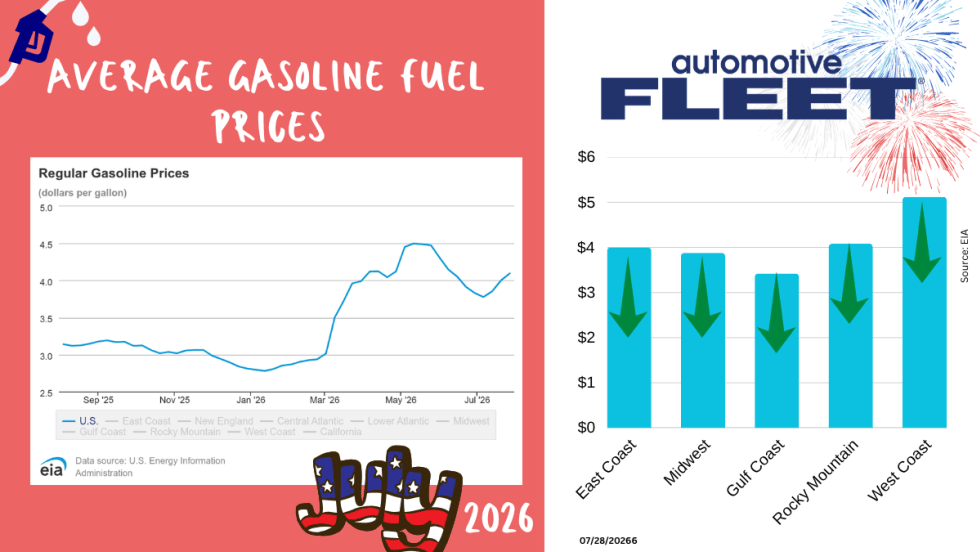
July Fuel Update: Prices Keep Rising in Light of More Conflict
Gas prices continue to rise as more and more conflicts do, too.
Read More →
Bob Adamsky on Fuel Volatility: "Don't Panic, Have a Plan."
When it comes to up and down fuel prices, Adamsky has a message for fleets: “Don’t panic.”
Read More →
How Fleets Can Gain Control of Non-Fuel Spend
Fuel often gets the spotlight, but non-fuel expenses can have a major impact on fleet costs. Ramel Lindsay of U.S. Bank Voyager discusses how fleets can gain better visibility and control over these often-overlooked expenditures.
Read More →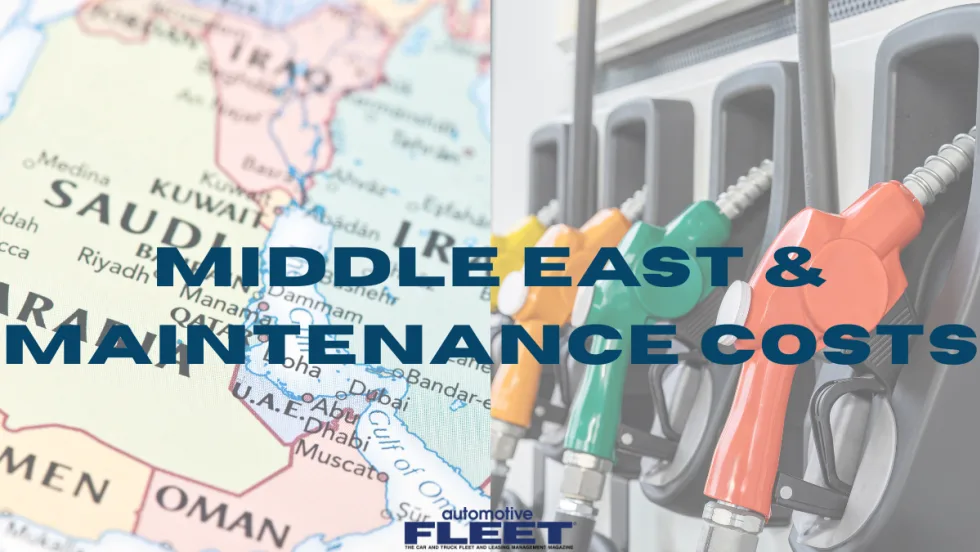
Fuel is Just the Start: How Middle East Tensions are Driving Up Fleet Maintenance Costs
The Middle East conflict is doing more than pushing up fuel prices. It’s also raising the cost of key maintenance products your fleet depends on, from motor oil to tires to windshield wipers. Here’s what you need to know about this budget-busting situation.
Read More →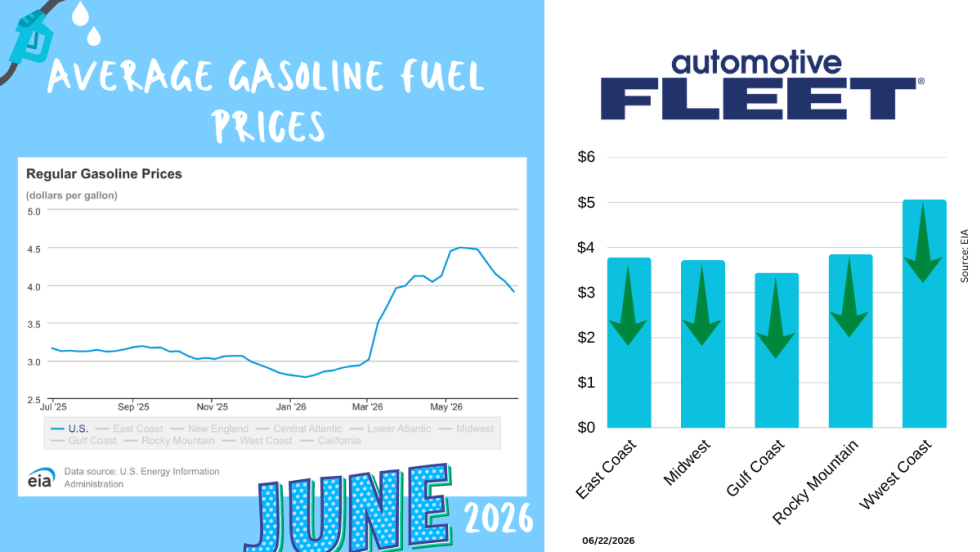
June Fuel Update: Prices Fall Below $4
Drivers are finally getting some relief at the pump. The national average gas price has dropped below $4 a gallon for the first time in months, with prices falling in 47 states as oil markets react to developments in U.S.-Iran negotiations.
Read More →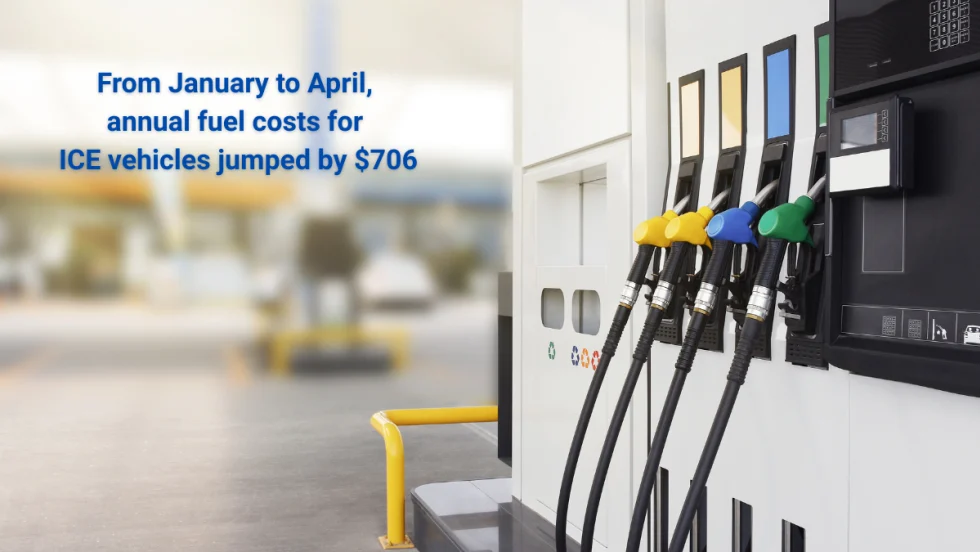
Study: How 2026's Gas Price Hikes Affect Different Vehicle Types
New data from iSeeCars reveals how rising fuel costs have affected different vehicle segments as gasoline prices climbed nearly 46% over the past four months.
Read More →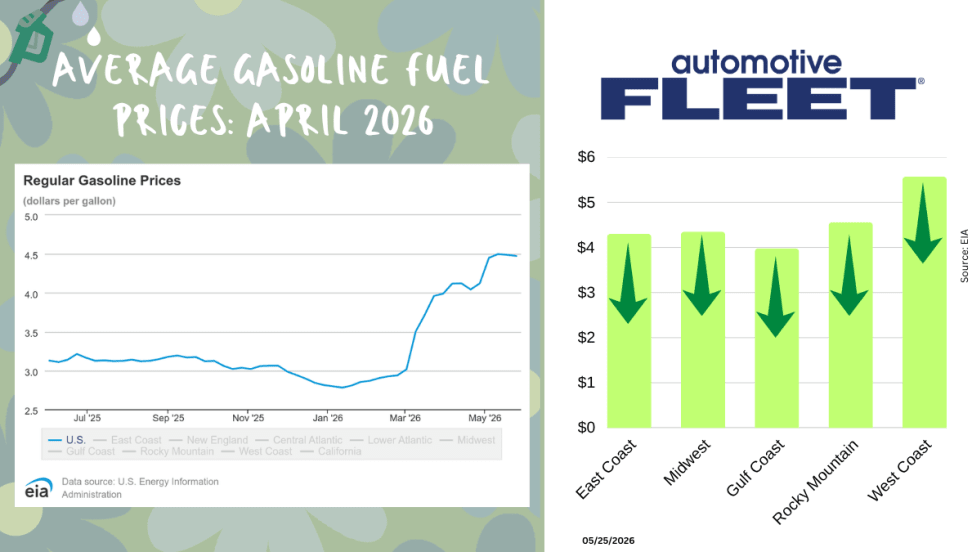
May Fuel Update: All Regions Experience Declines
Gas prices are finally easing in much of the country, but experts warn global tensions could quickly reverse the trend as the national average remains well above last month’s levels.
Read More →