





Related: Operating Costs Increase After Remaining Flat for Five Years
Operating Costs Inch Up for Second Consecutive Year
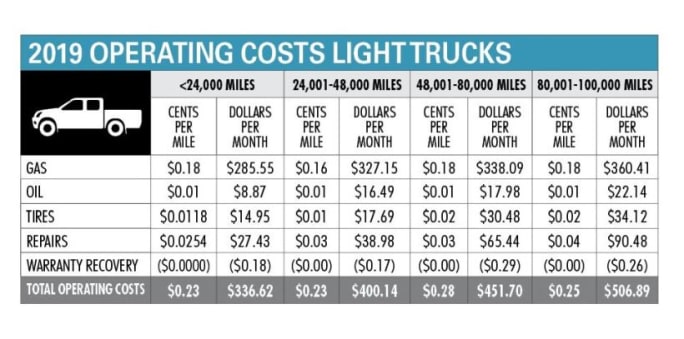
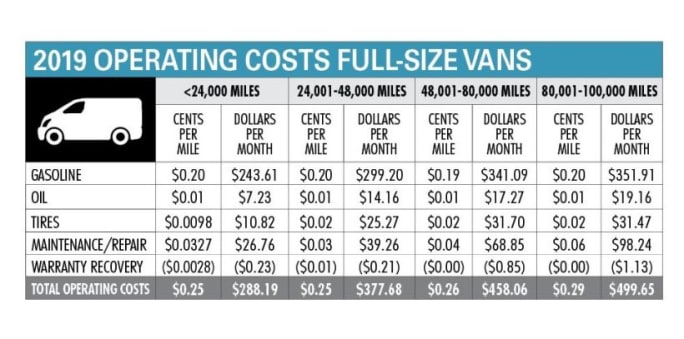
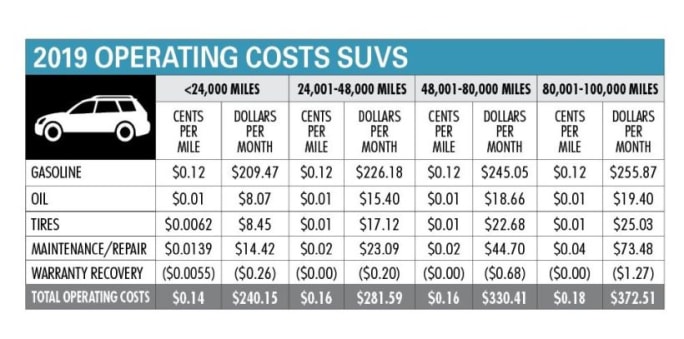
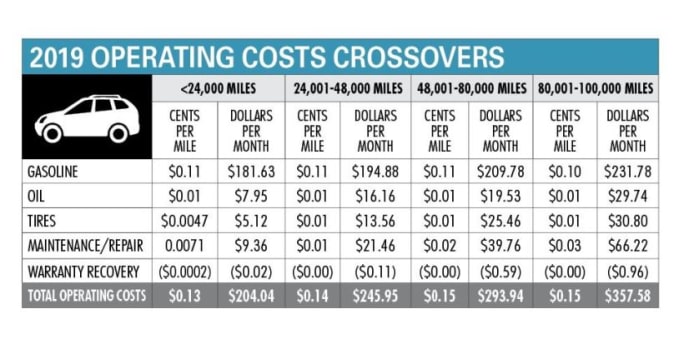
Fleet operating costs increased in CY-2019 due to higher PM costs, ongoing pressure to increase maintenance labor rates to address the widespread tech shortage, and higher prices for commodities to manufacture replacement tires.
October 25, 2019

A key reason for the past stability in operating costs was primarily due to the multiyear stability of gasoline and diesel prices, which offset higher maintenance labor costs and price increases for replacement tires.
Photo courtesy of Pixhook via Getty Images.
6 min to read
Editors note: This article is part of a several-part package dealing with operating costs in 2019. Read related articles that offer and in depth look at fleet maintenance, warranty recovery, tire prices, and preventive maintenance.
Calendar-year 2019 marks the second consecutive year that fleet operating costs have increased after five consecutive years of remaining flat. A key reason for the past stability in operating costs was primarily due to the multiyear stability of gasoline and diesel prices, which offset higher maintenance labor costs and price increases for replacement tires.
Although fuel prices remained stable for 2018 and 2019, there were simultaneous upward pressures on PM costs, labor rates, and replacement tire prices.
This, along with other findings, are revealed in Automotive Fleet’s 27th annual operating cost survey, and are based on data provided by eight survey partners:
ARI
Donlen
Element Fleet Management.
EMKAY
Enterprise Fleet Management
LeasePlan USA
Merchants Fleet
Wheels Inc.
This year’s survey is based on the analysis of actual operating costs incurred by 1,274,310 vehicles operated by commercial fleets, which are managed by these eight fleet management companies.
Ongoing Stability of Fuel Prices
The stability of fuel pricing over the past 12 months has helped remove volatility from fleet budgets. Fuel represents approximately 60% of a fleet’s total operating costs, so a stable price per gallon of fuel has helped offset increases in operating costs occurring elsewhere.
As many have learned through experience, fuel prices are impossible to forecast with certainty, and are influenced by a number of external variables, such as macroeconomic activities, volatile geopolitical dynamics, and domestic supply/demand. Most fleet management companies use the U.S. Energy Information Administration (EIA) of the U.S. Department of Energy forecasts for internal planning and external fuel price forecast dissemination.
“Fuel prices spiked through early Q2 2019, at which point the trendline started to progress back down to today’s levels,” said Becky Langmandel, vice president of analytics, consulting and transformation at LeasePlan USA. “The EIA is projecting prices to fall slightly from Q4 2019 through Q1 2020, at which point it is projected that values level out through 2020 at the $2.50 mark.”
On average, fuel prices in CY-2019 have been lower than those in 2018. “Prices on average for retail gasoline were higher in 2018 than 2019 but remained steady and are expected to rise again into 2020. Refineries are entering maintenance season, causing a dip in new production and unknowns around downtime. The biggest wildcard for the forecast of fleet fuel prices is the current administration and the upcoming 2020 election, along with ongoing sanctions on production that continue to impact supply, demand and pricing,” said Emily Candib, director, fleet products for Merchants Fleet.
Another reason for lower fuel prices in 2019 was that there was a high inventory of gasoline in the market, putting downward pressure on prices.
In 2019, the global natural rubber industry remained at a low ebb, as a result of the China-U.S. trade friction, damage by plant diseases and insect pests, and local economic factors. Global natural rubber price presented a choppy downward trend in pricing in 2019, when global natural rubber prices set all-time lows. The forecast is that the price of natural rubber may level off and pick up in 2020 or 2021. In the end, commodity prices dictate replacement tire costs. Tire pricing is rising due to higher cost of raw materials. The increase in replacement tire prices in calendar-year 2019 averaged 2% to 7%.
“Refineries continue to run high in 2019 compared to 2018, consistently producing new run records. As with June of 2018, June 2019 again produced a record month for the demand of gasoline with high U.S. imports to match,” said Candib of Merchants Fleet.
Fuel Cost Mitigation Strategies
Fleets are rightsizing their vehicle selectors to take advantage of fuel-efficient technologies, weight reduction measures, higher-speed transmissions, and appropriate drivetrains to meet their business necessity. The focus continues to be acquiring the most fuel-efficient models that can fulfill the fleet requirement. In addition, new-model vehicles tend to have higher mpg ratings than predecessor models.
Replacement tires are a major fleet spend category exceeded only by depreciation and fuel. With the lower cost of fuel, both the retail and fleet markets, are driving more miles, which accelerates overall tire wear and replacement. Also, more fleets are leveraging non-traditional tire replacement options. Tier 3 and 4 tires continue to grow in popularity, providing a pricing challenge for name brands as higher prices have prompted some fleets to expand non-brand replacement tires.
“The trend of right-sizing vehicles continues with fleets focusing on opportunities to improve fuel economy without sacrificing job function,” said Mark Lange, CAFM, technical services consultant for Element Fleet Management.
In addition, the increased implementation of telematics systems has also resulted in improved route optimization and easier identification of drivers who are engaging in driving behaviors that decrease mpg.
“After vehicle selection, once the vehicle goes on the road, the total fuel expense factors become the number of miles being driven and cost per gallon,” said Langmandel of LeasePlan USA. “While fleets can’t control the nationwide average price per gallon, fleets can look at fuel vendors and optimize these fuel purchases by their drivers. Are the drivers being directed to the lowest cost fueling stations? Are the fleet managers and their fleet management partners reviewing dashboards and reporting around fueling vendor selection? These are all important factors to consider to minimize fuel expense.”
Fuel Price Forecast for 2020
As many have learned through experience, fuel prices are impossible to forecast with certainty, and are influenced by a number of external variables, such as macroeconomic activity, geopolitical dynamics, and domestic supply/demand.
The best-managed fleets tend to be those that adhere to a written fleet policy. Fleet policy is crucial and it should be part of each company’s overall business strategy. Every affected department should be involved in the process of creating fleet policy. Each of your drivers should know the rules governing the use of a company vehicle and what actions will be taken for noncompliance.
Most fleet management companies use the U.S. Energy Information Administration (EIA) of the U.S. Department of Energy forecasts for internal planning and external fuel price forecast dissemination.
The EIA projects fuel costs to rise modestly over the next 12 months.
Tire Prices Upward Trajectory
Replacement tires are a major fleet spend category exceeded only by depreciation and fuel. The increase in replacement tire prices in calendar-year 2019 averaged 2% to 7%, varying by tire brand. The moderate price increases, relative to prior increases were primarily due to more stable commodity pricing, which exerted less pressure on tire OEM margins as their production costs remained relatively flat.
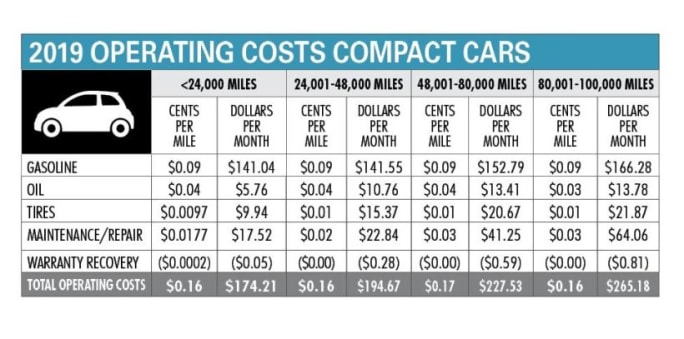
Similar to 2018, fleets are continuing to extend their preventive maintenance (PM) intervals as vehicles become more technologically complex and engine oils and lubricants shift to synthetics. PM expenses were impacted by an increased use of more expensive synthetic motor oil, which was partially offset by extended oil drain intervals.
The growth of the percentage vans in commercial fleets, with their special tire requirements, is forecast to exert other cost pressures on replacement tire prices.
Predicting future tire costs is very difficult due to the many variables that influence tire pricing. The unpredictable cost variable for tire prices is the price of commodities, such as oil, rubber, and steel, which are three key ingredients needed to manufacture tires. Barring unforeseen events, the industry consensus is that commodity prices will be higher in 2020, led by higher natural rubber prices, which will translate into higher tire prices. The forecast for replacement tire prices is upward due to forecast of ongoing higher commodity pricing, which exert pressure on tire OEMs to maintain margins as their production costs increase.
In the end, commodity prices dictate replacement tire costs. Tire pricing is rising due to higher cost of raw materials.
Maintenance Costs Trending Up
Maintenance costs have been steadily trending upward over the past 12 months, compared to CY-2018, as a result of more complex vehicle technology, the ongoing skilled labor shortages, increased tire prices, and proliferation of engines that require higher price synthetic motor oils.
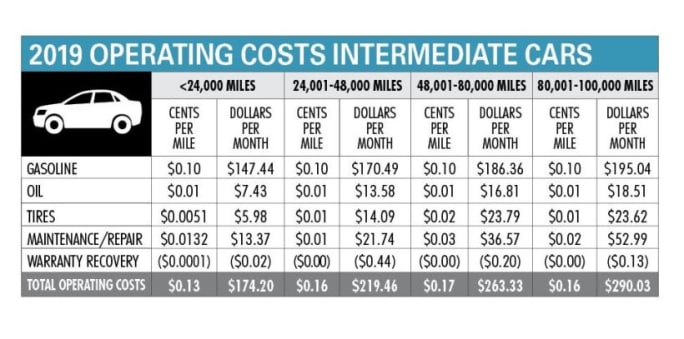
The stability of fuel pricing over the past 12 months has helped remove volatility from fleet budgets. Fuel represents approximately 60% of a fleet’s total operating costs, so a stable price per gallon of fuel has helped offset increases in operating costs occurring elsewhere. Prices, on average, for retail gasoline were higher in 2018 than 2019 but remained steady and are expected to rise again into 2020. When refineries enter maintenance season, it causes a dip in new production because of downtime causing upward price pressure due to the supply imbalance to demand.
While there are regional differences in prices, when averaged out on a national basis, PM costs in 2019 have increased. In 2019, the price of finished lubricants (lubricating oils and greases) increased 6% to 14%, which was attributed to the rising cost of raw materials, rising freight costs, and overall market fluctuations.
In the past several years, many repair shops increased labor rates and expect this trend to continue. Skilled technicians are exiting the trade at a rate faster than entering, which will put more pressure on shops to increase wages to attract the best talent.
PM Costs are Trending Upward
Preventive maintenance (PM) expenses were higher in 2019 because of the increased use of more expensive synthetic motor oil, which is partially offset by extending oil drain intervals.
The proliferation of smaller displacement engines in fleet applications is putting pressure on OEMs and fleet managers to use synthetic oil, which provides 50% better engine protection, to maximize engine life.
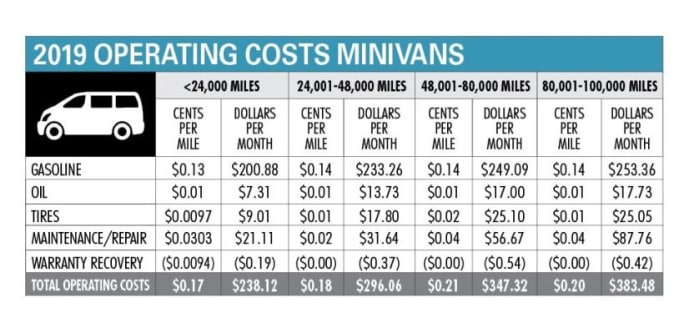
Maintenance costs have been steadily trending upward over the past 12 months, compared to CY-2018, as a result of more complex vehicle technology, the ongoing skilled labor shortages, increased replacement tire prices, and proliferation of engines that require higher price synthetic motor oils. While there are regional differences in prices, when averaged out on a national basis, PM costs in 2019 have increased. In 2019, the price of finished lubricants (lubricating oils and greases) increased 6% to 14%, which was attributed to the rising cost of raw materials, higher freight costs, and overall market fluctuations.
The trend of increased costs per service will continue as more and more vehicles requiring conventional motor oil are taken out of service and replaced with models that require synthetics.
Vehicle Policy is the Key
The best-managed fleets tend to be those that adhere to a written fleet policy. Fleet policy is crucial and it should be part of each company’s overall business strategy. Every affected department should be involved in the process of creating fleet policy. Each of your drivers should know the rules governing the use of a company vehicle and what actions will be taken for noncompliance.
“A key to managing operating costs is to look beyond the obvious strategies to reduce fuel and maintenance costs. There is renewed emphasis on vehicle policy and ensuring that there is an updated policy in place. Further, utilize benchmarking. In addition, do not overlook the impact of driver behaviors as those behaviors relate to operating spend,” said John Wuich, vice president of strategic consulting for Donlen.
Subscribe to Our Newsletter
More Operations

Avis Budget Group Deploys Neology Toll Management Technology Across Major Brands
Neology’s neoFleet platform will manage toll transactions and toll-authority operations for vehicles across Avis, Budget, Payless, Budget Truck and Zipcar.
Read More →
Fleet Personal-Use Charges Edge Higher in 2026
Nearly eight in 10 surveyed fleets allow personal use of company vehicles, while just over half of respondents report charging employees for the privilege.
Read More →
The Future of Fleet + What’s Changing Right Now | AF News Recap
Could developments overseas offer a preview of what’s coming for U.S. fleets? This week, we’re looking at the future of AI, autonomy, and electrification, plus Ford Pro’s new certified pre-owned program, smarter vehicle offboarding, and a new way for fleets to manage toll expenses.
Read More →
How to Handle Vehicle Offboarding
What do fleet managers need to do when a driver leaves?
Read More →
Sponsored•October 1, 2026
Fleet Manager’s Ultimate Playbook: Navigating the New Standard in OEM Connectivity
Rising operating costs, driver safety concerns, and unplanned downtime are putting unprecedented pressure on modern fleets. Discover how fleet managers use embedded OEM connectivity and real-time vehicle data to cut TCO, prevent downtime, and protect drivers without aftermarket telematics hardware.
Read More →
U.S. Bank Adds Verra Mobility Toll Management to Voyager Fleet Platform
The integration allows U.S. Bank Voyager fleet customers to manage toll payments and violations alongside fuel, EV charging and maintenance expenses.
Read More →
ADAS Prevents Crashes. But Repairs Cost More | AF News Recap
ADAS-equipped vehicles may crash less often, but they can cost more when they do. This week, we’re breaking down what that tradeoff means for fleets, plus Subaru’s first Forester Wilderness Hybrid, Nissan’s new e-POWER Rogue, and why Calstart has become Catalyst Mobility.
Read More →
Moventum Fleet Management Names Mark Iorillo Head of Sales
Iorillo brings nearly 20 years of fleet management and sales experience to the role, including previous positions at Element Fleet Management, CEI, Donlen and Ryder.
Read More →
Fleet Has a Talent Pipeline Problem. What Comes Next? | AF News Recap
Where will fleet’s next generation of leaders come from? This week, we’re looking at the industry’s talent pipeline, what certification can add to a fleet career, how to build an award-worthy track record, and the return of Automotive Fleet’s Personal Use Survey.
Read More →
Smith System Launches Driver Risk Management Program
Fleets have more driver data than ever, but identifying risky behavior doesn't necessarily correct it. Smith System's new Driver Risk Management program combines monitoring, training, and follow-up coaching to help fleets connect risk signals with driver intervention.
Read More →