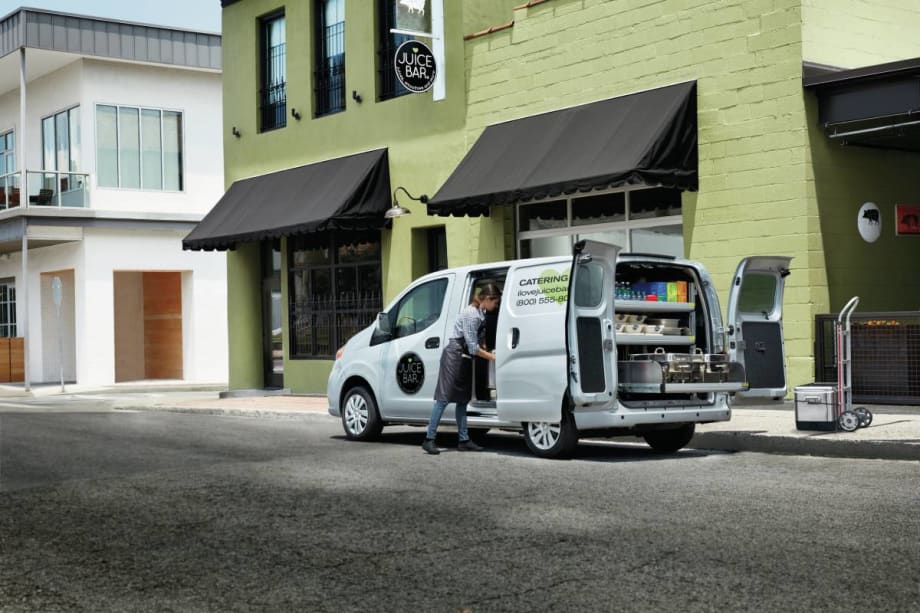
The demand for delivery and cargo vans and trucks of all types likely will stay consistent for years to come as economies keep pace with convenience.
Photo: Nissan
9 min to read
Delivery has taken on new dimensions since 2020 when the global pandemic locked down much of normal commerce and spurred consumers to fully embrace online ordering and delivery. The demand for delivery and cargo vans and trucks of all types likely will stay consistent for years to come as economies keep pace with convenience.
Ad Loading...
Smaller vans, both gas and electric, that can easily navigate dense urban areas and the more dispersed streets of quieter suburbs are gaining a wider share of the van market.
Ad Loading...
Typical Questions In Sizing Up Vans
For fleet operations preparing to expand fleets and/or replace aged units, fleet managers must look for creative ways to save money without sacrificing driver and crew productivity or safety. Some of the typically asked questions during this process include:
Should a fleet move to smaller vans, which would cost less up front and offer better fuel economy?
If the decision is made to downsize to smaller vans, is it still possible to maintain the required payload per vehicle, per trip?
Should larger vans be spec'ed that would provide the ability to haul more per trip and reduce the overall number of vans needed?
If a van is under-spec'ed and consistently overloaded, premature maintenance issues are created by forcing the engine, transmission, and suspension to work harder than designed. This also risks the crew's safety due to the added stress on the braking system, exposing a company to greater liability if the van is involved in an accident when overloaded.
Conversely, if a cargo van is over-spec'ed, e.g., selecting a ¾- or 1-ton unit when a smaller half-ton van will work, the result is not only a $3,000-$4,000 or more up-front acquisition cost, but fuel economy is also sacrificed by as much as 5 miles per gallon.
When evaluating van size and class, these are the key specs to consider: Maximum payload, maximum towing, cargo volume. Narrow a van search to the size/class van that accommodates a fleet's needs in all three areas.
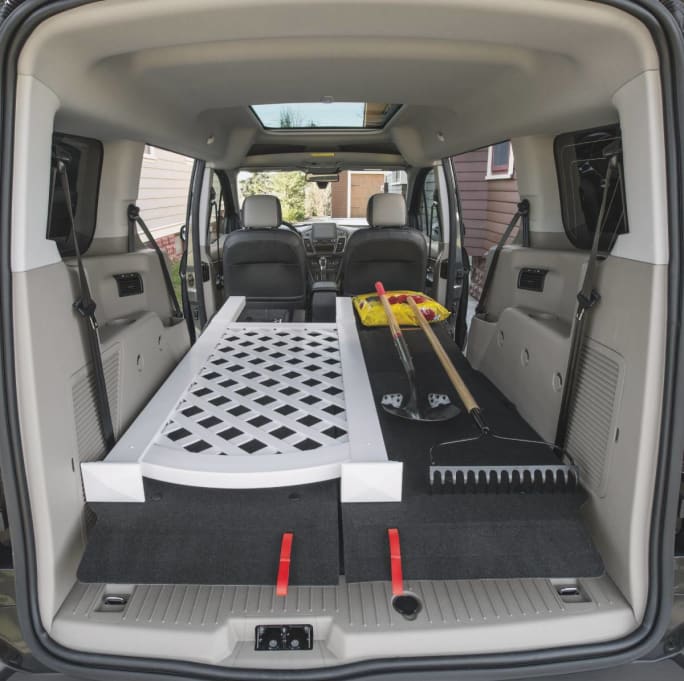
Photo: Ford
More Questions to Consider When Buying Cargo Vans
What is liked about current fleet vans? What works well?
What isn't liked that can be improved with new vans?
What is your fleet's current average fuel economy with its vans? Can this be improved? By how much?
Are the vans operated at full capacity? If not, is it possible to go smaller? If the vans are at max loads, do larger units need to be purchased, whether by payload capacity or van length?
What contents/cargo exactly will the van haul?
How much will a full load weigh?
What are the payload dimension requirements (height, length, and depth)?
How will the van be loaded and unloaded? This impacts interior dimensions and side-door location. What will be loaded outside the van? (Ladders, piping, glass sheets, etc.)
Will the van be pulling a trailer? How much total weight (including payload and trailer)? How often will the trailer be pulled? How much weight will be on the trailer when the van itself is fully loaded?
How many miles per year will the vehicle run
Ad Loading...
How many cubic feet does the required cargo take up? This is more difficult to answer. This requires looking beyond the cargo volume number for specific dimensions, especially length and height.
Photo: Ford
Key Decision Categories Cargo Van Buyers Should Evaluate
1. Van Class/Size
There are two main categories of cargo vans: compact vans and full-size options. Full-size vans are segmented into three classes: Half-ton, three-quarter-ton, and one-ton. While these terms have little to do anymore with actual payload capacities, they are still used industry-wide to define those segments.
Once a van requirement profile is created, review payload and training requirements. If the vehicle will haul, for example, 1,100 lbs., the compact Ford Transit Connect van with a payload capacity of 1,600 lbs. might work. However, if cargo is comprised of mostly lightweight, but bulky boxes of paper products, then it may be best to bump up to the full-size van in the half-ton segment to provide enough room for the size load needed per trip.
When evaluating van size and class, these are the key specs to consider: Maximum payload, maximum towing, cargo volume. Narrow a van search to the size/class van that accommodates a fleet's needs in all three areas.
2. Cargo Volume
How much space is needed? Cargo volume, measured in cubic feet, provides a specific number to make an "apples-to-apples" comparison across all vans to see how much cargo space is available.
How many cubic feet does the required cargo take up? This is more difficult to answer. This requires looking beyond the cargo volume number for specific dimensions, especially length and height.
Ad Loading...
Load length: Most manufacturers offer two length/wheelbase options: Regular and extended. What steps are needed to determine which is the best fit?
Some extended van versions can be about two feet longer in the cargo area. Will that extra space be needed to carry longer piping or to ensure room for additional shelving and storage?
Load height: Some van models come in two roof options: standard and raised. The raised model provides 6 feet, 4 inches of floor-to-roof clearance, allowing most crew members to stand upright while accessing the cargo area.
How often will a crew work out of the back of the van?
How important is that extra space?
The common measurement for cargo space is cargo volume, measured in cubic feet.
Ad Loading...
For dimensions on load length and height, consult a manufacturer representative.
3. Powertrain Options
If considering a half-ton van, should a V-6 or V-8 be selected? The advantage to the V-6 is better fuel economy. For example, a 4.3L V-6 model can offer 2 mpg better fuel economy than the 5.3L V-8. (Visit www.fueleconomy.gov to create side-by-side fuel economy comparisons. The tool applies only to vehicles under 8,600-lbs. GVWR.)
The downside of the V-6 is that it limits a vehicle's towing capacity. Therefore, if the van is pulling a trailer, the engine may need to be bumped up to a V-8, depending on how much weight the trailer is hauling. Consult a manufacturer rep or fleet management company to determine which size engine best fits overall performance requirements.
When considering three-quarter or one-ton vans, engine options expand. Which is better: gas or diesel? The answer depends on how the van will be used. Here are the factors that should be weighed in a decision:
Initial cost versus fuel economy analysis: A diesel engine will cost several thousand dollars more up front than the gasoline option. However, fuel economy with diesel is as much as 30% better compared to gas. The key is determining how many miles per year the vehicle needs to operate to recoup the higher investment in the diesel engine within an acceptable timeframe. A general rule of thumb is 25,000 miles. Under this mark, it's not likely the higher cost of the diesel unit will be recouped, making the gas engine a better fit. Above 25,000 miles, the diesel option often makes more financial sense.
Towing requirements: This is important. If a van is only operated 10,000 miles per year, based on the fuel economy analysis, the gas engine would be the preferred option. However, the diesel option offers a higher towing capacity. Make sure the engine selection matches towing needs.
Ad Loading...
4. Side Door Options
Refer back to the van performance requirements. How will the van be loaded and unloaded? The answer affects what side door option is the best fit. There are a few scenarios to consider:
Swing-open versus sliding side door: The swing-open doors work fine in most applications. However, the sliding door provides a slightly wider load opening. Also, if unloading in tight urban spaces, swing-open doors may take up too much space when open compared to a sliding door.
Passenger side door only versus both passenger and driver side door: Are there any scenarios where it will be more efficient to unload from the driver's side? If so, consider the driver-side door option. However, remember this option limits the ability to install shelving and storage systems on the driver side cargo wall. Therefore, be sure to consider cargo management requirements before selecting the driver side door option.
Refer back to the van performance requirements. How will the van be loaded and unloaded? The answer affects what side door option is the best fit.
Photo: Ford
5. Window Options
Typical van window options include:
Side- and rear-door glass.
Rear-door only glass.
No windows.
The advantage of side- and rear-door glass is maximum visibility and safety. Some fleets opt for rear door only or no glass for several reasons. The lack of windows creates a smoother surface more conducive to vehicle lettering and graphics. Also, if hauling expensive equipment, the no-windows option offers greater security because equipment is not visible.
Ad Loading...
6. Cargo Management Options
Most van manufacturers offer vocation-specific cargo packages (HVAC, plumbing, electrical, etc.), sometimes at no additional charge. Some packages include shelving, cargo bulkhead, ladder racks, etc. Consult a dealer, manufacturer rep, or fleet management company to help determine which cargo management system best fits the application.
7. Cabin Comfort Options
This factor directly impacts crew productivity and typically includes:
Power door locks: With manual door locks, the driver must physically go around the van to lock and unlock each door. If the driver forgets to lock one door, the cargo is at a greater risk of theft.
Power windows: This option is often bundled with power door locks. It allows the driver to roll down the passenger side window, when necessary, without reaching across the van to manually twist the window crank.
Adaptive cruise control: If operating the van on a low mileage, in-town basis, cruise control may not be worth the cost. However, if highway driving is as factor, smart technology cruise control that controls and varies speed is an important option to enhance driver comfort, reduce fatigue, and minimize the risk of collisions.
Interactive/infotainment options: GPS navigation, Bluetooth, and Internet accesses are essential to ensuring safe, reliable communication, information, and routing and mapping. A fleet manager must decide what types and levels of entertainment to allow for drivers, who technically are working. Satellite radio along with Bluetooth syncing options can complement traditional AM/FM radios. Upgraded entertainment can improve driver morale and productivity.
Vinyl vs. cloth seats: A few points to consider here. First, in very hot climates, cloth seats remain cooler than vinyl. Second, before selecting seat material, find out what "quirky" trade-offs must be made, depending on the preferred material.
8. Telematics Information/Technology:
Telematics programs for commercial vans can protect your vehicle, your employees, and your company by using an onboard computer that provides a full suite of data that extends well beyond simple GPS tracking. Telematics programs can alert you if your van leaves a predetermined service area through customizable geofencing. Fleet tracking data includes a detailed location history, driver movements and behaviors that can help you audit routes and optimize performance. Vehicle health data reports are monitored by manufacturers and help keep your van on the road by reviewing diagnostic code sent by your vehicle and alerting you to suggested actions. Customized maintenance schedules can be created within telematics based on oil life, engine hours, time and mileage.
Using telematics, you can avoid having to visually inspect odometer readings as they can be viewed in real-time using a computer. This data allows you to plan more effectively, minimize downtime, and extend the life of your fleet. The same information can be used to monitor fuel efficiency among different drivers caused by excessive idling.
Ad Loading...
Most importantly, telematics includes immediate notifications when a vehicle is being driven erratically such as speeding, hard accelerations or hard braking. Telematics can report drivers who are not wearing a seatbelt while driving. If your van is involved in an accident with an airbag deployment or started outside of business hours, you are notified immediately through the telematics system.
Chevrolet is updating two of its smallest SUVs with added driver-assistance technology, redesigned interiors, and revised trim options. The changes could add more safety equipment as standard for commercial fleets, while a new Trailblazer configuration adds another all-wheel-drive option.
From managing fleets of thousands of vehicles to advancing safety and mentoring fellow professionals, Mark F. Petersen made his mark across both the corporate and supplier sides of fleet.
The former Prologis Mobility and Shell executive will help expand EV Realty’s truck charging business and move its power-first infrastructure model into autonomous vehicle depots and other fleet sectors.