




ARS Technicians Get a Hoist with New Vehicle Lift
After making the switch to a new strap hoist vehicle lift, American Residential Services (ARS) has reduced technician injuries, increased productivity, lightened vehicle loads, and improved portability.

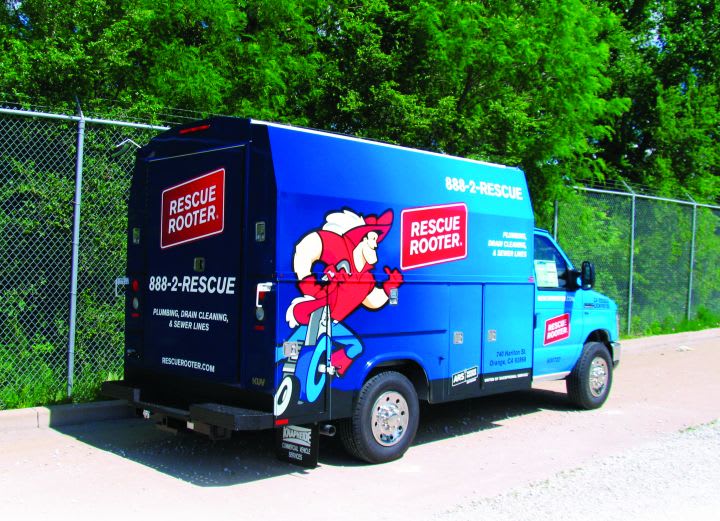
As a service fleet, ARS continuously seeks to streamline and fine-tune work processes to create increased efficiencies and a safer environment for drivers.
Photo: American Residential Services (ARS)
- American Residential Services (ARS) has transitioned to a new strap hoist vehicle lift.
- The new lift has led to reduced technician injuries and increased productivity.
- The upgraded equipment has resulted in lighter vehicle loads and improved portability.
*Summarized by AI
With more than 3,600 vehicles in the field, American Residential Services (ARS) depends on its vehicle fleet of mostly Ford E-250, E-350, and E-450 models to provide heating and air conditioning service, plumbing repairs, and cleaning and sewer line repair in a prompt, professional, and courteous manner.
“Every minute our drivers save in the field allows them another minute of productivity,” said Michael Baessler, director of purchasing & fleet for ARS, based in Memphis, Tenn. Baessler and his team of three manages ARS’ fleet operations — from vehicle selection to disposal.
As a service fleet, ARS continuously seeks to streamline and fine-tune work processes to create increased efficiencies and a safer environment for drivers. One recent initiative involved implementing new cranes — switching from a steel-cable model to a SpitzLift, featuring webbing.
“Our service personnel sometimes make six to seven stops per day, loading and unloading at each stop,” Baessler explained. “The repetition can get difficult, and having that strap has made the process simpler for them.”
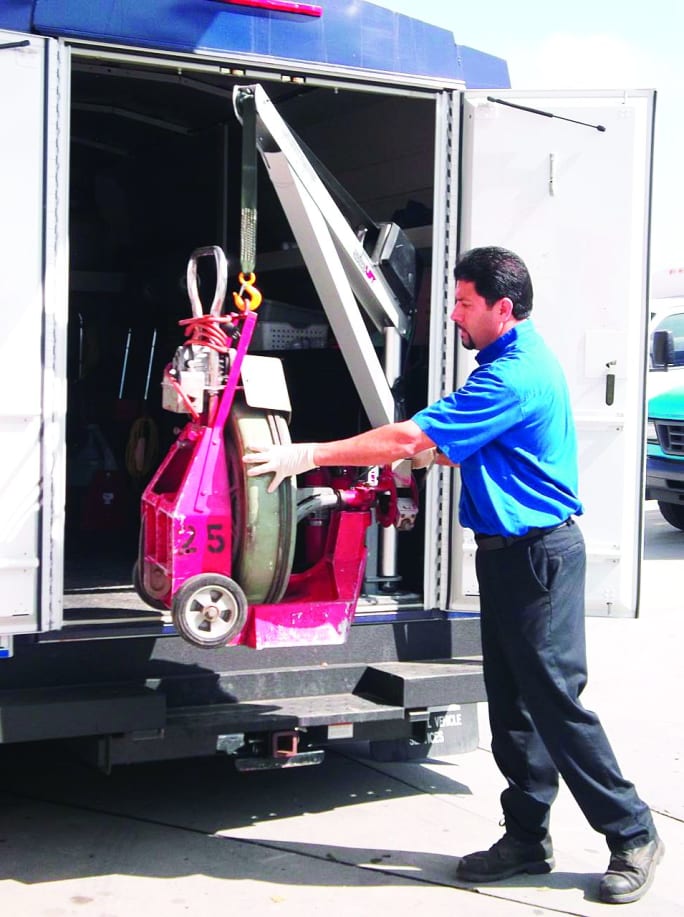
ARS' SpitzLift units have helped employees avoid injuries and become more efficient when making service calls.
Photo: American Residential Services (ARS)
Making the Job Easier, Safer
Previously, ARS utilized cranes on its plumbing trucks that lifted fairly heavy drain equipment in and out of the vehicle. Other trucks used similarly heavy equipment. A change was necessary to reduce on-the-job injuries, improve equipment flexibility, and increase service productivity.
To meet this need, ARS tested the SpitzLift, and, after receiving positive driver/operator feedback, the fleet team began to implement SpitzLift on newly acquired vehicles.
“The feedback was very positive,” Baessler said. “The technicians liked the strap, they liked that the arm was longer, and they liked that it allowed for more adjustability compared to the last crane.”
Baessler pointed out the primary benefits of the SpitzLift include:
- Lifting capacity of up to 900 lbs.
- 360-degree rotation.
- Minimizes payload impact to fleet.
- Folds up for easy storage.
- Lightweight — weighs 30-40 lbs.
- Reduces back and “lost time” injuries.
- Lessens workers’ compensation claims.
- Meets American Society of Mechanical Engineers (ASME)/Occupational Safety & Health Administration (OSHA) standards.
Because the SpitzLift is more flexible compared to the previous lift, the technicians can set it at any preferred height and arm length, making it easier to grab and handle to pull out and swing into the vehicle.
“This makes it easier and quicker to get those pieces of equipment in and out of vehicles during services,” Baessler said. “Plus, technicians are happier because it’s not a one-peg-fits-all-solution.”
Measuring the Benefits
With the previous lift, technicians occasionally cut themselves on the steel cable. Moving to a lift with a strap hoist eliminated these types of injuries. Also, wear and tear of the strap is easier to determine as opposed to the steel cable thanks to a wear sensor located on the outside of the system.
“We’ve eliminated on-the-job injuries that pertain to life operation, including head, hand, and other injuries,” Baessler said.
He also pointed out the portability benefits of the SpitzLift over the previous lift models, including the ability to transfer each SpitzLift to new vehicles when necessary. And, with more than 45 upfit configurations, the portability of the new lifts makes for a simpler installation process for ARS.
A new, lighter-duty SpitzLift model is under consideration for ARS’ cargo vans and ultra-low Knapheide KUV bodies.
“Anytime we make a significant fleet change, we get a lot of feedback from the field first and let the technicians tell us their opinion. Then we’ll move forward based on that feedback,” Baessler said.
ARS may offer technicians the option of choosing between several SpitzLift models, as the upfitting process for each is very similar.
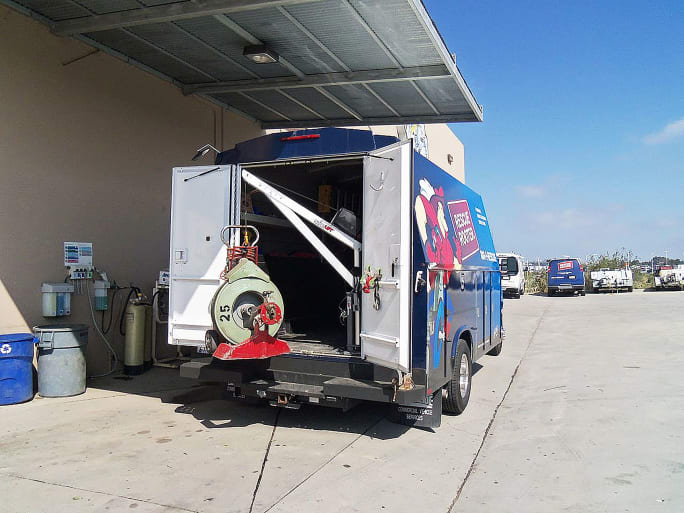
ARS' new SpitzLift units have been equipped on its Rescue Rooter trucks.
Photo: American Residential Services (ARS)
Field Tests Key to Success
ARS’ successful SpitzLift installations resulted from a detailed product investigation, extensive field testing, comprehensive feedback and analysis phase, and eventual rollout.
“Anything that you’re going to bring into the field, it’s critical that you have a good test program prior to introducing it on a national or fleet-wide basis,” Baessler stressed. “I’m fortunate to have a group of branches that can take on these projects and assist the fleet department by giving great feedback.”
He also emphasized the importance of setting parameters, having senior management involved in the process, and analyzing what is gained through the suggested change.
“My branches in the field are my customers. I need to put them in a position to succeed,” Baessler added.
Editor's Note: As of press time, Mike Baessler accepted a new position as fleet manager at another large service company.
Quick Answers
The new vehicle lift at ARS is designed to reduce technician injuries, increase productivity, lighten vehicle loads, and improve portability.
*Summarized by AI
Originally posted on Work Truck Online
More Vehicle Research
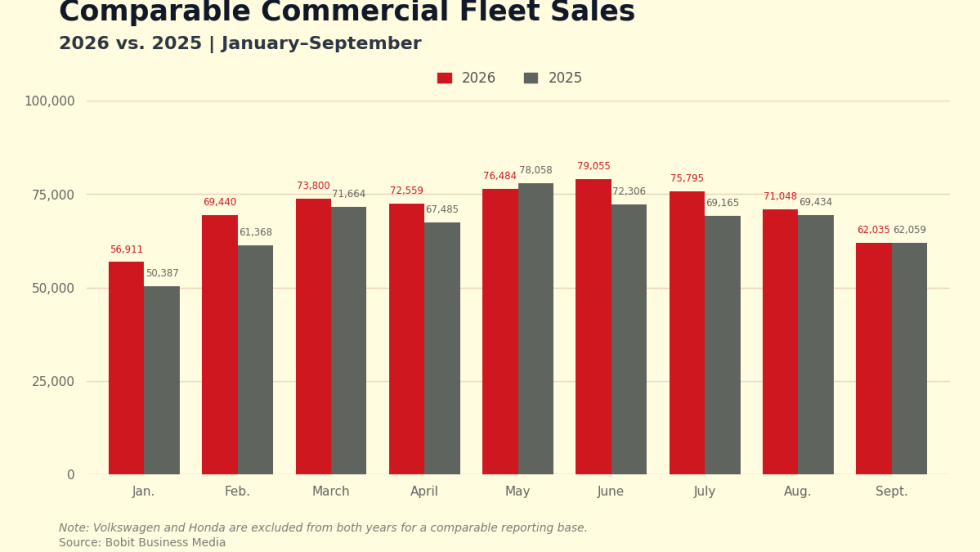
Commercial Fleet Sales Rise 5.8% Through September 2026
September commercial fleet sales were essentially unchanged from a year earlier, slowing year-to-date growth while keeping volume ahead of 2025.
Read More →
Hall of Fame Inductee: John Dmochowsky
The longtime Mondelēz International fleet executive joins the Automotive Fleet Hall of Fame.
Read More →
Hall of Fame Inductee: Lee Miller
After more than four decades at Boehringer Ingelheim, Lee Miller leaves a legacy built on fleet expertise.
Read More →
Hall of Fame Inductee: Mark F. Petersen
From managing fleets of thousands of vehicles to advancing safety and mentoring fellow professionals, Mark F. Petersen made his mark across both the corporate and supplier sides of fleet.
Read More →
When Charger Downtime Becomes a Fleet Availability Problem
As EV deployments move beyond pilot programs, charger reliability can directly affect vehicle readiness, driver productivity and route scheduling.
Read More →
2027 Nissan Rogue Hybrid Adds e-POWER, Standard AWD
The new Rogue Hybrid uses Nissan’s e-POWER system with dual electric motors, offers an estimated 40 mpg and starts at $35,490.
Read More →
2027 Subaru Forester Adds First Wilderness Hybrid
The 2027 Forester lineup starts at $29,995 and adds a Wilderness Hybrid with 194 combined horsepower and 9.3 inches of ground clearance.
Read More →
EV Realty Names Henrik Holland President as Charging Platform Expands
The former Prologis Mobility and Shell executive will help expand EV Realty’s truck charging business and move its power-first infrastructure model into autonomous vehicle depots and other fleet sectors.
Read More →
Mercedes-Benz Introduces Electric GLC With Up to 350 Miles of Range
The GLC 400 4MATIC Electric features an 800-volt architecture, 330-kW DC fast charging and a 94-kWh battery, along with Mercedes-Benz's new MB.OS operating system.
Read More →
Fleet Has a Talent Pipeline Problem, not a Talent Problem
Where will the next generation of fleet leaders come from, and what does the industry need to do differently to find them?
Read More →