




Anti-Idling Program Slashes Fleet’s Fuel Costs
Implementing a company-wide anti-idling program, this uniform service has decreased its idling time from 70 minutes to 7 minutes per driver per day, resulting in serious fuel savings.

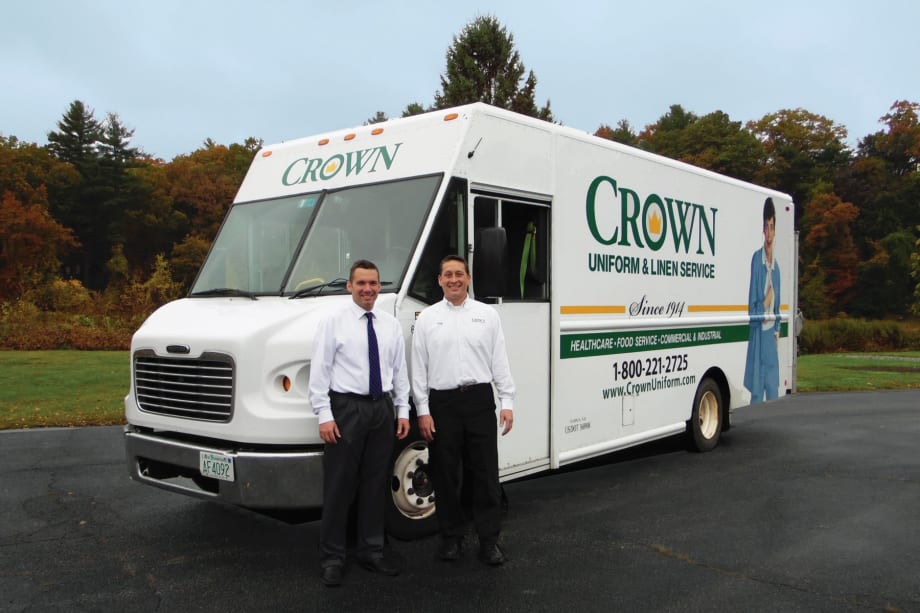
Dave Hardy, Crown’s fleet supervisor, (left) stands with Greg Franklin, a service manager, in front of a Crown Freightliner step van. Crown’s fleet has reduced its daily idling time from 70 minutes per driver down to 7 minutes.
With each fleet vehicle making 30 to 40 stops per day, fuel costs add up for Crown Uniform & Linen Service, especially when fuel is wasted on unnecessary engine idling.
“Idling reduction has always been important to Crown, but the company has had limited success with idling programs in the past,” says Dave Hardy, Crown’s fleet supervisor. “Earlier this year, we really wanted to try it again.”
Founded in Boston in 1914, this family-owned, fourth-generation uniform and linen supplier delivers and picks up at various businesses (i.e., health care, food service) on a weekly basis. With five locations in Massachusetts, New Hampshire, Connecticut and Virginia, its 30 Freightliner MT45 step vans — leased through local Ryder and Penske truck dealerships — travel approximately 100 to 150 miles daily throughout New England, according to Hardy.
Partnering with Sustainable America, Crown was able to roll out an idling-reduction pilot program last March. Sustainable America — an environmental nonprofit organization that promotes sustainability initiatives, including reducing oil consumption — provided Crown with ideas and tips through its “Idle-Free Fleet Program.” According to Sustainable America, 3.8 million gallons of fuel is wasted by idling in the U.S. every day.
“As a result of this program, we captured some significant fuel savings while further supporting Crown’s commitment to sustainable business practices,” says George Spilios, Crown’s regional manager.
Once the vision was identified with Sustainable America’s help, Hardy started tracking each step van’s idling time with Geotab’s telematics software. Installed in each step van, the Geotab device tracks a vehicle’s location, mileage, maintenance as well as idling (every time the engine stops and starts).
“I went back over several months and calculated our current idling baseline,” says Hardy. “I found out we were idling for 70 minutes per driver per day. I noticed that many drivers were idling as much as two to five hours per day on their route.”
The next step was communicating with location managers. After pointing out the high idling times, most of the managers had no idea their drivers were idling and for how long per day, according to Hardy.
Many of the drivers would leave the engine running out of habit. “Some drivers left their vehicles running while making a delivery,” says Hardy. “We had drivers idling while fueling their vehicle, going through a car wash and waiting at security gates.”
Once he got the managers on board with the program, they filtered the information down to their drivers to train them and eliminate these bad habits. Hardy set a goal of 10 minutes of idling per route per day.
After calculating the idling baseline, identifying common reasons for idling and setting a new idling limit, Hardy developed a daily tracking and reporting system. “I created a daily report that I sent out to managers that said how long each vehicle had been idling. I would say which drivers idled over 10 minutes and point out specific stops and problem areas.”
Then each manager would speak to the drivers individually and correct their actions. The daily communication helped to retrain drivers on the importance of shutting off the vehicle engine between stops, according to Hardy.
Within a few months, Crown’s drivers went from 70 idling minutes per day down to 7 minutes, says Hardy. With this decrease in idling times, “We have seen savings in fuel between $1,500 and $2,000 per month,” says Hardy.
With the program’s success among its delivery drivers, Crown plans to extend the program to its sales team, which drives about 15,000 to 20,000 miles per vehicle per year. “We have developed a culture of anti-idling at Crown,” says Hardy.
Originally posted on Work Truck Online
More Fuel

Turning Fleet Payment Data into Executive Insights
Ramel Lindsay of U.S. Bank Voyager discusses how fleets can transform payment and transaction data into actionable intelligence to reduce costs, improve oversight, and support executive decision-making.
Read More →
Why the IRS Raised Its Mileage Rate in the Middle of 2026
Fuel-price volatility drove the rare increase to 76 cents per mile, the fifth midyear adjustment since 2000.
Read More →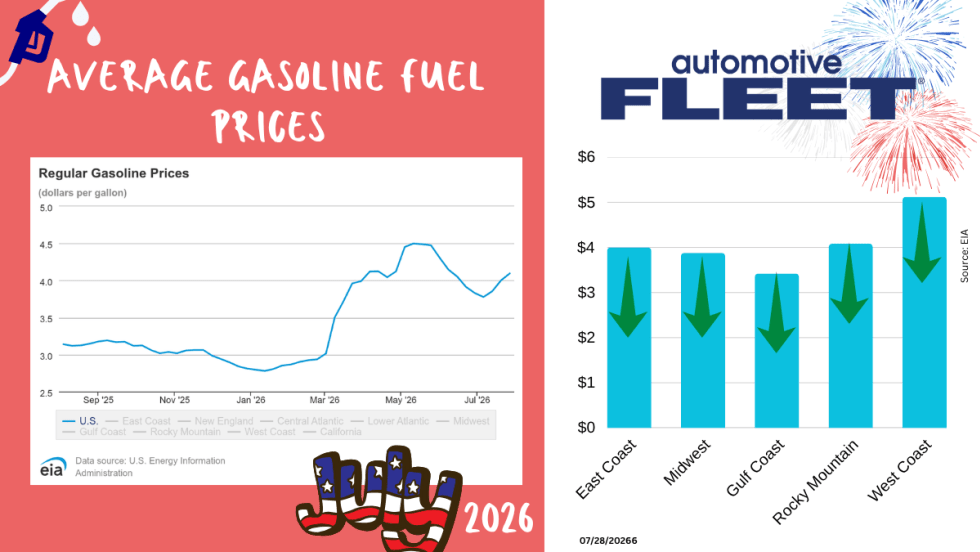
July Fuel Update: Prices Keep Rising in Light of More Conflict
Gas prices continue to rise as more and more conflicts do, too.
Read More →
Bob Adamsky on Fuel Volatility: "Don't Panic, Have a Plan."
When it comes to up and down fuel prices, Adamsky has a message for fleets: “Don’t panic.”
Read More →
How Fleets Can Gain Control of Non-Fuel Spend
Fuel often gets the spotlight, but non-fuel expenses can have a major impact on fleet costs. Ramel Lindsay of U.S. Bank Voyager discusses how fleets can gain better visibility and control over these often-overlooked expenditures.
Read More →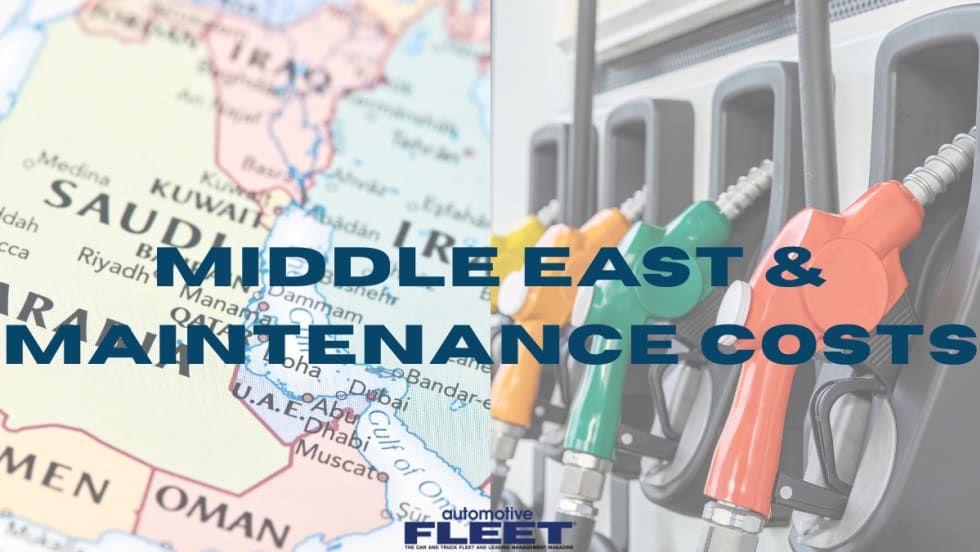
Fuel is Just the Start: How Middle East Tensions are Driving Up Fleet Maintenance Costs
The Middle East conflict is doing more than pushing up fuel prices. It’s also raising the cost of key maintenance products your fleet depends on, from motor oil to tires to windshield wipers. Here’s what you need to know about this budget-busting situation.
Read More →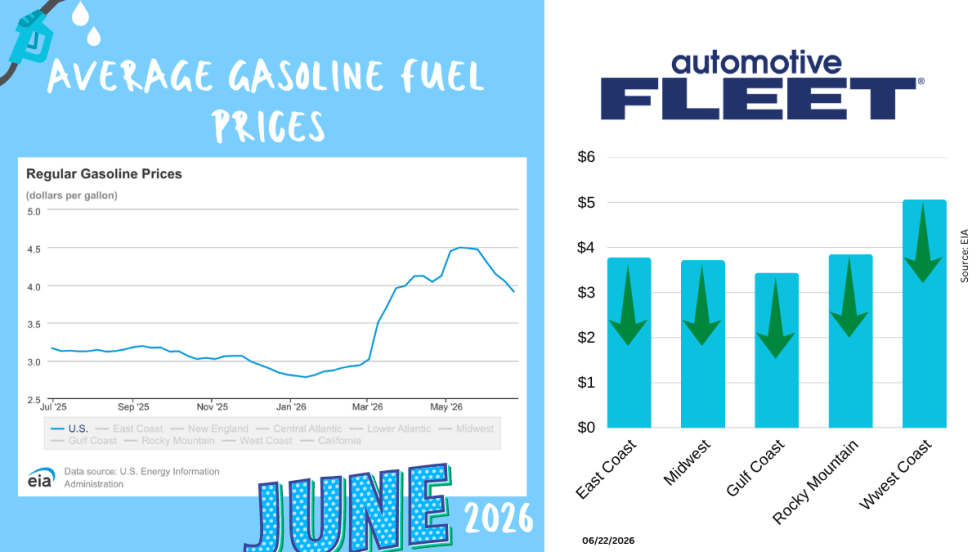
June Fuel Update: Prices Fall Below $4
Drivers are finally getting some relief at the pump. The national average gas price has dropped below $4 a gallon for the first time in months, with prices falling in 47 states as oil markets react to developments in U.S.-Iran negotiations.
Read More →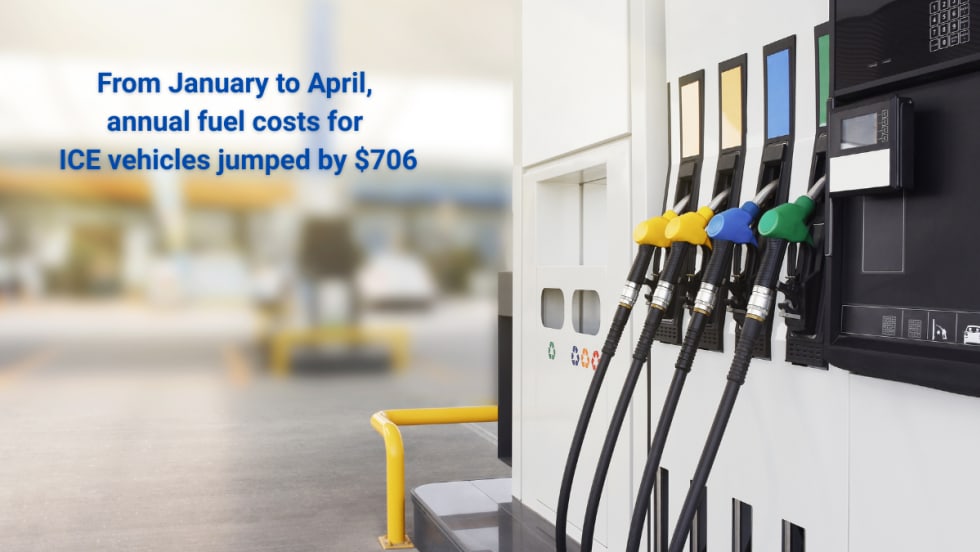
Study: How 2026's Gas Price Hikes Affect Different Vehicle Types
New data from iSeeCars reveals how rising fuel costs have affected different vehicle segments as gasoline prices climbed nearly 46% over the past four months.
Read More →
Are You Tracking Your Fleet's True Total Cost of Ownership?
Bobit Business Media surveyed 190 fleet professionals and found that while most fleets are tracking costs, fragmented systems and data gaps are keeping true TCO visibility out of reach. With rising pressure to control spend in an increasingly volatile environment, the gap between what fleets think they know and what the data actually shows is wider than you might expect. See how your peers are managing costs today and where the industry still has room to improve.
Read More →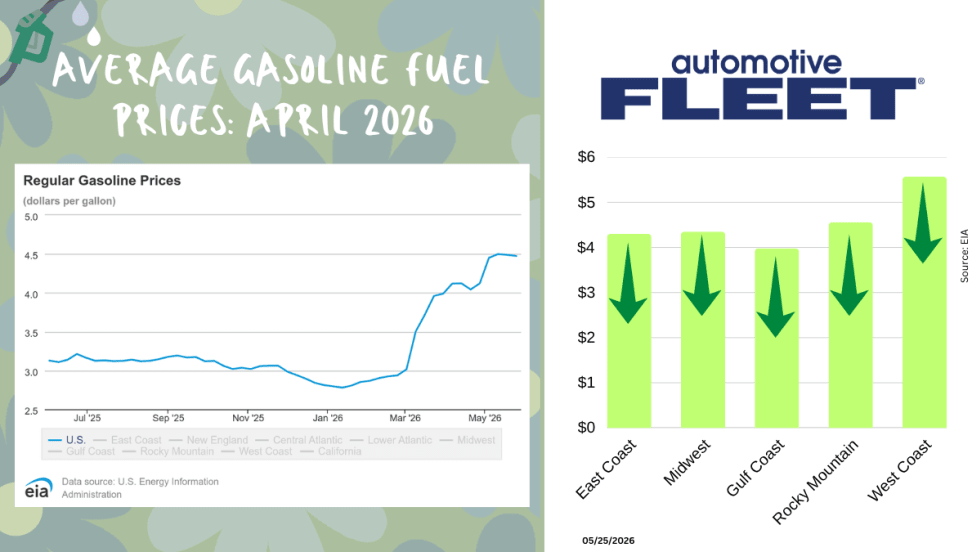
May Fuel Update: All Regions Experience Declines
Gas prices are finally easing in much of the country, but experts warn global tensions could quickly reverse the trend as the national average remains well above last month’s levels.
Read More →