




ADAS Complicates Fleet Vehicle Maintenance
Although proven to enhance driver safety, advanced driver assistance systems add new complexity and expense to fleet maintenance programs.

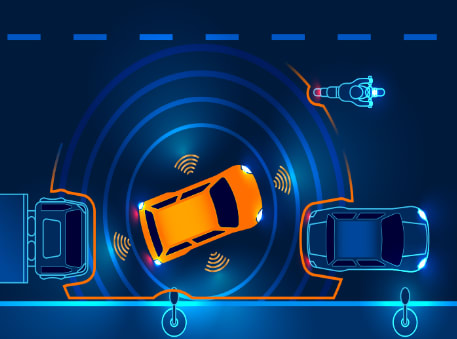
Advanced driver assistance systems use automated technology, such as sensors and cameras, to detect nearby obstacles or driver errors, and respond accordingly.
Photo: NHTSA
The adoption of new onboard safety technologies, such as advanced driver-assistance systems (ADAS) adds new complexity and expense to fleet maintenance programs.
These systems include such technologies as automatic emergency braking (AEB), adaptive cruise control (ACC), and lane departure warning (LDW) and assorted driver monitoring measures.
Special Equipment & Training Required
ADAS technologies require special equipment and training when service is needed. These systems add new parts to vehicles, such as cameras, proximity sensors, and radar/lidar.
A minor collision that in the past required only a bumper cover replacement can now involve bumper cover and radar replacement, along with pre- and post-system scans and ADAS recalibration. ADAS cameras built into windshields and rear-view mirrors are adding complexity and cost to windshield replacements.
Failure rates for these components are relatively low. However, when repairs are required on vehicles equipped with new technologies, the costs can sometimes be shocking. To the expense of a simple part replacement, fleets now must add the cost to recalibrate the ADAS, a costs that could amount to hundreds of dollars.
Vehicle alignment costs, too, are rising as ADAS become increasingly common in new vehicle models. The system’s complexity and number of required steps to complete transform what was once a basic service.
Repairs such as windshield replacements and bumper cover replacements, that lack steering or suspension components, now commonly require scan tools for recalibration and computer-aided equipment for ADAS alignment.
Indeed, many previously simple repairs now require calibration of the system’s cameras, sensors and controllers, which entails specialized and expensive tooling and equipment.
ADAS Becoming Standard
Now included as standard equipment on several popular fleet models, ADAS’ more expensive components are pushing repair costs higher. For example, the replacement cost of a windshield in an ADAS-equipped vehicle is typically higher than that of a non-ADAS unit. In addition to the increased cost of the windshield itself, the vehicle also often requires a recalibration of the entire system, an additional cost driver.
ADAS features such as lane departure warning systems use video, laser and/or infrared lasers to detect visible road markings when covered by snow, slush, salt, or ice. Forward-collision warning systems use front-facing cameras or radar to take corrective action. These sensors may also be affected by snow, slush, salt or ice.
Communicate with Drivers
Communicating with drivers can be key in properly maintaining these technologies, especially during winter months. Fleet managers must instruct drivers that ADAS is all they need to assist with safety and driving. Drivers still must be in control of the vehicle at all times, recognizing when roads are slippery and aware that stopping distances must be increased even with ADAS.
Drivers may also need to clean the sensors, radars and cameras for LDW and forward-collision warning systems more than once during a single when driving in snowy or icy conditions.
This process of communication with drivers has recently become front and center stage for many fleets, especially as organizations seek to recruit and retain drivers through better safety measures.
Including drivers in the conversation around safety initiatives and acknowledging their input is important for their safety and retention. Drives drivers and a fleet’s insurance provider will both appreciate vehicles spec’d with the latest and greatest safety features.
ADAS Pose Repair Problems
While ADAS can boast of proven safety benefits, some vehicle owners report problems with the technology following repairs, according to the Insurance Institute for Highway Safety (IIHS).
Notably, nearly 50% of IIHS survey respondents reported issues with the features after the repair was completed.
IIHS research has shown that front crash prevention (forward collision warning and automatic emergency braking), blind spot detection, and rearview cameras all substantially reduce the types of crashes they are designed to address. Moreover, automatic emergency braking (AEB) cuts police-reported rear-end crashes by half.
That’s the good news. However, vehicle repairs can make it necessary to calibrate the cameras and sensors the features rely on to ensure they work properly — a potentially complicated and expensive process.
For example, a simple windshield replacement can cost as little as $250. However, a separate study by the Highway Loss Data Institute (HLDI) found that vehicles equipped with front crash prevention were much more likely to have glass claims of $1,000 or more. Much of the higher cost is likely related to calibration.
The IIHS survey found that post-repair problems with the technology were substantially more common when the features were repaired because of crash damage or in connection with a windshield replacement. About two-thirds of owners whose crash avoidance feature repairs involved windshield replacement and nearly three-quarters of those whose repairs were required due to crash damage said they had issues with the technology after repair. In contrast, less than 50% of owners who had repairs done for other reasons faced problems afterward.
Windshield repairs often make it necessary to calibrate crash avoidance sensors and cameras, though it’s a common step in many repairs. Automakers stipulate systems be calibrated anytime a sensor is removed and replaced or reinstalled. Likewise, calibration is typically an early step in addressing a malfunctioning feature. About two-thirds of respondents who had repairs done said calibration was included in the repair. Those respondents also reported a higher incidence of post-repair issues.
Damaged Systems Can be Hazardous
Demand is growing for ADAS servicing, especially after collisions when ADAS technology may malfunction. A damaged lane-keeping assistance or an AEB system, for example, can actually be hazardous if not repaired.
These systems absolutely increase safety, and maintaining them is necessary to keep the systems functioning properly following certain repairs. However, the extra time and expense to perform the calibration frequently catches both drivers and fleet managers by surprise.
The calibration process could add 30 minutes to more than an hour in labor time to a repair, increasing the total cost, which can be significant. Even more frustrating to drivers is being required to bring their vehicle to a second repair facility or dealership to complete the calibration process, thus increasing their job downtime.
Expert say fleets should add ADAS to preventive maintenance schedules now. Servicing the ADAS is just as important as an oil change or tire rotation. Proactive monitoring will mitigate potential issues, even if the ADAS only needs a software upgrade.
While ADAS technologies present expense and repair complications, replace aging fleet cars and trucks with newer, safer equipment on the roads will keep drivers and others on the road safer, retain drivers at a higher rate and enjoy substantial savings in reduced accident and litigation costs, as well as lower maintenance and repair expenditures.
More Safety

Fleet Manager’s Ultimate Playbook: Navigating the New Standard in OEM Connectivity
Rising operating costs, driver safety concerns, and unplanned downtime are putting unprecedented pressure on modern fleets. Discover how fleet managers use embedded OEM connectivity and real-time vehicle data to cut TCO, prevent downtime, and protect drivers without aftermarket telematics hardware.
Read More →
From Driver Well-Being to EV Charging | AF News Recap
Mental health belongs in the fleet safety conversation. This week, we’re looking at five ways fleets can support employee well-being before a crisis, plus Holman’s expansion in Mexico, new one-day Fleet Forward passes, and why EV charging demand is outpacing infrastructure growth.
Read More →
Nexar-Nauto Merger Aims to Give Fleets Better Safety Intelligence Through Larger Driving Dataset
Stefan Heck tells Automotive Fleet that combining more than 10 billion miles of driving history with Nexar's AI models will give fleets deeper insights into driver risk and roadway conditions than either company could provide independently.
Read More →
Don't Wait for a Crisis: 5 Ways to Build Mental Health Into Your Fleet Safety Program
For Suicide Prevention Month, fleet and safety leaders have an opportunity to put mental health where it belongs: at the center of workplace safety.
Read More →
How Camera Data Can Strengthen a Fleet’s Insurance Renewal
Insights from a commercial insurance carrier and a broker show how fleets can turn video telematic data, driver coaching, and improved claims results into a stronger case at insurance renewal.
Read More →
The Safest Fleets Aren’t the Ones with the Most Technology
You’ve made the telematics investment. Here’s how to capture the other half of its value and build the safest fleet on the road.
Read More →
Hidden in Plain Sight: Fleet Compliance Risks
Fleet compliance isn't just about having policies — it's about consistently enforcing them. This practical guide reveals six hidden compliance risks common in public sector and shared fleet operations and outlines proven strategies to improve visibility, accountability, and audit readiness
Read More →
NETS Sets 2026 Fleet Safety Benchmark Conference for Indianapolis
The Sept. 15–17 program will feature fleet benchmarking data, case studies, emerging technologies, and implementation strategies while running alongside the NSC Safety Congress & Expo.
Read More →
Off-the-Job Crashes Account for 43% of Employers’ $61.7 Billion Crash Burden
NETS quantifies costs dispersed across fleet, risk, HR, and other departments while providing new per-crash benchmarks for employers.
Read More →
Ram Recalls More Than 1.27 Million 1500 Pickups for Seat Belt Anchor Issue
The recall affects certain 2019-2026 Ram 1500 pickups that may have improperly attached second-row seat belt buckle anchors.
Read More →