





More on ADAS Impact: ADA Systems Complicate Fleet Vehicle Maintenance
ADAS Saves Lives, But the Technology Has Limitations
Advanced driver assistance systems are expanding throughout model lineups. While protecting fleet drivers, the safety systems present higher costs and driver training issues.
April 27, 2023
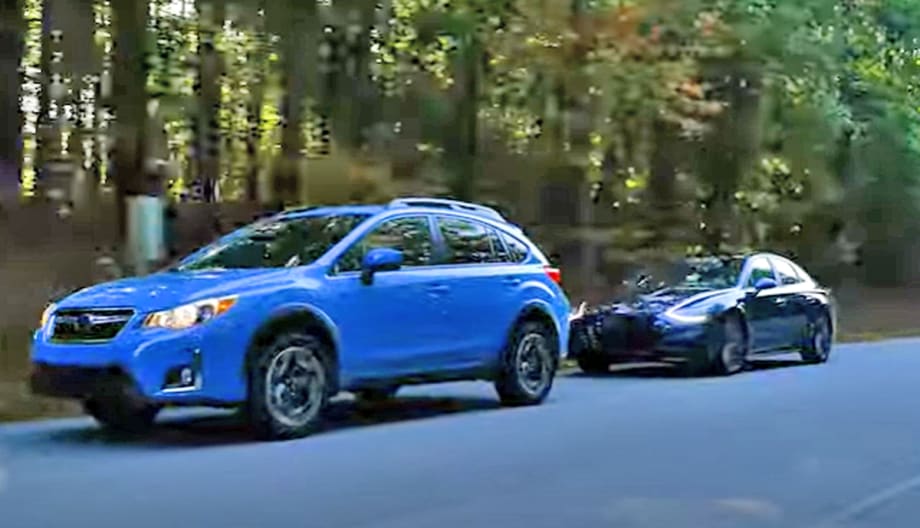
Forward collision warning and automatic emergency braking are among the safety technologies increasingly installed in vehicle across the model lineups.
Photo: NHTSA
7 min to read
The widespread adoption of advanced driver assistance systems (ADAS) presents management issues for fleets around the globe. Automotive Fleet Editor Mike Antich and Hans Damon, principal partner of U.K.-based Fleet 360 examine the implications of ADAS in the North American and European fleet markets.
Antich: Hans, what implications for fleet managers have you found regarding the increasing use of ADAS?
Damon: Indeed, ADAS is something clearly top of mind for many fleet managers for various reasons. What I already have encountered in talking to our customers about ADAS is, “What is the definition of the system?”
Not everybody has the same perception. The systems go from parking sensors all the way up to bringing us to the technical advanced solutions that would allow autonomous driving. ADAS can include such features as:
Adaptive cruise control
Anti-lock brakes
Forward collision warnings
Traffic signal recognition
Lane departure warning, a very important one where many accidents happen.
There's a lot available with ADAS, and it comes with pluses and minuses. What is your experience in the U.S.?
Antich: The biggest concern with fleet’s adoption of ADAS technology in the U.S. is the potential driver overreliance on the technology; drivers become lax in practicing good driving habits.
Another issue is the transition to ADAS is happening dramatically. A basic safety feature such as seatbelts took close to 100 years from the time of the its invention to the actual time it became mandated for all vehicles.
Widespread use of ADAS throughout all vehicles will happen within the next two or three generations of automobiles.
A big concern is some negative publicity about the technology. The Tesla autopilot has been involved in several accidents allegedly resulting from use of the autopilot. The industry is trying to work on in terms of the safety record of these devices.
The biggest problem is we're not telling drivers the technology’s limitations. Is the same thing happening in Europe?
Damon: Our biggest concern is that ADA systems currently are perceived as replacements for a driver safety program. They're not. A driver safety program is about repeating and repeating driver responsibilities, the dangers of driving not focused, and so on.
ADAS can make people complacent. They might think, “OK, the car really does take over, and I'm good to go. I can do something else in between.”
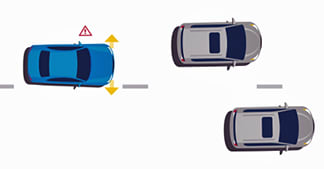
Fleet managers must do a better job training drivers on the benefits and limitations presented by ADA systems, which include lane departure warning,
Photo: NHTSA
But that's not the case. An ADA system is a good way to help drivers, to support drivers, but not take over driving.
Of course, the ADAS focus on the car and its operation has no time limit, unlike drivers who are advised to stop at least every two hours. The car’s computer can keep on going because it deals with ones and zeros with no emotion involved.
The systems do have their limitations. An example is the phantom braking. This sudden, unexpected braking or stopping may not cause a problem in front of you but can cause a problem behind you. The drivers to the rear must suddenly break even harsher.
Another limitation occurs when road construction is going on, and the lane lines on the road become less clear. The car starts to follow a line it should not follow because the original lane markings have been replaced with temporary lines. Guided by lane departure technology, the car may start to run into another car while still sensing nothing is going wrong.
In this case, human intelligence must take over rather than simply relying fully on technology. That caution is something we need to repeat.
Still another challenge is, in this time of supply shortages, ADAS have been pushed towards more expensive vehicles. For smaller vehicles, putting in all those ADA solutions might price them out of the bracket they should be operating in. Is that the same in the U.S.?
Antich: Absolutely. The additional equipment will raise a vehicle’s initial acquisition costs.
You'll also have additional maintenance expenses. Normal fender benders or cracked windshield repairs will now require installing components containing ADAS sensors.
Secondarily, the minute anything in an ADA system changes, recalibration is required. That's key.
So ADAS are exerting upward pressure on overall costs. However, how do you quantify that if you're saving lives?
The biggest problem with ADA system is the lack of training. I listen to a podcast called the Safety Geek. In one excellent episode, a guest was Roman Forrester, president and CEO of RG Auto, a supplier of aftermarket ADAS equipment for vehicles.
Forrester recounted a revealing experience. When he picked up his new car, they taught him all the functions within it, even how to lay the third-row seats flat expand cargo space. But he got no explanation at all on how any of the ADAS equipment works.
Historically, we've had some experience with this situation. In the 1980s and 1990s, when anti-lock brakes (ABS) were introduced, everyone thought the new technology would reduce the number of accidents.
Initially, however, just the opposite happened. Accidents actually increased because drivers pushed the vehicles to the limit, thinking the ABS would protect them.
The same caution should be highlighted with ADAS equipment. People need to have a better understanding of its capabilities and limitations.
In that same podcast, the cohost Phil Moser recalled first time he experienced the lane departure feature in an ADAS-equipped vehicle. He started feeling that vibration in the steering wheel. He thought he was having a flat tire. No one had explained feature earlier.
A challenge and call-to-action for fleets is to do a better job training drivers, especially those driving an ADAS-equipped vehicle for the first time. They need to be made aware of the systems’ limitations, what's available to them, so they can better protect themselves.
Damon: Very true. The other element we have experienced in Europe is that people tend to switch off the ADA system. As soon as they start driving, they are annoyed at the steering wheel vibration or the beeps or warnings.
Actually, if they're annoyed by all the warnings, they should question their driving behavior because those beeps are there for a reason.
It’s unfortunate some very important features can still be disabled in the software, although sometimes it’s more complicated to do. Most drivers who, let's say, are on a vengeance, can switch them off. So, indeed, that is another risk.
Technology should be supported with common sense communication programs from employer to driver. State in the car policy or the fleet’s code of conduct that, “We don't expect you to switch them off because these systems are there for a reason.”
Perhaps ADAS are not perfect yet, but they are a good “co-driver” to help avoid risk or mitigate risk on the driver’s behalf and that of people in surrounding vehicles.
Antich: The same thing is happening here in the U.S., especially in terms of blind-spot monitoring and lane departure. Too many false alarms annoy drivers, especially if they're in congested heavy traffic. Many drivers just simply turn the technology off.
That behavior must be addressed in fleet policy. Fleet managers need to be aware that drivers are disabling the systems to ensure those drivers aren't defeating the purpose of these safety measures. There's a reason the company invested money in that type of technology.
Damon: The cost of the technologies is not only the investment. We have seen companies say they will stop using parking sensors because replacing just the front bumper without the sensors after a little fender bender is cheaper than installing a replacement with the sensors. And typically, people continue to hit those fenders anyway. So why make it more expensive?
This is a bit more complicated with ADAS. However, it's an analysis that needs to be made because with a collision, you have to replace the radar or other components, and that can be extremely costly.
Antich: It's very true. Not only do you have higher acquisition expenses, higher maintenance expenses, but also higher accident management expenses.
Again, however, the bottom line of ADA systems is lives saved, and that should be a fleet manager's primary responsibility.
We must address the fact that ADAS have limitations and do a better job in training drivers on the use of ADAS equipment.
Subscribe to Our Newsletter
More Safety

What’s Next for Fleet? Safety, AI & Industry Recognition | AF News Recap
Could your company's culture be encouraging distracted driving? This week, we're exploring how workplace expectations affect driver safety, what AI, EVs, and autonomous vehicles could mean for the future of fleet management, and how fleet professionals can strengthen their award nominations.
Read More →
Does Your Fleet's Culture Encourage Distracted Driving?
What happens when the people responsible for enforcing safety rules are the ones setting the wrong example? The answer may reveal why some of the biggest risks to fleet drivers have little to do with what's written in the employee handbook.
Read More →
Sponsored•October 1, 2026
Fleet Manager’s Ultimate Playbook: Navigating the New Standard in OEM Connectivity
Rising operating costs, driver safety concerns, and unplanned downtime are putting unprecedented pressure on modern fleets. Discover how fleet managers use embedded OEM connectivity and real-time vehicle data to cut TCO, prevent downtime, and protect drivers without aftermarket telematics hardware.
Read More →
From Driver Well-Being to EV Charging | AF News Recap
Mental health belongs in the fleet safety conversation. This week, we’re looking at five ways fleets can support employee well-being before a crisis, plus Holman’s expansion in Mexico, new one-day Fleet Forward passes, and why EV charging demand is outpacing infrastructure growth.
Read More →
Nexar-Nauto Merger Aims to Give Fleets Better Safety Intelligence Through Larger Driving Dataset
Stefan Heck tells Automotive Fleet that combining more than 10 billion miles of driving history with Nexar's AI models will give fleets deeper insights into driver risk and roadway conditions than either company could provide independently.
Read More →
Don't Wait for a Crisis: 5 Ways to Build Mental Health Into Your Fleet Safety Program
For Suicide Prevention Month, fleet and safety leaders have an opportunity to put mental health where it belongs: at the center of workplace safety.
Read More →
How Camera Data Can Strengthen a Fleet’s Insurance Renewal
Insights from a commercial insurance carrier and a broker show how fleets can turn video telematic data, driver coaching, and improved claims results into a stronger case at insurance renewal.
Read More →
The Safest Fleets Aren’t the Ones with the Most Technology
You’ve made the telematics investment. Here’s how to capture the other half of its value and build the safest fleet on the road.
Read More →
Sponsored•August 7, 2026
Hidden in Plain Sight: Fleet Compliance Risks
Fleet compliance isn't just about having policies — it's about consistently enforcing them. This practical guide reveals six hidden compliance risks common in public sector and shared fleet operations and outlines proven strategies to improve visibility, accountability, and audit readiness
Read More →
NETS Sets 2026 Fleet Safety Benchmark Conference for Indianapolis
The Sept. 15–17 program will feature fleet benchmarking data, case studies, emerging technologies, and implementation strategies while running alongside the NSC Safety Congress & Expo.
Read More →