





Gas vs. Diesel: The Bad Investment Only Fleet Managers Know About
15 Ways to Save Fuel
In many cases, replacing an old fleet vehicle engine with a rebuilt or remanufactured engine is more cost-effective than buying a new car or truck.
April 1, 2008
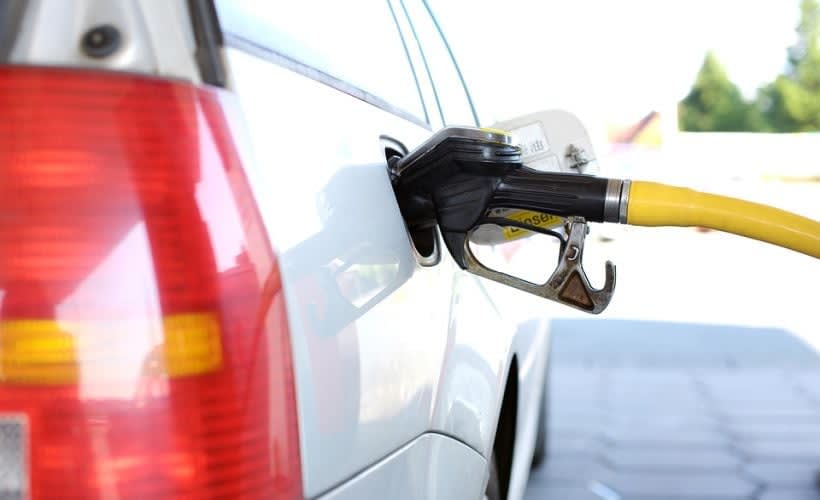
These 15 suggestions will help you save energy, conserve fuel use, and reduce operating costs.
Photo: Pixabay.
7 min to read
Editor's Note: Check out our updated article — check out 20 Ways to Conserve Fuel for the latest information!
Although fuel prices continue to hit record highs, you can take action to maximize fuel efficiency, save energy, and take steps to conserve gas in commercial fleet vehicles.
Top 15 Fuel-Saving Tips
We spoke to fleet operators and gathered 15 suggestions for ways to save fuel costs, gain better fuel economy, and share best practices that you can implement in your fleet right away.
1. Avoid Long Idling
The worst mileage a vehicle can get is 0 mpg, which occurs when it idles. Idling for long periods of time, whether at a railroad crossing or pulling off the road to make a cell phone call, consumes gas that could be saved by simply shutting off the engine. Restarting an engine uses about the same amount of gas as idling for 30 seconds. When idling for longer periods of time, turn off the engine to save on gas.
However, turning off the engine may disable vehicle functions, including safety features like airbags. Drivers should be certain to only utilize this strategy in situations where there is no possibility of collision.
2. Clean Out the Trunk and Eliminate Unnecessary Weight
Vehicles get much better gas mileage when they’re not loaded with unnecessary weight. Every 200 pounds of additional weight trims 1 mile off fuel efficiency. Most drivers accumulate material in their vehicle trunks, some of it unnecessary. Instruct drivers to remove all non-required items from the vehicle, such as unneeded tools or materials.
3. Keep Tires Inflated to the Correct Pressure
Buy tire gauges for your drivers so they can ensure tires are inflated to the manufacturer’s recommended level. One underinflated tire can cut fuel economy by 2% per pound of pressure below the proper inflation level. On average, one out of four drivers use vehicles with one or more underinflated tires.
When a tire is underinflated by 4-5 psi below the manufacturer’s recommended tire pressure, for example, vehicle fuel consumption increases by 10% and, over the long haul, causes a 15% reduction in tire tread life. Check the vehicle’s doorpost sticker for minimum tire inflation pressure. Avoiding low tire pressure is a simple way to get a more fuel-efficient vehicle.
4. Don’t Buy Premium Fuel
Resist the urge to buy higher-octane gas for “premium” performance, unless the vehicle requires it. Octane has nothing to do with gasoline performance; it merely indicates the volatility factor in the combustion chamber. Unless your vehicle owner’s manual specifically requires it, don’t use premium fuel. You can reduce your fuel costs as much as 10 cents per gallon by using regular gasoline instead of premium.
5. Encourage Drivers to Observe Posted Speed Limits
This tip may save a life as well as fuel. The Environmental Protection Agency (EPA) estimates a 10% to 15% improvement in fuel economy by driving 55 mph instead of 65 mph. Whenever possible, drivers should travel with an even cruise speed and resist the temptation to punch the gas.
It’s not just safer — it helps with reducing fuel costs and avoiding expensive speeding tickets.
6. Shop Around for Best Fuel Prices
Check the Web for the best fuel deals. GasBuddy.com is a network of more than 179 city-specific websites with gas price information posted by users. Browse this site on a mobile device to find cheap gas on-the-go.
Use a wholesale club or grocery store. Does your company have a business membership to a warehouse chain such as Costco, Sam’s Club, or BJ’s Wholesale Club? These wholesale clubs typically offer some of the lowest gas prices in town.
The downsides are that you may find lines at the pumps and the cost of membership (typically $40 to $45) will offset some of your savings if all you do is buy gas. Yet, if you shop at one of these anyway, or you’re a heavy gas user, you may still find the savings on fuel worthwhile.
Discount retailers like Wal-Mart and Kmart, and grocery stores that have pumps, also often charge less than the competition to get people on their lots. In addition, there’s no membership fee required at the discount retailers. That can make it very cost-effective to fill up the fuel tank at these sites.
7. Make Drivers Energy-Conscious
Similar to turning off the lights in unoccupied rooms at home, drivers should practice energy conservation habits in their vehicles as well. For instance, commercial truck drivers who have access to a trip computer should be encouraged to use the “instant fuel economy” display to refine their driving habits and help relieve the burden of high diesel prices.
8. Use Air Conditioning Sparingly
Use the air conditioner only when needed. The air conditioner puts extra load on the engine, causing increased fuel consumption. An air conditioner is one of the biggest drains on engine power and fuel economy. It can reduce gas consumption 5% to 20%, depending on the type of vehicle and the way it is driven. Don’t use it as a fan to simply circulate air. If it’s just too hot to bear without A/C, keep it set around 72 degrees. Use the vent setting as much as possible for climate control.
In addition, parking in the shade increases fuel efficiency since not as much gas will evaporate when the car is out of the sun. Air conditioning won’t need to work as hard to cool down the interior.
9. Make Your Vehicle More Aerodynamic
Wind drag is a key source of reduced fuel mileage, causing an engine to work harder, thereby reducing fuel economy.
Minimize wind drag by keeping the windows rolled up. This allows air to flow over the body, rather than drawing it inside the cabin and slowing down the vehicle. A wide-open window, especially at highway speeds, increases aerodynamic drag, which could result in a 10% decrease in fuel economy. If you want fresh air, run the climate system on “outside air” and “vent,” and crack the window for additional ventilation.
Watch out for tailgates. Lowering the tailgate of a pickup creates turbulence, causing wind drag and a less fuel-efficient truck at highway speeds. But when pickup truck drivers leave the tailgate up, a smooth bubble of air is created in the bed.
10. Encourage Carpooling
Another way to mitigate fuel costs is to use fewer vehicles whenever practical. Encourage carpooling through incentive programs. Possible incentives include reduced-cost or free parking, preferred parking, or reward programs such as prize drawings.
Employers can help employees form carpools through rideshare organizations, which help potential carpoolers locate others nearby with similar schedules.
If you have several employees going to the same work location or job site, have them take one vehicle instead of driving separately.
11. Anticipate Traffic Flow
Anticipate traffic conditions and accelerate and decelerate smoothly — it’s safer, uses less gas, and reduces brake wear.
In stop-and-go commuter traffic, look two or more vehicles ahead as you keep an eye on the driver in front of you. This enables you to accelerate and decelerate more gradually.
By anticipating a traffic light change, an upcoming stop sign, or the need to slow down for a curve, you can avoid or reduce brake use and save gasoline in the process. Like the “jackrabbit start,” the “jackrabbit stop” is also a major contributor to inefficient driving.
12. Avoid Uphill Speed Increases
When climbing a hill, the engine is already working hard to overcome gravity. Pushing it harder by stepping on the gas is simply a waste of fuel. To minimize fuel consumption, carefully regulate speeds while driving uphill.
13. Use Cruise Control During Highway Driving
Unnecessary changes in speed are wasteful. The use of cruise control helps improve fuel efficiency.
14. Avoid Aggressive Driving
Time studies show that fast starts, weaving in and out of traffic, and accelerating to and from a stop light don’t save much time and wear out components such as brakes and tires faster.
Simply limiting quick acceleration and fast braking can improve fuel efficiency. When accelerating, pretend you have a fresh egg underneath your right foot. A light, steady pressure helps to burn less fuel and maintain a more moderate and steady vehicle speed.
By not driving aggressively, drivers can save up to 20% in fuel economy, advises the EPA.
15. Monitor Preventive Maintenance Schedules
Proper maintenance increases a vehicle’s fuel performance — this holds true for everyone from professional semi-truck drivers to nine-to-five commuters. For example, unaligned wheels that fight each other cause the engine to burn more fuel, so watch the axle alignment.
Keep the air filter clean. A dirty filter clogs an engine’s air supply, causing a higher fuel-to-air ratio and thereby increasing gasoline consumption.
For oil changes, use good quality, energy-conserving (EC) oils with a viscosity grade consistent with the manual. Look for bottles marked with the symbol ECII, which is the American Society of Testing Materials (ASTM) logo for fuel-efficient oils.
Enjoy this article or want to talk about more ways to save fuel? Feel free to leave a comment or subscribe to our newsletter for up-to-date automotive news.
Subscribe to Our Newsletter
More Fuel
Fuel Prices Surge in September | September Fuel Update
September brought major fuel price swings, including diesel crossing $6 a gallon. Here’s how gas and diesel prices changed throughout the month, and where they stood heading into October.
Read More →
Turning Fleet Payment Data into Executive Insights
Ramel Lindsay of U.S. Bank Voyager discusses how fleets can transform payment and transaction data into actionable intelligence to reduce costs, improve oversight, and support executive decision-making.
Read More →
Why the IRS Raised Its Mileage Rate in the Middle of 2026
Fuel-price volatility drove the rare increase to 76 cents per mile, the fifth midyear adjustment since 2000.
Read More →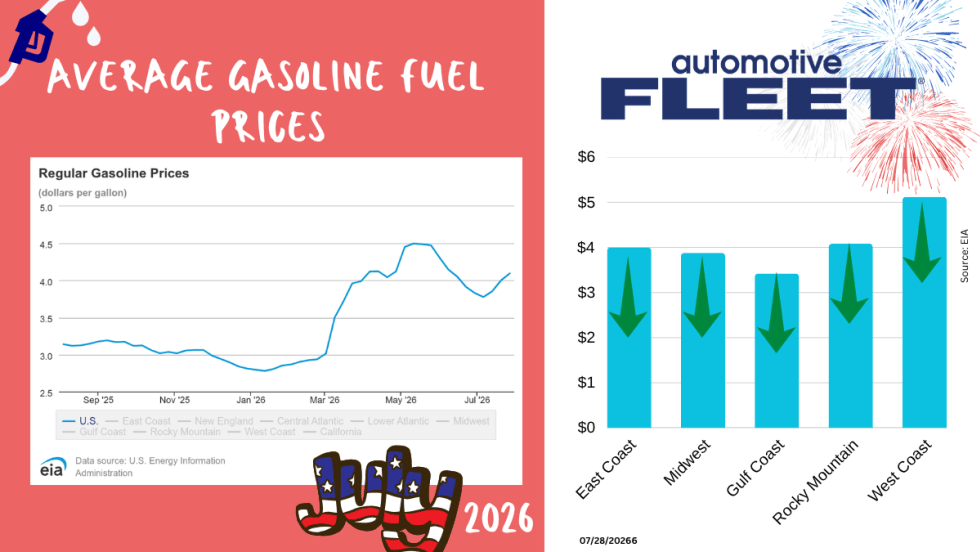
July Fuel Update: Prices Keep Rising in Light of More Conflict
Gas prices continue to rise as more and more conflicts do, too.
Read More →
Bob Adamsky on Fuel Volatility: "Don't Panic, Have a Plan."
When it comes to up and down fuel prices, Adamsky has a message for fleets: “Don’t panic.”
Read More →
How Fleets Can Gain Control of Non-Fuel Spend
Fuel often gets the spotlight, but non-fuel expenses can have a major impact on fleet costs. Ramel Lindsay of U.S. Bank Voyager discusses how fleets can gain better visibility and control over these often-overlooked expenditures.
Read More →
Fuel is Just the Start: How Middle East Tensions are Driving Up Fleet Maintenance Costs
The Middle East conflict is doing more than pushing up fuel prices. It’s also raising the cost of key maintenance products your fleet depends on, from motor oil to tires to windshield wipers. Here’s what you need to know about this budget-busting situation.
Read More →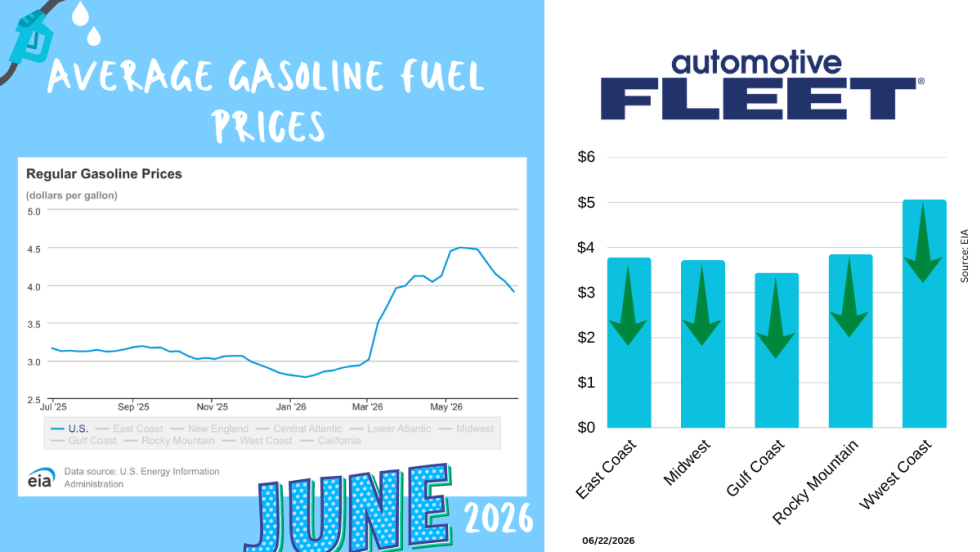
June Fuel Update: Prices Fall Below $4
Drivers are finally getting some relief at the pump. The national average gas price has dropped below $4 a gallon for the first time in months, with prices falling in 47 states as oil markets react to developments in U.S.-Iran negotiations.
Read More →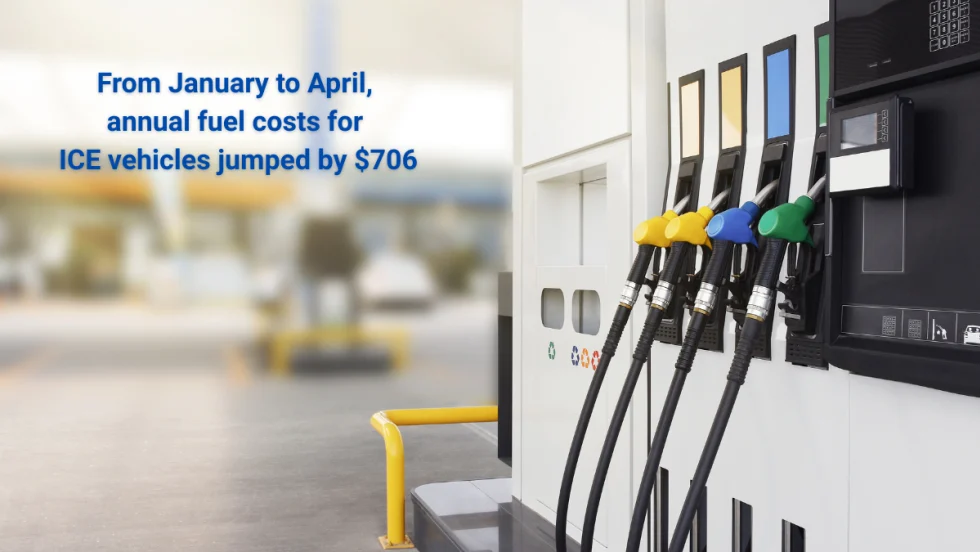
Study: How 2026's Gas Price Hikes Affect Different Vehicle Types
New data from iSeeCars reveals how rising fuel costs have affected different vehicle segments as gasoline prices climbed nearly 46% over the past four months.
Read More →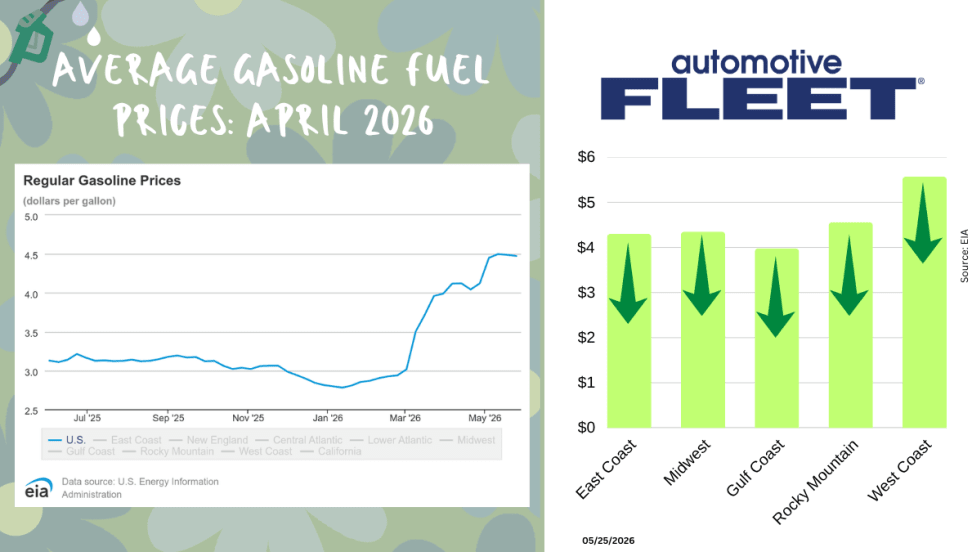
May Fuel Update: All Regions Experience Declines
Gas prices are finally easing in much of the country, but experts warn global tensions could quickly reverse the trend as the national average remains well above last month’s levels.
Read More →