




Related: Fleet Reduces Preventable Accidents Using Video Technology
How Video and AI are Improving Fleet Safety
Safety is a top area of concern for fleets where technology continues to play a large role in improving the well-being of drivers and making safety risks easier to control.

Andy Lundin・Former Senior Editor

In 2020, fleet safety will remain top of mind for every transportation company.
Photo courtesy of SplitShire via Pixabay.
3 min to read
Safety is a top area of concern for fleets where technology continues to play a large role in improving the well-being of drivers and making safety risks easier to control.
“Despite a recent decline in U.S. auto accident-related deaths, over 36,000 people still die on American roads every year. In 2020 and beyond, we anticipate fleet safety will remain top of mind for every transportation company and in turn, technology innovation to support these safety initiatives will be more important than ever,” said Eleanor Horowitz, safety product marketing manager of Samsara.

Eleanor Horowitz, Samsara
Telematics technology has played a major part in contributing to driver safety, with capabilities that allow managers to monitor driver behavior and observe overall road safety.
Video/dash camera technology was mentioned by several companies as a state-of-the-art technology that will greatly influence improved safety for fleet managers in the future.
“Smart video makes safety programs easier to manage and more effective than they could be with traditional telematics only,” said Ryan Driscoll, VP marketing, of GPS Insight. “Video takes telematics to another level by being able to give context and identify positive driver behaviors that telematics cannot detect.”
Some actionable information fleets can assess with this technology include alerts and playback on accidents, hard braking, rapid acceleration, distracted driving, traffic signal violations, stop sign violations, tailgating, seatbelt compliance, U-turn violations, etc.
“But the real game changer will lie within technology that enables managers to be proactive about these incidents,” said Horowitz of Samsara. “For example, leveraging sensors that can warn about safety-related events before they happen. Or in-cab alerts that engage a driver if they’re displaying distracted behavior.”
Driscoll added thoughts on regarding the benefit of AI with the video technology.
“For example, if a driver slams the brakes to avoid hitting a child that ran into the street to chase his ball, with regular telematics data, the driver would be dinged for hard braking and it would negatively affect his score,” said Driscoll. “With video, the AI on the camera would see that the hard braking was to avoid hitting someone, so it would give them a positive score.”

Ryan Driscoll, GPS Insight
Mathew Long, product success, Verizon Connect, echoed sentiments emphasizing the capabilities of this technology, particularly in how it can communicate event significance to managers using AI.
“When powered by AI, smart video solutions can automatically classify events by severity and minimize the burden of even more data on fleet owners and managers of situations by only alerting them to events that require immediate attention,” said Long of Verizon Connect.
These safety benefits ultimately service the corporations that the fleets are operating for and may provide a deeper ROI than expected.
“The main feedback we get from customers is that dash cams have made a marked improvement across multiple areas of their fleet: reduction in insurance costs and litigation fees, increase in driver retention rates, and improvement in driver safety scores measured by accidents and harsh events,” said Horowitz of Samsara.
Like the advent and further development of telematics, further additions to the technology such as these, are becoming more ubiquitous aspects to fleet technology.
“Companies that are keeping pace with technological advancements here will start to gain a lead on their industry competitors and ultimately spur more widespread adoption,” said Long.
Another great example of contemporary technology that is continuing to impact not only fleet but every industry around the world is the ubiquitous smartphone.Smartphone apps have changed the way people go about their lives significantly in the last decade, and the same can also be said about fleet management. But it’s also brought about new levels of demand.

Howie Spangler, ARI.
[EMPTY CREDIT]
“Today, fleet stakeholders expect fast, easy-to-use, and context-driven experiences; and rightfully so,” said Spangler ARI.
Another company that is similarly taking advantage of this technology is eDriving. Ecolab, a global provider of water, hygiene and energy technologies, is utilizing eDriving’s Mentor app to track driver behavior, and monitor vehicle accidents and risky driving.
More Safety

Sponsored•October 1, 2026
Fleet Manager’s Ultimate Playbook: Navigating the New Standard in OEM Connectivity
Rising operating costs, driver safety concerns, and unplanned downtime are putting unprecedented pressure on modern fleets. Discover how fleet managers use embedded OEM connectivity and real-time vehicle data to cut TCO, prevent downtime, and protect drivers without aftermarket telematics hardware.
Read More →
From Driver Well-Being to EV Charging | AF News Recap
Mental health belongs in the fleet safety conversation. This week, we’re looking at five ways fleets can support employee well-being before a crisis, plus Holman’s expansion in Mexico, new one-day Fleet Forward passes, and why EV charging demand is outpacing infrastructure growth.
Read More →
Nexar-Nauto Merger Aims to Give Fleets Better Safety Intelligence Through Larger Driving Dataset
Stefan Heck tells Automotive Fleet that combining more than 10 billion miles of driving history with Nexar's AI models will give fleets deeper insights into driver risk and roadway conditions than either company could provide independently.
Read More →
Don't Wait for a Crisis: 5 Ways to Build Mental Health Into Your Fleet Safety Program
For Suicide Prevention Month, fleet and safety leaders have an opportunity to put mental health where it belongs: at the center of workplace safety.
Read More →
How Camera Data Can Strengthen a Fleet’s Insurance Renewal
Insights from a commercial insurance carrier and a broker show how fleets can turn video telematic data, driver coaching, and improved claims results into a stronger case at insurance renewal.
Read More →
The Safest Fleets Aren’t the Ones with the Most Technology
You’ve made the telematics investment. Here’s how to capture the other half of its value and build the safest fleet on the road.
Read More →
Sponsored•August 7, 2026
Hidden in Plain Sight: Fleet Compliance Risks
Fleet compliance isn't just about having policies — it's about consistently enforcing them. This practical guide reveals six hidden compliance risks common in public sector and shared fleet operations and outlines proven strategies to improve visibility, accountability, and audit readiness
Read More →
NETS Sets 2026 Fleet Safety Benchmark Conference for Indianapolis
The Sept. 15–17 program will feature fleet benchmarking data, case studies, emerging technologies, and implementation strategies while running alongside the NSC Safety Congress & Expo.
Read More →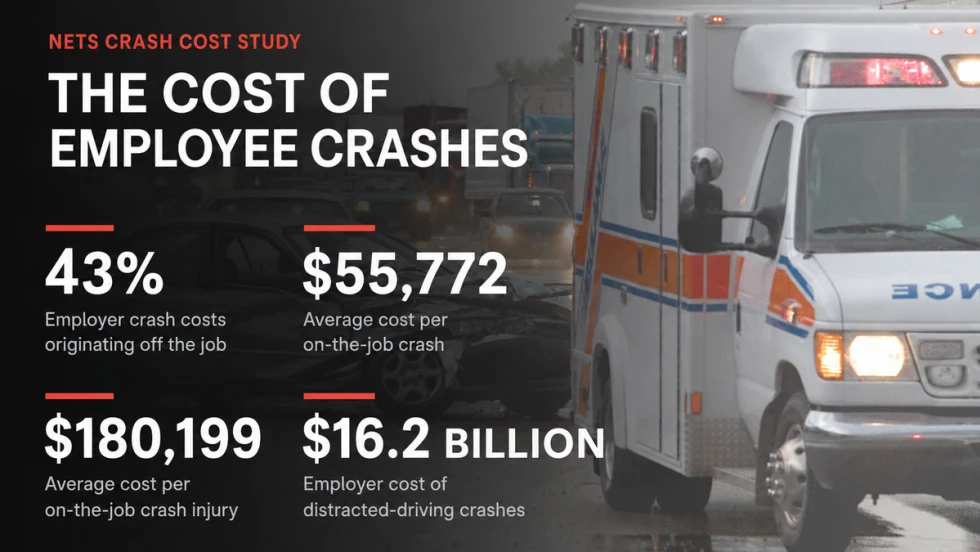
Off-the-Job Crashes Account for 43% of Employers’ $61.7 Billion Crash Burden
NETS quantifies costs dispersed across fleet, risk, HR, and other departments while providing new per-crash benchmarks for employers.
Read More →
Ram Recalls More Than 1.27 Million 1500 Pickups for Seat Belt Anchor Issue
The recall affects certain 2019-2026 Ram 1500 pickups that may have improperly attached second-row seat belt buckle anchors.
Read More →