How Mobility as a Service Will Change Fleet Management
A transportation revolution occurring with car-sharing and ride-sharing, generically
grouped under the category of Mobility as a Service (MaaS), has the potential to
fundamentally change fleet management as we know it.
by John F. Possumato
August 29, 2017
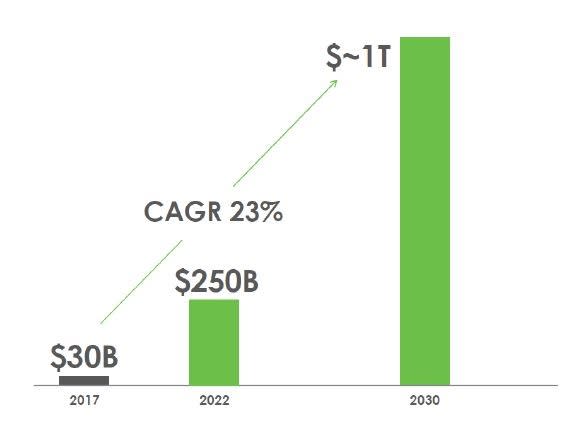
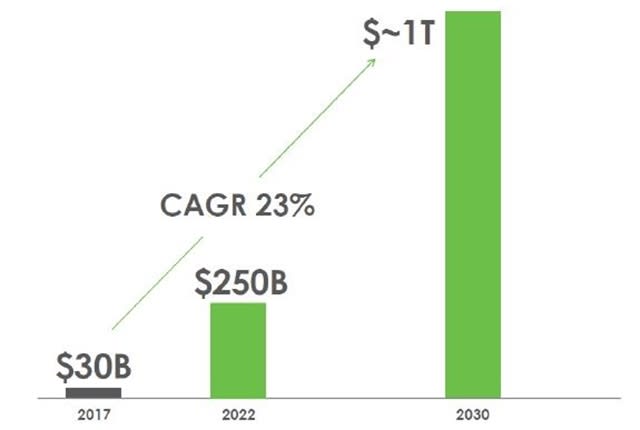
The revenue growth for Mobility as a Service (MaaS) providers is expected to grow exponentially in the coming years. This year, revenue growth from MaaS companies (Uber, Lyft, Gett) is expected to reach $30 billion. By 2022, that number is expected to reach $250 billion, and by 2030, revenue growth is projected to reach approximately $1 trillion. Data courtesy of ABI research report, Nov. 2016, Mobility as a Service.
5 min to read
The revenue growth for Mobility as a Service (MaaS) providers is expected to grow exponentially in the coming years. This year, revenue growth from MaaS companies (Uber, Lyft, Gett) is expected to reach $30 billion. By 2022, that number is expected to reach $250 billion, and by 2030, revenue growth is projected to reach approximately $1 trillion. Data courtesy of ABI research report, Nov. 2016, Mobility as a Service.
After an introduction to the industry as a fleet-minded car dealer, I have spent the last few decades sort of straddling between the automotive fleet, retail industry, and the technology sector, focusing on where those worlds intersect with new innovations and procedures.
Ad Loading...
I can honestly say that there has never been a time with more potential for deep structural changes in the way vehicles are procured and used, than now.
Ad Loading...
Mobility as a Service (MaaS), as moved forward by car-sharing companies, such as ZipCar and DriveNow and ride-sharing companies such as Uber, Lyft, and Gett, will dramatically affect how vehicles are sold and used in the United States in the not too distant future if any of the research out there is even close to being on target.
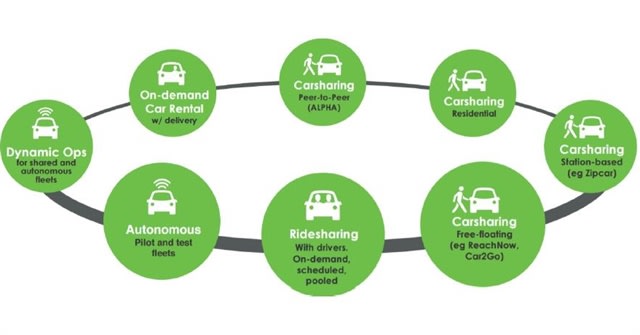
As a brief overview, car-sharing companies are those that operate a service that can provide vehicles at any time of the day without any human friction. Ride-sharing companies provide services where a driver and a vehicle subcontract themselves out for transportation use.
Graphic courtesy of John F. Possumato.
Let’s conisder a few researchers’ charts I picked up at the TU-Automotive Conference held in Detroit at the beginning of June. One chart (below) shows the dramatic increase in new vehicles sold to mobility fleets (the majority outside of 15 years), another (page 26) shows the projected exponential revenue growth of MaaS companies from $30 billion this year, to $250 billion by 2022 and $1 trillion by 2030.
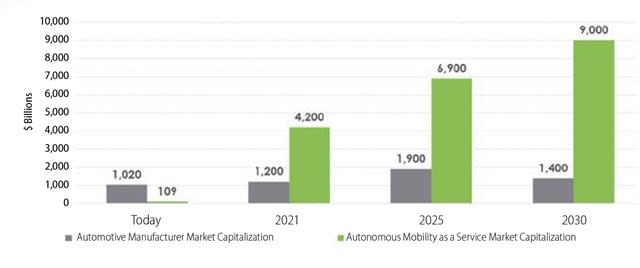
By 2021, MaaS companies are projected to be valued at almost four times the amount of all vehicle manufacturers combined.
This is not too hard to believe, when you consider that today, even with all of its management troubles, Uber is still the highest-valued startup in history, with a value around $70 billion. This is at a time when Ford and GM are around a $45 billion and $52 billion market cap, respectively. This is also at a time when the price of a taxi medallion in NYC is down by more than half in the last few years.
Ad Loading...
Whether the valuations for these early market leaders are too inflated, really is not the issue, there is no debate that MaaS has and will change every aspect of transportation in this country over the long haul.
There is no debate that Mobility as a Service (Maas) has, and will change, every aspect of transportation in this country over the long haul. Specifically, these services have the potential to enhance fleet management capabilities. Data courtesy of ARK Investment Management LLC.
Automotive Fleet Editor Mike Antich’s insightful editorial published online in March, “Mobility Management As a Change Agent Will Transform Fleet,” touched on one aspect of potential change, based on Europe, where they seem to be way ahead of the U.S. in “smart cities” and car sharing in general.
Another area of potential change would be if dealers ever entered the MaaS business, under a uniform brand. If they did this, they could leap frog the initial entrants, as, I think, only dealers have a structural cost competitive advantage in vehicle acquisition, service, maintenance etc., but that is another topic.
Perhaps, counterintuitively, I actually think integrating MaaS, car sharing and ride sharing services, when appropriate in fleet management, actually enhances the skill and management capabilities of the conventional fleet role, while reducing some of the “grunt work” touch points.
A car-sharing fleet can be totally automated. The scheduling, pick and drop off, accounting, etc., can all done by a mobile software platform and an algorithm. On the other hand, managing the introduction and utilization of a car sharing fleet requires higher management capabilities. It could even be a revenue source, if the company presents the vehicles for non-company drivers.
Ad Loading...
When and how to use car-sharing and ride-sharing for maximum efficiency, based on specific corporate transportation needs, requires a big picture analysis, and is something only an astute fleet manager can do.
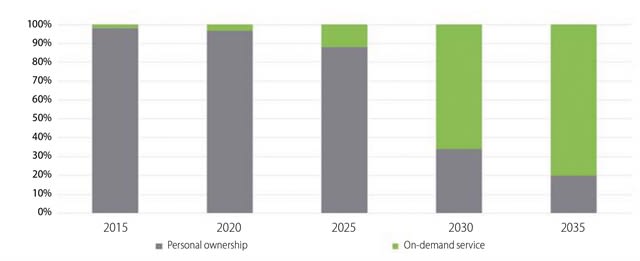
A forecast of new-vehicle sales distribution in urban areas within the U.S. predicts a dramatic shift away from personal ownership, toward on-demand service. By 2030, the amount of people using on-demand services is expected to overtake personal ownership. Data courtesy of Deloitte University Press, 2017 Issue 20.
In parallel, in this new world of MaaS, I see the value of fleet management companies growing, as there will be services that only they will be able to provide. For instance, with a car sharing model, vehicles could not only be “shared” within the same company, they could also potentially promote greater efficiencies within a network of companies in the same geographic locations, coordinated by their fleet management provider.
Remember, pick-up, dispatch, driver identification, even proper billing is all automated through the mobile software platform and algorithm (note: this is available now by third party providers). What is really needed, once again, is the higher level “brain work” to figure out how and where to coordinate this multiple company fleet usage in various markets.
These ideas are just the tip of the iceberg really. When one sees the fleet business from a broader perspective, not just acquiring and running a fleet a vehicles, but as an advanced exercise of getting folks from “point a” to “point b” in the most efficient, cost effective, environmentally sustainable and image conscious way possible, MaaS innovation could have tremendous long-term implications.
Fleet Forward Conference
Bobit Business Media will launch a new event dedicated to providing fleets with smart mobility solutions through curated networking and high-level education.
The event will take place Nov. 7-8 and will be co-located with Auto Rental Summit at the Miami Hilton Downtown.
The Fleet Forward Conference is designed to bring fleets of all types together with traditional fleet suppliers and new technology providers. Registration is open and Auto Rental Summit registrants can attend the event for free.
So what’s the next step in an effort to have a hand in developing this new future, instead of one day getting blindsided by change? If there is interest, perhaps there can be a gathering of a group of fleet industry folks, including corporate fleet managers, fleet management company representatives, OEMs and some MaaS tech experts to investigate how MaaS might satisfy some current and future fleet needs.
Ad Loading...
Maybe generate a proper needs analysis through a round table or two, and then develop a series of possible solutions MaaS implementation might offer. To paraphrase a quote attributed to Darwin, “It is not the strongest of the species that survives, nor the most intelligent that survives. It is the one that is most adaptable to change.”
Buying fleet management software in 2027 means looking beyond features and price. As fleet operations, technology and expectations evolve, this guide explores what today’s fleet professionals should consider when choosing a system that can deliver value now and adapt to what comes next.
Neology’s neoFleet platform will manage toll transactions and toll-authority operations for vehicles across Avis, Budget, Payless, Budget Truck and Zipcar.
Nearly eight in 10 surveyed fleets allow personal use of company vehicles, while just over half of respondents report charging employees for the privilege.
Could developments overseas offer a preview of what’s coming for U.S. fleets? This week, we’re looking at the future of AI, autonomy, and electrification, plus Ford Pro’s new certified pre-owned program, smarter vehicle offboarding, and a new way for fleets to manage toll expenses.
Rising operating costs, driver safety concerns, and unplanned downtime are putting unprecedented pressure on modern fleets. Discover how fleet managers use embedded OEM connectivity and real-time vehicle data to cut TCO, prevent downtime, and protect drivers without aftermarket telematics hardware.
ADAS-equipped vehicles may crash less often, but they can cost more when they do. This week, we’re breaking down what that tradeoff means for fleets, plus Subaru’s first Forester Wilderness Hybrid, Nissan’s new e-POWER Rogue, and why Calstart has become Catalyst Mobility.