Meet the 2015 Professional Fleet Manager of the Year
Brenda Davis, fleet commodity manager for Baker Hughes, was honored as the Professional Fleet Manager of the Year for her career accomplishments at the Automotive Fleet & Leasing Association (AFLA)’s annual conference.
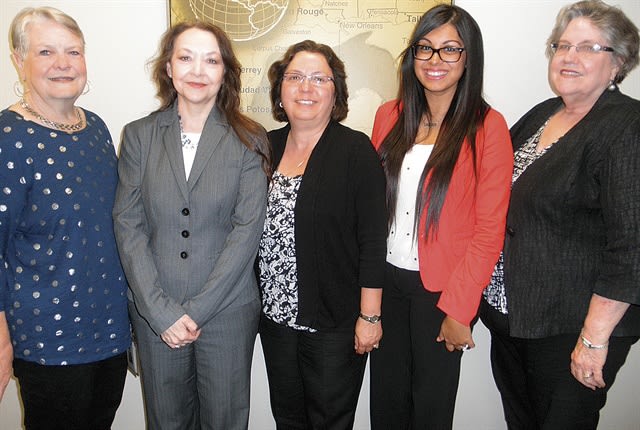
Working to keep the Baker Hughes fleet running smoothly are (L-R) Helen Ryza, fleet coordinator (retired May 2015); Brenda Davis, fleet commodity manager; Carmela Giovinco, Donlen account manager; Amanda Guerra, junior fleet administrator; and Pam Pollack, senior fleet coordinator.
6 min to read
Working to keep the Baker Hughes fleet running smoothly are (L-R) Helen Ryza, fleet coordinator (retired May 2015); Brenda Davis, fleet commodity manager; Carmela Giovinco, Donlen account manager; Amanda Guerra, junior fleet administrator; and Pam Pollack, senior fleet coordinator.
When accepting this year’s Automotive Fleet Professional Fleet Manager of the Year award, Brenda Davis, fleet commodity manager for Baker Hughes, said “I am humbled by the recognition of this award and especially for doing something that I love, to God be the glory!”
Ad Loading...
Davis, a 26-year fleet veteran, was honored during the Automotive Fleet & Leasing Association (AFLA)’s annual conference in Nashville, Tenn., Sept. 14-16, 2015.
Ad Loading...
The AF Professional Fleet Manager of the Year Award was created by Automotive Fleet to recognize an experienced and proficient fleet manager who has demonstrated special business acumen in developing and executing key management policies in all areas. Qualified nominees are eligible are full-time commercial fleet managers, control a company-owned or leased fleet in excess of 100 cars and light trucks combined, and are recognized nationally among their peers for their unique abilities and accomplishments. The award is presented by Automotive Fleet annually, and is sponsored by Wheels Inc. and AFLA.
At A Glance
Brenda Davis, fleet commodity manager for Baker Hughes, was named the 2015 AF Professional Fleet Manager of the Year. Among her achievements:
Leading the integration of Baker Hughes' 11 divisional fleets into a single entity.
Saving more than $5 million in fleet costs in the first quarter of 2015.
Building collaboration between departments to increase fleet and company efficiency.
Pursuing a Fleet Education
Unlike many fleet managers, Davis actively pursued a career in fleet. At the beginning of her career, she worked for a few years first as an office manager and then as a buyer expeditor, but was intrigued by the idea of getting into fleet. Though, it probably was an inevitability considering that fleet and the automotive industry were already an influence.
“My sister Sandra was in fleet with a small leasing company out of Houston, and is currently working in the fleet industry, and my brother-in-law Jim worked at an auto dealer as a finance manager. My husband was always wrenching on cars; he could build one from the ground up, and he enjoyed racing,” she explained. “So, I was always amidst fleet and it always intrigued me.”
It didn’t hurt, too, that at the company where she got her her start, Davis was following in the footsteps of future AF Professional Fleet Manager of the Year and AF Fleet Hall of Fame honoree Patsy Brownson, and future Marathon Oil fleet manager, Cay Pavlik (Holtman). Davis still counts them both as friends and mentors.
Ad Loading...
After Pavlik transitioned to Marathon Oil, Davis saw her chance, to move up in the company.
“I thought, ‘I’m just going to apply for the job, and see if they will take a chance on me to make a difference’ ” Davis said.
This was when Davis’ fleet education began in earnest.
“I had very little training, so I just called all of the current suppliers and started making appointments with them. I told them, ‘I don’t know anything about fleet, but tell me everything you know,’ and I just started educating myself, and basically trained myself, sometimes through trial and error,” she said.
Building Collaboration
Ad Loading...
If there is a theme that runs through Davis’ 26-year fleet career, it is that she has an ongoing quest for self-improvement and building avenues of collaboration. This is particularly illustrated by one of the most daunting and rewarding events in her career — leading the integration of Baker Hughes’ 11 divisions’ fleets into the single organization it is today.
Davis joined Baker Hughes — then Baker Oil Tools — in 1997 to manage the division’s fleet.
Soon after, Baker Hughes reorganized its divisions. “Prior to this, every division had its own infrastructure, such as separate financial services and HR systems; and we were going through this effort to combine the services into a shared-services organization. I guess you could say that one of my biggest challenges was moving from a single division into the shared services organization,” she said.
This led not only to a change for the fleet overnight, creating a much larger scope of responsibility, but also a change for Davis’ career.
“When the fleet position was created under strategic sourcing, I applied for that position. Again, I didn’t have the experience on the sourcing side, but, with the support of the organization at the time, I took on the role of strategic sourcing for fleet,” Davis said. “The great thing about Baker Hughes is that they’re committed to personal growth and training. To have those opportunities was one of the keys to my success.”
Ad Loading...
In 2010-2011, Davis integrated a fleet through an acquisition of approximately 8,000 vehicles and equipment and without adding headcount.
“This was mainly due to technology enhancements and great supplier partners,” Davis said.
Today, the combined Baker Hughes fleet consists of approximately 16,500 vehicles and pieces of motorized equipment.
“We have everything from passenger cars to a Class 8 tractor,” Davis explained. “We also have trailers — these aren’t small trailers, they range from fracking equipment that’s installed on trailers that’s used in our pressure pumping group for natural gas, to trailers that might carry drilling fluid, or a medium-duty truck that carries chemicals for well treatment.”
Davis credits much of her success to her team.
Ad Loading...
“They’re so committed to excellence, that’s one of the reasons I’m successful,” she said. “This award is also about all of the people who supported the day-to-day operations, so I could think strategically.”
In addition to her staff of two, Davis relies on her fleet management company, Donlen, to help her to do “more with less,” including the implementation of a customized ordering tool, automated reporting, and a best in class technology tool that supports our business requirements.
It’s not just partnering with an FMC that has been a key to the fleet’s ongoing efficiency, but collaborating internally with other functional groups has been crucial as well.
“From an organizational perspective, collaboration is extremely important because of the diversity of our fleet. We have to make sure that our communication is back and forth,” Davis said.
For instance, the company’s safety group works closely with Davis and her team.
Ad Loading...
“Baker Hughes sets a metric for reducing accidents, and in order to assist the organization with reaching these goals, it is essential that safety and fleet have a collaborative relationship,” Davis said. “So, participating on the manufacturers’ advisory boards is crucial, so that they understand how important it is to have safety devices on our vehicles.
The same is true with Human Resources, which works with Baker Hughes’ operational leadership to determine policy.
“HR works with operations and fleet in regard to vehicle usage — who’s eligible to drive, what is the acceptable mileage, all of the myriad policies and guidelines that need to be followed,” Davis said. “Fleet has input into all of those policies, so we can give HR more information, which can impact the policy.”
This interplay of collaboration has reaped bottom-line benefits for the fleet and Baker Hughes as a whole.
In 2015, in conjunction with operations, Davis helped manage the downturn in the oil industry and the utilization of vehicles. She worked to look “out-of-the-box” for solutions to optimize usage and lower operating costs, including reallocation and disposal. Along with other functional groups, such as HR and operations, business process norms and policies were reviewed. Together these efforts achieved an excess of $5 million in cost avoidance savings in the first quarter of 2015. Earlier, from 2013 to 2014, the company achieved reductions in excess of $12 million by the continual review of total cost of ownership (TCO) contracts, best practices, and program technology enhancements.
Ad Loading...
Davis is a member of AFLA, NAFA, the Ford Fleet Advisory Board, the Donlen Advisory Board, and is a past member of the Chrysler Fleet Advisory Board.
Buying fleet management software in 2027 means looking beyond features and price. As fleet operations, technology and expectations evolve, this guide explores what today’s fleet professionals should consider when choosing a system that can deliver value now and adapt to what comes next.
Neology’s neoFleet platform will manage toll transactions and toll-authority operations for vehicles across Avis, Budget, Payless, Budget Truck and Zipcar.
Nearly eight in 10 surveyed fleets allow personal use of company vehicles, while just over half of respondents report charging employees for the privilege.
Could developments overseas offer a preview of what’s coming for U.S. fleets? This week, we’re looking at the future of AI, autonomy, and electrification, plus Ford Pro’s new certified pre-owned program, smarter vehicle offboarding, and a new way for fleets to manage toll expenses.
Rising operating costs, driver safety concerns, and unplanned downtime are putting unprecedented pressure on modern fleets. Discover how fleet managers use embedded OEM connectivity and real-time vehicle data to cut TCO, prevent downtime, and protect drivers without aftermarket telematics hardware.
ADAS-equipped vehicles may crash less often, but they can cost more when they do. This week, we’re breaking down what that tradeoff means for fleets, plus Subaru’s first Forester Wilderness Hybrid, Nissan’s new e-POWER Rogue, and why Calstart has become Catalyst Mobility.