




The Do’s And Don’ts of Employee Sales
It is universally accepted that selling out-of-service vehicles to employees reduces cost and is a win-win program for all. However, too many companies remain passive in their process; here’s how to maximize the opportunity.
It is one of the mantras of fleet management: selling out-of-service vehicles to employees will lower depreciation costs, provide a benefit to the buyer, and ultimately make the fleet more cost efficient.
Often, though, once a method of pricing has been established, the employee sales process becomes an afterthought, and opportunities to actually market these vehicles are missed. There are some basic do’s and don’ts to effectively sell fleet vehicles to employees, and fleet managers who recognize them can reap the benefits.
Not Just Sales It’s been said that fleet management is essentially the creation of a product: a used vehicle. While this observation may be an over-simplification, there is at least some truth to it and, as with any product, used vehicles must be properly marketed to command the best price.
A number of the “do’s” of employee sales involve creating and marketing a top product: Used-vehicle values are based primarily upon age, mileage, equipment, and condition. Within the ability of a vehicle to perform the corporate mission, the replacement policy, specification, and proper maintenance should all be considered in creating corporate fleet policy.
Start before the vehicle is first put into service:
Manage the “production” process carefully:
A used vehicle is “produced” during its term in service. Mileage, age, and condition should be monitored regularly. Condition reports should be required at least quarterly, completed by the driver and approved by a supervisor. A process should be in place to address the damage and mechanical conditions shown on the reports.Replace vehicles on time:
Don’t let vehicles run beyond your replacement criteria.Be careful with reconditioning:
Unless you have a means to sell vehicles at full retail value, reconditioning beyond basic cleanup or normal physical wear and tear seldom, if ever, returns the full value of the money spent. If you’ve managed the vehicle properly during its service term, reconditioning will seldom be necessary.Market vehicles aggressively:
Make sure that the greatest number of people as possible in the company know that a vehicle is available and what the price is.Make buying simple and easy:
Have all your “ducks in a row” - paperwork, title, and vehicle maintenance and repair records should be available to interested buyers. Have ancillary programs available as well. Marketing used vehicles, rather than just selling them, will increase sales at higher prices and still provide a much-prized benefit to employees.
Some Marketing Tips
Assuming vehicles have been equipped properly, well maintained during service life, and replaced on schedule, you can aggressively market them to your employees (not just to drivers) in several ways.
Your drivers, of course, are the greatest potential market. Drivers know the vehicles, their condition, and maintenance histories. Most direct selling price inquiries will come from drivers. However, many fleets make the mistake of waiting until asked to provide pricing. For every vehicle coming out of service, fleet managers should provide a formal price quote to the driver, whether or not the driver requests one. Drivers who weren’t initially interested may be swayed upon seeing the price. The price quote should be non-negotiable and encourage the driver to notify other potential buyers that the vehicle is available. Drivers should have right of first refusal, followed by a first-come, first-served sales process. Use company Intranet sites to actively advertise available vehicles.
Two ancillary programs that help sell vehicles are financing and extended warranty. Used-vehicle financing can usually be offered through your lessor or the manufacturer, as well as through independent lenders and banks. Manufacturers also offer extended warranties.
Pricing is the most critical part of a strong employee sales program. Offer fleet vehicles at a price lower than employees can obtain themselves, but higher than offered at auction. Know and understand both markets: the amount you get from the wholesale market, as well as the price an identical or similar vehicle commands in the retail market.
If your company permits drivers to purchase upgraded equipment when the vehicle is ordered, a policy should be in place to address how equipment value is handled. If equipment enhances the vehicle’s value and the driver is interested, don’t add that value to the price. If another employee or third party is interested, that value should be factored into the price. The driver should have no financial interest in equipment purchased unless he or she buys the vehicle.
Work closely with your lessor, if your vehicles are leased. As the titled owners, lessor cooperation is needed in obtaining paperwork such as titles and bills of sale.
Keep close tabs on vehicle condition throughout service life and at turn-in. When vehicles are transferred from one driver to another, get a condition report from both, compare the reports, and investigate any discrepancies. Upon turn-in, get a final driver report as well.
Some Don’ts to Live By
There are clear “don’ts” to maximizing employee sales: allow your vehicles to miss scheduled maintenance. Remember, you are producing a used-vehicle product.Don’t
wait to be asked for a price quote. Preparing a formal quote is part of your proactive marketing program.
Don’t
Don’t fall behind in your knowledge of all resale markets, including retail and wholesale. Remember that all quotes given will be “shopped” against local markets.
Don’t limit used-vehicle sales efforts to your drivers. Advertise vehicles on company Web sites, and encourage drivers to make them available to family and friends.
It may seem that such a marketing program will command a great deal of work and attention in the midst of day-to-day fleet management activities. But fewer more fertile areas for savings are so readily available.
More Operations
How to Manage Conflict for Your Fleet Operations
Conflict management is becoming a core leadership skill. Here are five strategies fleet leaders should know.
Read More →
Turning Connected Vehicle Data Into Decisions That Matter
Fleet leaders have more data than ever, but turning that data into clear, actionable decisions remains a challenge. This white paper shows how leading organizations are using connected vehicle data to improve safety, reduce costs, and optimize fleet performance. Learn how to turn insight into action across your fleet.
Read More →
Cameras, Safety and Insurance: From Reactive Claims to Real-time Prevention
Commercial auto remains one of the most challenging and costly lines of coverage for fleet operators and insurers alike. Learn more about how to effectively address these issues from Onur Aksan, Enterprise Business Development Executive, Geotab.
Read More →

Are You Tracking Your Fleet's True Total Cost of Ownership?
Bobit Business Media surveyed 190 fleet professionals and found that while most fleets are tracking costs, fragmented systems and data gaps are keeping true TCO visibility out of reach. With rising pressure to control spend in an increasingly volatile environment, the gap between what fleets think they know and what the data actually shows is wider than you might expect. See how your peers are managing costs today and where the industry still has room to improve.
Read More →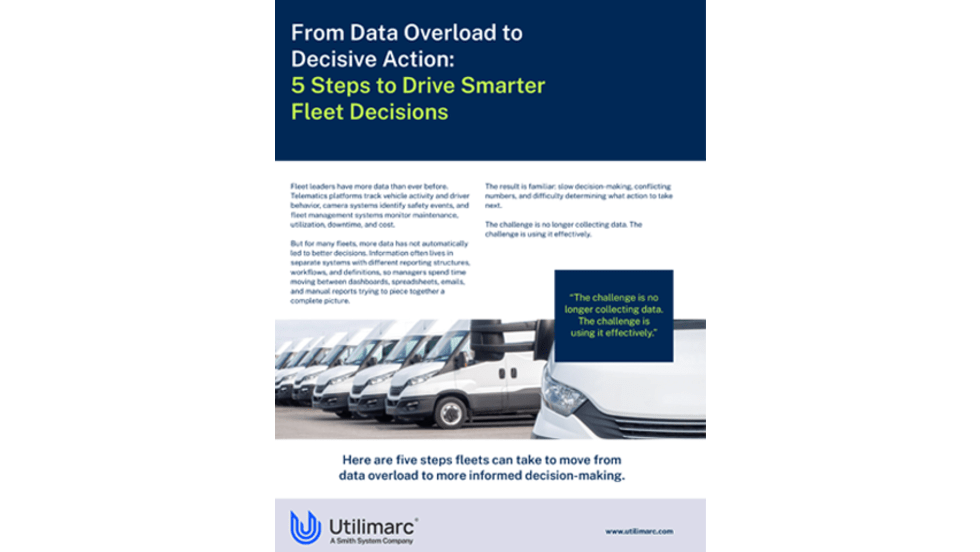
Turn Fleet Data Into Smarter Decisions
Fleet leaders have access to more operational data than ever, but disconnected systems and unclear metrics often slow decision-making instead of improving it. This article outlines five practical steps fleets can take to transform fragmented data into actionable insights that improve planning, safety, utilization, and long-term performance.
Read More →
Hybrids: Electrification Without the Challenges
For fleet managers, fuel is one of the biggest line items in the budget — and it's one hybrids can shrink without changing how your people work. Download the eBook to see the numbers, understand the technology, and get a step-by-step guide to making the switch.
Read More →
How NOV Uses Telematics to Improve Fleet Safety Across 160 Locations
James Victory of NOV discusses how the company manages fleet safety, maintenance, and telematics across more than 150 locations supporting oilfield operations throughout the U.S.
Read More →
Fleet Meets: Steven Santostasi
This edition of the Fleet Meets series features Steven Santostasi, the current TSP channel manager for Ford Pro.
Read More →
Why Fleet Managers Are Replacing Departmental Vehicles with Shared Motor Pools
Departmentally assigned vehicles often create hidden costs through underutilization, poor visibility, and increased administrative burden. This white paper explores how shared motor pool strategies help fleets reduce costs, improve accountability, and optimize vehicle utilization.
Read More →
Soap Box Derby Challenge: Assembling the Crew
Meet Gabriel, Matthew, and Angel — the team helping bring this soap box derby build to life.
Read More →