





In Other Safety News: The Car Seat and the Company Car: Why Your Fleet Needs A Child Safety Seat Policy
NHTSA Research Reveals Need for Female Crash Test Dummy
A recent NHTSA safety study revealed that women have a higher risk of injury during vehicle crashes.
January 28, 2026

The Trump Administration’s progress in launching the first-of-its-kind advanced female crash test dummy is reinforced by this recent NHTSA study.
Credit: Automotive Fleet
2 min to read
The National Highway Traffic Safety Administration (NHTSA) released new research proving that women are at higher risk of injury than men during vehicular crashes. This study underscores the importance of the Trump Administration’s progress in launching the first-of-its-kind advanced female crash test dummy.
According to the study, women have a statistically significantly higher risk of injury than men in 26% of the 150 crash injury models, and women have a higher risk more frequently for moderate injuries.
“Under President Trump and Secretary Duffy’s leadership, USDOT streamlined efforts to approve the first-of-its-kind female crash test dummy. The Administration did this because acknowledging the biological differences between men and women can save lives,” said NHTSA Administrator Jonathan Morrison. “This study reaffirms the importance of the THOR and will help the Department further build on the progress it's already made in lowering traffic fatalities.”
Six Types of Crashes
NHTSA studied six crash types for this report: frontal, near-side, far-side, and rear crashes; one combining all four, and one for rollover crashes. NHTSA’s study covered a broader range of crash types, occupant restraint conditions, and seating positions.
Findings related to moderate and higher injuries include:
46% higher injury risk in frontal crashes.
55% higher injury risk in rollover crashes.
62% higher risk for lower extremity injuries in frontal crashes (including knee, thigh, hip, leg, foot, and ankle).128% higher risk of injuries to the foot and ankle in frontal crashes.
This new injury report’s results suggest the following for both men and women:
Injury risk increases with a person’s age. Compared with the youngest age group (13 to 24-year-olds), each subsequent age group (25-34, 35-44, 45-54, 55-64, and 65 and up) had higher moderate-to-severe and fatal injury risk in all but rollover crashes.
Having a body mass index of 30 or higher was frequently associated with significantly higher injury risk, especially in frontal crashes.
Occupant height was not significantly associated with injury risk in 86% of injuries studied.
A previous NHTSA report assessed the difference in fatality risk between men and women, finding that this difference was reduced significantly in newer vehicles. The report found that the newer the vehicle, the smaller the disparity. The overall fatality gap between women and men drops from 18% to 6.3% for 2010-2020 vehicles and to 2.9% for 2015-20 vehicles.
The study used data from NHTSA’s National Automotive Sampling System, Crashworthiness Data System from 2000-2015, and the Crash Investigation Sampling System from 2017-2022. These systems are nationally representative surveys of police-reported passenger vehicle crashes.
More Safety

Does Your Fleet's Culture Encourage Distracted Driving?
What happens when the people responsible for enforcing safety rules are the ones setting the wrong example? The answer may reveal why some of the biggest risks to fleet drivers have little to do with what's written in the employee handbook.
Read More →
Sponsored•October 1, 2026
Fleet Manager’s Ultimate Playbook: Navigating the New Standard in OEM Connectivity
Rising operating costs, driver safety concerns, and unplanned downtime are putting unprecedented pressure on modern fleets. Discover how fleet managers use embedded OEM connectivity and real-time vehicle data to cut TCO, prevent downtime, and protect drivers without aftermarket telematics hardware.
Read More →
From Driver Well-Being to EV Charging | AF News Recap
Mental health belongs in the fleet safety conversation. This week, we’re looking at five ways fleets can support employee well-being before a crisis, plus Holman’s expansion in Mexico, new one-day Fleet Forward passes, and why EV charging demand is outpacing infrastructure growth.
Read More →
Nexar-Nauto Merger Aims to Give Fleets Better Safety Intelligence Through Larger Driving Dataset
Stefan Heck tells Automotive Fleet that combining more than 10 billion miles of driving history with Nexar's AI models will give fleets deeper insights into driver risk and roadway conditions than either company could provide independently.
Read More →
Don't Wait for a Crisis: 5 Ways to Build Mental Health Into Your Fleet Safety Program
For Suicide Prevention Month, fleet and safety leaders have an opportunity to put mental health where it belongs: at the center of workplace safety.
Read More →
How Camera Data Can Strengthen a Fleet’s Insurance Renewal
Insights from a commercial insurance carrier and a broker show how fleets can turn video telematic data, driver coaching, and improved claims results into a stronger case at insurance renewal.
Read More →
The Safest Fleets Aren’t the Ones with the Most Technology
You’ve made the telematics investment. Here’s how to capture the other half of its value and build the safest fleet on the road.
Read More →
Sponsored•August 7, 2026
Hidden in Plain Sight: Fleet Compliance Risks
Fleet compliance isn't just about having policies — it's about consistently enforcing them. This practical guide reveals six hidden compliance risks common in public sector and shared fleet operations and outlines proven strategies to improve visibility, accountability, and audit readiness
Read More →
NETS Sets 2026 Fleet Safety Benchmark Conference for Indianapolis
The Sept. 15–17 program will feature fleet benchmarking data, case studies, emerging technologies, and implementation strategies while running alongside the NSC Safety Congress & Expo.
Read More →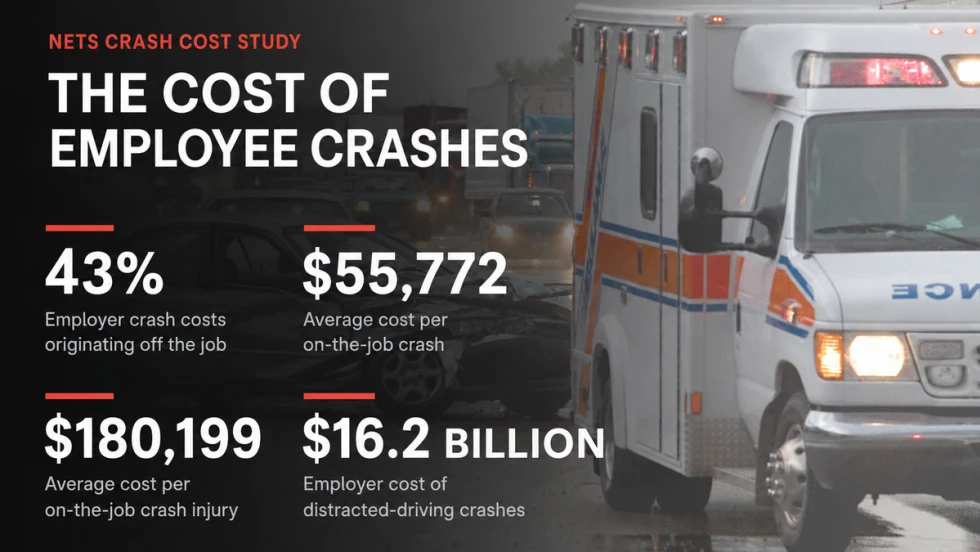
Off-the-Job Crashes Account for 43% of Employers’ $61.7 Billion Crash Burden
NETS quantifies costs dispersed across fleet, risk, HR, and other departments while providing new per-crash benchmarks for employers.
Read More →