




More Safety News: AAA Study Reveals Safety Concerns During Heavy Traffic
Staged Accidents and How to Spot Them
How fleets and drivers can stay ahead of this rising insurance fraud scheme.
by Brett Odom, Policy Vice President – Auto & Alternative Vehicles, NAMIC and Kyle McCollum Vice President - Strategy, Policy, and Government Affairs, NICB
September 30, 2025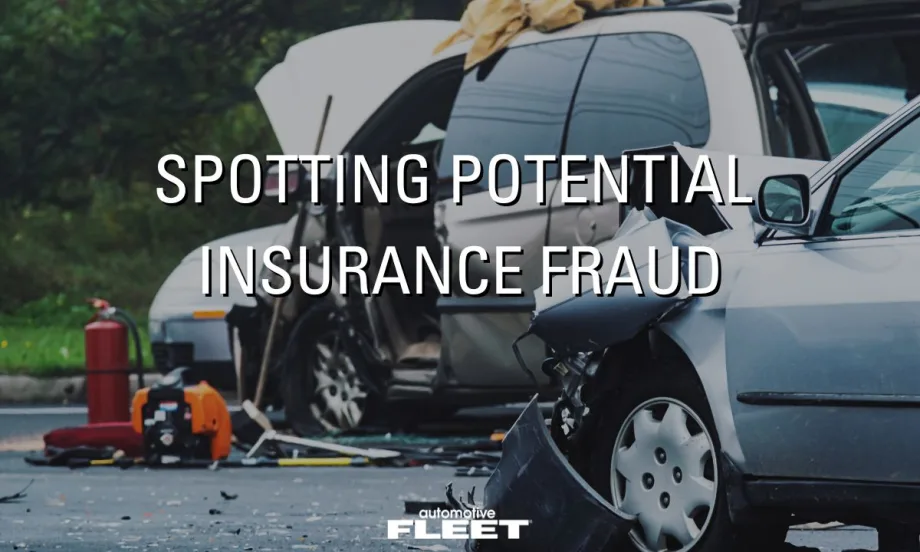
Scammers use several tactics to force a collision, leaving victims to pick up the tab.
Photo: Automotive Fleet
5 min to read
Insurance fraud raises costs for all. One especially dangerous and increasing form of fraud is staged vehicle accidents. To combat the rise of staged accidents, the National Association of Mutual Insurance Companies
(
NAMIC
)
is working closely with partner organizations and members of Congress to advance necessary reforms, including a call for the Department of Justice to establish a national committee solely focused on identifying insurance fraud.
In a recent letter to Attorney General Pam Bondi, NAMIC President and CEO Neil Alldredge stated, “Unfortunately, more and more frequently, these crashes are not mere accidents, but the result of intentional, strategic, and coordinated schemes designed to unjustly enrich fraudsters with ties to organized crime. Staged vehicle accidents are rising at an alarming rate, increasing risks and costs for all honest road users and our members who provide the financial security that helps rebuild lives and businesses in the wake of a crash.”
The Customer Pays The Price
According to the Coalition Against Insurance Fraud (CAIF), insurance fraud amounts to over $308 billion annually. Unfortunately, customers are the ones who pay for the losses that insurance companies incur due to these staged accidents.
NAMIC works closely with organizations such as the CAIF and the National Insurance Crime Bureau (NICB) to educate our members on the impact of insurance fraud and the steps that can be taken to identify and address fraud within their claim practices. To help combat staged auto accidents, it is essential for insurance professionals, fleet managers, and any innocent parties involved to be aware of specific patterns and tactics.
The NICB is the nation's premier not-for-profit organization dedicated exclusively to combating and preventing insurance crime and fraud through intelligence-driven operations. They work in close partnership with member insurers and law enforcement across the country in investigating and uncovering staged accident rings and have identified a significant increase in these tactics in recent years, especially with commercial vehicles.
In fact, the NICB recently provided operational support to the FBI in one of the largest staged accident rings uncovered to date.
In addition to advancing legislative reforms at the state level, NICB, alongside the CAIF and the International Association of Special Investigation Units, recently called on Congress to pass HR 2662, the Staged Accident Fraud Prevention Act of 2025. The bill would establish the staging of motor vehicle collisions with commercial motor vehicles as a federal crime and impose tougher penalties against those involved in these schemes.
Staying Alert
The NICB provides helpful information and guidance on the common staged accident schemes to be on the lookout for, which include:
Left Turn Drive Down - You are driving down a four-lane road, preparing to make a left turn. As you stop to make the turn, a driver heading the other way slows to a stop, waves to you to go ahead and turn. As you move ahead to complete the turn, the driver who waved you through suddenly moves forward, blocking your entrance to the parking lot. To avoid an accident, you stop. However, another car coming down the road slams into the side of your car. The car blocking the entrance leaves the scene, making it appear as though you are at fault for pulling into oncoming traffic. The driver and passengers of the car that crashed into you will all claim you “pulled” into traffic when it “wasn’t clear,” and claim injuries. As a result, a claim is filed against your insurance company to pay the criminals, and unless someone suspects fraud and investigates further, the criminals cash in.
Right Turn Drive Down - You pull up to an intersection, preparing to make a right turn. You start to make the turn when suddenly another vehicle runs into the back-left side of your car. The driver and passengers of the car that crashed into you will all state that you “pulled into traffic” when it wasn’t clear, and they will all claim injuries. Seemingly at fault, a claim is filed against your insurance company to pay the criminals, and unless someone suspects fraud and investigates further, the criminals cash in.
Curb Drive Down - You prepare to pull away from a curb and merge into traffic. It’s clear, so you drive ahead. Suddenly, a car crosses from the left lane and deliberately crashes into you. The driver and passengers of the car that crashed into you will all claim you “pulled into traffic” when it wasn’t clear, and they will all claim injuries. As a result, a claim is filed against your insurance company to pay the criminals, and unless someone suspects fraud and investigates further, the criminals cash in.
Swoop-and-Squats – On an ordinary city street, this typically involves three vehicles — two driven by criminals and the third by an innocent victim. The driver of the “squat” vehicle pulls in front of the victim’s car. The driver of the “swoop” vehicle pulls in front of the squat vehicle, causing the driver of the squat vehicle to hit his brakes. The victim cannot react in time and rear-ends the squat vehicle. The swoop vehicle races off and is not seen again. The victim is then responsible for any vehicle damage and personal injury to passengers in the squat vehicle. On a freeway or expressway, four vehicles are typically involved, with three of them belonging to the criminals. In this variation, the third criminal boxes in the victim so they cannot change lanes when the swoop vehicle cuts off the squat vehicle. Following the crash, the swoop and box-in cars speed off, again forcing the victim’s insurer to pay the claim.
The NICB also provides tips on how to avoid becoming the victim of a staged accident scheme, including:
Avoid tailgating,
Immediately call the police to the accident scene,
Use the camera on your cell phone to document damage and the number of occupants in other vehicles,
Avoid “runners” and “cappers” – people who suddenly appear at an accident scene to try to direct you to, especially doctors and attorneys,
Be wary of physicians who insist you file a personal injury claim after an accident, especially if you are not hurt, and
Steer clear of tow trucks that appear when you have not called for service, as they are often “cappers” for body shops. If you didn’t request it, reject it.
About NAMIC
NAMIC is the largest property and casualty insurance trade association in the United States, representing nearly 1,500 local, regional, and national member companies. Collectively, our members write over $391 billion in annual premiums and represent 68 percent of the homeowners, 56 percent of the automobile, and 31 percent of the business insurance markets.
Subscribe to Our Newsletter
More Safety

What’s Next for Fleet? Safety, AI & Industry Recognition | AF News Recap
Could your company's culture be encouraging distracted driving? This week, we're exploring how workplace expectations affect driver safety, what AI, EVs, and autonomous vehicles could mean for the future of fleet management, and how fleet professionals can strengthen their award nominations.
Read More →
Does Your Fleet's Culture Encourage Distracted Driving?
What happens when the people responsible for enforcing safety rules are the ones setting the wrong example? The answer may reveal why some of the biggest risks to fleet drivers have little to do with what's written in the employee handbook.
Read More →
Sponsored•October 1, 2026
Fleet Manager’s Ultimate Playbook: Navigating the New Standard in OEM Connectivity
Rising operating costs, driver safety concerns, and unplanned downtime are putting unprecedented pressure on modern fleets. Discover how fleet managers use embedded OEM connectivity and real-time vehicle data to cut TCO, prevent downtime, and protect drivers without aftermarket telematics hardware.
Read More →
From Driver Well-Being to EV Charging | AF News Recap
Mental health belongs in the fleet safety conversation. This week, we’re looking at five ways fleets can support employee well-being before a crisis, plus Holman’s expansion in Mexico, new one-day Fleet Forward passes, and why EV charging demand is outpacing infrastructure growth.
Read More →
Nexar-Nauto Merger Aims to Give Fleets Better Safety Intelligence Through Larger Driving Dataset
Stefan Heck tells Automotive Fleet that combining more than 10 billion miles of driving history with Nexar's AI models will give fleets deeper insights into driver risk and roadway conditions than either company could provide independently.
Read More →
Don't Wait for a Crisis: 5 Ways to Build Mental Health Into Your Fleet Safety Program
For Suicide Prevention Month, fleet and safety leaders have an opportunity to put mental health where it belongs: at the center of workplace safety.
Read More →
How Camera Data Can Strengthen a Fleet’s Insurance Renewal
Insights from a commercial insurance carrier and a broker show how fleets can turn video telematic data, driver coaching, and improved claims results into a stronger case at insurance renewal.
Read More →
The Safest Fleets Aren’t the Ones with the Most Technology
You’ve made the telematics investment. Here’s how to capture the other half of its value and build the safest fleet on the road.
Read More →
Sponsored•August 7, 2026
Hidden in Plain Sight: Fleet Compliance Risks
Fleet compliance isn't just about having policies — it's about consistently enforcing them. This practical guide reveals six hidden compliance risks common in public sector and shared fleet operations and outlines proven strategies to improve visibility, accountability, and audit readiness
Read More →
NETS Sets 2026 Fleet Safety Benchmark Conference for Indianapolis
The Sept. 15–17 program will feature fleet benchmarking data, case studies, emerging technologies, and implementation strategies while running alongside the NSC Safety Congress & Expo.
Read More →