




Learn More: Survey: California is Worst State for Road Rage in 2024
Research Offers Best Practices for Combatting Aggressive Driving
Aggressive driving can lead to road rage incidents that result in altercations, assaults, and collisions that can cause injuries and even deaths.
by Athena Mekis
July 31, 2025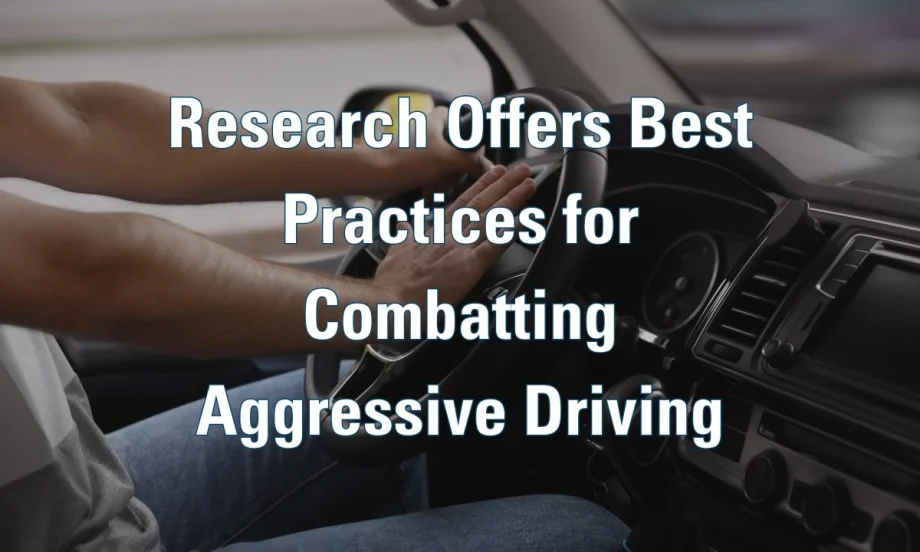
Research analysis can offer fleet managers insight into safety best practices for their drivers.
Photo: Automotive Fleet
4 min to read
Aggressive driving often leads to instances of road rage. According to the AAA Foundation for Traffic Safety’s 2019 data, nearly 80 percent of drivers expressed significant anger, aggression, or road rage behind the wheel at least once in the previous 30 days.
While aggressive driving and road rage are similar, there is a difference. Aggressive driving is any unsafe behavior performed deliberately and with ill intention or disregard for safety.
Extreme cases of aggressive driving can escalate road rage, including cursing people, throwing objects, ramming, sideswiping, or forcing a driver off the road.
The National Highway Traffic Safety Administration (NHTSA) defines road rage as “an intentional assault by a driver or passenger with a motor vehicle or a weapon that occurs on the roadway or is precipitated by an incident on the roadway.”
Research Can Help Combat Aggressive Driving Behavior
Aggressive driving behavior includes driving more than 15 mph over the speed limit, running a red light, tailgating, erratic lane changing, and illegal passing.
According to the NHTSA, 29% of all traffic fatalities resulted from speeding. Several factors that contribute to this driving behavior include:
Traffic
Running late
Anonymity
Disregard for others and the law
The AAA Foundation for Traffic Safety 2023 Traffic Safety Culture Index (TSCI) found that most respondents perceive driving through a red light (81%) and aggressive driving (89%) as very or extremely dangerous.
Nevertheless, 31% of respondents reported driving through a red light, 48% reported driving 15 mph over the speed limit, and 34% reported tailgating a vehicle to prevent another car from merging in front of them.
Respondents were engaged in these behaviors in the 30 days before the survey.
Fleet managers should review and incorporate the research into their fleet safety policies.
How to Deal with Aggressive Drivers
The NHTSA offers the following advice when encountering aggressive drivers on the road:
If you are in the left lane and someone wants to pass, move over and let them by.
Give speeding drivers plenty of space. Speeding drivers may lose control of their vehicle more easily.
Adjust your driving accordingly. Speeding is tied to aggressive driving. If a speeding driver is tailgating you or trying to engage you in risky driving, use judgment to steer your vehicle out of the way safely.
Call the police if you believe a driver is following or harassing you.
The NHTSA also collaborates with the Federal Motor Carrier Safety Administration (FMCSA) and the Federal Highway Administration (FHWA) to provide tools and resources for designing speed management programs.
AAA offers the following advice for dealing with aggressive drivers:
Follow the rules of the road:
Maintain adequate following distance.
Use turn signals.
Allow others to merge.
Use your high beams responsibly.
Tap your horn, if necessary, but avoid long blasts and hand gestures.
Be considerate in parking lots. Park in one spot, not across multiple spaces. Be careful not to hit cars next to you with your door.
Remaining calm and courteous behind the wheel lowers your risk of an unpleasant encounter.
If you are in a situation where you need to deal with confrontation, AAA suggests:
Avoiding eye contact with angry drivers.
Don’t respond to aggression with aggression.
If you feel at risk, drive to a public place such as a police station, hospital, or fire station.
When you park, allow room to pull out safely if someone approaches you aggressively.
Use your horn to attract attention but remain in your locked vehicle.
Stay as calm and courteous as possible.
If you feel threatened, call 911.
Always remember:
Don’t Offend: Never cause another driver to change their speed or direction. That means not forcing another driver to use their brakes or turn the steering wheel in response to something you have done.
Be Tolerant and Forgiving: The other driver may be having a bad day. Assume that it’s not personal.
Do Not Respond: Avoid eye contact, don’t make gestures, maintain space around your vehicle, and contact 9-1-1 if needed.
Editor’s note: This article was originally published in September 2013 and has been updated for continued relevance.
Subscribe to Our Newsletter
More Safety

Sponsored•October 1, 2026
Fleet Manager’s Ultimate Playbook: Navigating the New Standard in OEM Connectivity
Rising operating costs, driver safety concerns, and unplanned downtime are putting unprecedented pressure on modern fleets. Discover how fleet managers use embedded OEM connectivity and real-time vehicle data to cut TCO, prevent downtime, and protect drivers without aftermarket telematics hardware.
Read More →
From Driver Well-Being to EV Charging | AF News Recap
Mental health belongs in the fleet safety conversation. This week, we’re looking at five ways fleets can support employee well-being before a crisis, plus Holman’s expansion in Mexico, new one-day Fleet Forward passes, and why EV charging demand is outpacing infrastructure growth.
Read More →
Nexar-Nauto Merger Aims to Give Fleets Better Safety Intelligence Through Larger Driving Dataset
Stefan Heck tells Automotive Fleet that combining more than 10 billion miles of driving history with Nexar's AI models will give fleets deeper insights into driver risk and roadway conditions than either company could provide independently.
Read More →
Don't Wait for a Crisis: 5 Ways to Build Mental Health Into Your Fleet Safety Program
For Suicide Prevention Month, fleet and safety leaders have an opportunity to put mental health where it belongs: at the center of workplace safety.
Read More →
How Camera Data Can Strengthen a Fleet’s Insurance Renewal
Insights from a commercial insurance carrier and a broker show how fleets can turn video telematic data, driver coaching, and improved claims results into a stronger case at insurance renewal.
Read More →
The Safest Fleets Aren’t the Ones with the Most Technology
You’ve made the telematics investment. Here’s how to capture the other half of its value and build the safest fleet on the road.
Read More →
Sponsored•August 7, 2026
Hidden in Plain Sight: Fleet Compliance Risks
Fleet compliance isn't just about having policies — it's about consistently enforcing them. This practical guide reveals six hidden compliance risks common in public sector and shared fleet operations and outlines proven strategies to improve visibility, accountability, and audit readiness
Read More →
NETS Sets 2026 Fleet Safety Benchmark Conference for Indianapolis
The Sept. 15–17 program will feature fleet benchmarking data, case studies, emerging technologies, and implementation strategies while running alongside the NSC Safety Congress & Expo.
Read More →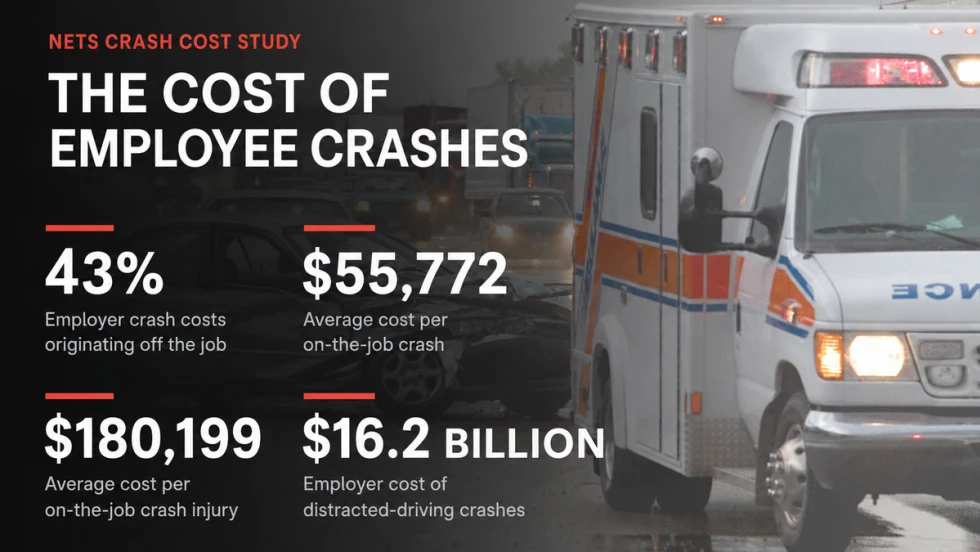
Off-the-Job Crashes Account for 43% of Employers’ $61.7 Billion Crash Burden
NETS quantifies costs dispersed across fleet, risk, HR, and other departments while providing new per-crash benchmarks for employers.
Read More →
Ram Recalls More Than 1.27 Million 1500 Pickups for Seat Belt Anchor Issue
The recall affects certain 2019-2026 Ram 1500 pickups that may have improperly attached second-row seat belt buckle anchors.
Read More →