





Related: Carbon Emissions Vs. Ownership Costs: Pickup Trucks
Does America Need Another EV Manufacturer?
A radically simple truck enters a complicated market — but maybe that’s exactly the point.
May 14, 2025
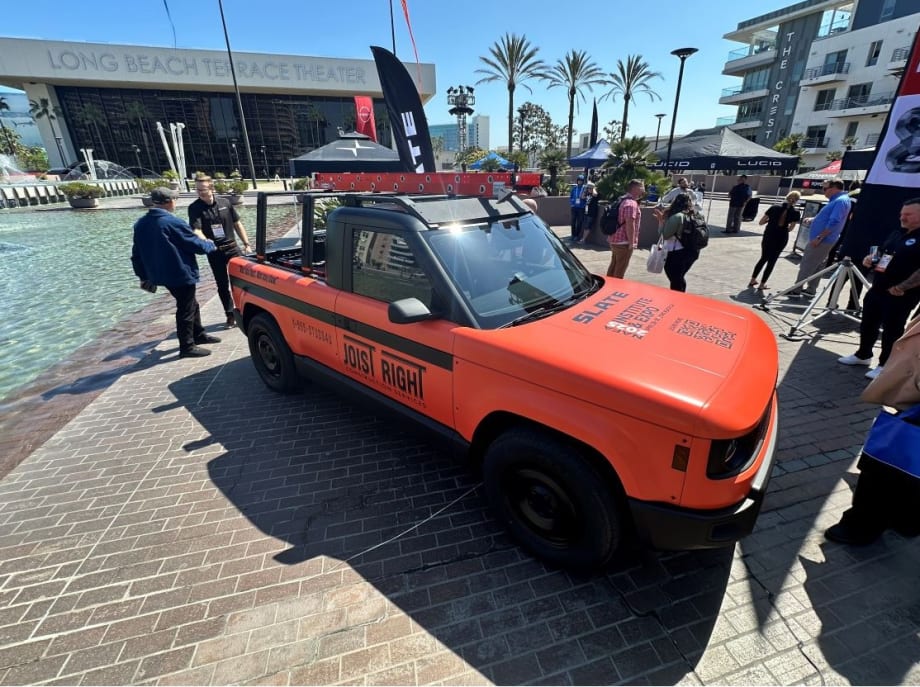
Slate brought its truck to the NAFA I&E in Long Beach, California in April.
Photo: Chris Brown
4 min to read
“The definition of what’s affordable is broken,” said Slate CEO Chris Barman onstage at the startup’s launch event in April. This is truth. The average new vehicle MSRP in the U.S. is $48k. There is clearly a market of buyers waiting for reliable, cheap mobility on four wheels.
If federal incentives remain, the base Slate truck — an electric, rear-wheel-drive, single-cab, two-door pickup — will cost $20k. Is Slate the truck to meet the moment for both consumers and fleets?
Let’s be clear — growing an independent electric automotive company to profitability is extremely hard. We got excited about Lordstown Motors, Fisker, Canoo, Lion Electric, Nikola, and Arrival. And does anyone remember Coda? I still have swag from each of them.
Yet here we are again.
But first, should I even trust myself? I wrote this blog defending Lordstown Motors against Hindenburg’s infamous short seller report. Lordstown went bankrupt 27 months later. I’ll still endorse my point on short seller investigations, but yes, I own that. Forgive us if this time, the coverage isn’t as breathless.
How Slate Could Succeed
So, how will Slate succeed where others have failed?
Slate makes a radically simple, American-made truck: one configuration, significantly fewer components, basic interior, analog controls, roll-up windows. No paint, no options or trim levels, no infotainment. One price.
Instead of options, it’s about DIY accessorizing: roof rails, light covers, pre-cut vinyl wrap kits. Fleets can wrap a truck for Coachella and swap that out for new graphics for Stagecoach two weeks later. And you can turn the truck into an SUV. I saw Slate do the conversion twice, within an hour.
Challenges Slate Will Face
A truck with fewer parts will be easier to repair, but growing a service network commensurate with sales is the bane of independent automakers. Stranding a fleet driver for even two days won’t cut it. Slate should consider a service loaner/rental program to keep fleets on the road.
Slate’s base 52.7 kWh battery produces a top range of 150 miles. Accessorizing and cargo will add weight, and we all know how 150 miles becomes 110 miles in the wrong conditions.
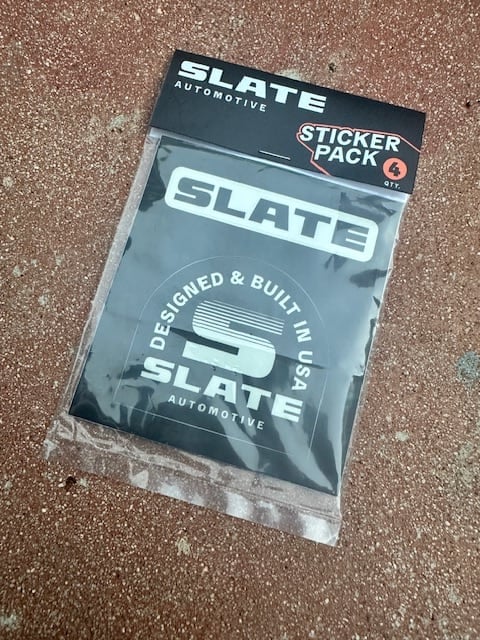
I have a closet full of swag from independent automakers no longer in business. Can Slate flip the script?
Photo: Chris Brown
This will exclude a segment of buyers. But just understand that Slate is not one size fits all. It aims for route-predictable use cases, like small business owners, contractors, delivery services, and municipal fleets, where range anxiety is minimal and TCO is critical.
Slate’s biggest competitor won’t be the F-150 Lightning or Chevy Silverado EV. It’s the Chevy Equinox EV, with its $33k base price, tons of utility, and General Motors’ backing and serviceability.
Though the Slate truck is cheaper to start, upgrading to the larger battery with the 240-mile range will bring the price within Equinox’s, yet it still falls well short of Equinox’s range of over 300 miles.
But then, Slate isn’t trying to be Equinox. It’s about low complexity, task-specific use, utility, and TCO over general-purpose comfort.
Here’s perhaps the biggest caveat to date: I haven’t driven the truck yet, nor has there been any coverage of the truck’s performance. Handicapping Slate’s potential, this is perhaps the biggest “if” waiting to be resolved.
Expectation, Disillusionment, Enlightenment
The startups that failed before Slate were in a different market. They were thrown gobs of venture capital, with firms looking to exploit this new technology that promised to transform the world. Those times were the “Peak of Inflated Expectations,” or Stage 2 in Gartner’s Hype Cycle.
But the market just wasn’t ready. The charging infrastructure wasn’t in place, and everyone misread actual demand. Along with self-inflicted mistakes and overpromises, those startups were perpetually delayed in coming to market. The cash burn was never enough to keep the lights on.
This market is different. Gartner’s Stage 3 is the “Trough of Disillusionment.” Ironically, it may be the best time to start a new EV company. The stupid money is gone, along with the stupid players (well, a lot of them, anyway).
But it’s likely we’re exiting the Trough and entering Stage 4, the “Slope of Enlightenment,” where use cases work based on TCO and aren’t dependent on incentives or regulations. This is exactly Slate’s value proposition.
So yes, we’ll root for another EV startup, again. Of course, fleet operators do not have to “root for” anything. They just need the product to work. It’s now up to Slate to come through for them.
Subscribe to Our Newsletter
More Blog Posts

How to Win a Fleet Manager Award: Make Your Nomination Count
Strong fleet accomplishments can go unrecognized when the nomination doesn’t make the case. Here’s what judges need to see.
Read More →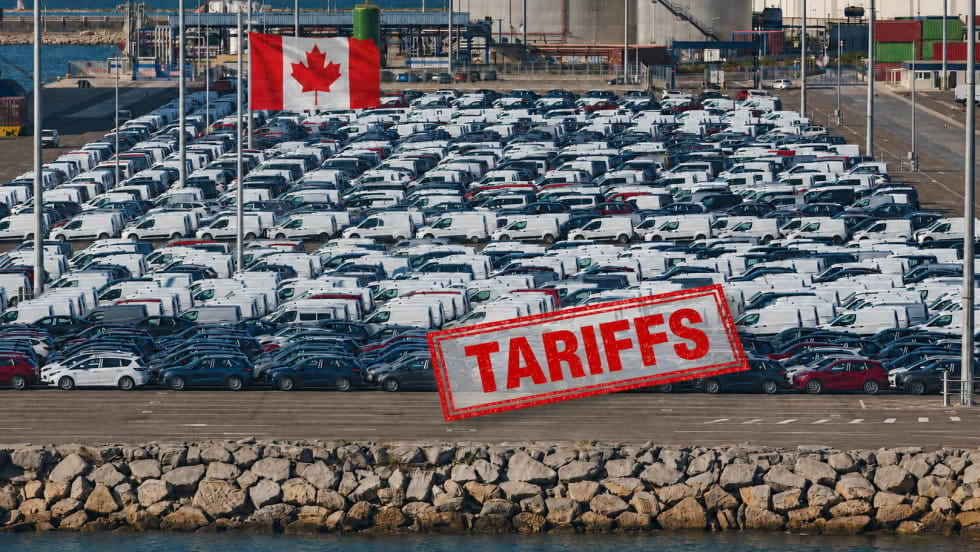
The Only Certainty with the New Tariff Threat Is Uncertainty
Trump’s Canadian tariff threat will not move production overnight, but the uncertainty could influence ordering and pricing now. Longer term, forces beyond tariffs may determine which North American plants survive.
Read More →
What Does It Mean to Embody the Spirit of Fleet?
Presented alongside Fleet Manager of the Year, Fleet Visionary, and Fleet Hall of Fame at AFLA, the new Mike Antich Spirit of Fleet Award is unique in that it recognizes service to the overall profession. Just like Mike.
Read More →
What Separates Great Fleet Managers From Everyone Else?
What do Visionary candidates with fewer than 10 years of experience have in common with Hall of Fame nominees with a lifetime under their belts?
Read More →
The Next Fleet War Won't Be Won on Specs Alone
The 2026 Stellantis Pro One Fleet Preview was less about vehicles and more about what happens after you buy them.
Read More →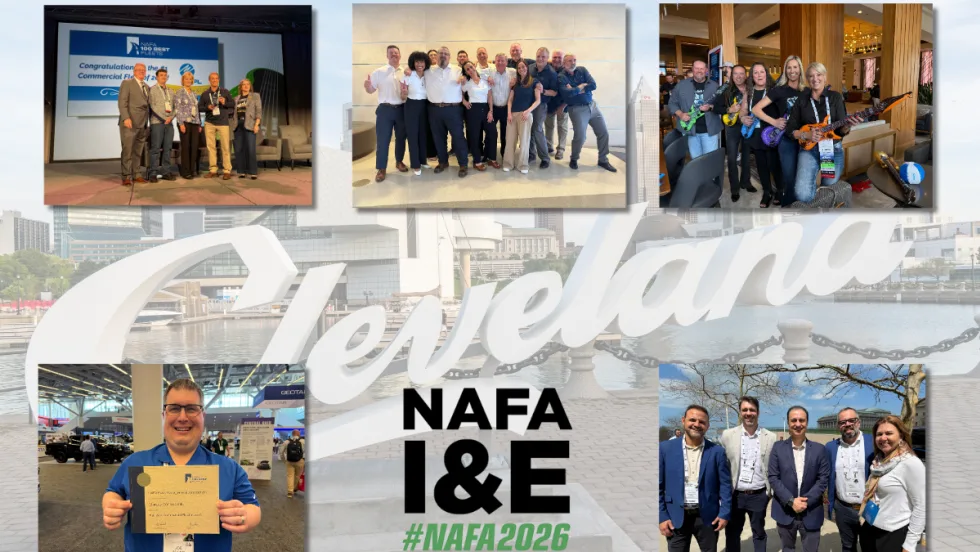
Navigating Brundlefly and Fleet AI at 2026 NAFA I&E
AI is becoming the operating layer for fleets. In Cleveland, the buzz was about harnessing AI in an increasingly complex, permanently disrupted environment.
Read More →
8 Trends: Work Truck Week 2026 Reveals a Fleet Industry in Reset Mode
Walking the show floor this year, the new focus was around “practical innovation” and pragmatic solutions. And oh yeah, a new small van.
Read More →
The Moment AI Became Operational
“AI isn’t assisting us anymore. It’s doing the work,” said CEO Neil Cawse at Geotab Connect 2026. What does this mean for fleet managers?
Read More →
For Mike Antich, it Was Always About the People
He stood tall in the industry in so many ways, but he measured success by the people he served.
Read More →
Solving the Flexible-Lean Fleet Paradox
The lean fleets of yesterday are the fragile fleets of today. Where do we find the balance?
Read More →