





Read More: 7 Key Features on the Ford F-150 Lightning Pro for Fleets
First Drive: F-150 Lightning Pro
How does an all-electric pickup that burns rubber going uphill with an 1,889-lb. payload fit with fleets?
June 20, 2022
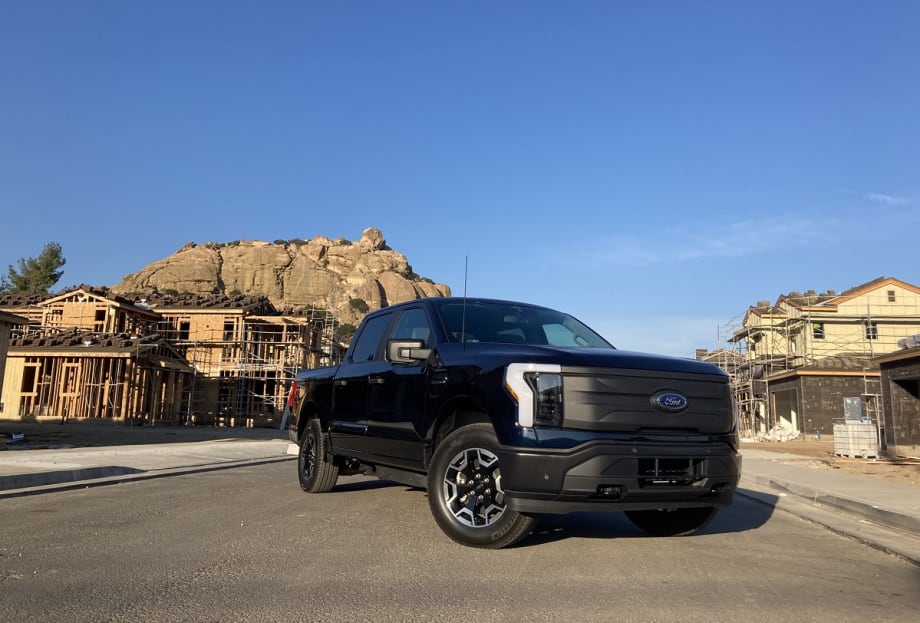
The 2022 F-150 Lightning Pro takes a break in a new housing development before hitting the Santa Susana Pass. This F-150 doesn’t belong in the traditional “white truck” crowd anymore.
Photo: Chris Brown
9 min to read
Can you bake “want” into a fleet budget?
The Ford F-150 Lightning will be that truck — the one fleet drivers fight over. In addition to its green credentials, consider it an incentive and retention tool. Just beware that they won’t want to go back to driving a gas or diesel engine vehicle again. Hyperbole is dangerous in reviews of anything, and it’s always a worthy exercise to return to the original material after some contemplation and revise appropriately. But here, the first impression sticks: The F-150 Lightning is a game changer in the world of pickups.
There are other considerations on whether it’s a game changer for fleets, and we’ll get to those in a bit. But first, let’s get straight to the drive.
Driving the Lightning
I got my hands on the 2022 Ford F-150 Lightning Pro from Ford’s Los Angeles press fleet for 10 days. The Pro is supposed to be the Spartan trim for fleets, but it doesn’t belong in the traditional “white truck” crowd. Our truck’s Antimatter Blue paint job dispelled that notion at first glance. Moving inside, the vinyl gray seats on this base model will feel familiar to fleets. But the brushed nickel, chrome, and stitched faux-denim accents — along with the 12-inch display and computer graphics — elevate the Pro into a retail-spec’d feel.

Photo: Chris Brown
Getting onto the road, the Lightning flat-out cooks. Sure, a couple of halo pickup models equal the Lightning’s zero to 60 of mid-four seconds. But this isn’t the $75,000 twin-turbo, supercharged, V-8 enviro-nightmare of yore. You can get to mid-four without the shift lag, engine rattle, or exhaust blast. And you can do it in the base Pro — the fleet model. (I haven’t driven the Rivian R1T, which is faster, but you’ll pay dearly for that too.)
Think hard about that — you’re putting your fleet drivers into a truck that will smoke a Raptor off the line. You already know the drivers for which this is too much truck. Bequeath with caution.
The thing is, the Lightning cooks with a load too, in my case 60 boxes of old print magazines pulled from Bobit headquarters in Torrance. I fit 1,889 lbs. of magazines in the bed, 85% of the max payload of 2,235 lbs. The goal was to drop them off to recycle, but the first order of business was a joy ride through the Santa Susana Pass that connects LA’s San Fernando Valley with Simi Valley.
When you step on the pedal of a loaded ICE truck, reduced torque is a given. Not so with the Lightning. In fact, even with almost maxed out payload you can chirp the tires from start. The Santa Susana Pass rises and falls through hills and canyons with a few hairpins thrown in. Think Sunday morning Porsche club, not truck territory. Yet the Lightning attacked every hill effortlessly — with the load, in 96-degree heat, and with the A/C blaring — with more to give if I dared. With such a heavy load, body roll was noticeable, as it would be in an ICE truck. Using the truck’s tow/haul mode dampened some of that, and the truck’s 1,800 lbs. of batteries helped to center the truck through turns.
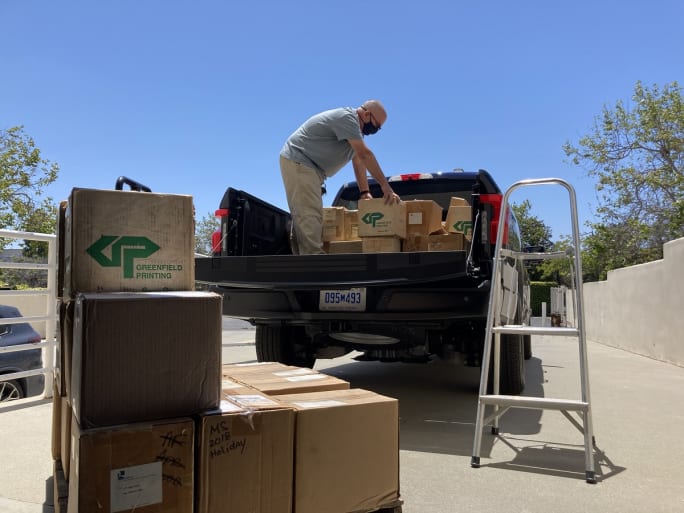
Photo: Chris Brown
I started this trip traveling on the 405 over the Sepulveda Pass during rush hour, which defines the oft-used LA traffic phrase “soul crushing.” Driving the Lightning in stop-and-go traffic isn’t so bad with one-pedal driving, which maximizes regenerative braking and returns power to the battery. (There are two regen settings on the Lightning — off, and one pedal.) There’s an added benefit in stop-and-go traffic, as it is much easier to feather and release the pedal without having to switch back and forth with the brake. This wasn’t the case with the guy lurching forward in the stake bed next to me.
One-pedal operation in reverse takes a bit more acclimation. The Lightning has no need for a parking brake, the truck does that for you. If you’re not throttling in reverse, the truck holds, even reversing down a steep hill. That automatic hill hold is a benefit overall after you get used to it, but you’ll have to learn to push the pedal to go backward downhill.
Range and Charging Anxiety
My truck was spec’d with the standard smaller battery, which has an EPA-estimated 230-mile range. The range at box load-in was 144 miles. I was anxious about running out of juice in the Santa Susana Pass, particularly with the load, hilly grade, and the need for A/C. I figured at some point I’d need to charge during my joy ride and before recycling the boxes. I didn’t preemptively charge before the trip, but probably should’ve taken the time. Nor did I do the arithmetic to plan the trip’s exact mileage, though maybe I should’ve.
Owing to some snafus, I was unable to set up the Ford Pass app to connect to Ford’s charging network. However, our company has an account with EV Connect, which allows for public and private charging through one account. (We have Level 2 chargers at Bobit HQ.) Searching the EV Connect network along my route, I found few public options to charge, and fewer DCFC fast chargers. If my battery’s range started to plummet, it would’ve been nail-biting time.
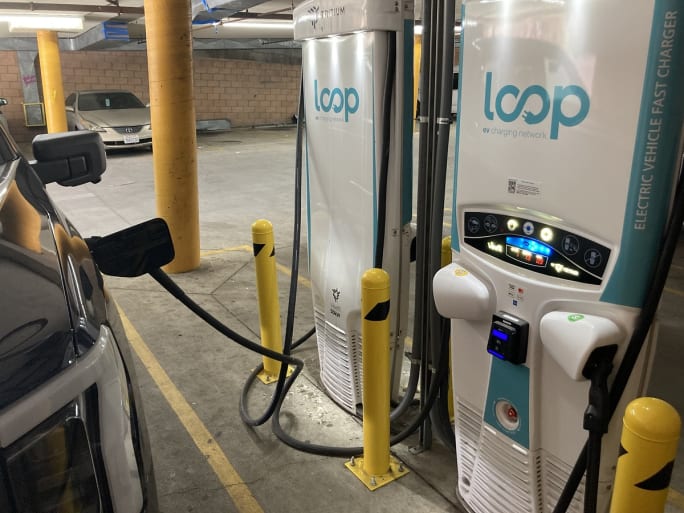
Photo: Chris Brown
Luckily, it all worked out. I ultimately drove 116 miles before recycling the load the next day. Regarding managing range during the trip, the miles burned off more quickly going up steep grades, but the regen added miles to the range when going downhill for extended stretches. I made it to the recycling place the next day with 29 miles of range showing on the dash.
At that point, I went looking for a DCFC charger within the EV Connect network. My search took me to a market in Thai Town on East Hollywood Blvd. After a few quizzical stares I was directed to the second floor of a parking garage in back, and I avoided scraping the truck to get there. All chargers were thankfully free (the app told me that) but not free of bird poop. Nor were they fast — the app listed them as “DC Fast” but what I got was AC power of 125 kW at peak. I charged for 14 minutes but added only 24 miles to my range. And it was expensive: $4.12 plus $2 to park. Compared to $5 a gallon fuel for an ICE F-150, the savings was paltry.
Heading home, I managed to trickle charge overnight on successive nights, which added 22 and 24 miles of range each night. I tripped a breaker on one night and lost a couple of hours of charging before I noticed. This is another benefit of having a working Ford Pass app, as it would’ve notified me of an interrupted charge.
Today, 80% of EV charging happens at home. For fleets, charging should happen at home or the depot, not wasting time and expense with public charging. It’s clear the public charging network needs to be built out — and it will be — to avoid my adventures. But for now, careful route planning is essential, particularly for those spec’ing the smaller battery. Dealing with multiple charging networks, apps, and accounts is a huge hassle, as opposed to swiping a fleet card at any standard gas station pump. Consolidation of charging networks will happen too, but not soon enough.
Work Truck Rewards
One sign of EVs’ popularity is that most now know what a “frunk” is. Double clicking the key fob pops the frunk, revealing 14.1 cubic feet of storage space with a 400-lb. weight capacity and four 120-volt power outlets. Fleets will find numerous ways to take advantage of cargo space that can’t be offered on an ICE truck along with the power provided. The seal is tighter than any trunk, which makes the lighted interior hood release a welcome sight, particularly for parents.
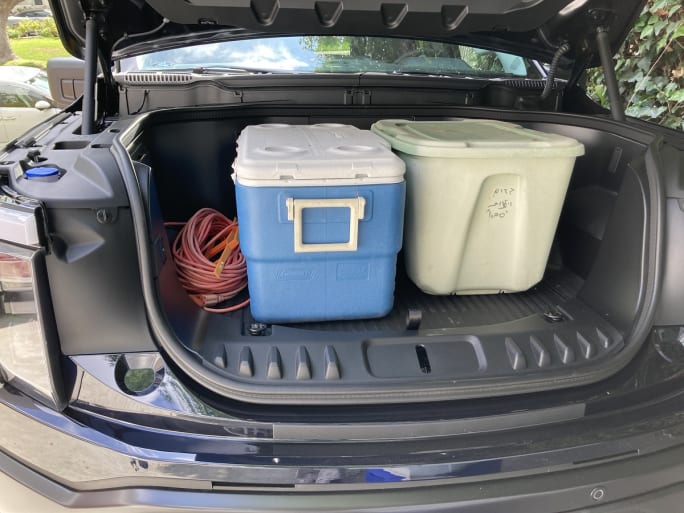
Photo: Chris Brown
With the tow package, Ford snuck in some new tech with the onboard scale feature, which automatically measures payload in real time and displays it in a graphic on the head unit. The Lightning automatically updates its estimated mileage range based on payload and other factors such as towing, weather conditions, and traffic.
Another handy work truck feature is LED zone lighting, which can illuminate the front, both sides, and rear by using the touchscreen in the vehicle or from the FordPass App. Users can light up each zone or all four at once.
The latest version of Ford Co-Pilot 360 comes standard on all trims. The truck senses everything around it and will brake for you when objects are in the red zone.
The TCO Equation
All Lightnings are four-door SuperCrew Cabs with the 5.5-ft bed and 4x4 drivetrain. The base MSRP for the 2022 F-150 Lightning is $39,974. Our model had $3,615 of fleet-worthy options: the Tow Technology Package ($1,950), Pro Power OnBoard ($1,070), and a spray-in bedliner ($595). With destination & delivery (but not including tax) the total MSRP was $45,284. Buyers can also take advantage of the federal government’s $7,500 tax incentive, which will help lower TCO (total cost of ownership).
The XLT trim takes the Lightning above $53k MSRP, and the Lariat drives the sticker into the $67k range. The show ponies that want every available option can go for the Platinum package but will have to fork over more than $90k for the privilege.
The options on the model I drove are all most fleets would need. For fleets that haven’t refreshed their trucks in a while, the base Pro model is a pleasing upgrade compared to the XL and XLT trims of five or six years ago. In this new EV environment, a lot of useful functions move from mechanical to electronic, controlled through the display, and they’re included in the base price.
Of course, you can get a cheaper 2022 F-150. But a reasonable match to the gas-powered version in terms of towing, payload, and 4x4 drivetrain would be the XL SuperCrew with the upgraded 2.7L EcoBoost V6 engine. Base MSRP is $44,085, over $4,000 more than the Pro model.
With the $7,500 federal tax credit, expected savings on maintenance, and exhilarating performance, the Lightning Pro becomes a no brainer for fleets — some fleets.
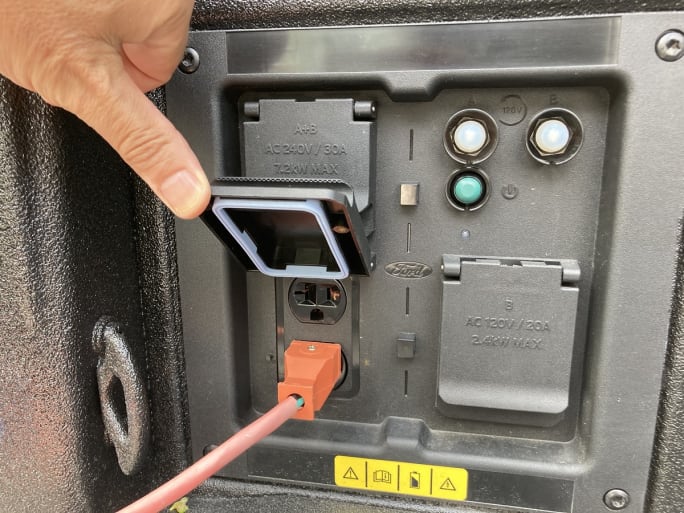
Photo: Chris Brown
Spec’ing the larger battery will deliver an extra 90 miles of range, though it’ll run an extra $10k. With that big of a TCO hit, do you need the bigger battery?
The more miles fleets put on EVs, the faster the payback on the premium. Right now, it’s about finding those duty cycles with high daily miles, yet dependable, set routes. That way, fleets can charge overnight and still maximize the battery’s top range. What shouldn’t get lost in the TCO equation is the cost to install the infrastructure and the chargers and maintain them too.
When you finally get your hands on one, it’ll become clear that the Lightning delivers a superior on-road experience to any other ICE truck in your fleet. But take baby steps. Plan out your infrastructure, configure the software, and come up with the right duty cycle for the first few you fleet. And then push the start button and enjoy.
Subscribe to Our Newsletter
More Fleet Forward
Erin Gilchrist Receives Mike Antich Spirit of Fleet Award
Last week at AFLA in Vegas, Erin Gilchrist received the inaugural, brand-new Spirit of Fleet Award.
Read More →
Dominika Leja Named the 2026 Fleet Manager of the Year
The AstraZeneca associate director of fleet was recognized for her leadership in fleet electrification, cost savings, and operational transformation.
Read More →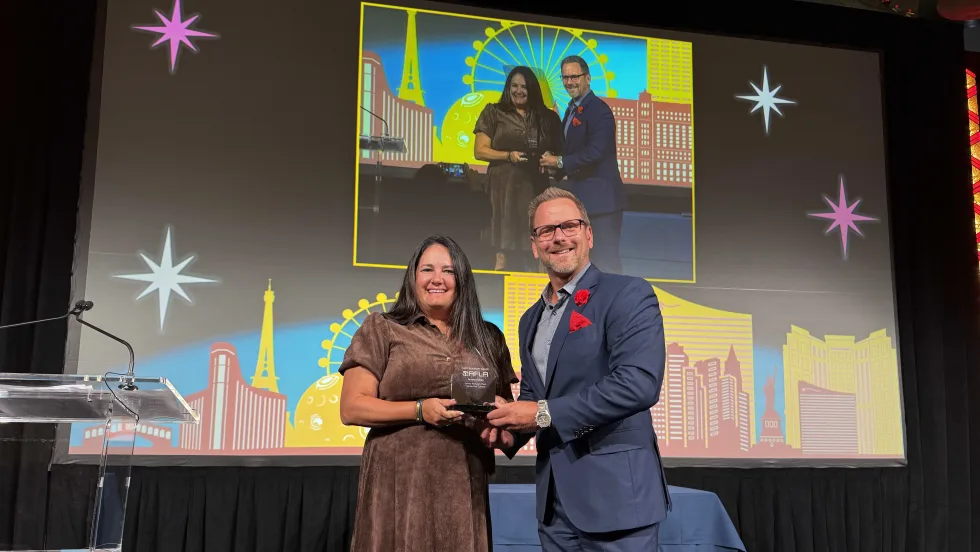
Jamie McKay Named the 2026 Fleet Visionary Award Winner
The Aptive Pest Control fleet manager was recognized for her approach to operations, data, lifecycle management, and driver needs.
Read More →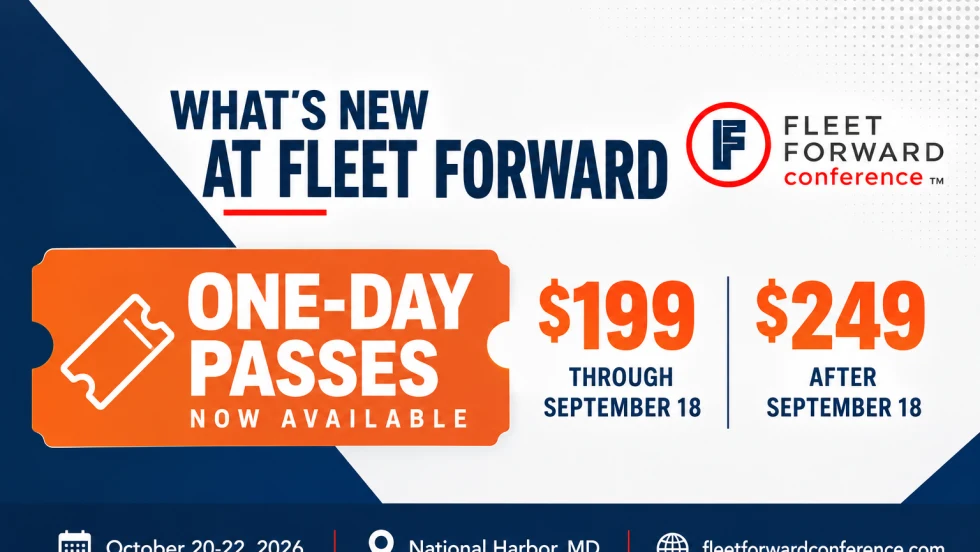
Fleet Forward Conference Introduces One-Day Passes for 2026
New one-day registration gives fleet professionals the flexibility to attend Tuesday, Wednesday, or Thursday, with passes available for $199 through Sept. 18.
Read More →
Vibe Coding: When Fleet Managers Become Software Builders
Five fleet professionals — none with programming skills — discuss how they’re using AI to build fleet solutions in-house and in a fraction of the time.
Read More →
Fleet Forward Conference Tackles Fleet Industry’s Growing Leadership Gap
This session will examine succession planning, knowledge transfer, and the skills the next generation of fleet leaders will need as veteran professionals leave the industry.
Read More →
2026 Fleet Manager of the Year Finalists Announced
Who are the 2026 Fleet Manager of the Year finalists?
Read More →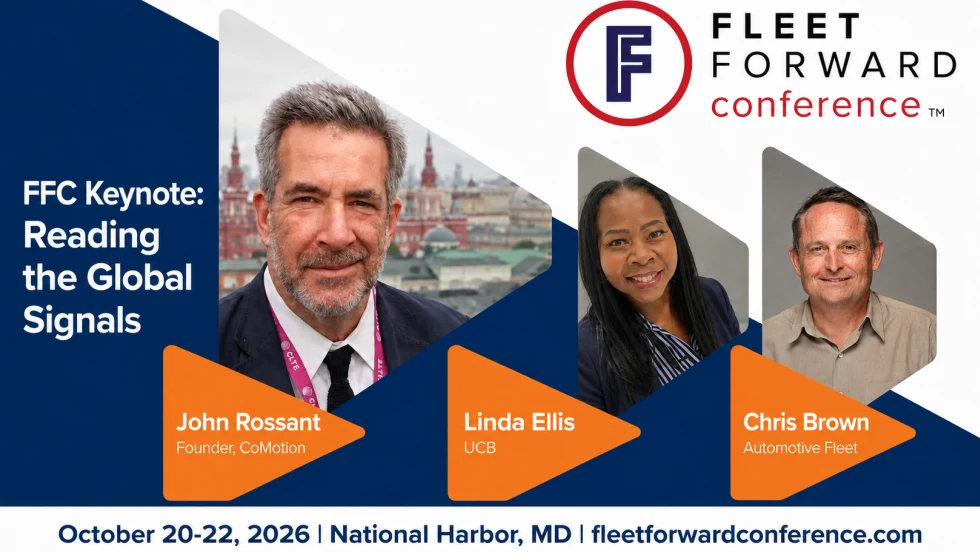
John Rossant to Deliver Opening Keynote at 2026 Fleet Forward Conference
The CoMotion founder will draw on developments across Europe, China, the Middle East, and other international markets to identify trends that could influence how U.S. fleets plan for the coming decade.
Read More →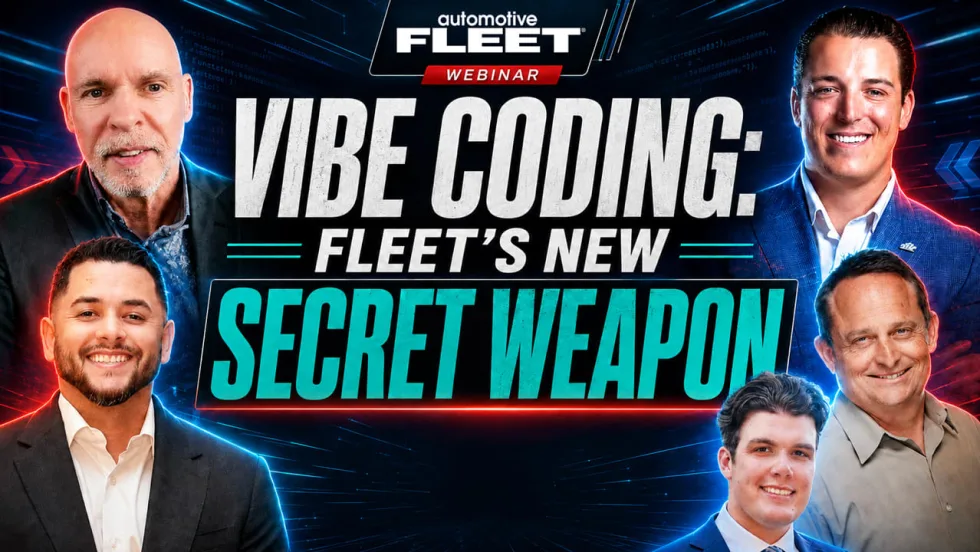
How to Build Custom Fleet Tools With AI and Vibe Coding [Webinar]
A new Automotive Fleet webinar explores how fleet managers are using AI and vibe coding to automate routine work and create simple operational tools without traditional programming skills.
Read More →