




Using Humor to Drive Home Your Fleet Safety Message
Learn how comedy, trivia, and interactive activities can be blended into safety sessions to drive engagement and training retention.

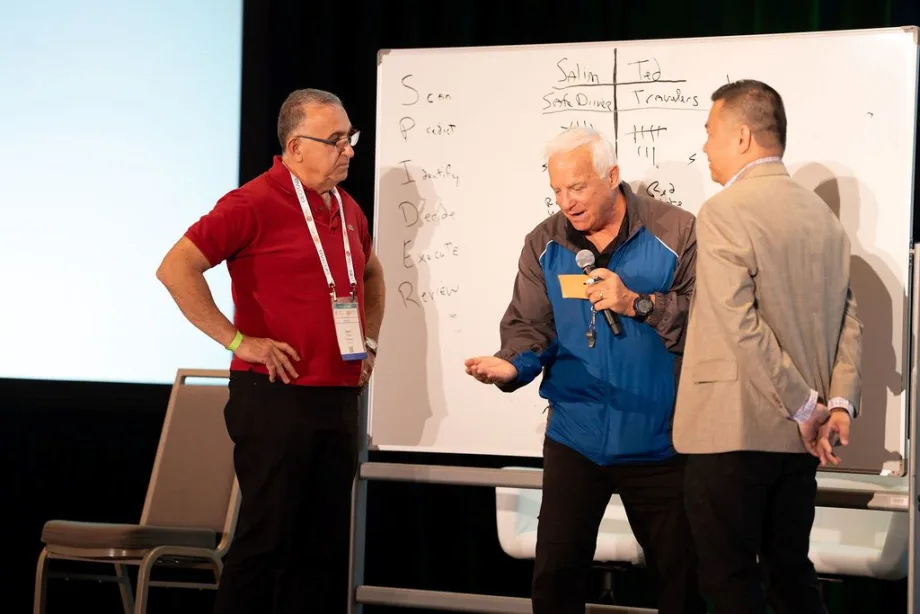
Humor can make serious messages more impactful and relatable, IMPROVLearning Traffic Safety Educator Steve Verret (center) says.
Photo: Ross Stewart / Stewart Digital Media
They say laughter is the best medicine. In fact, if you think about it, humans gain the ability to laugh before they can say their first word.
Perhaps this is why humor is sprinkled into things like commercials, movies, and books. It makes things more memorable.
So why don’t commercial fleet managers incorporate humor into their safety training? Steve Verret, traffic safety educator at IMPROVLearning, encouraged attendees at the 2024 Fleet Safety Conference, part of the all-new Fleet Week, to consider this, by demonstrating it himself.
Engagement Starts with Participation
From the moment Verret took the stage, he had the audience involved.
His first instruction? "Meet two people, shake hands, and if they’re not smiling, punch them in the ribs." This humorous icebreaker set the tone for an interactive session.
Participants were divided into teams with captains, fostering camaraderie and friendly competition.
Key lesson: Engagement is critical in any presentation. Encouraging audience participation — whether in a classroom or online, through games, discussions, or competitions — keeps energy levels high and attendees attentive. Humor also plays a role here, as it reduces anxiety and boosts motivation, making participants more willing to engage.
Fun Trivia Makes Facts Stick
Verret used trivia questions to teach key safety concepts. For instance, participants guessed:
Who gets the most traffic tickets? (Answer: Single people.)
What three car colors attract the most tickets? (Answer: Red, white, and yellow.)
What became mandatory in all cars in 1968? (Answer: Seat belts.)
Verret explained that humor and fun activities help embed information in the brain.
"People remember what makes them laugh," Verret said.
Incorporating relatable humor into the session also created common ground, making the content more accessible and memorable.
Key Lesson: Incorporating humor and games into training sessions enhances the retention of key points.
Humor Highlights Serious Lessons
While Verret kept the room laughing, he also tackled serious topics. For instance, he shared a story about his Cajun upbringing to illustrate the dangers of distracted driving.
His uncle, a colorful character, would blow through red lights, claiming, "My uncle never stopped for no red light, and neither do I."
Through this comedic lens, Verret emphasized the importance of focus and responsibility behind the wheel. He also explained the psychological "cocktail effect" that describes how a phone call can monopolize your attention, making hands-free calls just as dangerous as holding a phone. Using humor here diffused potential tension while driving the lesson home effectively
Key Lesson: Humor can make serious messages more impactful and relatable. It also helps diffuse awkward situations—like a projector failure—with witty comebacks to keep the mood light.
Vehicle Colors and Safety
Ever wondered why school buses and taxis are yellow? Steve shared insights from a 1958 study on how colors affect the human brain.
Red, white, and yellow cars get the most tickets because they’re the most noticeable, but they’re also involved in fewer crashes.
Bonus trivia: Companies like McDonald’s and In-N-Out use red, white, and yellow because these colors grab attention — a strategy fleet managers can borrow by incorporating bright colors into their vehicles.
Key Lesson: Color isn’t just aesthetic; it’s strategic. Use high-visibility colors to enhance fleet safety.
Distracted Driving: The Big Culprit
Verret also tackled distracted in the session.
Through games and trivia, participants identified common distractions:
Talking to passengers
Eating and drinking
Adjusting sound or navigation
Grooming (yes, putting on makeup or shaving)
Smoking
Verret highlighted that texting while driving is 25 times more likely to cause a crash.
“If you’ve got things you need to cover for your meeting, why not cover it this way? Like ‘the top five things you need to learn from our [safety] manual we handed out last week,’” Verret suggested.
Key Lesson: Understanding distractions is the first step toward eliminating them.
Storytelling Brings Lessons to Life
Verret shared anecdotes that underscored his points.
For example, he recounted how his daughter’s minor fender bender turned into an insurance fraud nightmare. The other driver fabricated damage, leading to higher insurance premiums.
His advice? Always take photos after an incident. He also illustrated traffic laws with hypothetical scenarios, like a left-turn accident caused by gridlock. These stories resonated with the audience, making abstract rules concrete.
Additionally, weaving in humor through anecdotes or references to familiar cultural moments helps boost retention.
Key Lesson: Stories make lessons relatable and memorable. Use them liberally.
SPIDER: A Method for Safe Driving
Verret introduced SPIDER, a method designed to instill proactive driving habits:
Scan the roadway.
Predict potential hazards.
Identify specific dangers.
Decide on a course of action.
Execute the maneuver.
Review the situation for future learning.
For example, if you’re driving near a ball field, predict that a ball might roll into the street and plan how to react. This forward-thinking approach makes drivers more prepared and less prone to panic.
Key Lesson: Teach drivers to anticipate rather than react to hazards. Use short yet memorable acronyms that can be used as a verb. Remembering simple acronyms will make training stickier.
The Power of Participation
Verret wrapped up the session with a "Family Feud" game focused on driving habits. Teams competed to guess answers to questions like "What are the top distractions while driving?" The game reinforced the day’s lessons and kept participants engaged until the end.
Key Lesson: Games aren’t just for fun; they’re an effective teaching tool. Humor uplifts participants and creates a ripple effect, leaving employees enthusiastic and motivated— a key ingredient for workplace satisfaction.
Steve Verret’s seminar was a masterclass in using humor to educate. By blending comedy, trivia, and interactive activities, he turned a safety presentation into an unforgettable experience.
His final advice to fleet managers?
“The more your audience participates, the more they learn. And if you can make them laugh along the way, they’ll remember it even better.”
More Safety

Fleet Manager’s Ultimate Playbook: Navigating the New Standard in OEM Connectivity
Rising operating costs, driver safety concerns, and unplanned downtime are putting unprecedented pressure on modern fleets. Discover how fleet managers use embedded OEM connectivity and real-time vehicle data to cut TCO, prevent downtime, and protect drivers without aftermarket telematics hardware.
Read More →
From Driver Well-Being to EV Charging | AF News Recap
Mental health belongs in the fleet safety conversation. This week, we’re looking at five ways fleets can support employee well-being before a crisis, plus Holman’s expansion in Mexico, new one-day Fleet Forward passes, and why EV charging demand is outpacing infrastructure growth.
Read More →
Nexar-Nauto Merger Aims to Give Fleets Better Safety Intelligence Through Larger Driving Dataset
Stefan Heck tells Automotive Fleet that combining more than 10 billion miles of driving history with Nexar's AI models will give fleets deeper insights into driver risk and roadway conditions than either company could provide independently.
Read More →
Don't Wait for a Crisis: 5 Ways to Build Mental Health Into Your Fleet Safety Program
For Suicide Prevention Month, fleet and safety leaders have an opportunity to put mental health where it belongs: at the center of workplace safety.
Read More →
How Camera Data Can Strengthen a Fleet’s Insurance Renewal
Insights from a commercial insurance carrier and a broker show how fleets can turn video telematic data, driver coaching, and improved claims results into a stronger case at insurance renewal.
Read More →
The Safest Fleets Aren’t the Ones with the Most Technology
You’ve made the telematics investment. Here’s how to capture the other half of its value and build the safest fleet on the road.
Read More →
Hidden in Plain Sight: Fleet Compliance Risks
Fleet compliance isn't just about having policies — it's about consistently enforcing them. This practical guide reveals six hidden compliance risks common in public sector and shared fleet operations and outlines proven strategies to improve visibility, accountability, and audit readiness
Read More →
NETS Sets 2026 Fleet Safety Benchmark Conference for Indianapolis
The Sept. 15–17 program will feature fleet benchmarking data, case studies, emerging technologies, and implementation strategies while running alongside the NSC Safety Congress & Expo.
Read More →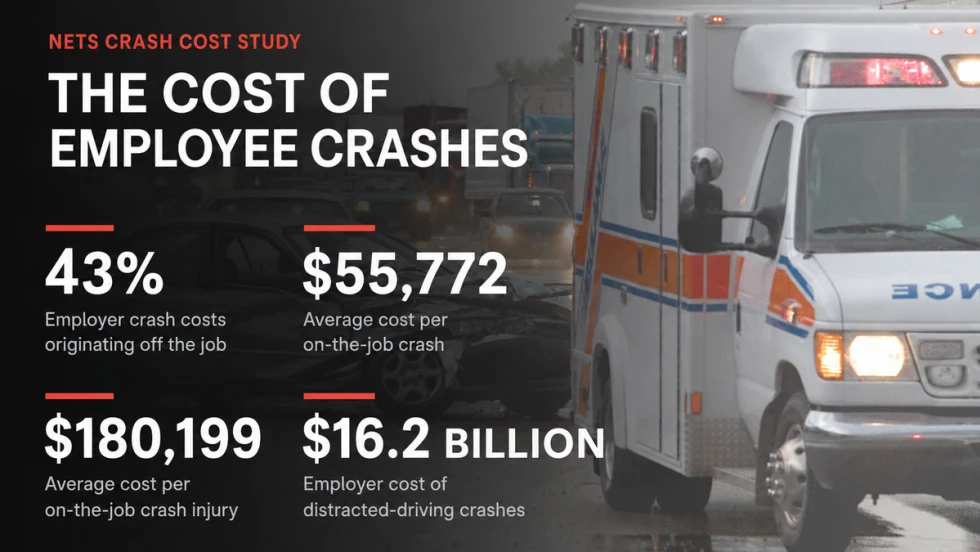
Off-the-Job Crashes Account for 43% of Employers’ $61.7 Billion Crash Burden
NETS quantifies costs dispersed across fleet, risk, HR, and other departments while providing new per-crash benchmarks for employers.
Read More →
Ram Recalls More Than 1.27 Million 1500 Pickups for Seat Belt Anchor Issue
The recall affects certain 2019-2026 Ram 1500 pickups that may have improperly attached second-row seat belt buckle anchors.
Read More →