




Isuzu Invests $30 Million in Gatik to Develop Autonomous Driving Business
Future of Fleet: Autonomy for the Middle Mile
Is your fleet ready for autonomous vehicles? Discover key insights on safety, scalability, and the cost-saving potential of AV technology in 2025.
by Rachael Plant, Fleetio
December 19, 2024
More widespread use of AVs has several challenges, including poor bridge and roadway infrastructure, but some of the biggest hindrances are safety, investment, and scale.
Photo: Fleetio / Automotive Fleet
6 min to read
With the growing use of new technologies in the fleet space, keeping up with the latest cost-saving advancements can prove advantageous, and one of those advancements is autonomous vehicles (AVs).
There are several vehicle autonomy levels, and many fleets are using some form of lower-level autonomy, like adaptive cruise control, braking assist, and lane-keeping. But full autonomy — driverless vehicles — have been transitioning from futuristic ideas to mainstream realities in recent years.
Brian Tabel, vice president of marketing at Isuzu, and Adam Campbell, senior manager of safety innovation and impact at Gatik, recently spoke with The Fleet Code podcast about their partnership in autonomous trucks serving the middle mile segment.
Taking a look at that partnership and key takeaways around what it means for the future of AV in fleet — as well as evaluating the challenges, progress, and AV market forecasts — can help prepare managers to start thinking about how they could apply this technology as it becomes more widely available.
Overcoming Safety, Scalability, and Infrastructure Hurdles
More widespread use of AVs has several challenges, including poor bridge and roadway infrastructure, but some of the biggest hindrances are safety, investment, and scale. New automotive technologies can be tricky to roll out — something we’ve already seen with EVs.
It can be challenging for manufacturers and dealerships to navigate a lack of market demand and the inability to source parts and materials — such as lithium and semiconductors for EVs — at rates that can reduce price barriers.
On top of that, poor road conditions can complicate things like routing for AVs and create faster wear and tear on vehicle components.
We have seen significant gains in terms of safety and scale, though, and the Gatik and Isuzu partnership may also allow for a safer, more scalable building process.
“Our partnership with Isuzu is allowing us [...] in collaboration with them, an opportunity to further elevate the safety of the platform,” Campbell explained. “And so there is an enormous amount of safety and reliability that comes by interacting so closely with an OEM partner at this level.”
“That’s paramount for sure — is safety — not only for the truck, but everyone that’s around it,” Tabel added. “You know, it could interact with thousands of people [...], so certainly, the safety of everybody around it is paramount for a community.”
In October, Gatik unveiled the scope of a comprehensive safety case assessment for its Freight-Only operations (deliveries without a human driver onboard) across North America. With this announcement, Gatik is committed to launching Freight-Only operations at scale once it satisfies the most rigorous evaluation ever performed on its autonomous driving system by independent third parties.
The company noted that its safety “assessment will encompass over 700 identified safety portfolios [that] must be completed and closed before [it] can achieve Freight-Only operations at scale.”
Fleet customers can contact Gatik to speak with their team about how best to apply AV tech to their business model. Additionally, the joint Isuzu and Gatik manufacturing facility in the works in North Carolina is expected to make AVs available to customers at scale in 2027.
Since there are currently no regulatory guidelines at the federal level, the roadmap to operating AVs is fluid between states.
In California, for example, AVs are restricted to testing and can only be “operated” by those associated with the manufacturer. In Virginia, AVs fall under the general motor vehicles category, so they need to meet state and federal commercial vehicle regulations.
However, the hurdles to AV deployment may see big changes soon. “The Trump administration has expressed a strong pro-business stance, suggesting a potential acceleration in the rollout of self-driving technology. This will likely involve a push for streamlined regulations that would facilitate testing and deployment,” according to a Forbes article. “Many are hopeful that [these] changes may include harmonizing federal and state regulations, which has been a significant challenge for the industry and led to a virtual hodgepodge of legislation nationwide.”
Investments are likewise gaining traction, with Alphabet investing up to $5M in the Waymo Driver autonomous driving system and GM’s Cruise fleet nearing its comeback.
2025 Autonomous Vehicle Market Projections and Applications
The advancements in AV technology and investments throughout 2024 may signal that 2025 and beyond will likely see an uptick in AV use. Using AVs to make back-and-forth trips between warehouses for fleets in the middle mile sector can reduce operating costs and allocate labor hours more effectively.
As mentioned, a good portion of AV use is happening in the taxi and ride-share service industry.
“With a 20-year compound annual growth rate (CAGR) of 37% between 2025 and 2045, the worldwide robotaxi vehicle market is expected to reach a valuation of $174 billion in 2045,” according to a report IDTechEx released. “With several commercial autonomous robotaxi services going online in China and the US in the last few years, the robotaxi sector is maturing. Important companies in these areas, including Waymo from Google, Cruise from GM, Apollo Go from Baidu, and Zoox from Amazon, have now accrued tens of millions of miles of real-world driving experience.”
“Together, these businesses already operate over 2,000 robotaxis, gathering data to support AI drivers, demonstrating the safety of autonomous vehicles, and providing mobility as a service to clients,” the report noted.
The more substantiated data these AVs accrue, the more safety procedures and standards can be built into the technology, and as the technology advances, so too may the use cases, allowing for more fleets across different industries to explore how AV use might fit into and impact their operations.
How Fleets Can Prepare for Autonomous Vehicle Technology
During their time on The Fleet Code, Tabel and Campbell discussed how fleets can prepare for and apply AV technology to their operations.
“It’s not just about technology, it’s about what pain point you’re solving for. And there are a lot of pain points in the middle mile and a lot of value that they — our customers — can provide to their customers by unlocking value, safety and efficiency and cost, by adopting autonomy,” Campbell said.
“If you can have a middle mile truck going from depot to depot without having a driver, and it goes and does its routes, think of that savings that you’re going to have [just having] people there to load or unload those vehicles,” Tabel added. “It certainly will be advantageous for the customers as they continue to move merchandise.”
The current application, middle mile logistics, allows a controlled environment for the technology to develop and improve, eventually leading the way to more advanced or intricate applications.
Adopting new fleet technologies always boils down to one basic rule: When deciding which new and emerging technologies to add to your fleet, you must first consider what problems need to be solved. Once you do that, you can survey the current technologies to see what’s worth investing in.
While AVs will change the way fleets operate, the responsibilities of a fleet manager will be consistent: maximize the profitability of your fleet operation while promoting a safety culture.
Subscribe to Our Newsletter
More Fleet Forward

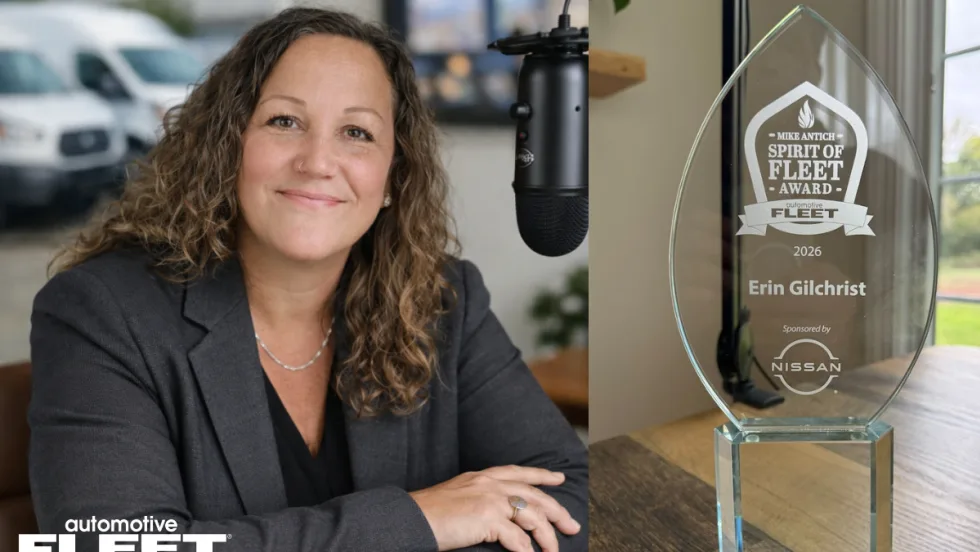
Erin Gilchrist Receives Mike Antich Spirit of Fleet Award
Last week at AFLA in Vegas, Erin Gilchrist received the inaugural, brand-new Spirit of Fleet Award.
Read More →
Dominika Leja Named the 2026 Fleet Manager of the Year
The AstraZeneca associate director of fleet was recognized for her leadership in fleet electrification, cost savings, and operational transformation.
Read More →
Jamie McKay Named the 2026 Fleet Visionary Award Winner
The Aptive Pest Control fleet manager was recognized for her approach to operations, data, lifecycle management, and driver needs.
Read More →
Fleet Forward Conference Introduces One-Day Passes for 2026
New one-day registration gives fleet professionals the flexibility to attend Tuesday, Wednesday, or Thursday, with passes available for $199 through Sept. 18.
Read More →
Vibe Coding: When Fleet Managers Become Software Builders
Five fleet professionals — none with programming skills — discuss how they’re using AI to build fleet solutions in-house and in a fraction of the time.
Read More →
Fleet Forward Conference Tackles Fleet Industry’s Growing Leadership Gap
This session will examine succession planning, knowledge transfer, and the skills the next generation of fleet leaders will need as veteran professionals leave the industry.
Read More →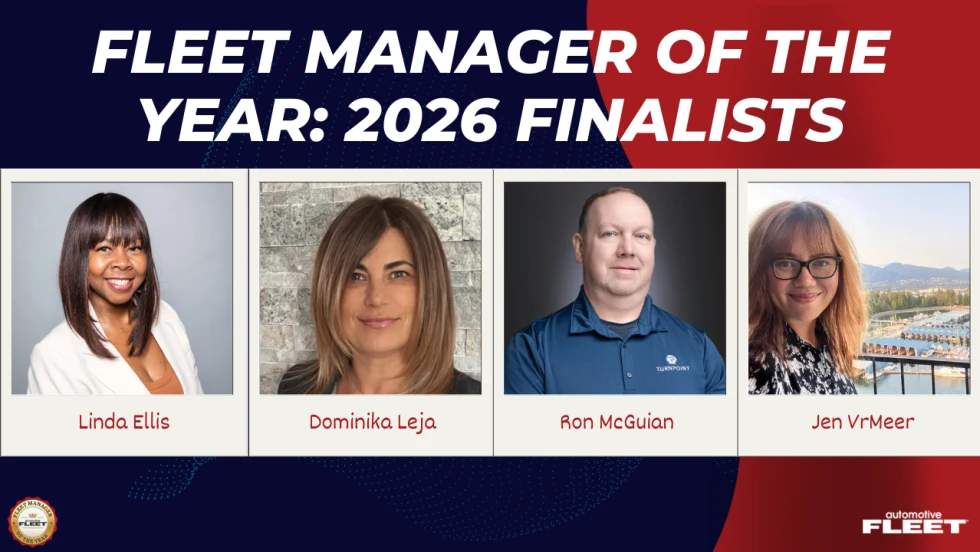
2026 Fleet Manager of the Year Finalists Announced
Who are the 2026 Fleet Manager of the Year finalists?
Read More →
John Rossant to Deliver Opening Keynote at 2026 Fleet Forward Conference
The CoMotion founder will draw on developments across Europe, China, the Middle East, and other international markets to identify trends that could influence how U.S. fleets plan for the coming decade.
Read More →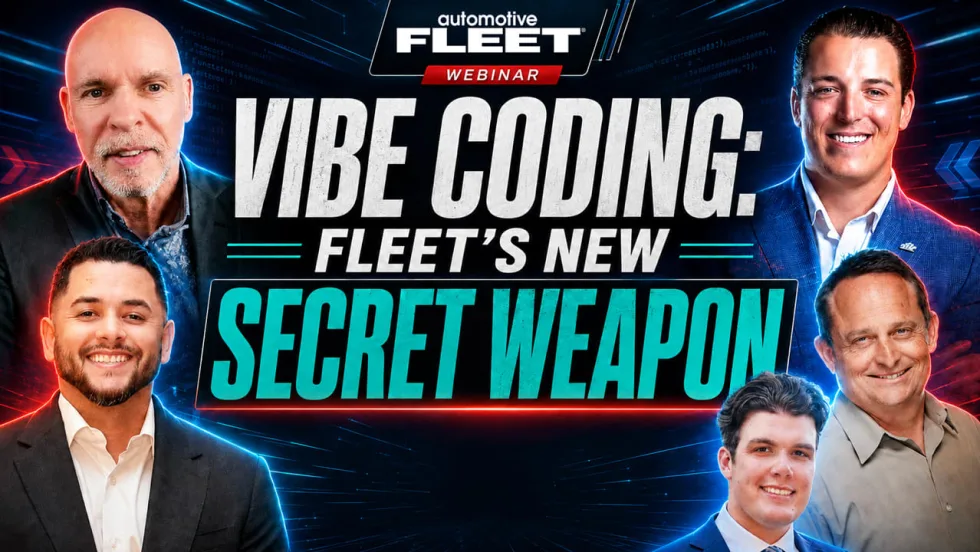
How to Build Custom Fleet Tools With AI and Vibe Coding [Webinar]
A new Automotive Fleet webinar explores how fleet managers are using AI and vibe coding to automate routine work and create simple operational tools without traditional programming skills.
Read More →