




More Drivers, More Danger: Why This Holiday Season Could Be the Riskiest Yet
A record 119 million holiday travelers are expected in 2024. See why traffic delays, drunk driving risks, and rising fatalities call for heightened road safety measures.

The safest choices drivers and passengers can make this holiday season are buckling up, driving sober, and looking out for others on the road.
Photo: Automotive Fleet
This year, AAA expects 119.3 million people will travel from home over the year-end holiday period, specifically between Tuesday, December 24, 2024, and Wednesday, January 1, 2025.
A jump from last year, when more than 115 million Americans were projected to drive 50+ miles during the holiday season, 2024’s domestic travel projection narrowly surpasses the previous record set in 2019 by 64,000 travelers. AAA expects an additional 3 million travelers this holiday season compared to last year.
With record holiday travel on the horizon, fleet managers should prioritize driver safety, route planning, and proactive risk mitigation to ensure smooth, secure operations during this high-traffic period.
Are Holiday Driving Risks on the Rise?
Using data from the National Highway Traffic Safety Administration (NHTSA), researchers at TruckInfo.net uncovered worrying trends for holiday travelers.
While Uber and Lyft have helped reduce alcohol-related traffic fatalities by 6.1%, drunk driving remains a major issue during both holidays. During the 2022 holiday period of December 24 through January 1, more than 31% of fatalities were alcohol-related.
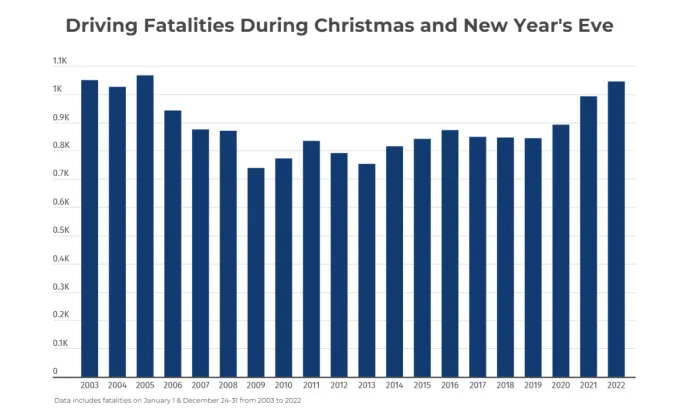
According to TruckInfo.net, 2005 to 2009 saw a steady decline in deaths followed by a relatively flat decade.
Source: TruckInfo.net
In another alarming find, fatalities have been increasing to levels not seen since 2005, with 2022 being the worst year on record. According to TruckInfo.net, 2005 to 2009 saw a steady decline in deaths followed by a relatively flat decade.
With drunk driving still a major concern and fatality rates reaching record highs, prioritizing safe driving practices is more critical than ever during the holiday season, especially for fleets working during the holidays.
How Do We Keep Each Other Safe From Risky Driving?
AAA reports that nearly 90% of holiday travelers will drive to their destinations, making it the most popular travel method.
Many travelers, particularly families with young children, prefer the flexibility and lower cost of road trips. To make driving an even more appealing method, gas prices are lower this holiday season than last year when the national average was around $3.12 in the last two weeks of 2023.
So, how do we keep each other safe? With millions of additional travelers expected on the roads during this year-end holiday travel period, AAA urges drivers, either on holiday or working, to prioritize safety with the following tips:
1. Follow Posted Speed Limits
While it’s tempting to speed to save time, the facts don’t support it. Even minor speed increases can make crashes deadly.
Driving 80 mph instead of 75 mph over 100 miles saves only 5 minutes, hardly worth the risk.
Speeding may feel faster but often leads to tragedy.
2. Drive Only When Alert and Refreshed
Fleet drivers know all too well that driving on 4-5 hours of sleep is as dangerous as driving with a 0.08 Blood Alcohol Concentration (BAC), which is the legal intoxication limit. Less than 4 hours of sleep? The risk doubles.
Travel during hours you’re normally awake, and avoid overnight drives if possible.
Steer clear of heavy meals, drowsy medications, and alcohol.
For long trips, take breaks every 2 hours or 100 miles. Use these breaks to switch drivers if possible, or park at a safe location and nap for 20-30 minutes to recharge.
Avoid the temptation to use cellular devices while driving.
3. Slow Down, Move Over
A roadside worker is killed every other week in the U.S. To help prevent these tragedies, AAA asks drivers to slow down and move over.
When you see an emergency responder assisting a stranded driver on the side of the road, reduce your speed.
Change lanes to give those crews room to do their jobs safely.
All 50 states and the District of Columbia have “Move Over” laws.
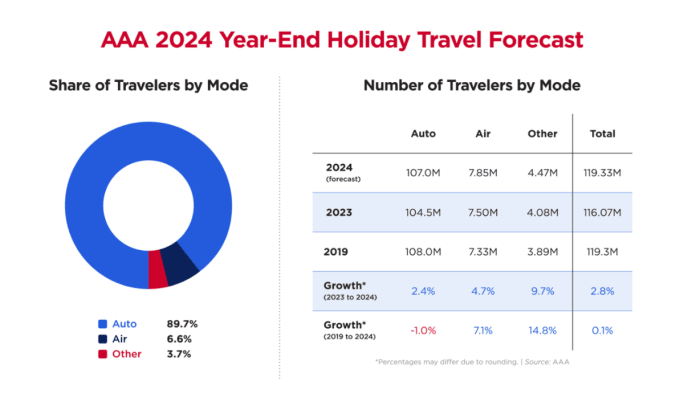
This year’s domestic travel projection narrowly surpasses the previous record set in 2019 by 64,000 travelers. AAA expects an additional 3 million travelers this holiday season compared to last year.
Source: AAA
INRIX, a transportation data provider, expects drivers to experience the worst traffic delays the weekends before Christmas Day and New Year’s Day.
The holidays themselves are expected to have minimal congestion. Drivers in Boston, New York City, Seattle, and Washington, D.C. could see double the typical delays. Nationwide, travel times could be up to 30% longer.
“With a near record number of auto travelers expected this holiday season, drivers should expect delays in and around major metro areas, with Sunday, December 22, expected to be the nation’s worst day to travel,” Bob Pishue, transportation analyst at INRIX, said. “Our advice is to avoid traveling during peak commuting hours during the week. If schedules allow, leave bright and early or after the evening commute.”
Best and Worst Times to Travel by Car
Date | Peak Traffic Period | Recommended Travel Time |
|---|---|---|
Monday, Dec 23 | 1:00 – 6:00 PM | Before 11:00 AM |
Tuesday, Dec 24 | Minimal Traffic Impact Expected | — — |
Wednesday, Dec 25 | Minimal Traffic Impact Expected | — — |
Thursday, Dec 26 | 12:00 PM – 5:00 PM | Before 11:00 AM |
Friday, Dec 27 | 3:00 PM – 7:00 PM | Before 2:00 PM |
Saturday, Dec 28 | 1:30 PM – 7:00 PM | Before 11:00 AM |
Sunday, Dec 29 | 12:00 PM – 6:00 PM | Before 11:00 AM |
Monday, Dec 30 | 5:00 PM – 7:00 PM | Before 2:00 PM |
Tuesday, Dec 31 | Minimal Traffic Impact Expected | — — |
Wednesday, Jan 01 | Minimal Traffic Impact Expected | — — |
Thursday, Jan 02 | 4:00 PM – 8:00 PM | Before 3:00 PM |
Source: INRIX
Remember, outside of making strategic travel plans, the safest choices drivers and passengers can make this holiday season are buckling up, driving sober, and looking out for others on the road.
More Safety

Fleet Manager’s Ultimate Playbook: Navigating the New Standard in OEM Connectivity
Rising operating costs, driver safety concerns, and unplanned downtime are putting unprecedented pressure on modern fleets. Discover how fleet managers use embedded OEM connectivity and real-time vehicle data to cut TCO, prevent downtime, and protect drivers without aftermarket telematics hardware.
Read More →
From Driver Well-Being to EV Charging | AF News Recap
Mental health belongs in the fleet safety conversation. This week, we’re looking at five ways fleets can support employee well-being before a crisis, plus Holman’s expansion in Mexico, new one-day Fleet Forward passes, and why EV charging demand is outpacing infrastructure growth.
Read More →
Nexar-Nauto Merger Aims to Give Fleets Better Safety Intelligence Through Larger Driving Dataset
Stefan Heck tells Automotive Fleet that combining more than 10 billion miles of driving history with Nexar's AI models will give fleets deeper insights into driver risk and roadway conditions than either company could provide independently.
Read More →
Don't Wait for a Crisis: 5 Ways to Build Mental Health Into Your Fleet Safety Program
For Suicide Prevention Month, fleet and safety leaders have an opportunity to put mental health where it belongs: at the center of workplace safety.
Read More →
How Camera Data Can Strengthen a Fleet’s Insurance Renewal
Insights from a commercial insurance carrier and a broker show how fleets can turn video telematic data, driver coaching, and improved claims results into a stronger case at insurance renewal.
Read More →
The Safest Fleets Aren’t the Ones with the Most Technology
You’ve made the telematics investment. Here’s how to capture the other half of its value and build the safest fleet on the road.
Read More →
Hidden in Plain Sight: Fleet Compliance Risks
Fleet compliance isn't just about having policies — it's about consistently enforcing them. This practical guide reveals six hidden compliance risks common in public sector and shared fleet operations and outlines proven strategies to improve visibility, accountability, and audit readiness
Read More →
NETS Sets 2026 Fleet Safety Benchmark Conference for Indianapolis
The Sept. 15–17 program will feature fleet benchmarking data, case studies, emerging technologies, and implementation strategies while running alongside the NSC Safety Congress & Expo.
Read More →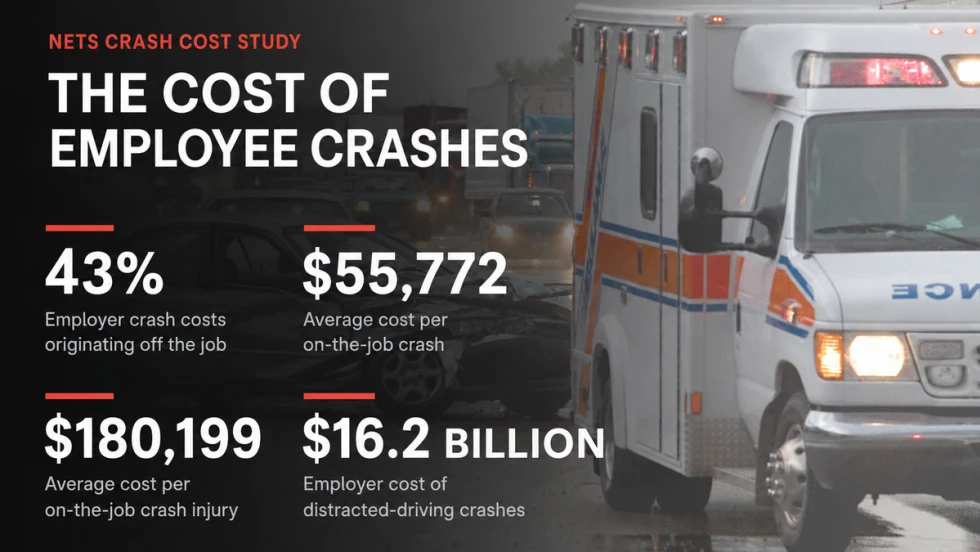
Off-the-Job Crashes Account for 43% of Employers’ $61.7 Billion Crash Burden
NETS quantifies costs dispersed across fleet, risk, HR, and other departments while providing new per-crash benchmarks for employers.
Read More →
Ram Recalls More Than 1.27 Million 1500 Pickups for Seat Belt Anchor Issue
The recall affects certain 2019-2026 Ram 1500 pickups that may have improperly attached second-row seat belt buckle anchors.
Read More →